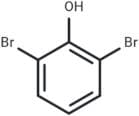
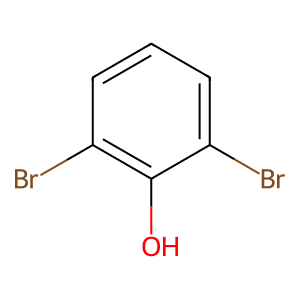
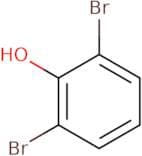
CAS 608-33-3
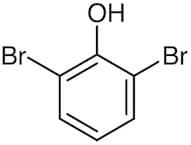
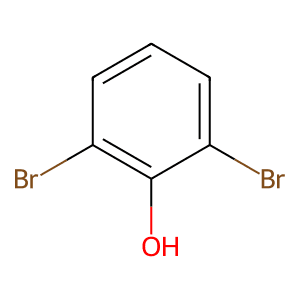
:2,6-Dibromophénol
- 2,6-Dibromo Phenol
- NSC 6214
- Phenol, 2,6-dibromo-
- 2,6-Dibromophenol
2,6-Dibromophenol
CAS :Formule :C6H4Br2ODegré de pureté :>98.0%(T)Couleur et forme :White to Light yellow to Light orange powder to lumpMasse moléculaire :251.912,6-Dibromophenol, 99%
CAS :2,6-Dibromophenol is used in the production of 3,4,5-trimethoxybenzaldehyde and 2-(2,6-dibromophenoxy)ethylbromide. This Thermo Scientific Chemicals brand product was originally part of the Alfa Aesar product portfolio. Some documentation and label information may refer to the legacy brand. The oriFormule :C6H4Br2ODegré de pureté :99%Couleur et forme :White to pale grey, Crystals or powder or crystalline powderMasse moléculaire :251.912,6-Dibromophenol
CAS :2,6-DibromophenolFormule :C6H4Br2ODegré de pureté :≥95%Couleur et forme : white to off white solidMasse moléculaire :251.90g/mol2,6-Dibromophenol
CAS :2,6-Dibromophenol (2,6-Dibromo-phenol) is extracted from the skin and muscle of flatfish.Formule :C6H4Br2ODegré de pureté :99.71%Couleur et forme :Needles From Water White CrystalMasse moléculaire :251.902,6-Dibromophenol
CAS :Produit contrôléFormule :C6H4Br2OCouleur et forme :NeatMasse moléculaire :251.902,6-Dibromophenol
CAS :Applications 2,6-Dibromophenol is an off-flavor compound that is a metabolite of the spoilage bacteria Alicyclobacillus acidoterrestris. 2,6-Dibromophenol is a metabolic inhibitor and an auxin-like molecule.
Not a dangerous good if item is equal to or less than 1g/ml and there is less than 100g/ml in the package
References Siegmund, B., Poellinger-Zierler, B.: J. Agr. Food Chem., 55, 6692 (2007); Charles, J.F.: Ann Inst. Pasteur. Mic.,134A, 365 (1983); Spaepen, S., et. al.: Eur. J. Soil Bio., 45, 81 (2009)Formule :C6H4Br2OCouleur et forme :Light BrownMasse moléculaire :251.92,6-Dibromophenol
CAS :Formule :C6H4Br2ODegré de pureté :95%Couleur et forme :SolidMasse moléculaire :251.9052,6-Dibromophenol
CAS :2,6-Dibromophenol is a chemical compound that is used as an analytical reagent in the determination of bromide ion concentrations. It can be prepared by the debromination of 2-bromophenols using hydrochloric acid and heating to 150°C. This reaction mechanism is best described by kinetic data and a model system. The reaction product of this process is 2,6-dibromo-3-hydroxyphenol. This compound has been shown to have a higher dry weight in strains with high levels of hydroxy group activity.
Formule :C6H4Br2ODegré de pureté :Min. 95%Masse moléculaire :251.9 g/mol