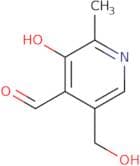
CAS 66-72-8
:Pyridoxal
Description :
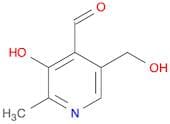
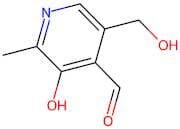
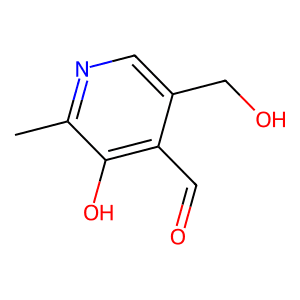
Pyridoxal, avec le numéro CAS 66-72-8, est une forme biologiquement active de la vitamine B6, jouant un rôle crucial dans diverses réactions enzymatiques au sein du corps. C'est un composé cristallin jaune soluble dans l'eau et l'alcool, mais moins soluble dans les solvants non polaires. Pyridoxal sert de coenzyme dans le métabolisme des acides aminés, facilitant la transamination, la décarboxylation et la racémisation des acides aminés. Sa structure présente un cycle pyridine avec un groupe aldéhyde, essentiel pour sa réactivité et sa fonction biologique. Pyridoxal peut être phosphorylé pour former Pyridoxal phosphate, la forme active de la coenzyme qui participe à de nombreuses voies métaboliques. De plus, il présente des propriétés antioxydantes et est impliqué dans la synthèse de neurotransmetteurs, tels que la sérotonine et la dopamine. Une carence en Pyridoxal peut entraîner divers problèmes de santé, notamment l'anémie, la neuropathie périphérique et une fonction immunitaire altérée. Dans l'ensemble, Pyridoxal est vital pour maintenir la santé métabolique et soutenir divers processus physiologiques.
Formule :C8H9NO3
InChI :InChI=1/C8H9NO3/c1-5-8(12)7(4-11)6(3-10)2-9-5/h2,4,10,12H,3H2,1H3
Code InChI :InChIKey=RADKZDMFGJYCBB-UHFFFAOYSA-N
SMILES :C(=O)C=1C(CO)=CN=C(C)C1O
Synonymes :- 3-Hydroxy-5-(Hydroxymethyl)-2-Methylpyridine-4-Carbaldehyde
- 3-Hydroxy-5-(hydroxymethyl)-2-methyl-4-pyridinecarboxaldehyde
- 3-Hydroxy-5-(hydroxymethyl)-2-methylisonicotinaldehyde
- 3-Hydroxy-5-(hydroxymethyl)-2-methylpyridine-4-carboxaldehyde
- 3-Hydroxy-5-hydroxymethyl-2-methyl-4-pyridincarbaldehyd
- 3-Hydroxy-5-hydroxymethyl-2-methyl-pyridine-4-carbaldehyde
- 3-Hydroxy-5-hydroxymethyl-2-methylisonicotin aldehyde
- 4-Pyridinecarboxaldehyde, 3-hydroxy-5-(hydroxymethyl)-2-methyl-
- 4-Pyridinecarboxaldehyde, 3-hydroxy-5-(hydroxymethyl)-2-methyl- (9CI)
- Brn 0383768
- Nsc 19613
- Piridoxal
- Pyridoxaldehyde
- Unii-3Thm379K8A
- 5-21-13-00044 (Beilstein Handbook Reference)
- Pyridoxal
- 3-Hydroxy-5-(hydroxymethyl)-2-methyl-4-pyridinecarbaldehyde
- 2-Methyl-3-hydroxy-5-(hydroxymethyl)pyridine-4-carbaldehyde
- PYRIDOXALE
- 3-(Hydroxymethyl)-5-hydroxy-6-methylpyridine-4-carbaldehyde
- 3-hydroxy-2-methyl-5-methylol-isonicotinaldehyde
- Voir plus de synonymes
Trier par
Degré de pureté (%)
0
100
|
0
|
50
|
90
|
95
|
100
6 produits concernés.
Pyridoxal
CAS :Formule :C8H9NO3Degré de pureté :98%Couleur et forme :SolidMasse moléculaire :167.1620Pyridoxal
CAS :Pyridoxal represents an active form of vitamin B6 [1].Formule :C8H9NO3Degré de pureté :99.83%Couleur et forme :SolidMasse moléculaire :167.163-Hydroxy-5-(hydroxymethyl)-2-methyl-pyridine-4-carbaldehyde
CAS :3-Hydroxy-5-(hydroxymethyl)-2-methyl-pyridine-4-carbaldehyde (3HMPA) is a natural compound that has been shown to have tissue nonspecific effects on the bowel. It is structurally similar to pyridoxal, an amino acid present in food, and may have a role in the synthesis of proteins. 3HMPA has also been shown to be an effective treatment for infectious diseases such as HIV and tuberculosis. 3HMPA binds metal ions by chelation and inhibits the growth of bacteria by inhibiting glutamate production. This compound has also been shown to stimulate physiological responses in mice, including increased heart rate and blood pressure.
Formule :C8H9NO3Degré de pureté :Min. 95%Masse moléculaire :167.16 g/mol