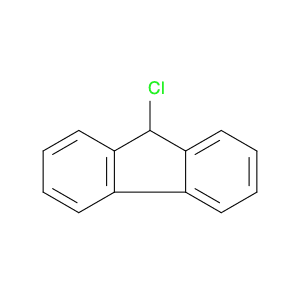
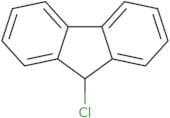
CAS 6630-65-5
:9-Chlorofluorène
- 9-Fluorenyl Chloride
- 9-chloro-9H-fluorene
- 9H-Fluorene, 9-chloro-
- Fluorene, 9-chloro-
- NSC 59976
- 9-Chlorofluorene
9-Chloro-9H-fluorene
CAS :Formule :C13H9ClDegré de pureté :98%Couleur et forme :SolidMasse moléculaire :200.66369-Chlorofluorene
CAS :Produit contrôléApplications 9-Chlorofluorene is a monochlorinated fluorene with therapeutic effects on fungal diseases of tomato. 9-Chlorofluorene is part of a class of halogenated pollutants observed in the urban atmosphere.
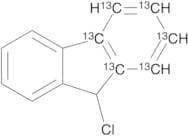
References Buchenauer, H. et al.: Phytopathol. Zeitsch., 72, 145 (1971); Buchenauer, H. et al.: Nature, 227, 1267 (1970); Ma, J. et al.: Environ. Sci. Technol., 43, 643 (2009);Formule :C13H9ClCouleur et forme :NeatMasse moléculaire :200.669-Chlorofluorene-13C6 (Contain 3% unlabeled)
CAS :Produit contrôléApplications Labelled analogue of 9-Chlorofluorene, a monochlorinated fluorene with therapeutic effects on fungal diseases of tomato. 9-Chlorofluorene is part of a class of halogenated pollutants observed in the urban atmosphere.
References Buchenauer, H. et al.: Phytopathol. Zeitsch., 72, 145 (1971); Buchenauer, H. et al.: Nature, 227, 1267 (1970); Ma, J. et al.: Environ. Sci. Technol., 43, 643 (2009);Formule :C713C6H9ClCouleur et forme :NeatMasse moléculaire :206.629-Chlorofluorene
CAS :9-Chlorofluorene is a synthetic chemical that has been used as an intermediate for the production of polymers and dyes. It is a colorless liquid with a chloroform-like odor. 9-Chlorofluorene reacts with hydrogen chloride to form the chlorinated derivative, fluorene dichloride. This chemical is also known to react with other compounds such as alcohols, amines, and phenols in the presence of moisture or heat to produce unwanted byproducts including aldehydes, chlorides, and hydrocarbons. 9-Chlorofluorene may be contaminated with impurities such as carbon tetrachloride, which can lead to toxic effects on humans and animals. There are bioassays that measure the toxicity of this substance in mice. The toxicity of 9-chlorofluorene has been shown to depend on the electron transfer reactions it undergoes during metabolism.
Formule :C13H9ClDegré de pureté :Min. 95%Masse moléculaire :200.66 g/mol