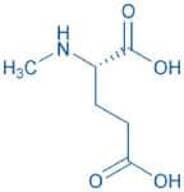
CAS 6753-62-4
:Acide N-méthyl-L-glutamique
Description :
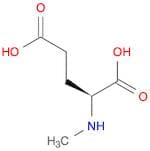
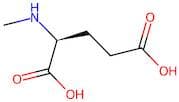
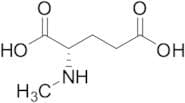
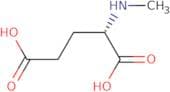
Acide N-méthyl-L-glutamique est un dérivé de l'acide aminé L-acide glutamique, caractérisé par l'ajout d'un groupe méthyle à l'atome d'azote du groupe amino. Cette modification altère ses propriétés et son activité biologique. La substance est un solide cristallin blanc qui est soluble dans l'eau, reflétant sa nature polaire en raison de la présence de groupes fonctionnels à la fois acide carboxylique et amino. Acide N-méthyl-L-glutamique est connu pour agir comme un agoniste sélectif pour certains récepteurs de glutamate, en particulier le récepteur NMDA, qui joue un rôle crucial dans la plasticité synaptique et la fonction de la mémoire dans le système nerveux central. Sa structure chimique comprend deux groupes carboxyles, contribuant à son acidité, et il est classé comme un acide aminé non protéinogène. En raison de son rôle dans la neurotransmission, Acide N-méthyl-L-glutamique est d'un intérêt en neuropharmacologie et peut avoir des implications dans l'étude de divers troubles neurologiques. Les données de sécurité doivent être consultées pour la manipulation et la toxicité potentielle, comme pour toute substance chimique.
Formule :C6H11NO4
Synonymes :- N-Me-Glu-OH
- H-L-Meglu-Oh Hcl
- N-ALPHA-METHYL-L-GLUTAMIC ACID HYDROCHLORIDE
- H-L-MEGLU-OH HCL USP/EP/BP
- N-Methyl-L-glutamic aicd
- N-Mathyl-L-glutamic acid
- N-α-Methyl-L-glutamic acid hydrate
- L-Glutamic acid, N-methyl-
- N-METHYL-L-GLUTAMIC ACID HYDROCHLORIDE
- H-N-Me-Glu-OH
- N-Me-L-Glu-OH
- (2S)-2-(methylamino)pentanedioic acid
- N-ME-GLUTAMIC ACID
- H-MEGLU-OH
- N-Methyl-L-glutamic acid hydrochloride (1:1)
- N-ALPHA-METHYL-L-GLUTAMIC ACID
- N-ME-GLU-OH HCL
- N-Methyl-L-glutamic acid≥ 98% (HPLC)
- Voir plus de synonymes
Trier par
Degré de pureté (%)
0
100
|
0
|
50
|
90
|
95
|
100
5 produits concernés.
(S)-2-(Methylamino)pentanedioic acid
CAS :Formule :C6H11NO4Degré de pureté :95%Couleur et forme :SolidMasse moléculaire :161.1558(S)-2-(Methylamino)pentanedioic acid
CAS :(S)-2-(Methylamino)pentanedioic acidDegré de pureté :97%Masse moléculaire :161.16g/molN-Methyl-L-glutamic acid
CAS :N-Methyl-L-glutamic acid (NMG) is a metabolite of the amino acid L-glutamic acid. NMG is found in many tissues, and has been detected in plasma, cerebrospinal fluid, urine, and brain tissue. It also has been found in high concentrations in the brains of depressed patients. NMG is converted to n-methyl-d-aspartic acid (NMDA), which may be responsible for some of its effects on neurotransmitters. NMDA receptor antagonists are being investigated as treatments for depression and epilepsy. NMG is also involved in energy metabolism, as it can be converted to oxaloacetate by a number of enzymes. The enzyme activities for this conversion include glutamate carboxypeptidase II, glutamine synthase, glutamate dehydrogenase, glutamine synthetase and aspartate aminotransferase.Formule :C6H11NO4Degré de pureté :Min. 95%Couleur et forme :PowderMasse moléculaire :161.16 g/molN-Me-Glu-OH
CAS :Bachem ID: 4002660.
Formule :C6H11NO4Degré de pureté :> 98%Couleur et forme :White PowderMasse moléculaire :161.16