CAS 68303-40-2
:acide L-malique monosodique cristallin
Description :
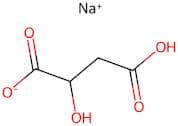
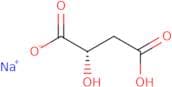
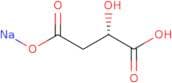
acide L-malique monosodique cristallin, avec le numéro CAS 68303-40-2, est un sel de sodium de l'acide L-malic, un composé organique qui joue un rôle significatif dans divers processus biochimiques, en particulier dans le cycle de Krebs. Cette substance apparaît généralement sous forme de poudre cristalline blanche et est soluble dans l'eau, ce qui la rend utile dans diverses applications, y compris les industries alimentaires et des boissons en tant qu'acidifiant et exhausteur de goût. Elle possède un goût légèrement acide et est connue pour sa capacité à rehausser l'acidité des produits. En plus de ses utilisations culinaires, l'acide L-malic monosodique peut également servir d'agent tampon et est utilisé dans les produits pharmaceutiques et cosmétiques pour ses propriétés stabilisantes. Le composé est généralement reconnu comme sûr (GRAS) lorsqu'il est utilisé en quantités appropriées, mais comme toutes les substances, il doit être manipulé avec soin pour éviter tout effet indésirable potentiel. Sa structure chimique comprend à la fois des groupes fonctionnels acides carboxyliques et hydroxyles, contribuant à sa réactivité et à son interaction avec d'autres composés.
Formule :C4H5NaO5
Synonymes :- L-Malic acid monosodium salt
- L-Hydroxybutanedioic acid sodium salt
- SODIUM BIMALATE
- SODIUM ACID MALATE
- Malic acid-Na-salt
- L-(-)-Malic acid sodiuM salt 95-100% (enzyMatic)
- L-malic acid monosodium crystalline
- SODIUM HYDROGEN MALATE
- DL-MALIC ACID MONOSODIUM SALT
- SODIUM HYDROGEN DL-MALATE
Trier par
Degré de pureté (%)
0
100
|
0
|
50
|
90
|
95
|
100
4 produits concernés.
L-(-)-Malic acid sodium salt
CAS :Formule :C4H5NaO5Couleur et forme :SolidMasse moléculaire :156.0693Sodium 3-carboxy-2-hydroxypropanoate
CAS :Sodium 3-carboxy-2-hydroxypropanoateDegré de pureté :95%Masse moléculaire :156.07g/molL-(-)-Malic acid monosodium
CAS :L-Malic acid is a dicarboxylic acid that is found in many fruits and vegetables. It is the substrate for the enzyme malate dehydrogenase, which catalyzes the oxidation of L-malate to oxaloacetate. L-Malic acid is used to study mitochondrial function, as it can be used as an alternative energy source. The L-malic acid monosodium salt (LAM) has been shown to be effective in preventing muscle damage caused by exercise. This may be due to its ability to decrease oxidative stress and increase ATP production through increased mitochondrial activity. LAM also has been shown to promote photoreceptor cell survival and improve retinal function in animals with damaged photoreceptors, although it does not have any effect on normal animal eyes.Formule :C4H6O5•NaDegré de pureté :Min. 95%Couleur et forme :PowderMasse moléculaire :157.08 g/molL-Malic acid, sodium salt
CAS :L-Malic acid, sodium salt is a white crystalline compound that is soluble in water and has a molecular weight of 136.08. It is a useful scaffold for the synthesis of organic compounds and can be used as a reaction component or as a speciality chemical. L-Malic acid, sodium salt can be used to synthesize many different types of compounds including pharmaceuticals, hormones, industrial chemicals, and research chemicals. This compound is also an important intermediate in the production of amino acids, polymers, and other organic compounds. L-Malic acid, sodium salt has been found to have high purity with few impurities.
Formule :C4H5NaO5Masse moléculaire :156.07 g/mol