CAS 6982-09-8
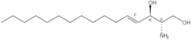
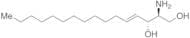
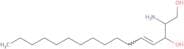
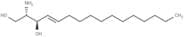
:4-Hexadécène-1,3-diol, 2-amino-, (2S,3R,4E)-
Description :
4-Hexadécène-1,3-diol, 2-amino-, (2S,3R,4E)-, avec le numéro CAS 6982-09-8, est un composé organique caractérisé par sa longue chaîne d'hydrocarbures et la présence de groupes fonctionnels hydroxyle (-OH) et amino (-NH2). Ce composé présente une double liaison dans sa chaîne carbonée, spécifiquement à la position 4, ce qui contribue à son insaturation. La stéréochimie indiquée par (2S,3R,4E) suggère des arrangements spatiaux spécifiques des substituants autour des centres chiraux, influençant sa réactivité et ses interactions. La présence de groupes hydroxyles améliore généralement la solubilité dans les solvants polaires et peut participer à des liaisons hydrogène, tandis que le groupe amino peut conférer une basicité et une réactivité dans diverses réactions chimiques. Ce composé peut trouver des applications dans des domaines tels que la biochimie, la pharmacie ou la science des matériaux, où ses groupes fonctionnels uniques peuvent être utilisés pour la synthèse ou comme intermédiaires dans des processus chimiques. Dans l'ensemble, ses caractéristiques structurelles suggèrent une polyvalence potentielle dans la réactivité chimique et les applications.
Formule :C16H33NO2
Trier par
Degré de pureté (%)
0
100
|
0
|
50
|
90
|
95
|
100
4 produits concernés.
C16-D-erythro-Sphingosine
CAS :Formule :C16H33NO2Degré de pureté :>98%Couleur et forme :SolidMasse moléculaire :271.44C16-Sphingosine
CAS :Produit contrôléFormule :C16H33NO2Couleur et forme :NeatMasse moléculaire :271.44c16-Sphingosine
CAS :Sphingosine is a long-chain fatty acid that is naturally found in the human body. It has been shown to have a role in regulating cellular metabolism and apoptosis, as well as inflammatory responses. Sphingosine is metabolized through the action of hydrochloric acid and hydrogen chloride to form sphinganine, which can then be converted into other metabolites. The metabolism of sphingosine is an important factor for determining its effects on the body. Chronic exposure to sphingosine may result in an accumulation of metabolites in the body, which may lead to metabolic profiles that are similar to those seen in various diseases such as cancer and inflammatory diseases.Formule :C16H33NO2Degré de pureté :Min. 95%Masse moléculaire :271.44 g/molSphingosine (d16:1)
CAS :Sphingosine (d16:1), an unconventional sphingolipid, is synthesized through enzymatic reactions starting with the condensation of myristoyl-CoA and serine by serine palmitoyltransferase long-chain base subunit 3 (SPTLC3), which shows a preference for myristoyl-CoA. This compound is found in minute quantities in its free form in human plasma and as a component of various plasma sphingolipids, such as sphingosine-1-phosphate, ceramides, sphingomyelins, and in brain cerebrosides, albeit at lower concentrations than the more common d18:1 sphingoid base. Sphingosine (d16:1) acts as an inhibitor of PKC in mixed micelle assays and diminishes superoxide production triggered by phorbol 12-myristate 13-acetate in isolated human neutrophils, as well as inhibiting the growth of CHO cells with IC50 values of 1 and 3.2 µM, respectively. Additionally, the concentration of sphingolipids containing sphingosine (d16:1) in the plasma is linked to the dietary consumption of saturated fatty acids and protein among ethnic Chinese populations.Formule :C16H33NO2Couleur et forme :SolidMasse moléculaire :271.4