CAS 70131-67-8
:Polysiloxanes, di-Me, terminés par hydroxy
Description :
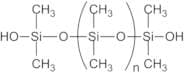
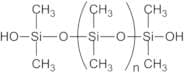
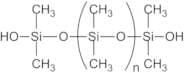
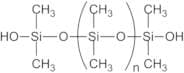
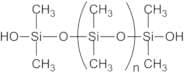
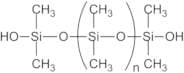
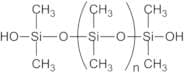
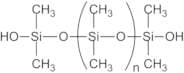
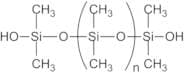
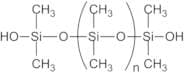
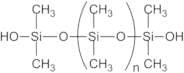
Polysiloxanes, di-Me, terminés par hydroxy, communément appelé polydiméthylsiloxane terminal hydroxyle (PDMS), est une classe de polymères siloxanes caractérisés par leurs unités de siloxane (Si-O) répétées. Ces composés présentent généralement une structure linéaire avec des groupes méthyle (Me) attachés aux atomes de silicium et des groupes hydroxyle (–OH) aux extrémités terminales. Cette structure confère des propriétés uniques, notamment la flexibilité, une faible tension superficielle et une excellente stabilité thermique, ce qui les rend adaptés à une variété d'applications. Ils sont souvent utilisés comme intermédiaires dans la synthèse d'élastomères de silicone, de scellants et de revêtements en raison de leur capacité à former des liaisons fortes avec d'autres matériaux. De plus, leur nature hydrophobe et leur faible toxicité les rendent précieux dans les formulations cosmétiques et les applications médicales. La présence de groupes hydroxyles permet une modification chimique supplémentaire, améliorant leur polyvalence dans divers processus industriels. Dans l'ensemble, les polysiloxanes avec cette structure spécifique sont essentiels dans de nombreux domaines, y compris la science des matériaux, la pharmacie et les produits de consommation.
Formule :Unspecified
Synonymes :- Poly(dimethylsiloxane),hydroxy
- Sh-Qy
- α-Hydro-ω-hydroxypoly(dimethylsiloxane)
- Hydroxy silicone oil
- Polydimethylsiloxane, silanol terminated
- PS 195
- OH Polymer
- Polysiloxanes, di-Me, hydroxy-terminated
- Hydroxy-terminated di-Me siloxanes
- Di-Me hydroxy-terminated siloxanes
- Siloxanes and Silicones, di-Me, hydroxy-terminated
- Voir plus de synonymes
Trier par
Degré de pureté (%)
0
100
|
0
|
50
|
90
|
95
|
100
25 produits concernés.
Polydimethylsiloxane, hydroxy terminated, M.W. 4200
CAS :<p>Polydimethylsiloxane is frequently used in a liquid containing 4-5% silica gel, emulsifiers and preservatives. It is employed in applications like contact lenses, medical devices, elastomers, in shampoos, food (antifoaming agent), caulking, lubricants, kinetic sand , and heat-resistant tiles. PDMS i</p>Formule :HOSi(CH3)2OnHCouleur et forme :Clear liquidSilanol terminated polydimethylsiloxane cSt 90-120
CAS :Couleur et forme :Liquid, ClearMasse moléculaire :0.0Polydimethylsiloxane, hydroxy terminated, M.W. 4200
CAS :Formule :C2H8O2SiDegré de pureté :98%Couleur et forme :LiquidMasse moléculaire :92.1692Poly(dimethylsiloxane), hydroxy terminated
CAS :Poly(dimethylsiloxane), hydroxy terminatedDegré de pureté :25~45 cstSilanol terminated polydimethylsiloxane cSt16-32
CAS :Couleur et forme :Liquid, Clear LiquidMasse moléculaire :0.0Silanol terminated Polydimethylsiloxane cSt 18,000
CAS :Couleur et forme :LiquidMasse moléculaire :0.0Silanol terminated polydimethylsiloxane cSt 90,000-150,000
CAS :<p>DMS-S51 - Silanol terminated polydimethylsiloxane cSt 90,000-150,000</p>Couleur et forme :Liquid, ClearMasse moléculaire :0.0SILANOL TERMINATED POLYDIMETHYLSILOXANE, 90,000-150,000 cSt
CAS :<p>DMS-S51: Silanol Terminated PDMS, 90,000-150,000 cSt (Telechelic Functional Fluid)<br>Terminal silanol groups render polydimethylsiloxanes susceptible to condensation under both mild acid and base conditions. They are intermediates for most room temperature vulcanizeable (RTV) condensation cure silicones. The reactivity of silanol fluids is utilized in applications other than RTVs. Low viscosity silanol fluids are employed as filler treatments and structure control additives in silicone rubber compounding. Intermediate viscosity (1,000-10,000 cSt) fluids can be applied to textiles as durable fabric softeners. High viscosity silanol terminated fluids form the matrix component in tackifiers and pressure sensitive adhesives.<br>DMS-S51 Properties<br>Viscosity: 90,000-150,000 cStMolecular Weight: 139,000 g/molWt.% OH: 0.02OH (eq/kg): 0.010-0.015<br></p>Couleur et forme :LiquidMasse moléculaire :139000.0SILANOL TERMINATED POLYDIMETHYLSILOXANE, 1,000 cSt
CAS :<p>DMS-S31: Silanol Terminated PDMS, 1,000 cSt (Telechelic Functional Fluid)<br>Terminal silanol groups render polydimethylsiloxanes susceptible to condensation under both mild acid and base conditions. They are intermediates for most room temperature vulcanizeable (RTV) condensation cure silicones. The reactivity of silanol fluids is utilized in applications other than RTVs. Low viscosity silanol fluids are employed as filler treatments and structure control additives in silicone rubber compounding. Intermediate viscosity (1,000-10,000 cSt) fluids can be applied to textiles as durable fabric softeners. High viscosity silanol terminated fluids form the matrix component in tackifiers and pressure sensitive adhesives.<br>DMS-S31 Properties<br>Viscosity: 1,000 cStMolecular Weight: 26,000 g/molWt.% OH: 0.1OH (eq/kg): 0.055-0.060<br></p>Couleur et forme :LiquidMasse moléculaire :26000.0SILANOL TERMINATED POLYDIMETHYLSILOXANE, 16-32 cSt
CAS :<p>DMS-S12: Silanol Terminated PDMS, 16-32 cSt (Telechelic Functional Fluid)<br>Terminal silanol groups render polydimethylsiloxanes susceptible to condensation under both mild acid and base conditions. They are intermediates for most room temperature vulcanizeable (RTV) condensation cure silicones. The reactivity of silanol fluids is utilized in applications other than RTVs. Low viscosity silanol fluids are employed as filler treatments and structure control additives in silicone rubber compounding. Intermediate viscosity (1,000-10,000 cSt) fluids can be applied to textiles as durable fabric softeners. High viscosity silanol terminated fluids form the matrix component in tackifiers and pressure sensitive adhesives.<br>DMS-S12 Porperties<br>Viscosity: 16-32 cStMolecular Weight: 400-700 g/molWt.% OH: 4.5-7.5OH (eq/kg): 2.3-3.5<br></p>Couleur et forme :Colourless LiquidMasse moléculaire :400-700SILANOL TERMINATED POLYDIMETHYLSILOXANE, 700-800 cSt
CAS :<p>DMS-S27: Silanol Terminated PDMS, 700-800 cSt (Telechelic Functional Fluid)<br>Terminal silanol groups render polydimethylsiloxanes susceptible to condensation under both mild acid and base conditions. They are intermediates for most room temperature vulcanizeable (RTV) condensation cure silicones. The reactivity of silanol fluids is utilized in applications other than RTVs. Low viscosity silanol fluids are employed as filler treatments and structure control additives in silicone rubber compounding. Intermediate viscosity (1,000-10,000 cSt) fluids can be applied to textiles as durable fabric softeners. High viscosity silanol terminated fluids form the matrix component in tackifiers and pressure sensitive adhesives.<br>DMS-S27 Properties<br>Viscosity: 700-800 StMolecular Weight: 18,000 g/molWt.% OH: 0.2OH (eq/kg): 0.11-0.13<br></p>Couleur et forme :LiquidMasse moléculaire :18000.0SILANOL TERMINATED POLYDIMETHYLSILOXANE, 35-45 cSt
CAS :<p>DMS-S14: Silanol Terminated PDMS, 35-45 cSt (Telechelic Functional Fluid)<br>Terminal silanol groups render polydimethylsiloxanes susceptible to condensation under both mild acid and base conditions. They are intermediates for most room temperature vulcanizeable (RTV) condensation cure silicones. The reactivity of silanol fluids is utilized in applications other than RTVs. Low viscosity silanol fluids are employed as filler treatments and structure control additives in silicone rubber compounding. Intermediate viscosity (1,000-10,000 cSt) fluids can be applied to textiles as durable fabric softeners. High viscosity silanol terminated fluids form the matrix component in tackifiers and pressure sensitive adhesives.<br>DMS-S14 Properties<br>Viscosity: 35-45 cStMolecular Weight: 700-1,500 g/molWt.% OH: 30.-4.0OH (eq/kg): 1.7-2.3<br></p>Couleur et forme :Colourless LiquidMasse moléculaire :700-1500SILANOL TERMINATED POLYDIMETHYLSILOXANE, 45-85 cSt
CAS :<p>DMS-S15: Silanol Terminated PDMS, 45-85 cSt (Telechelic Functional Fluid)<br>Terminal silanol groups render polydimethylsiloxanes susceptible to condensation under both mild acid and base conditions. They are intermediates for most room temperature vulcanizeable (RTV) condensation cure silicones. The reactivity of silanol fluids is utilized in applications other than RTVs. Low viscosity silanol fluids are employed as filler treatments and structure control additives in silicone rubber compounding. Intermediate viscosity (1,000-10,000 cSt) fluids can be applied to textiles as durable fabric softeners. High viscosity silanol terminated fluids form the matrix component in tackifiers and pressure sensitive adhesives.<br>DMS-S15 Properties<br>Viscosity: 45-85 cStMolecular Weight: 2,000-3,500 g/molWt.% OH: 0.9-1.2OH (eq/kg): 0.53-0.70<br></p>Couleur et forme :LiquidMasse moléculaire :2000-3500SILANOL TERMINATED POLYDIMETHYLSILOXANE, 50,000 cSt
CAS :<p>DMS-S45: Silanol Terminated PDMS, 50,000 cSt (Telechelic Functional Fluid)<br>Terminal silanol groups render polydimethylsiloxanes susceptible to condensation under both mild acid and base conditions. They are intermediates for most room temperature vulcanizeable (RTV) condensation cure silicones. The reactivity of silanol fluids is utilized in applications other than RTVs. Low viscosity silanol fluids are employed as filler treatments and structure control additives in silicone rubber compounding. Intermediate viscosity (1,000-10,000 cSt) fluids can be applied to textiles as durable fabric softeners. High viscosity silanol terminated fluids form the matrix component in tackifiers and pressure sensitive adhesives.<br>DMS-S45 Properties<br>Viscosity: 50,000 cStMolecular Weight: 110,000 g/molWt.% OH: 0.03OH (eq/kg): 0.015-0.017<br></p>Couleur et forme :LiquidMasse moléculaire :110000.0SILANOL TERMINATED POLYDIMETHYLSILOXANE, 5,000c cSt
CAS :<p>DMS-S35: Silanol Terminated PDMS, 5,000 cSt (Telechelic Functional Fluid)<br>Terminal silanol groups render polydimethylsiloxanes susceptible to condensation under both mild acid and base conditions. They are intermediates for most room temperature vulcanizeable (RTV) condensation cure silicones. The reactivity of silanol fluids is utilized in applications other than RTVs. Low viscosity silanol fluids are employed as filler treatments and structure control additives in silicone rubber compounding. Intermediate viscosity (1,000-10,000 cSt) fluids can be applied to textiles as durable fabric softeners. High viscosity silanol terminated fluids form the matrix component in tackifiers and pressure sensitive adhesives.<br>DMS-S35 Properties<br>Viscosity: 5,000 cStMolecular Weight: 49,000 g/molWt.% OH: 0.07OH (eq/kg): 0.039-0.043<br></p>Couleur et forme :LiquidMasse moléculaire :49000.0SILANOL TERMINATED POLYDIMETHYLSILOXANES cSt 45-85
CAS :<p>DMS-S15 - SILANOL TERMINATED POLYDIMETHYLSILOXANES cSt 45-85</p>Couleur et forme :Liquid, ClearMasse moléculaire :0.0SILANOL TERMINATED POLYDIMETHYLSILOXANE cSt 2000
CAS :Couleur et forme :Liquid, Clear LiquidMasse moléculaire :0.0Silanol terminated polydimethylsiloxane cSt 5000
CAS :<p>DMS-S35 - Silanol terminated polydimethylsiloxane cSt 5000</p>Couleur et forme :Liquid, ClearMasse moléculaire :0.0Silanol terminated polydimethylsiloxane cSt1000
CAS :Couleur et forme :Liquid, ClearMasse moléculaire :0.0Silanol terminated polydimethylsiloxane cSt 35-45
CAS :Couleur et forme :Liquid, Clear LiquidMasse moléculaire :0.0Silanol terminated polydimethylsiloxanes cSt 50,000
CAS :<p>DMS-S45 - Silanol terminated polydimethylsiloxanes cSt 50,000</p>Couleur et forme :Liquid, ClearMasse moléculaire :0.0SILANOL TERMINATED POLYDIMETHYLSILOXANE, 3,500 cSt
CAS :<p>DMS-S33: Silanol Terminated PDMS, 3,500 cSt (Telechelic Functional Fluid)<br>Terminal silanol groups render polydimethylsiloxanes susceptible to condensation under both mild acid and base conditions. They are intermediates for most room temperature vulcanizeable (RTV) condensation cure silicones. The reactivity of silanol fluids is utilized in applications other than RTVs. Low viscosity silanol fluids are employed as filler treatments and structure control additives in silicone rubber compounding. Intermediate viscosity (1,000-10,000 cSt) fluids can be applied to textiles as durable fabric softeners. High viscosity silanol terminated fluids form the matrix component in tackifiers and pressure sensitive adhesives.<br>DMS-S33 Properties<br>Viscosity: 3,500 cStMolecular Weight: 43,500 g/molWt.% OH: 0.8OH (eq/kg): 0.045-0.050<br></p>Couleur et forme :LiquidMasse moléculaire :43500.0SILANOL TERMINATED POLYDIMETHYLSILOXANE,18,000 cSt
CAS :<p>DMS-S42: Silanol Terminated PDMS, 18,000 cSt (Telechelic Functional Fluid)<br>Terminal silanol groups render polydimethylsiloxanes susceptible to condensation under both mild acid and base conditions. They are intermediates for most room temperature vulcanizeable (RTV) condensation cure silicones. The reactivity of silanol fluids is utilized in applications other than RTVs. Low viscosity silanol fluids are employed as filler treatments and structure control additives in silicone rubber compounding. Intermediate viscosity (1,000-10,000 cSt) fluids can be applied to textiles as durable fabric softeners. High viscosity silanol terminated fluids form the matrix component in tackifiers and pressure sensitive adhesives.<br>DMS-S42 Properties<br>Viscosity: 18,000 cStMolecular Weight: 77,000 g/molWt.% OH: 0.4OH (eq/kg): 0.023-0.025<br></p>Couleur et forme :LiquidMasse moléculaire :77000.0SILANOL TERMINATED POLYDIMETHYLSILOXANE, 90-120 cSt
CAS :<p>DMS-S21: Silanol Terminated PDMS, 90-120 cSt (Telechelic Functional Fluid)<br>Terminal silanol groups render polydimethylsiloxanes susceptible to condensation under both mild acid and base conditions. They are intermediates for most room temperature vulcanizeable (RTV) condensation cure silicones. The reactivity of silanol fluids is utilized in applications other than RTVs. Low viscosity silanol fluids are employed as filler treatments and structure control additives in silicone rubber compounding. Intermediate viscosity (1,000-10,000 cSt) fluids can be applied to textiles as durable fabric softeners. High viscosity silanol terminated fluids form the matrix component in tackifiers and pressure sensitive adhesives.<br>DMS-S21 Properties<br>Viscosity: 90-120 cStMolecular Weight: 4,200 g/molWt.% OH: 0.8-0.9OH (eq/kg): 0.47-0.53<br></p>Couleur et forme :LiquidMasse moléculaire :4200.0