CAS 7440-16-6
:Rhodium
Description :
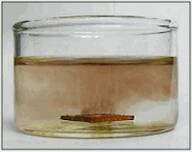
Rhodium est un métal de transition rare, de couleur argentée, appartenant au groupe des métaux du platine, connu pour sa haute réflectivité et sa résistance à la corrosion et à l'oxydation. Il a le numéro atomique 45 et est désigné par le symbole Rh. Rhodium est principalement utilisé dans les catalyseurs pour automobiles, où il aide à convertir les gaz nocifs en émissions moins toxiques. Ses excellentes propriétés catalytiques le rendent également précieux dans diverses réactions chimiques, y compris les processus d'hydrogénation et d'oxydation. Rhodium se caractérise par un point de fusion élevé et une densité importante, contribuant à sa durabilité et à son efficacité dans des applications à haute température. De plus, il est souvent utilisé dans la bijouterie et comme matériau de placage en raison de sa finition brillante et de sa capacité à améliorer l'apparence d'autres métaux. Malgré ses propriétés bénéfiques, Rhodium est considéré comme l'un des métaux précieux les plus chers, son prix étant influencé par la dynamique de l'offre et de la demande dans les secteurs automobile et industriel. Sa rareté et ses caractéristiques uniques en font un élément significatif tant dans les applications industrielles que sur les marchés d'investissement.
Formule :Rh
InChI :InChI=1S/Rh
Code InChI :InChIKey=MHOVAHRLVXNVSD-UHFFFAOYSA-N
SMILES :[Rh]
Synonymes :- Rhodium (nanoparticles)
- Rhodium black
- Rhodium-103
- Rodio
- Rhodium
- MeSH ID: D012238
Trier par
Degré de pureté (%)
0
100
|
0
|
50
|
90
|
95
|
100
Rhodium (5% on Alumina)
CAS :Produit contrôlé<p>Applications Rhodium is a transition metal catalyst used in a multitude of inorganic synthesis.<br>References Alonso, F. et al.: Chem. Rev., 102, 4009 (2002); Widegren, J. et al.: J. Am. Chem. Soc., 125, 10301 (2003); Blomberg, M. et al.: J. Am. Chem. Soc., 113, 424 (1991);<br></p>Formule :RhCouleur et forme :NeatMasse moléculaire :102.91Rhodium (Activated Carbon)
CAS :<p>Applications Rhodium is a transition metal catalyst used in a multitude of inorganic synthesis.<br>References Alonso, F. et al.: Chem. Rev., 102, 4009 (2002); Widegren, J. et al.: J. Am. Chem. Soc., 125, 10301 (2003); Blomberg, M. et al.: J. Am. Chem. Soc., 113, 424 (1991);<br></p>Formule :RhCouleur et forme :NeatMasse moléculaire :102.91Rhodium nanoparticles, pure, (<20nm) in acetone at 100mg/L (surfactant and reactant-free)
CAS :<p>Rhodium nanoparticles, pure, (<20nm) in acetone at 100mg/L (surfactant and reactant-free)</p>Couleur et forme :grey-brown liq.Rhodium powder (99.8%)
CAS :<p>Rhodium powder (99.8%)</p>Formule :RhDegré de pureté :(99.8%)Masse moléculaire :102.91Rhodium (10%) on Carbon, (wetted with ca. 55% Water)
CAS :Degré de pureté :5%Couleur et forme :SolidMasse moléculaire :102.90Rhodium 5% on alumina
CAS :<p>Rhodium 5% on alumina is a chemical catalyst that is used in the oxidation of hydrocarbons and the reduction of nitro compounds. It is used in the process of catalytic conversion of hydrocarbons to produce gasoline, diesel fuel, and other fuels. Rhodium 5% on alumina has high resistance to hydrochloric acid, water vapor, and acid complex. This catalyst has been shown to be an effective catalyst for hydrogenation reactions with boron nitride as a support material. Rhodium 5% on alumina also has analytical chemistry applications due to its ability to bind up blood group antigens from animal sources or human blood samples.</p>Degré de pureté :Min. 95%Rhodium/tetra-n-octylammonium chloride colloid, purified (70-75% Rh)
CAS :Formule :Rh(C8H17)4NClCouleur et forme :2.0 nm ± 0.5 nm; gray pwdr.Rhodium 5% on Carbon (wetted with ca. 55% Water)
CAS :<p>Rhodium 5% on Carbon (wetted with ca. 55% Water) is a catalyst that has a phase transition temperature of approximately -36 degrees Celsius. This product is used in the reaction of alkanoic acids and also for the preparation of stable complexes with metal hydroxides. Rhodium 5% on Carbon (wetted with ca. 55% Water) has been shown to have beneficial effects on autoimmune diseases, including multiple sclerosis, rheumatoid arthritis, and psoriasis. The metal-carbon bond in this product is covalent, which means it forms strong chemical bonds that are difficult to break. Rhodium 5% on Carbon (wetted with ca. 55% Water) has been shown to be an excellent catalyst for reactions involving water vapor or other molecules containing hydrogen atoms.</p>Formule :RhDegré de pureté :Min. 95%Masse moléculaire :102.91 g/mol