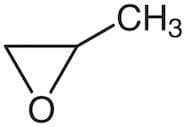
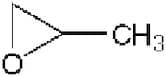
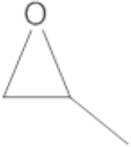
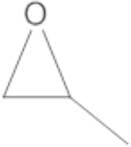
CAS 75-56-9
:(±)-Oxyde de propylène
Description :
(±)-Oxyde de propylène, avec le numéro CAS 75-56-9, est un liquide incolore et inflammable avec une odeur caractéristique. C'est un époxyde, un éther cyclique à trois membres, ce qui le rend hautement réactif, en particulier avec les nucléophiles. Ce composé est principalement utilisé comme intermédiaire dans la production de polyols de polyéther pour les mousses de polyuréthane, ainsi que dans la synthèse de divers produits chimiques. Sa formule moléculaire est C3H6O, et il a un point d'ébullition relativement bas, ce qui contribue à sa volatilité. Le composé présente à la fois des caractéristiques polaires et non polaires en raison de la présence de l'oxygène de l'éther, ce qui lui permet de se dissoudre dans une variété de solvants. De plus, (±)-Oxyde de propylène est connu pour ses risques potentiels pour la santé, y compris l'irritation de la peau, des yeux et du système respiratoire, et il est classé comme un cancérogène humain possible. Une manipulation appropriée et des précautions de sécurité sont essentielles lors de la manipulation de cette substance dans des environnements industriels et de laboratoire.
Formule :C3H6O
InChI :InChI=1/C3H6O/c1-3-2-4-3/h3H,2H2,1H3
Code InChI :InChIKey=GOOHAUXETOMSMM-UHFFFAOYSA-N
SMILES :CC1CO1
Synonymes :- (.+-.)-2-Methyloxirane
- (R,S)-2-Methyl-oxirane
- 1,2-Epossipropano
- 1,2-Epoxipropano
- 1,2-Epoxy-Propan
- 1,2-Epoxypropan
- 1,2-Epoxypropane
- 1,2-Propylene oxide
- 1,2-エポキシプロパン
- 2,3-Epoxypropane
- 2-Methyloxiran
- <span class="text-smallcaps">DL</span>-1,2-Epoxypropane
- AD 6 (suspending agent)
- Ad 6
- Chemogas NV
- DL-1,2-Epoxypropane
- Epihydrin
- Epossipropano, 1,2-
- Epoxipropano, 1,2-
- Epoxypropan, 1,2-
- Epoxypropane
- Époxypropane, 1,2-
- Methyl ethylene oxide
- Methyl oxirane
- Methyloxacyclopropane
- Methyloxiran
- Methyloxirane
- Methyloxiranne
- Metiloxirano
- Ossido di Propilene
- Oxirane, 2-methyl-
- Oxirane, methyl-
- Oxypropylene
- Óxido de propileno
- Propane, 1,2-Epoxy-
- Propene oxide
- Propozone
- Propylene epoxide
- Propyleneoxide
- Propylenoxid
- Propylène, oxyde de
- dl-Propylene oxide
- rac-Propylene oxide
- プロピレンオキシド
- Propylene oxide
- DL-methyloxirane
- caswellno713a
- epoxy-propan
- epapesticidechemicalcode042501
- PO
- ai3-07541
- 3-Methyl-1,2-epoxypropane
- Voir plus de synonymes
Trier par
Degré de pureté (%)
0
100
|
0
|
50
|
90
|
95
|
100
7 produits concernés.
Propylene Oxide
CAS :Formule :C3H6ODegré de pureté :>99.0%(GC)Couleur et forme :Colorless to Almost colorless clear liquidMasse moléculaire :58.08(±)-Propylene oxide, >99%
CAS :Propylene oxide is used as a precursor in the production of polyether polyols, which is utilized for making polyurethane plastics, polypropylene glycols, propylene glycol ethers and propylene carbonate. It is involved in the preparation of biological samples for electron microscopy. It plays a vitaFormule :C3H6ODegré de pureté :99%Couleur et forme :Liquid, ColorlessMasse moléculaire :58.08Propylene Oxide
CAS :Methyloxirane (propylene oxide)Formule :C3H6OCouleur et forme :Colorless LiquidMasse moléculaire :58.04186(±)-Propylene Oxide
CAS :Produit contrôléStability Volatile
Applications (±)-Propylene Oxide is a carcinogenic substance to rats and potentially humans (1). (±)-Propylene oxide also has the ability to self-polymerize at room temperature in the presence of powdered potassium hydroxide (2). (±)-Propylene oxide is used in industry for fumigation in the food industry, inducing the formation of persistent toxic chlorohydrins. Drinking water contaminant candidate list 3 (CCL 3) compound as per United States Environmental Protection Agency (EPA), environmental, and food contaminants.
E3
References 1. Dunkelberg, H. et al.: Brit. J. Cancer. 1982 Dec;46(6):924-33.2. St. Pierre, L. et al.: J. Am. Chem. Soc. 1956 78 (14), pp 3432–3436Formule :C3H6OCouleur et forme :ColourlessMasse moléculaire :58.08