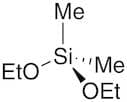
CAS 78-62-6
:Diméthyldiéthoxysilane
- Cg-N 222
- Diaethoxy-Dimethyl-Silan
- Diethoxy(dimethyl)silan
- Diethoxy(dimethyl)silane
- Dietoxi(Dimetil)Silano
- Dimethyl diethoxy silicane
- Dimethyldiethoxylsilane
- Dimethyldiethoxysilane
- Dimethylsilicondiethoxide
- Dmdes
- Dp 322
- Kbe 22
- Ls 1370
- Nsc 77085
- Silane, Dimethyldiethoxy-
- Silane, diethoxydimethyl-
- Sz 6078
- Tsl 8122
- Voir plus de synonymes
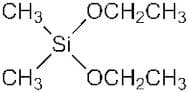
Diethoxydimethylsilane, 97%
CAS :Diethoxydimethylsilane is useful for blocking hydroxyl and amino groups in organic synthesis reactions. This silylating step allows subsequent reactions to be carried out which would be adversely affected by the presence of active hydrogen in the hydroxyl or amine groups. Following the reaction stepFormule :C6H16O2SiDegré de pureté :97%Couleur et forme :Liquid, Clear colorless to pale yellowMasse moléculaire :148.28Diethoxydimethylsilane
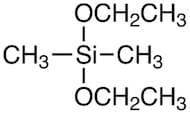
CAS :Formule :C6H16O2SiDegré de pureté :>98.0%(GC)Couleur et forme :Colorless to Almost colorless clear liquidMasse moléculaire :148.28Dimethyldiethoxysilane
CAS :S07125 - Dimethyldiethoxysilane
Formule :C6H16O2SiDegré de pureté :>98.0%(GC)Couleur et forme :Liquid, ClearMasse moléculaire :148.277Bis(ethoxy)dimethylsilane
CAS :Bis(ethoxy)dimethylsilaneFormule :C6H16O2SiDegré de pureté :≥95%Couleur et forme : clear. almost colourless liquidMasse moléculaire :148.28g/molDIMETHYLDIETHOXYSILANE, 98%
CAS :Alkyl Silane - Conventional Surface Bonding
Aliphatic, fluorinated aliphatic or substituted aromatic hydrocarbon substituents are the hydrophobic entities which enable silanes to induce surface hydrophobicity. The organic substitution of the silane must be non-polar. The hydrophobic effect of the organic substitution can be related to the free energy of transfer of hydrocarbon molecules from an aqueous phase to a homogeneous hydrocarbon phase. A successful hydrophobic coating must eliminate or mitigate hydrogen bonding and shield polar surfaces from interaction with water by creating a non-polar interphase. Although silane and silicone derived coatings are in general the most hydrophobic, they maintain a high degree of permeability to water vapor. This allows coatings to breathe and reduce deterioration at the coating interface associated with entrapped water. Since ions are not transported through non-polar silane and silicone coatings, they offer protection to composite structures ranging from pigmented coatings to rebar reinforced concrete. A selection guide for hydrophobic silanes can be found on pages 22-31 of the Hydrophobicity, Hydrophilicity and Silane Surface Modification brochure.
Dimethyldiethoxysilane; Diethoxydimethylsilane
Viscosity: 0.53 cStVapor pressure, 25 °C: 15 mmΔHcomb: -4,684 kJ/molΔHform: 837 kJ/molΔHvap: 41.0 kJ/molDipole moment: 1.39 debyeVapor pressure, 25 °C: 15 mmCoefficient of thermal expansion: 1.3 x 10⁻³Hydrophobic surface treatment and release agentDialkoxy silaneFormule :C6H16O2SiDegré de pureté :98%Couleur et forme :Colorless To Slightly Yellow LiquidMasse moléculaire :148.28Dimethyldiethoxysilane, 97%
CAS :Dimethyldiethoxysilane, 97%
Formule :(CH3)2Si(OC2H5)2Degré de pureté :97%Couleur et forme :colorless liq.Masse moléculaire :148.30