CAS 83-86-3
:Acide phytique
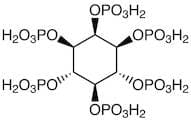
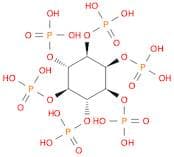
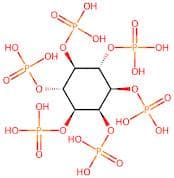
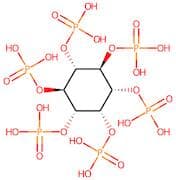
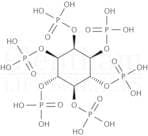
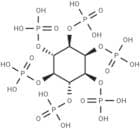
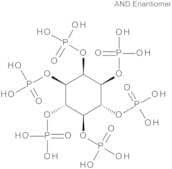
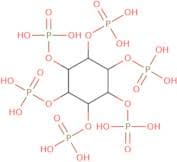
- (1R,2S,3r,4R,5S,6s)-cyclohexane-1,2,3,4,5,6-hexayl hexakis(phosphate)
- Acide Fytique
- Acide phytique
- Acido Fitico
- Alkalovert
- D-myo-Inositol-1,2,3,4,5,6-hexaphosphate
- Dermofeel PA 3
- Exfoderm
- Exfoderm Forte
- Fytinsaure
- IP6
- IP<sub>6</sub>
- Inositol 1,2,3,4,5,6-hexakisphosphate
- Inositol Hexaphosphate
- Inositol hexakis(phosphate)
- Inositol hexaphosphoric acid, 40-50 wt% aqueous solution
- Inositol, hexakis(dihydrogen phosphate), myo-
- Inositol-hexaphosphoric acid
- InsP6
- InsP<sub>6</sub>
- Ip 6J
- Myo-inositol hexaphosphate
- Phyliance
- Phytic acid
- RP 3000 (rust inhibitor)
- Rp 3000
- WHL (depressant)
- meso-Inositol hexaphosphate
- myo-Inositol hexakis(phosphate)
- myo-Inositol hexakisphosphate
- myo-Inositol, 1,2,3,4,5,6-hexakis(dihydrogen phosphate)
- myo-Inositol, hexakis(dihydrogen phosphate)
- Voir plus de synonymes
Phytic Acid (ca. 50% in Water, ca. 1.1mol/L)
CAS :Formule :C6H18O24P6Couleur et forme :Very Pale Yellow - Reddish Yellow LiquidMasse moléculaire :660.03myo-Inositol, 1,2,3,4,5,6-hexakis(dihydrogen phosphate)
CAS :Formule :C6H18O24P6Degré de pureté :%Couleur et forme :LiquidMasse moléculaire :660.0353Phytic acid, 50% (w/w) in water
CAS :Formule :C6H18O24P6Degré de pureté :(w/w) 45.0 - 55.0 % (phytic acid)Couleur et forme :Clear, colourless to yellow-brown solutionMasse moléculaire :660.04Inositol hexaphosphoric acid
CAS :Inositol hexaphosphoric acidDegré de pureté :70% in waterCouleur et forme :LiquidMasse moléculaire :660.04g/molPhytic acid, sodium salt (technical)
CAS :Formule :C6H18O24P6·xNa·yH2ODegré de pureté :≥ 85.0%Couleur et forme :White to off-white powderMasse moléculaire :660.04 (free acid)Phytic acid
CAS :Formule :C6H18O24P6Degré de pureté :≥ 90.0%Couleur et forme :Clear, colourless to yellow-brown solutionMasse moléculaire :660.04Phytic acid
CAS :Phytic acid (Fytic Acid) is a complexing agent for removal of traces of heavy metal ions. It acts also as a hypocalcemic agent.Formule :C6H18O24P6Degré de pureté :99.89%Couleur et forme :SolidMasse moléculaire :660.04Phytic Acid (Technical Grade)
CAS :Applications The principal storage form of phosphorus in many plant tissues, especially bran and seeds. It has antioxidant effect as well as neuroprotective effect by chelating iron. Inositol hexakisphosphate kinase type 2 (InsP6K2), which converts phytic acid to inositol pyrophosphate diphosphoinositol pentakisphosphate, is believed to induce pathogenesis of Huntington disease (HD).
Not a dangerous good if item is equal to or less than 1g/ml and there is less than 100g/ml in the package
References Nagata, E. et al.: J. Biol. Chem., 286, 26680 (2011); Sompong, U. et al.: Euphytica, 171, 389 (2010); Xu, Q. et al.: Toxicol., 245, 101 (2008);Formule :C6H18O24P6Couleur et forme :Single SolutionMasse moléculaire :660.04Phytic acid
CAS :Chelator of multivalent metal ions; food perservative; antioxidantFormule :C6H18O24P6Degré de pureté :Min. 95%Couleur et forme :PowderMasse moléculaire :660.04 g/molPhytic acid, 50% aqueous solution
CAS :Phytic acid is a naturally occurring compound that is found in plants. It can be found in grains such as wheat, corn, rice, and oats. Phytic acid has been shown to inhibit the absorption of calcium, magnesium, copper, iron, and zinc from the diet. This may be due to its ability to bind these minerals in the gastrointestinal tract. The binding of these minerals may also lead to an increase in bioavailability of phytates by preventing their absorption from the gut. Phytic acid has been shown to have a number of physiological effects on humans including inhibition of squamous carcinoma growth and autoimmune diseases. It also has been shown to have biological properties that include being an inhibitor for binding with other compounds such as sodium citrate and inositol.
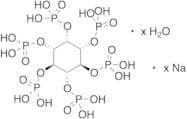
Formule :C6H18O24P6Couleur et forme :Colorless PowderMasse moléculaire :660.04 g/molD-myo-Inositol 1,2,3,4,5,6-Hexakisphosphate Sodium Salt Hydrate, Zea mays (>85% purity)
CAS :Stability Very Hygroscopic
Applications D-myo-Inositol 1,2,3,4,5,6-Hexakisphosphate Sodium Salt Hydrate, Zea mays is a major phosphorus compound in plants that chelates with a variety of di- and trivalent cations. It can be used in biological study in dephytinization of food stuffs by phytase of Geobacillus sp. TF16 immobilized in chitosan and calcium-alginate.
References Sirin, Y., et al.: Int J Food Prop (2017)Formule :C6H18O24P6·Na·H2ODegré de pureté :>85%Couleur et forme :MixtureMasse moléculaire :701.04Phytic Acid Solution (DISCONTINUED)
CAS :Non-aromatic phosphoric esters and their salts, including lactophosphates; their halogenated, sulfonated, nitrated or nitrosated derivatives, nesoiCouleur et forme :Yellow Brown Liquid Viscous