CAS 868-59-7
:L-Cystéine, ester éthylique, chlorhydrate
Description :
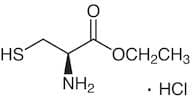
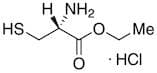
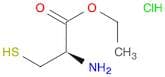
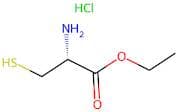
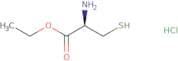
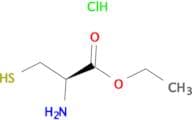
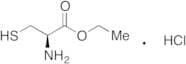
L-Cystéine, ester éthylique, chlorhydrate est un dérivé de l'acide aminé cystéine, caractérisé par la présence d'un groupe ester éthylique et d'une forme de sel chlorhydrate. Ce composé est typiquement une poudre cristalline blanche à blanc cassé, soluble dans l'eau, ce qui améliore sa biodisponibilité. En tant qu'acide aminé contenant un thiol, la L-cystéine joue un rôle crucial dans la synthèse des protéines et agit comme précurseur de l'antioxydant glutathion. La modification de l'ester éthylique peut améliorer son absorption et sa stabilité par rapport à sa forme libre. Dans les systèmes biologiques, la L-cystéine est impliquée dans divers processus métaboliques, y compris la détoxification et la synthèse d'autres biomolécules. La forme chlorhydrate indique que le composé est sous forme de sel, ce qui peut influencer sa solubilité et sa stabilité. L-Cystéine, ester éthylique, chlorhydrate est souvent utilisé dans les compléments nutritionnels et les applications de recherche, en particulier dans les études liées au stress oxydatif et à la santé cellulaire. Comme pour toute substance chimique, des précautions de manipulation et de sécurité appropriées doivent être observées en raison de sa réactivité potentielle et de ses effets biologiques.
Formule :C5H11NO2S·ClH
InChI :InChI=1S/C5H11NO2S.ClH/c1-2-8-5(7)4(6)3-9;/h4,9H,2-3,6H2,1H3;1H/t4-;/m0./s1
Code InChI :InChIKey=JFKJWWJOCJHMGV-WCCKRBBISA-N
SMILES :C([C@H](CS)N)(OCC)=O.Cl
Synonymes :- (2R)-1-ethoxy-1-oxo-3-sulfanylpropan-2-aminium
- (R)-Ethyl 2-amino-3-mercaptopropanoate hydrochloride
- <span class="text-smallcaps">L</span>-Cysteine, ethyl ester, hydrochloride
- <span class="text-smallcaps">L</span>-Cysteine, ethyl ester, hydrochloride (1:1)
- Cystanin
- Cystein Ethylester Hydrochloride
- Cysteine, ethyl ester, hydrochloride, <span class="text-smallcaps">L</span>-
- Cysteinmethylesterhydrochloride,98%
- Ethyl <span class="text-smallcaps">L</span>-cysteinate hydrochloride
- Ethyl Cysteinate
- Ethyl Cysteinate Hydrochloride
- H-Cys-OEt.HCl
- H-Cys-OEt・HCl
- L-Cysteine Ethyl Ester HCl
- NSC 117387
- NSC 519837
- Cysteine, ethyl ester, hydrochloride, L-
- L-Cysteine, ethyl ester, hydrochloride
- Voir plus de synonymes
Trier par
Degré de pureté (%)
0
100
|
0
|
50
|
90
|
95
|
100
9 produits concernés.
L-Cysteine Ethyl Ester Hydrochloride
CAS :Formule :C5H11NO2S·HClDegré de pureté :>98.0%(T)Couleur et forme :White to Almost white powder to crystalineMasse moléculaire :185.67L-Cysteine ethyl ester hydrochloride, 98+%
CAS :L-Cysteine ethyl ester hydrochloride is widely used in food additive, cosmetic, pharmaceutical area. This Thermo Scientific Chemicals brand product was originally part of the Alfa Aesar product portfolio. Some documentation and label information may refer to the legacy brand. The original Alfa AesarFormule :C5H12ClNO2SDegré de pureté :98+%Couleur et forme :Crystalline powder or powder and/or chunks or lumps, WhiteMasse moléculaire :185.67L-Cysteine ethyl ester hydrochloride, 98%
CAS :L-Cysteine ethyl ester hydrochloride, 98%
Formule :HSCH2CH(NH2)COOC2H5HClDegré de pureté :98%Couleur et forme :white solidMasse moléculaire :185.67L-Cysteine ethyl ester hydrochloride
CAS :Formule :C5H12ClNO2SDegré de pureté :97%Couleur et forme :SolidMasse moléculaire :185.6723L-Cysteine ethyl ester hydrochloride
CAS :Formule :C5H11NO2S·HClDegré de pureté :(Titration) 98.0 - 102.0 %Couleur et forme :White powderMasse moléculaire :185.67L-Cysteine ethyl ester hydrochloride
CAS :L-Cysteine ethyl ester hydrochlorideFormule :C5H11NO2S·ClHDegré de pureté :98%Couleur et forme : white crytalline solidMasse moléculaire :185.67g/molL-Cysteine ethyl ester hydrochloride
CAS :L-Cysteine ethyl ester HCl is a disulfide bond that is used in the synthesis of proteins. It is also used to prevent hair loss and to treat baldness. L-Cysteine ethyl ester HCl has potent antitumor activity, which may be due to its ability to react with nucleophilic substitutions. In addition, L-Cysteine ethyl ester HCl can induce apoptosis by binding to the apoptosis protein. The reaction mechanism is not well understood but it may involve hydroxide ion and organometallic complexes. L-Cysteine ethyl ester HCl is soluble in water at neutral pH and poorly soluble in ethanol. It hydrolyzes in the presence of acid or base, forming trifluoroacetic acid or sodium hydroxide solution respectively.Formule :C5H11NO2S•HClDegré de pureté :Min. 95%Couleur et forme :PowderMasse moléculaire :185.67 g/molH-Cys-OEt.HCl
CAS :M03085 - H-Cys-OEt.HCl
Formule :C5H12ClNO2SDegré de pureté :97%Couleur et forme :Solid, White powderMasse moléculaire :185.67L-Cysteine Ethyl Ester Hydrochloride
CAS :Produit contrôléApplications L-Cysteine Ethyl Ester Hydrochloride is the hydrochloride form of ethyl ester of L-Cysteine (C995000) which is a non-essential amino acid commonly used as a precursor in the food and pharmaceutical industries. L-Cysteine Ethyl Ester Hydrochloride is used in the synthesis of several organic compounds including that of diastereoisomers and analogues of tubulysin-U which is a potent anti-mitotic compound.
References Pecivova, P. et al.: J. Sci. Food Agric., 90, 1681 (2010); Hui, N. et al.: Meat Sci. Appl., 74 (2001); Kiviharju, K. et al.: J. Biotechnol., 117, 299 (2005); Shankar, P., et al.: Tetrahedron Lett., 54, 6137 (2013);Formule :C5H11NO2S·HClCouleur et forme :NeatMasse moléculaire :185.67