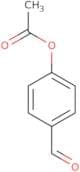
CAS 878-00-2
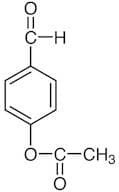
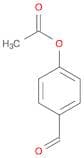
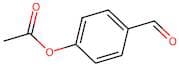
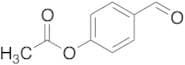
:4-(Acétyloxy)benzaldéhyde
- 4-(Acetyloxy)benzaldehyde
- 4-Formylphenyl acetate
- Acetic acid 4-formylphenyl ester
- Benzaldehyde, 4-(acetyloxy)-
- Benzaldehyde, p-hydroxy-, acetate
- NSC 40537
- p-Acetoxybenzaldehyde
- p-Hydroxybenzaldehyde acetate
- 4-Acetoxybenzaldehyde
4-Acetoxybenzaldehyde
CAS :Formule :C9H8O3Degré de pureté :>98.0%(GC)Couleur et forme :Colorless to Light yellow clear liquidMasse moléculaire :164.164-Formylphenyl Acetate
CAS :Formule :C9H8O3Degré de pureté :97%Couleur et forme :LiquidMasse moléculaire :164.15804-Acetoxybenzaldehyde
CAS :4-AcetoxybenzaldehydeFormule :C9H8O3Degré de pureté :98%Couleur et forme : yellow liquidMasse moléculaire :164.16g/mol4-Acetoxybenzaldehyde
CAS :Formule :C9H8O3Degré de pureté :97%Couleur et forme :ClearMasse moléculaire :164.164-Acetoxybenzaldehdye
CAS :Produit contrôléFormule :C9H8O3Couleur et forme :NeatMasse moléculaire :164.164-Acetoxybenzaldehyde
CAS :4-Acetoxybenzaldehyde is a compound with an acetyl group attached to the benzene ring. It is potentially toxic to cells and has been shown to produce reactive oxygen species (ROS) in v79 cells, which can lead to cell death. The biological properties of 4-acetoxybenzaldehyde are not well understood, but it has been shown to have antioxidant properties in other studies. This compound also reacts with amines, forming acetamides and amides. 4-Acetoxybenzaldehyde is found in environmental pollution as a result of its presence in the atmosphere and its use as a solvent. It was first synthesized by the reaction of coumaric acid and acetyl chloride with formaldehyde at reflux temperature. The compound can be purified by chromatographic methods or mass spectrometric analysis.
Formule :C9H8O3Degré de pureté :Min. 95%Couleur et forme :LiquidMasse moléculaire :164.16 g/mol