CAS 9004-64-2
:Cellulose, éther 2-hydroxypropyle
Description :
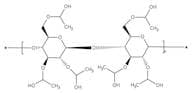
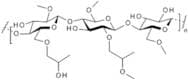
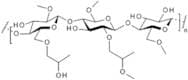
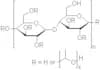
Cellulose, éther 2-hydroxypropyle, communément appelé cellulose hydroxypropyle (HPC), est un dérivé non ionique et soluble dans l'eau de la cellulose. Il est produit par l'étherification de la cellulose avec de l'oxyde de propylène, ce qui entraîne l'introduction de groupes hydroxypropyles dans la structure de la cellulose. Cette modification améliore sa solubilité dans l'eau et les solvants organiques, le rendant utile dans diverses applications. HPC se caractérise par sa capacité à former des solutions claires et visqueuses, ce qui le rend précieux en tant qu'agent épaississant, agent filmogène et stabilisant dans les produits pharmaceutiques, cosmétiques et alimentaires. Il est également connu pour sa biocompatibilité et sa faible toxicité, ce qui élargit encore son applicabilité dans les domaines biomédicaux. De plus, la cellulose hydroxypropyle présente des propriétés thermoplastiques, ce qui permet de la traiter sous diverses formes. Sa stabilité chimique et sa résistance à la dégradation dans des conditions normales contribuent à sa longévité dans les formulations. Dans l'ensemble, HPC est un polymère polyvalent avec une utilité significative dans plusieurs industries en raison de ses propriétés uniques.
Formule :C3H7O
InChI :InChI=1/C36H70O19/c1-19(37)9-45-17-27-29(47-11-21(3)39)31(48-12-22(4)40)34(51-15-25(7)43)36(54-27)55-30-28(18-46-10-20(2)38)53-35(52-16-26(8)44)33(50-14-24(6)42)32(30)49-13-23(5)41/h19-44H,9-18H2,1-8H3/t19?,20?,21?,22?,23?,24?,25?,26?,27?,28?,29?,30-,31?,32?,33?,34?,35?,36+/m1/s1
Synonymes :- AeroWhip
- HPC
- Hpc-E
- Hpc-Ef
- Hpc-Ef-G
- Hpc-H
- Hpc-Hf
- Hpc-L
- Hpc-L-Fp
- Hpc-Le-G
- Hpc-Lg
- Hpc-Ll
- Hpc-Lr
- Hpc-M
- Hpc-Mf
- Hpc-Mg
- Hpc-S
- Hpc-Sfp
- Hpc-Sl
- Hpc-Ssl
- Hpc-Ssl-Sfp
- Hydroxypropylcellulose
- Hyprolose
- Klucel
- L-Hpc
- Lacrisert
- Leogard
- O-(2-Hydroxypropyl)cellulose
- O-(Hydroxypropyl)cellulose
- Hydroxypropyl cellulose
- Cellulose hydroxypropyl ether
- Oxypropylated cellulose
- Hydroxypropyl ether of cellulose
- 1-[(5R)-3,4-bis(2-hydroxypropoxy)-6-(2-hydroxypropoxymethyl)-5-[(2S)-3,4,5-tris(2-hydroxypropoxy)-6-(2-hydroxypropoxymethyl)tetrahydropyran-2-yl]oxy-tetrahydropyran-2-yl]oxypropan-2-ol
- Hydroxypropyl cellulose, Average M.W. 100.000
- Cellulose, 2-hydroxypropyl ether
- Hydroxypropyl Cellulose (6-10mPa.s, 2% in Water at 20deg C)
- (HYDROXYPROPYL)CELLULOSE STANDARD 15'000
- HYDROXYPROPYLCELLULOSE,150-400CPS,NF
- Hydroxypropyl cellulose USP
- HYDROXYPROPYL CELLULOSE LOW-SUBSTITUTED
- syntheticvegetablegums
- low substituted hydroxypropyl cellulose(LH21)
- Hydroxypropyl Cellulose (500 mg)
- HYDROXYPROPYL CELLULOSE 6-10.0
- HYDROXYPROPYL CELLULOSE, 1000-4000 MPAS
- Hydroxypropyl Cellulose (1,000-4,000mPa.s, 2% in Water at 20deg C)
- cellulosehydroxypropylether
- HYDROXYPROPYL CELLULOSE, 150-400 MPAS
- HYDROXYPROPYL CELLULOSE, M.W. 1,000,000
- HYDROXYPROPYL CELLULOSE, AVERAGE MW. CA. 80,000
- hydroxypropyletherofcellulose
- Hydroxypropyl cellulose average Mw ~80,000, average Mn ~10,000, powder, 20 Mesh particle size (99% through)
- Hydroxypropyl Cellulose (200 mg)
- HPC, hydroxypropyl cellulose
- pm50(polymer)
- HYDROXYPROPYL CELLULOSE, 3-6CPS
- (HYDROXYPROPYL)CELLULOSE STANDARD 50'000
- HYDROXYPROPYL CELLULOSE, 3-6CPS: (2% IN WATER AT 20C)
- oxypropylatedcellulose
- HYDROXYPROPYLCELLULOSE,4,000-6,500CPS,NF
- HYDROXYPROPYL CELLULOSE, M.W. 370,000
- HYDROXYPROPYL CELLULOSE 2-2.9
- synthetic
- Hydroxypropyl cellulose, Average M.W. 100.000 250GR
- HYDROXYPROPYLCELLULOSE,75-100CPS,NF
- (HYDROXYPROPYL)CELLULOSE STANDARD 35'000
- HYDROXYPROPYL CELLULOSE, 6-10 MPAS
- Hydroxypropyl Cellulose (3-6mPa.s, 2% in Water at 20deg C)
- HYDROXYPROPYLCELLULOSE, M.W.60,000
- (HYDROXYPROPYL)CELLULOSE STANDARD 25'000
- (2% IN WATER AT 20)
- (HYDROXYPROPYL)CELLULOSE STANDARD 30'000
- Hydroxypropyl cellulose, Average M.W. 100.000 100GR
- Hydroxypropyl cellulose average Mw ~370,000, powder, 20 Mesh particle size (99% through)
- 2-Hydroxypropyl cellulose
- (HYDROXYPROPYL)CELLULOSE STANDARD 10'000
- Hydroxypropyl cellulose average Mw ~100,000, powder, 20 Mesh particle size (99% through)
- pm50
- L-Hydroxypropylcellulose
- HYDROXYPROPYL CELLULOSE, M.W. 100,000
- Hydroxypropyl Cellulose (150-400mPa.s, 2% in Water at 20deg C)
- Low-Substituted Hydroxypropyl cellulose
- Hydroxypropyl cellulose average Mw ~1,000,000, powder, 20 mesh particle size (99% through)
- (HYDROXYPROPYL)CELLULOSE STANDARD 20'000
- Ve(VitaminEAcetateOil
- hydroxypropyl
- HYDROXYPROPYL CELLULOSE 3-5.9
- HYDROXYPROPYL CELLULOSE, 3-5.9 MPAS
- Voir plus de synonymes
Trier par
Degré de pureté (%)
0
100
|
0
|
50
|
90
|
95
|
100
Hydroxypropyl Cellulose (1000-4000mPa·s, 2% in Water at 20°C)
CAS :Couleur et forme :White to Almost white powder to crystalHydroxypropyl Cellulose (150-400mPa·s, 2% in Water at 20°C)
CAS :Couleur et forme :White to Almost white powder to crystalHydroxypropyl Cellulose (6-10mPa·s, 2% in Water at 20°C)
CAS :Couleur et forme :White to Almost white powder to crystalHydroxypropyl Cellulose (3-6mPa·s, 2% in Water at 20°C)
CAS :Couleur et forme :White to Almost white powder to crystalHydroxypropyl cellulose, M.W. 100,000
CAS :Thickener, binder, and emulsifierCouleur et forme :Powder, White to off-whiteLow-substituted Hydroxypropyl Cellulose
CAS :Cellulose ethers,nesoiFormule :C11H15NO3Couleur et forme :White Off-White PowderMasse moléculaire :209.2417Hydroxypropyl Cellulose
CAS :Cellulose ethers,nesoiFormule :C3H8O2·xUnspecifiedCouleur et forme :White Cream Powder GranularMasse moléculaire :209.2417Hydroxypropyl cellulose, low-substituted
CAS :Couleur et forme :White to off-white powderMasse moléculaire :-Hydroxypropyl Cellulose
CAS :Hydroxypropyl cellulose (HPC), soluble in water and organics, serves as a food additive and DNA separation aid.Formule :C12H20N2Degré de pureté :98%Couleur et forme :SolidMasse moléculaire :192.306Hydroxypropyl Cellulose
CAS :Produit contrôléApplications Hydroxypropyl Cellulose is used in the synthesis of nanoparticle carriers for drug delivery.
References Watanabe, Y. et al.: Biol. Pharm. Bull., 18, 1308 (1995); Ober, C. et al.: J. Polym. Sci., 23, 103 (1985); Lok, K. et al.: Can. J. Chem., 63, 209 (1985);Formule :C6H8N2O5Couleur et forme :NeatMasse moléculaire :0.00Hydroxypropyl cellulose - Average MW 50,000 - 1250,000
CAS :In water, hydroxypropyl cellulose forms liquid crystals with many mesophases depending on concentration. These mesophases include isotropic, anisotropic, nematic and cholesteric, the latter resulting in many colors such as violet, green and red. Pharmaceutical applications include treatments for medical conditions such as dry eye syndrome (keratoconjunctivitis sicca), recurrent corneal erosions, decreased corneal sensitivity, exposure and neuroparalytic keratitis. It is also used as a binder in tablets. Hydroxypropylcellulose is also used as a thickener, a binder and emulsion stabiliser in foods with E number E463. HPC is used as a support matrix for DNA separations by capillary and microchip electrophoresis.Degré de pureté :Min. 95%Couleur et forme :Clear LiquidHydroxypropyl cellulose - Average MW 370,000
CAS :In water, hydroxypropyl cellulose forms liquid crystals with many mesophases depending on concentration. These mesophases include isotropic, anisotropic, nematic and cholesteric, the latter resulting in many colors such as violet, green and red. Pharmaceutical applications include treatments for medical conditions such as dry eye syndrome (keratoconjunctivitis sicca), recurrent corneal erosions, decreased corneal sensitivity, exposure and neuroparalytic keratitis. It is also used as a binder in tablets. Hydroxypropylcellulose is also used as a thickener, a binder and emulsion stabiliser in foods with E number E463. HPC is used as a support matrix for DNA separations by capillary and microchip electrophoresis.Degré de pureté :Min. 95%Couleur et forme :Powder