CAS 9005-25-8
:Amidon
Description :
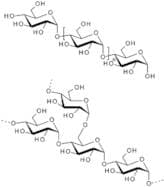
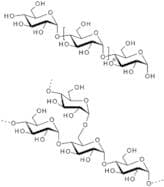
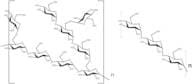
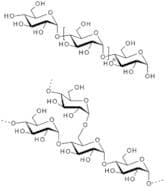
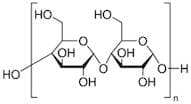
Amidon, avec le numéro CAS 9005-25-8, est un polysaccharide composé de nombreuses unités de glucose liées par des liaisons glycosidiques. Il est principalement produit par les plantes comme moyen de stockage d'énergie et se trouve en abondance dans des sources telles que les pommes de terre, le maïs et le blé. Amidon existe sous deux formes principales : l'amylose, qui est typiquement linéaire et hélicoïdale, et l'amylopectine, qui est ramifiée. Cette variation structurelle influence ses propriétés physiques, telles que la solubilité et le comportement de gélification. Amidon est une poudre blanche et inodore qui est insoluble dans l'eau froide, mais peut former un gel lorsqu'elle est chauffée dans l'eau, ce qui la rend utile en cuisine et dans le traitement des aliments. Elle sert d'agent épaississant, de stabilisant et de texturisant dans divers produits alimentaires. De plus, Amidon est utilisé dans la production de biocarburants, de plastiques biodégradables et de produits pharmaceutiques. Sa digestibilité varie, certaines formes étant rapidement décomposées par des enzymes, tandis que d'autres sont résistantes, contribuant aux fibres alimentaires. Dans l'ensemble, Amidon est un glucide polyvalent et essentiel dans les applications alimentaires et industrielles.
Formule :Unspecified
Synonymes :- 1401B
- 75A
- AccuGel
- Almidon
- Alpha-Starch
- Amaizow13
- Amicoa
- Amidon
- Amidulin
- Amigel
- Amilofaks
- Amylogel
- Amylogum
- Amylomaizevii
- Amylum
- Amyral
- Aquapel(Polysaccharide)
- Argobrandcornstarch
- Asagao
- Atomyl
- C*Gel
- C<sup>*</sup>Gel
- Claro5591
- Clearjel
- Collamil
- Cornstarch
- Cpc3005
- Creamgel
- Crystalean
- Dexyace
- Dunamyl
- Eco-Maize
- Emes-Ef
- Envirofil
- Era-Tab
- Eurylon
- Excelsior
- F-Smash
- Filter-Check
- Finesnow
- HaemoCer
- HiMaize
- Hitex
- Hwangmi
- Hylon
- Impermex
- J-Spd
- Jpcs-W
- Kiyou
- Kuroba
- Luremild
- MSPrebiotic
- Maizena
- Maranta
- Matsunorin
- Melogel
- Melojel
- Meluna
- Merigel
- MiraQuick
- Miyabinori
- Mogul
- Momiji
- Mxpp
- Mxppj
- Nabond
- Nkl-L
- Novation
- Novelose
- Octie
- Oilcure
- Optagrade
- PCS
- Permalose
- Pince-Ace
- Pinebrand
- Remyline
- Renatur
- Rheotack
- Roadster
- Ruuamairudo
- SDU
- SF-α
- Sago
- Sakura
- Sepistab
- Soft-Set
- Solonace
- St-C
- Staerken
- Starch
- Starches
- Starke
- Supergell
- TPS
- Tanpopo
- Tapioca
- Tapon
- Trogum
- Ultra-sperse
- W-Gum
- Waxylis
- Yamato-nori
- Yoki
- Zam-X
- α-Starch
- Maize Starch
- Arrowroot starch
- Pregelatine starch
- Voir plus de synonymes
Trier par
Degré de pureté (%)
0
100
|
0
|
50
|
90
|
95
|
100
8 produits concernés.
Starch, powder, from potato
CAS :Formule :(C6H10O5)nCouleur et forme :White or off-white powderMasse moléculaire :-Starch (Smithies); for electrophoresis
CAS :Formule :(C6H10O5)nCouleur et forme :White powderMasse moléculaire :(162.14)nCorn starch
CAS :Starch is a two component polysaccharide mixture of amylose and amylopectin. Amylose is a linear polysaccharide of α (1,4)-linked glucose residues and averages 20 to 30% of the total in most native starches. Amylopectin is a highly branced glucan containing both a (1,4) and a (1,6) linkages. The number of glucose residues in a single starch molecule can vary from five hundred to several hundred thousand, depending on the type of starch. Starch is the major storage form of energy in plants, just as glycogen is the storage form of energy for animals. The plant directs the starch molecules to the amyloplasts, where they are deposited to form granules. Thus, both in plants and in the extracted concentrate, starch exists as granules varying in diameter from 2 to 130 μm.Degré de pureté :Min. 95%Couleur et forme :PowderPregelatinized starch
CAS :Starch is a two component polysaccharide mixture of amylose and amylopectin. Amylose is a linear polysaccharide of α (1,4)-linked glucose residues and averages 20 to 30% of the total in most native starches. Amylopectin is a highly branced glucan containing both a (1,4) and a (1,6) linkages. The number of glucose residues in a single starch molecule can vary from five hundred to several hundred thousand, depending on the type of starch. Starch is the major storage form of energy in plants, just as glycogen is the storage form of energy for animals. The plant directs the starch molecules to the amyloplasts, where they are deposited to form granules. Thus, both in plants and in the extracted concentrate, starch exists as granules varying in diameter from 2 to 130 μm.Degré de pureté :Min. 95%Couleur et forme :PowderStarch from potato
CAS :Starch is an energy storing polysaccharide produced by higher plants and some algae. Pure starch is a white, tasteless and odorless powder that is insoluble in cold water or alcohol. It consists of two types of polysaccharide: the linear and helical amylose (α-1,4-linked glucose) and the branched amylopectin (α-1,4 and α-1,6-linked glucose). Depending on the plant, starch generally contains 20 to 25% amylose and 75 to 80% amylopectin by weight.Couleur et forme :White PowderWheat starch
CAS :Starch is an energy storing polysaccharide produced by higher plants and some algae. Pure starch is a white, tasteless and odorless powder that is insoluble in cold water or alcohol. It consists of two types of polysaccharide: the linear and helical amylose (α-1,4-linked glucose) and the branched amylopectin (α-1,4 and α-1,6-linked glucose). Depending on the plant, starch generally contains 20 to 25% amylose and 75 to 80% amylopectin by weight.Degré de pureté :Min. 95%Couleur et forme :Powder