CAS 9005-79-2
:Glycogène
- Animal starch
- Biosaccharides LS-HG
- Glucogeno
- Glycogene
- Glykogen
- Hepatin
- Liver glycogen
- Liver starch
- Lyoglycogen
- Phytoglycogen
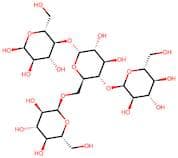
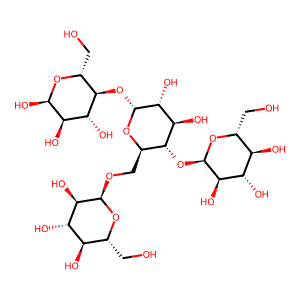
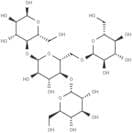
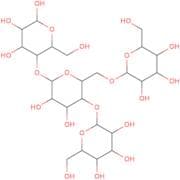
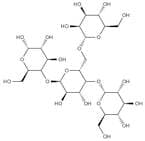
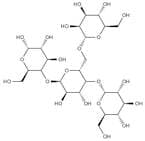
- alpha-D-glucopyranosyl-(1-> 4)-[alpha-D-glucopyranosyl-(1-> 6)]-alpha-D-glucopyranosyl-(1-> 4)-alpha-D-glucopyranose
- Glycogen
- alpha-D-glucopyranose, O-alpha-D-glucopyranosyl-(1-> 4)-O-[alpha-D-glucopyranosyl-(1-> 6)]-O-alpha-D-glucopyranosyl-(1-> 4)-
- alpha-D-glucopyranosyl-(1->4)-[alpha-D-glucopyranosyl-(1->6)]-alpha-D-glucopyranosyl-(1->4)-alpha-D-glucopyranose
- animalstarch
- GLYCOGEN (MAMMALIAN LIVER)
- GLYCOGEN OYSTER
- GLYCOGEN TYPE IX FROM BOVINE LIVER
- GLYCOGEN TYPE III FROM RABBIT LIVER
- GLYCOGEN EX OYSTER
- GLYCOGEN EX RABBIT LIVER
- GLYCOGEN, EX BOVINE LIVER
- GLYCOGEN, BEEF
- liverstarch
- GLYCOGEN TYPE II FROM OYSTER
- D-(+)-GLYCOGEN
- GLYCOGEN (FROM OYSTERS)
- GLYCOGEN FROM CREPIDULA FORNICATA (SLIPPER LIMPET), TYPE VIII
- GLYCOGEN TYPE XI FROM OYSTERS
- GLYCOGEN, D-(+)
- GLYCOGEN OYSTERS
- Voir plus de synonymes
Glycogen
CAS :Formule :C24H42O21Degré de pureté :85%Couleur et forme :SolidMasse moléculaire :666.5777Glycogen, from plant
CAS :Formule :(C6H10O5)nDegré de pureté :≥ 98.0% (dried basis)Couleur et forme :White powderMasse moléculaire :(162.14)nGlycogen
CAS :Formule :(C6H10O5)nCouleur et forme :White, off-white, light-yellow or beige powderMasse moléculaire :-Glycogen, Mussel
CAS :Glycogen, Mussel is a glycolytic intermediate and high-energy phosphate that ACTS as a form of energy storage for humans, animals, fungi and bacteria.Formule :C24H42O21Degré de pureté :98%Couleur et forme :SolidMasse moléculaire :666.57Glycogen - from oyster
CAS :Glycogen is a highly branched polysaccharide of glucose that serves as a form of energy storage in animals and fungi. It is the main storage form of glucose in the body. In humans, glycogen is made and stored primarily in liver and muscle cells and functions as the second most important energy storage molecule to fat which is held in adipose tissue. Glycogen is analogous to starch and has a structure similar to amylopectin, but is more extensively branched and compact than starch. It occurs as granules in the cytosol/cytoplasm in many cell types, and plays an important role in the glucose cycle.
Formule :C24H42O21Couleur et forme :PowderMasse moléculaire :666.58 g/molGlycogen - from bovine liver
CAS :Glycogen is a highly branched polysaccharide of glucose that serves as a form of energy storage in animals and fungi. It is the main storage form of glucose in the body. In humans, glycogen is made and stored primarily in liver and muscle cells and functions as the second most important energy storage molecule to fat which is held in adipose tissue. Glycogen is analogous to starch and has a structure similar to amylopectin, but is more extensively branched and compact than starch. It occurs as granules in the cytosol/cytoplasm in many cell types, and plays an important role in the glucose cycle.Formule :(C6H10O5)nDegré de pureté :Min. 95%Couleur et forme :PowderMasse moléculaire :162.05282Glycogen - from rabbit liver
CAS :Glycogen is a highly branched polysaccharide of glucose that serves as a form of energy storage in animals and fungi. It is the main storage form of glucose in the body. In humans, glycogen is made and stored primarily in liver and muscle cells and functions as the second most important energy storage molecule to fat, which is held in adipose tissue. Glycogen is analogous to starch and has a structure similar to amylopectin, but is more extensively branched and compact than starch. It occurs as granules in the cytosol/cytoplasm in many cell types, and plays an important role in the glucose cycle.Formule :C24H42O21Degré de pureté :Min. 85%Couleur et forme :White PowderMasse moléculaire :666.6 g/molGlycogen, ex oyster
CAS :Please enquire for more information about Glycogen, ex oyster including the price, delivery time and more detailed product information at the technical inquiry form on this pageFormule :(C6H10O5)nGlycogen ex. Oyster extrapure, 85%
CAS :Degré de pureté :min.85%Couleur et forme :White to off-white, PowderGlycogen ex. Oyster for molecular biology, 85%
CAS :Degré de pureté :min. 85%Couleur et forme :White to off-white, PowderGlycogen - from oyster for molecular biology
CAS :Glycogen is a highly branched polysaccharide of glucose that serves as a form of energy storage in animals and fungi. It is the main storage form of glucose in the body. In humans, glycogen is made and stored primarily in liver and muscle cells and functions as the second most important energy storage molecule to fat which is held in adipose tissue. Glycogen is analogous to starch and has a structure similar to amylopectin, but is more extensively branched and compact than starch. It occurs as granules in the cytosol/cytoplasm in many cell types, and plays an important role in the glucose cycle.
Degré de pureté :Min. 95%