Substrats fluorogènes
297 produits trouvés pour "Substrats fluorogènes"
Esculetin-7-β-D-galactopyranoside
Esculetin-7-beta-D-galactopyranoside, also known as 6,7-Dihydroxycoumaryl-7-beta-D-galactopyranoside, is a fluorogenic substrate used in the detection of beta-galactosidase activity. This coumarin derivative, when hydrolyzed, yields esculetin (6,7-dihydroxycoumarin) which, in the presence of iron salts, forms a brown-black complex.Formule :C15H16O9Degré de pureté :Min. 95%Masse moléculaire :340.28 g/mol4-Methylumbelliferyl-beta-D-cellobioside
CAS :Fluorogenic substrate for β-D-Cellobiosidase yielding a blue fluorescent solution upon cleavage.Formule :C22H28O13Degré de pureté :Min. 98.0 Area-%Masse moléculaire :500.46 g/mol4-Methylumbelliferyl phosphate, dilithium salt
CAS :4-Methylumbelliferyl phosphate, dilithium salt is a fluorescent probe that is used for the detection of phosphatases. The fluorescence of this compound is inversely proportional to the activity of phosphatases. This compound can be used as a substrate for phosphatases, which are enzymes that break down phosphate groups from compounds such as ATP, ADP, and AMP. 4-Methylumbelliferyl phosphate, dilithium salt reacts with surface antigens on cells and shows reproducible results when screened with monoclonal antibodies.Formule :C10H7Li2O6PMasse moléculaire :268.02 g/molRef: 3D-M-5920
1gÀ demander5gÀ demander250mgÀ demander500mgÀ demander2500mgÀ demander-Unit-ggÀ demander7-((4'-L-Alaninamido)-rac-3'-hydroxybutyloxy) coumarin hydrochloride
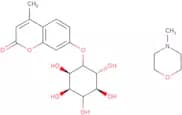
This Clips-O substrate 7-((4'-L-Alaninamido)-rac-3'-hydroxybutyloxy) coumarin allows the detection of single and dual enzymatic activity (L-alanine aminopetidase and oxidation of 4-amino-3-hydroxybutyloxy spacer either enzymatically or by exposure to sodium periodate) with a single substrate resulting in a fluorescent signal. The main virtues of Clips-O substrates are an increased stability towards non-enzymatic hydrolysis that results in a reduced background and high sensitivity.Formule :C16H21ClN2O5Masse moléculaire :356.8 g/mol4-Methylumbelliferyl myo-inositol-1-phosphate, N-methyl-morpholine salt
CAS :Fluorogenic substrate for phosphatidylinositol-specific phospholipase C. Isolation and identification of Listeria monocytogenes, bacteria of the Bacillus cereus group, yeasts and molds. See also B-7404.Formule :C21H30NO12PDegré de pureté :Min. 98.0 Area-%Masse moléculaire :519.45 g/molGlutaryl-glycyl-L-arginine 7-amido-4-methylcoumarin hydrochloride
CAS :Glutaryl-glycyl-L-arginine 7-amido-4-methylcoumarin hydrochloride is a chromogenic substrate that can be used in the detection of enzymes and other proteins. It is a fluorogenic substrate that can be used in chemiluminescence to detect and measure free radicals. Glutaryl-glycyl-L-arginine 7-amido-4-methylcoumarin hydrochloride is stable at pH 7, and has a high purity with a CAS number of 103213-40-7. This product is suitable for use as an enzyme substrate or ligand, as well as for staining and diagnostics.Formule :C23H31ClN6O7Masse moléculaire :538.98 g/molRef: 3D-G-3950
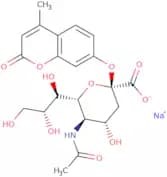
1gÀ demander25mgÀ demander100mgÀ demander250mgÀ demander500mgÀ demander-Unit-ggÀ demander2'-(4-Methylumbelliferyl)-alpha-D-N-acetylneuraminic acid, sodium salt
CAS :4-Methylumbelliferyl N-acetyl-a-D-neuraminic acid sodium salt (4-MUNANA) is a fluorogenic substrate of neuraminidase. 4-Methylumbelliferone is released from 4-MUNANA by neuraminidase in the assay and can be detected fluorometrically with excitation at 365-380 nm and emission at 445-454 nm. It can also be used for fluorescent staining of sialidases in PAGE.Formule :C21H24NNaO11Degré de pureté :Min. 98 Area-%Masse moléculaire :489.42 g/mol4-Methylumbelliferyl-α-D-mannopyranoside
CAS :4-Methylumbelliferyl alpha-D-mannopyranoside (4-MU-a-D-Man) is a fluorogenic substrate used in activity assays for alpha-mannosidase. When it is hydrolyzed by alpha-mannosidase, it produces a fluorescent compound, 4-methylumbelliferone (4-MU). 4-MU-a-D-Man is often used in medical research to monitor the activity of alpha-mannosidase, which is important in lysosomal storage diseases. In addition, 4-Methylumbelliferyl alpha-D-mannopyranoside has been used to study the the activity of concanavalin A, a lectin that specifically binds to alpha-D-mannopyranosyl and alpha-D-glucopyranosyl residues on various glycoproteins. The use of this fluorogenic enzyme substrate permits study the degree of alpha-D-mannosidic linkage cleavage by the enzyme.Formule :C16H18O8Degré de pureté :Min. 98 Area-%Masse moléculaire :338.32 g/molRef: 3D-M-5730
1gÀ demander5gÀ demander10gÀ demander500mgÀ demander2500mgÀ demander-Unit-ggÀ demander4-Methylumbelliferyl-β-D-glucuronic acid methyl ester, Biosynth Patent: EP 2718458 and US 9127303
4-Methylumbelliferyl-β-D-glucuronic acid methyl ester is a fluorogenic substrate that can be used as a ligand for enzyme activity detection. The substrate reacts with an oxidizing agent to produce the fluorescent product 4-methylumbelliferone, which can then be detected with a sensitive fluorometer. 4-Methylumbelliferyl-β-D-glucuronic acid methyl ester is an alternative to the more commonly used fluorescein in enzyme assays. This product has been shown to be an effective chemiluminescent substrate for the detection of bacteria and fungi in culture media, as well as for food testing.Formule :C17H18O9Degré de pureté :Min. 97.0 Area-%Masse moléculaire :366.32 g/molRef: 3D-M-5709_P00
1gÀ demander5gÀ demander10gÀ demander25gÀ demander2500mgÀ demander-Unit-ggÀ demanderL-Leucine 7-amido-4-methylcoumarin hydrochloride
CAS :Sensitive fluorogenic substrate for leucine aminopeptidase or a broad specificity aminopeptidase like aminopeptidase M that releases a bright blue fluorescent dye, 7-amino-4-methylcoumarin upon enzyme activity (excitation 380nm emission 440nm).Formule :C16H21ClN2O3Degré de pureté :Min. 97.5 Area-%Masse moléculaire :324.81 g/molRef: 3D-L-2800
1gÀ demander100mgÀ demander250mgÀ demander500mgÀ demander2500mgÀ demander-Unit-ggÀ demander4-Methylumbelliferyl-α-L-arabinofuranoside
CAS :4-Methylumbelliferyl-alpha-L-arabinofuranoside is a nucleic acid molecule that has an average diameter of 10 nm. It is used as a tracer in electron microscopy to detect the presence of nucleic acid molecules in cells. This compound is also used to study the interactions between DNA and RNA molecules by labeling the DNA strand with 4-methylumbelliferyl-alpha-L-arabinofuranoside, which contains an alpha-(2,4,6) arabinofuranosyl group. The recombinant expression of this compound can be carried out in corynebacterium glutamicum, and it has a bulk density that ranges from 1.7 to 2.1 g/cm3 and an average particle diameter ranging from 0.5 to 1 micron. It is not soluble in water or alcohol but is soluble in acetone or chloroform.Formule :C15H16O7Degré de pureté :Min. 98 Area-%Masse moléculaire :308.29 g/molRef: 3D-M-5509
1gÀ demander100mgÀ demander250mgÀ demander500mgÀ demander2500mgÀ demander-Unit-ggÀ demander4-Methylumbelliferyl-β-D-glucuronic acid dihydrate
CAS :4-Methylumbelliferyl β-D-glucuronide (MUG) is commonly used as a substrate for detecting β-glucuronidase. MUG is used for identifying E. coli contamination in food, drinking water, clinical samples and for rapid bacterial identification in blood cultures. It is recommended in international normatives (ISO, DIN) as a fluorogenic substrate for detection of E. coli. MUG is also a tool assaying the glucuronidase gene in plants.Formule :C16H20O11Degré de pureté :Min. 98.0 Area-%Masse moléculaire :388.33 g/mol4-Methylumbelliferyl-2-O-(α-L-fucopyranosyl)-β-L-fucopyranoside
4-Methylumbelliferyl-2-O-(alpha-L-fucopyranosyl)-beta-L-fucopyranoside is a fluorogenic substrate for alpha-L-fucosidase. After enzymatic cleaveage, free 4-methylumbelliferone (also known as hymecromone) is released, exhibiting blue fluorescence upon excitation with UV light. The strongest fluorescence of 4-methylumbelliferone requires deprotonation of the hydroxyl group (thus requires alkaline pH), with a maximal fluorescence intensity obtained with excitation at 350 to 370 nm and emission at 440 to 470 nm. The use of 4-methylumbelliferyl-2-O-(alpha-L-fucopyranosyl)-beta-L-fucopyranosideas a substrate for measuring the alpha-L-fucosidase activity is used for diagnosis of fucosidosis (defficiency of L-fucosidase).Degré de pureté :Min. 95%Couleur et forme :White/Off-White SolidMasse moléculaire :468.45 g/mol4-Methylumbelliferyl-alpha-D-galactopyranoside
CAS :Fluorogenic substrate for α-galactosidase yielding a blue fluorescent solution upon cleavage. It is used for species differentiation within the family of Enterobacteriaceae. It is also utilized for the localization of the enzyme in plants.Formule :C16H18O8Degré de pureté :Min. 99.0 Area-%Masse moléculaire :338.32 g/mol4-Methylumbelliferyl-alpha-L-arabinopyranoside
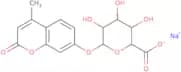
CAS :Fluorogenic substrate for α-L-arabinosidase yielding a blue fluorescent solution upon cleavage.Formule :C15H16O7Degré de pureté :Min. 98.0 Area-%Masse moléculaire :308.29 g/mol4-Methylumbelliferyl-α-L-idopyranosiduronic acid, sodium salt
CAS :4MU-alpha-L-idopyranosiduronic acid is a fluorogenic substrate for alpha-L-iduronidase. Active alpha-L-iduronidase cleaves the MU moiety from the synthetic substrate, which results in release of a fluorescent signal (Ex 360 nm / Em 455 nm). The reaction is stopped by the addition of sodium carbonate. 4MU-alpha-L-idopyranosiduronic acid is used in alpha-L-iduronidase assays in the context of biochemical characterisation of samples from patients affected by lysosomal storage disease mucopolysaccharidosis I (MPS I).Formule :C16H15NaO9Degré de pureté :Min. 98.0 Area-%Masse moléculaire :374.27 g/molRef: 3D-W-204014
10mgÀ demander25mgÀ demander50mgÀ demander100mgÀ demander250mgÀ demander-Unit-ggÀ demander3-Acetylumbelliferyl b-D-glucopyranoside
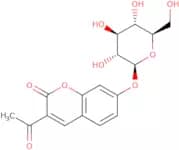
CAS :3-Acetylumbelliferyl beta-D-glucopyranoside is a fluorogenic enzyme substrate for beta-galactosidase-6-phosphatase. It is used in in diagnostic assays such as Gaucher disease.Formule :C17H18O9Degré de pureté :Min. 95%Couleur et forme :PowderMasse moléculaire :366.32 g/mol6'-(Diethylamino)spiro[isobenzofuran-1(3H),9'-[9H]xanthen]-3'-yl b-D-galactopyranoside
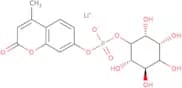
CAS :6'-(Diethylamino)spiro[isobenzofuran-1(3H),9'-[9H]xanthen]-3'-yl b-D-galactopyranoside is a chemiluminescent substrate for the detection of ATP. It reacts with the luciferase enzyme to produce light, which can be detected by a luminometer. 6'-(Diethylamino)spiro[isobenzofuran-1(3H),9'-[9H]xanthen]-3'-yl b-D-galactopyranoside is used in a variety of applications, including diagnostics, food testing, and environmental monitoring.Degré de pureté :Min. 95%Masse moléculaire :535.58 g/mol4-Methylumbelliferyl myo-inositol 1-phosphate lithium salt
CAS :4-Methylumbelliferyl myo-inositol 1-phosphate lithium salt is a fluorogenic substrate that is used in food testing to detect the presence of glucose. It can also be used in environmental testing to measure bacterial activity and as a chromogenic substrate in diagnostic applications. 4-Methylumbelliferyl myo-inositol 1-phosphate lithium salt is also used as an enzyme substrate in the determination of conjugates, ligands, and other substances. 4-Methylumbelliferyl myo-inositol 1-phosphate lithium salt has high purity and high quality, enabling it to be used for chemiluminescence and bioluminescence reactions.Degré de pureté :Min. 95%Masse moléculaire :424.22 g/mol4-Methylumbelliferyl α-D-xylopyranoside
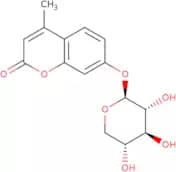
CAS :4-Methylumbelliferyl alpha-D-xylopyranoside is a fluorogenic substrate for alpha-xylosidase. After enzymatic cleaveage, free 4-methylumbelliferone (also known as hymecromone) is released, exhibiting blue fluorescence upon excitation with UV light. The strongest fluorescence of 4-methylumbelliferone requires deprotonation of the hydroxyl group (thus requires alkaline pH), with a maximal fluorescence intensity obtained with excitation at 350 to 370 nm and emission at 440 to 470 nm. The use of 4-methylumbelliferyl alpha-D-xylopyranosideas a substrate for measuring the alpha-xylosidase activity is used for oligosaccharidosis monitoring and other lysosomal storage disorder diagnosis.Formule :C15H16O7Degré de pureté :Min. 98 Area-%Couleur et forme :White PowderMasse moléculaire :308.28 g/molN-Acetyl-3,7-dihydroxyphenoxazine
CAS :N-Acetyl-3,7-dihydroxyphenoxazine is a fluorescent probe, which is synthesized from chemical precursors and used primarily in biochemical research. This compound acts by undergoing a chemical reaction with hydrogen peroxide, resulting in the formation of resorufin, a highly fluorescent compound. The distinctive property of this probe is its capacity to produce a measurable fluorescent signal upon interaction with hydrogen peroxide, making it an invaluable tool for detecting and quantifying this reactive oxygen species.
Formule :C14H11NO4Masse moléculaire :257.24 g/molRef: 3D-J-100008
1gÀ demander5gÀ demander250mgÀ demander500mgÀ demander2500mgÀ demander-Unit-ggÀ demanderResorufin N-acetyl-b-D-galactosamine
Resorufin N-acetyl-b-D-galactosamine is a fluorogenic substrate used as a probe to detect and quantify the activity of N-acetyl-beta-D-galactosaminidase (also known as beta-hexosaminidase or HEX(NAG)). Particularly useful in biomedical research, clinical chemistry, and diagnostics, when the substrate is cleaved, the highly fluorescent resorufin dye is produced that can be detected at approximately 598 nm.Degré de pureté :Min. 95%Couleur et forme :PowderMasse moléculaire :416.38 g/molResorufin-α-D-glucopyranoside
CAS :Please enquire for more information about Resorufin-alpha-D-glucopyranoside including the price, delivery time and more detailed product information at the technical inquiry form on this pageFormule :C18H17NO8Degré de pureté :(Hplc-Ms) Min. 70 Area-%Masse moléculaire :375.33 g/molResorufin-beta-D-galactopyranoside
CAS :Resorufin β-D-galactopyranoside is a non-fluorescent compound and is orange-yellow in color. It is hydrolyzed by the enzyme β-galactosidase (β-Gal) to yield fluorescent resorufin.Formule :C18H17NO8Degré de pureté :Min. 98.0 Area-%Masse moléculaire :375.34 g/mol4-Methylumbelliferone
CAS :4-Methylumbelliferone is a coumarin derivative that inhibits the activity of enzymes such as p-nitrophenyl phosphate oxidase and aminopeptidase. It is used in vitro to study oxidative injury, which plays a role in the pathogenesis of inflammatory diseases, including primary sclerosing cholangitis and bone marrow transplantation. 4-Methylumbelliferone has been shown to induce apoptosis by increasing reactive oxygen species levels and activating toll-like receptor 4 (TLR4). It also has inhibitory effects on osteosarcoma cell proliferation in vitro.Formule :C10H8O3Masse moléculaire :176.17 g/molL-Leucine-PAB-resorufin
CAS :L-Leucine-PAB-resorufin is a substrate for enzymes such as β-glucuronidase, α-glucosidase, and β-galactosidase. It is used in the diagnosis of bacterial infections and the detection of certain bacteria in urine and stool samples. L-Leucine-PAB-resorufin can be used to detect the presence of bacteria that produce β-galactosidase and/or β-glucuronidase by releasing resorufin from the substrate. This reaction produces a blue color in the presence of a fluorogenic substrate like fluorescein diacetate or fluorescein isothiocyanate. L-Leucine-PAB-resorufin is also used to detect bacteria that produce α-glucosidase by releasing fluorescamine from the substrate. This reaction produces a green color in the presence of a chromFormule :C25H25N3O4Degré de pureté :(Hplc-Ms) Min. 70 Area-%Masse moléculaire :431.48 g/molFluorescein-dipalmitoylphosphatidylethanolamine triethylammonium salt
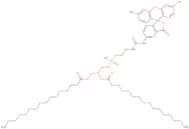
CAS :Fluorescein-dipalmitoylphosphatidylethanolamine triethylammonium salt is a fluorescent phospholipid derivative for phospholipase. This substrate consists of a fluorescein conjugated to DPPE (dipalmitoylphosphatidylethanolamine), a key component of biological membranes. This compound is frequently used in membrane dynamics studies and lipid metabolism research. The fluorescein moiety allows visualization of lipid interactions in model membranes, liposomes, or live-cell imaging applications. The triethylammonium salt form enhances solubility and stability, property that facilitates its use in aqueous and lipid-based environments.
Degré de pureté :Min. 95%Couleur et forme :PowderMasse moléculaire :1,182.53 g/mol4-Methylumbelliferyl phosphate, bis(cyclohexylammonium) salt, trihydrate
CAS :Sensitive fluorogenic substrate for fluorometric and UV-spectrophotometric assays of phosphatases. This may also be used for in-gel assaysFormule :C22H41N2O9PMasse moléculaire :508.55 g/mol4-Methylumbelliferyl nonanoate
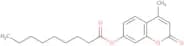
CAS :4-Methylumbelliferyl nonanoate is a fluorogenic substrate for lipase. After enzymatic cleaveage, free 4-methylumbelliferone (also known as hymecromone) is released, exhibiting blue fluorescence upon excitation with UV light. The strongest fluorescence of 4-methylumbelliferone requires deprotonation of the hydroxyl group (thus requires alkaline pH), with a maximal fluorescence intensity obtained with excitation at 350 to 370 nm and emission at 440 to 470 nm. The use of 4-methylumbelliferyl nonanoateas a substrate for measuring the lipase activity is used for the detection of lipase deficiency that could lead to pancreatic insufficiency.Formule :C19H24O4Degré de pureté :Min. 95%Couleur et forme :PowderMasse moléculaire :316.39 g/molResorufin β-D-cellobioside
CAS :Resorufin beta-D-cellobioside is a fluorogenic substrate for the enzyme beta-glucosidase. It is soluble in water and can be used as a chromogenic substrate for beta-galactosidase. Resorufin beta-D-cellobioside is also used as a ligand to study protein interactions, such as those between lectins and glycoproteins. This product is of high purity and quality, with CAS No. 1000404-48-7.Formule :C24H27NO13Degré de pureté :Min. 95 Area-%Masse moléculaire :537.47 g/molRef: 3D-R-2056
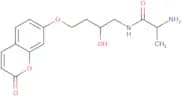
10mgÀ demander25mgÀ demander50mgÀ demander100mgÀ demander250mgÀ demander-Unit-ggÀ demander7-((4'-L-Alaninamido)-rac-3'-hydroxybutyloxy) coumarin
This Clips-O substrate 7-((4'-L-Alaninamido)-rac-3'-hydroxybutyloxy) coumarin allows the detection of single and dual enzymatic activity (L-alanine aminopetidase and oxidation of 4-amino-3-hydroxybutyloxy spacer either enzymatically or by exposure to sodium periodate) with a single substrate resulting in a fluorescent signal. The main virtues of Clips-O substrates are an increased stability towards non-enzymatic hydrolysis that results in a reduced background and high sensitivity.
Formule :C16H20N2O5Degré de pureté :Min. 95%Couleur et forme :PowderMasse moléculaire :320.35 g/mol7-((4'-L-Alaninamido)-rac-3'-hydroxybutyloxy) coumarin hydrochloride
This Clips-O substrate 7-((4'-L-Alaninamido)-rac-3'-hydroxybutyloxy) coumarin allows the detection of single and dual enzymatic activity (L-alanine aminopetidase and oxidation of 4-amino-3-hydroxybutyloxy spacer either enzymatically or by exposure to sodium periodate) with a single substrate resulting in a fluorescent signal. The main virtues of Clips-O substrates are an increased stability towards non-enzymatic hydrolysis that results in a reduced background and high sensitivity.Formule :C16H21ClN2O5Degré de pureté :Min. 95%Couleur et forme :PowderMasse moléculaire :356.8 g/mol4-Methylumbelliferyl-beta-D-glucuronic acid dihydrate
CAS :4-Methylumbelliferyl beta-D-glucuronide (MUG) is commonly used as a substrate for detecting beta-glucuronidase. MUG is used for identifying E. coli contamination in food, drinking water, clinical samples and for rapid bacterial identification in blood cultures. It is recommended in international normatives (ISO, DIN) as a fluorogenic substrate for detection of E. coli. MUG is also a tool assaying the glucuronidase gene in plants.Formule :C16H20O11Degré de pureté :Min. 99 Area-%Masse moléculaire :388.33 g/mol6-Hexadecanoylamino-4-methylumbelliferyl b-D-galactopyranoside - Moscerdam™ biochemical purity
CAS :Hexadecanoylamino-4-methylumbelliferyl b-D-galactopyranoside is a substrate used for the diagnosis of Krabbe disease. Krabbe disease (globoid cell leukodystrophy/ galactosylceramide lipidosis), is a rare and often fatal lysosomal storage disease that results in progressive damage to the nervous system. It is inherited in an autosomal recessive pattern and involves dysfunctional metabolism of sphingolipids (MG44866 b-D-Galactosylsphingosine - Synthetic)Formule :C32H49NO9Degré de pureté :Min. 95 Area-%Couleur et forme :White PowderMasse moléculaire :591.73 g/mol4-Methylumbelliferyl-β-D-GlcNAc-6-phosphocholine
4-Methylumbelliferyl-beta-D-GlcNAc-6-phosphocholine is a fluorogenic substrate for phosphodiesterase. After enzymatic cleaveage, free 4-methylumbelliferone (also known as hymecromone) is released, exhibiting blue fluorescence upon excitation with UV light. The strongest fluorescence of 4-methylumbelliferone requires deprotonation of the hydroxyl group (thus requires alkaline pH), with a maximal fluorescence intensity obtained with excitation at 350 to 370 nm and emission at 440 to 470 nm. The use of 4-methylumbelliferyl-beta-D-GlcNAc-6-phosphocholineas a substrate for measuring the phosphodiesterase activity is used for Niemann-Pick disease diagnostic assays. It is also used for sphingomyelin metabolism disorder screening.Degré de pureté :Min. 95%Masse moléculaire :544.49 g/mol4-Methylumbelliferyl lignocerate
CAS :This botanical is a download for the Floral Database.
Formule :C34H54O4Degré de pureté :Min. 95 Area-%Masse moléculaire :526.81 g/molRef: 3D-M-5720
1gÀ demander5gÀ demander250mgÀ demander500mgÀ demander2500mgÀ demander-Unit-ggÀ demander4-Methylumbelliferyl 6-O-(N-acetylneuraminyl)-b-D-glucopyranoside
4-Methylumbelliferyl 6-O-(N-acetylneuraminyl)-b-D-glucopyranoside is a fluorescent substrate for the enzyme β-D-galactosidase. It is used in the detection of β-D-galactosidase activity in the diagnosis of various diseases, including celiac disease and AIDS. 4-Methylumbelliferyl 6-O-(N-acetylneuraminyl)-b-D-glucopyranoside can also be used as a chromogenic or fluorogenic substrate for chemiluminescent detection of β-D-galactosidase activity. The conjugate with horseradish peroxidase can be used to detect hydrogen peroxide in water samples, such as drinking water, wastewater, and surface waters. 4MUG has been shown to have high purity and is CAS No. 78761–35–4.Degré de pureté :Min. 95%4-Trifluoromethylumbelliferyl b-D-xylopyranoside
4-Trifluoromethylumbelliferyl b-D-xylopyranoside (4TUF) is a fluorescent probe that can be used to monitor the activity of protein kinases. The fluorescence intensity of 4TUF changes in response to the phosphorylation state of the target protein. This probe can be used in computational and experimental investigations of protein kinase signalling pathways, as well as for optimizing drug design.Degré de pureté :Min. 95%4-Methylumbelliferyl beta-D-apiofuranoside
4-Methylumbelliferyl beta-D-apiofuranoside is a fluorescent substrate that is used in the detection of enzyme activity. It is a yellow crystalline powder with a melting point of 132°C and an optical rotation of +27°. 4-Methylumbelliferyl beta-D-apiofuranoside can be used as a conjugate for fluorescence, chemiluminescence, or bioluminescence detection of enzymes such as β-galactosidase, phosphatases, esterases, and peroxidases. It is also used to stain cells and tissues for microscopic analysis. This product has been tested for its effects on the environment and found to have little potential for harm to the environment. 4-Methylumbelliferyl beta-D-apiofuranoside has been shown to be high purity with no significant impurities detected in testing. The chemical has shown high quality characteristics inFormule :C15H16O7Degré de pureté :Min. 95 Area-%Masse moléculaire :308.29 g/molAldol® 355 fluorescence enhancer
CAS :Aldol® 355 fluorescence enhancer is an enhancer of fluorescence signals of the Aldol® fluorogenic substrates. Aldol® 355 fluorescence enhancer allows concentrations of fluorogenic Aldol® substrates in media to reduce up to 6 times. Aldol® 355 fluorescence enhancer can be combined with Aldol® substrates, releasing water-insoluble dyes upon enzymatic cleavage, such as Aldol® 470 range, Aldol® 495 range, Aldol® 518 range, and Aldol®515 range of fluorogenic enzyme substrates.Formule :C39H52N2O2Degré de pureté :Min. 95.0 Area-%Masse moléculaire :580.84 g/mol4-(Trifluoromethyl)umbelliferyl-β-D-cellotrioside
CAS :4-(Trifluoromethyl)umbelliferyl-beta-D-cellotrioside is a fluorogenic substrate for cellulase. After cleavage, the fluorophore 4-(trifluoromethyl)umbelliferone, commonly referred as TFMU, is released, exhibiting a blueish color. 4-(Trifluoromethyl)umbelliferyl-beta-D-cellotrioside is used to study the enzyme kinetics in bacterial cellulose degradation assays as well as in biomass conversion research studies.Formule :C28H35F3O18Degré de pureté :Min. 95%Couleur et forme :White to off-white solid.Masse moléculaire :716.56 g/mol4-Methylumbelliferyl b-L-fucopyranoside
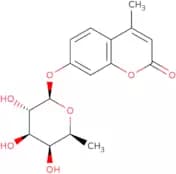
CAS :A MOSCERDAM® substrate targeting the fucosidase enzymeFormule :C16H18O7Degré de pureté :Min. 98 Area-%Couleur et forme :PowderMasse moléculaire :322.31 g/mol4-Methylumbelliferyl dodecanoate
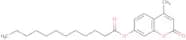
CAS :4-Methylumbelliferyl dodecanoate is a fluorogenic substrate for lipase. After enzymatic cleaveage, free 4-methylumbelliferone (also known as hymecromone) is released, exhibiting blue fluorescence upon excitation with UV light. The strongest fluorescence of 4-methylumbelliferone requires deprotonation of the hydroxyl group (thus requires alkaline pH), with a maximal fluorescence intensity obtained with excitation at 350 to 370 nm and emission at 440 to 470 nm. The use of 4-methylumbelliferyl dodecanoateas a substrate for measuring the lipase activity is used for detecting pancreatic insufficiency in diagnosis assays as well as the screening of lipase deficiency.Formule :C22H30O4Degré de pureté :Min. 95%Couleur et forme :PowderMasse moléculaire :358.47 g/mol4-Methylumbelliferyl a-D-glucosaminide
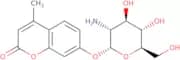
CAS :4-Methylumbelliferyl alpha-D-glucosaminide is a fluorogenic substrate for alpha-N-acetylglucosaminidase. After enzymatic cleaveage, free 4-methylumbelliferone (also known as hymecromone) is released, exhibiting blue fluorescence upon excitation with UV light. The strongest fluorescence of 4-methylumbelliferone requires deprotonation of the hydroxyl group (thus requires alkaline pH), with a maximal fluorescence intensity obtained with excitation at 350 to 370 nm and emission at 440 to 470 nm. The use of 4-methylumbelliferyl alpha-D-glucosaminideas a substrate for measuring the alpha-N-acetylglucosaminidase activity is used for Sanfilippo syndrome B and Mucopolysaccharidosis IIIB (MPS IIIB) diagnosis.Formule :C16H19NO7Degré de pureté :Min. 90 Area-%Couleur et forme :White PowderMasse moléculaire :337.32 g/molL-Alanine-7-amido-4-methylcoumarin hydrochloride
CAS :L-Alanine-7-amido-4-methylcoumarin hydrochloride is a synthetic peptide substrate used as a fluorogenic substrate for alanine aminopeptidase.Formule :C13H14N2O3·HClDegré de pureté :Min. 90%Couleur et forme :PowderMasse moléculaire :282.72 g/mol4-Methylumbelliferyl 2-acetamido-3-O-(b-D-galactopyranosyl)-a-D-galactopyranoside
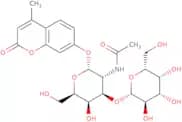
CAS :4-Methylumbelliferyl 2-acetamido-3-O-(beta-D-galactopyranosyl)-alpha-D-galactopyranoside is a fluorogenic substrate for alpha-N-acetylgalactosaminidase. After enzymatic cleaveage, free 4-methylumbelliferone (also known as hymecromone) is released, exhibiting blue fluorescence upon excitation with UV light. The strongest fluorescence of 4-methylumbelliferone requires deprotonation of the hydroxyl group (thus requires alkaline pH), with a maximal fluorescence intensity obtained with excitation at 350 to 370 nm and emission at 440 to 470 nm. The use of 4-methylumbelliferyl 2-acetamido-3-O-(beta-D-galactopyranosyl)-alpha-D-galactopyranosideas a substrate for measuring the alpha-N-acetylgalactosaminidase activity is used for Fabry disease diagnosis and Schindler disease screening.Formule :C24H31NO13Degré de pureté :Min. 95%Couleur et forme :White PowderMasse moléculaire :541.5 g/mol(+)-Biotin 4-amidobenzoic acid sodium salt
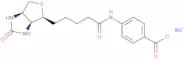
CAS :(+)-Biotin 4-amidobenzoic acid sodium salt, often referred as (+)-biotin PABA, is a fluorogenic substrate used to measure biotinidase activity, especially in newborn screening programs.
Formule :C17H20N3NaO4SDegré de pureté :Min. 95%Couleur et forme :White Slightly Yellow PowderMasse moléculaire :385.41 g/mol4-Methylumbelliferyl a-L-idopyranosiduronic acid sodium salt
CAS :PAIRED PRODUCT AVAILABLE: alpha-L-iduronidase Enzyme, FI179383.
4MU-alpha-L-idopyranosiduronic acid is a fluorogenic substrate for alpha-L-iduronidase. Active alpha-L-iduronidase cleaves the MU moiety from the synthetic substrate, which results in release of a fluorescent signal (Ex 360 nm / Em 455 nm). The reaction is stopped by the addition of sodium carbonate. 4MU-alpha-L-idopyranosiduronic acid is used in alpha-L-iduronidase assays in the context of biochemical characterisation of samples from patients affected by lysosomal storage disease mucopolysaccharidosis I (MPS I).Formule :C16H15NaO9Degré de pureté :Min. 98 Area-%Couleur et forme :White PowderMasse moléculaire :374.27 g/mol4-Methylumbelliferyl palmitate
CAS :4-Methylumbelliferyl palmitate, commonly names as 4-MUP, is a fluorescent probe that binds to lipases, enzymes responsible to assist on the hydrolysis of fats. In diagnosis, 4-MUP is used for screening of lysosomal storage diseases (LSD) caused by a deficiency of a single enzyme involved in the metabolism of glycoproteins, lipids or mucopolysaccharides.
Formule :C26H38O4Degré de pureté :Min. 95%Couleur et forme :White PowderMasse moléculaire :414.58 g/molResorufin b-D-glucuronide sodium salt
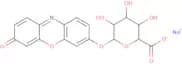
CAS :Resorufin b-D-glucuronide sodium salt is used as a fluorogenic substrate for beta-glucuronidase (GUS) to study drug metabolism.Degré de pureté :Min. 95%Couleur et forme :Brown Orange Red PowderMasse moléculaire :411.29 g/mol







![6'-(Diethylamino)spiro[isobenzofuran-1(3H),9'-[9H]xanthen]-3'-yl b-D-galactopyranoside](/_next/image/?url=https%3A%2Fstatic.cymitquimica.com%2Fproducts%2F3D%2Fthumb-webp%2FED139088.webp&w=3840&q=75)