


Substrats fluorogènes
284 produits trouvés pour "Substrats fluorogènes".
Resorufin N-acetyl-b-D-glucosamine
CAS :Resorufin N-acetyl-b-D-glucosamine is fluorogenic substrate for N-acetyl-beta-D-glucosaminidase (NAG).
Formule :C20H20N2O8Degré de pureté :Min. 98 Area-%Couleur et forme :Orange PowderMasse moléculaire :416.38 g/mol4-Methylumbelliferyl 6-thio-palmitate-b-D-glucopyranoside - Moscerdam™ biochemical purity
CAS :4-Methylumbelliferyl 6-thio-palmitate-b-D-glucopyranoside (Mu-6S-Palm-β-Glc) is a fluorogenic substrate of palmitoyl-protein thioesterase 1 (PPT1), used in the diagnosis of infantile neuronal ceroid lipofuscinosis (INCL). INCL, also known as infantile CLN1 disease, is a rapidly progressing lysosomal storage disorder (LSD), caused by a deficiency of PPT1. Mu-6S-Palm-β-Glc is also used as the substrate in the PPT assay to investigate the retention of lysosomal enzyme activity of bi-functional IgG-PPT1 fusion protein in the delivery across blood-brain barrier.
Formule :C32H48O8SDegré de pureté :Min. 95%Couleur et forme :White PowderMasse moléculaire :592.78 g/molL-Leucine 7-amido-4-methylcoumarin hydrochloride salt
CAS :L-Leucine 7-amido-4-methylcoumarin hydrochloride salt is a synthetic peptide substrate used as a fluorogenic substrate for leucine aminopeptidase.Formule :C16H21ClN2O3Degré de pureté :Min. 98 Area-%Couleur et forme :White PowderMasse moléculaire :324.8 g/mol4-Methylumbelliferyl caprylate
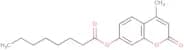
CAS :Used for identification of Salmonella spp. by detection of caprylate esteraseFormule :C18H22O4Degré de pureté :Min. 95%Couleur et forme :White PowderMasse moléculaire :302.36 g/molEthyl umbelliferone-3-carboxylate-α-D-glucopyranoside
Ethyl umbelliferone-3-carboxylate-a-D-glucopyranoside is a fluorogenic substrate used for detecting alpha-glucosidase activity in enzymatic assays. When alpha-glucosidase cleaves , the glycosidic bond, umbelliferone-3-carboxylate is released, which exhibits strong fluorescence. This substrate is commonly utilized in glycobiology research, diagnostic tests, and high-throughput screening of enzyme inhibitors.
Formule :C18H20O10Degré de pureté :Min. 95%Couleur et forme :Off-white to yellow solid.Masse moléculaire :396.35 g/molL-Alanine-7-amido-4-methylcoumarin hydrochloride
CAS :L-Alanine-7-amido-4-methylcoumarin hydrochloride is a synthetic peptide substrate used as a fluorogenic substrate for alanine aminopeptidase.Formule :C13H14N2O3·HClDegré de pureté :Min. 90%Couleur et forme :PowderMasse moléculaire :282.72 g/mol4-Methylumbelliferyl 2-acetamido-2-deoxy-a-D-glucopyranoside
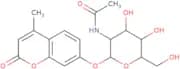
CAS :4-Methylumbelliferyl 2-acetamido-2-deoxy-alpha-D-glucopyranoside is a fluorogenic substrate for alpha-N-acetylglucosaminidase. After enzymatic cleaveage, free 4-methylumbelliferone (also known as hymecromone) is released, exhibiting blue fluorescence upon excitation with UV light. The strongest fluorescence of 4-methylumbelliferone requires deprotonation of the hydroxyl group (thus requires alkaline pH), with a maximal fluorescence intensity obtained with excitation at 350 to 370 nm and emission at 440 to 470 nm. The use of 4-methylumbelliferyl 2-acetamido-2-deoxy-alpha-D-glucopyranosideas a substrate for measuring the alpha-N-acetylglucosaminidase activity is used for Sanfilippo syndrome B screening and mucopolysaccharidosis diagnosis.Formule :C18H21NO8Degré de pureté :Min. 98 Area-%Couleur et forme :PowderMasse moléculaire :379.36 g/mol4-Methylumbelliferyl-N-acetyl-β-D-glucosaminide-6-sulfate, sodium salt
CAS :4-Methylumbelliferyl 2-acetamido-2-deoxy-beta-D-glucopyranoside-6-sulfate sodium salt is a high-quality fluorogenic substrate specifically designed for the detection and quantification of various enzymes, including beta-glucosidases and sulfatases. Upon hydrolysis by the target enzyme, this substrate releases the highly fluorescent 4-methylumbelliferone, allowing for real-time monitoring and accurate measurement of enzyme activities in biochemical assays, diagnostic tests, and research applications. 4-Methylumbelliferyl 2-acetamido-2-deoxy-beta-D-glucopyranoside-6-sulfate sodium salt has excellent solubility in water, ensuring a consistent and reliable performance in different experimental conditions. This versatile substrate is an essential tool for researchers and industry professionals who require a sensitive and reproducible detection method for enzymes of interest.Formule :C18H20NNaO11SDegré de pureté :Min. 98.0 Area-%Masse moléculaire :481.41 g/molRef: 3D-M-5505
-Unit-ggÀ demander5mgÀ demander25mgÀ demander50mgÀ demander100mgÀ demander250mgÀ demander4-Methylumbelliferyl 2-deoxy-2-sulfamino-b-D-glucopyranoside sodium salt
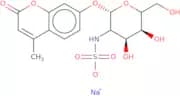
4-Methylumbelliferyl 2-deoxy-2-sulfamino-beta-D-glucopyranoside sodium salt is a fluorogenic substrate for N-sulfoglucosamine sulfohydrolase. After enzymatic cleaveage, free 4-methylumbelliferone (also known as hymecromone) is released, exhibiting blue fluorescence upon excitation with UV light. The strongest fluorescence of 4-methylumbelliferone requires deprotonation of the hydroxyl group (thus requires alkaline pH), with a maximal fluorescence intensity obtained with excitation at 350 to 370 nm and emission at 440 to 470 nm. The use of 4-methylumbelliferyl 2-deoxy-2-sulfamino-beta-D-glucopyranoside sodium saltas a substrate for measuring the N-sulfoglucosamine sulfohydrolase activity is used for screening of Mucopolysaccharidosis IIIA (MPS IIIA) and diagnosis of Sanfilippo A syndrome.Formule :C16H19NO10SNaDegré de pureté :Min. 95%Couleur et forme :PowderMasse moléculaire :439.37 g/mol3-(4,4-Difluoro-5,7-dimethyl-4-bora-3a,4a-diaza-s-indacene-3-propionamido)propyl b-D-lactoside
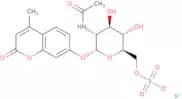
3-(4,4-Difluoro-5,7-dimethyl-4-bora-3a,4a-diaza-s-indacene-3-propionamido)propyl b -D -lactoside (FDPBP) is a substrate for alkaline phosphatase. It reacts with the enzyme to produce a blue color. FDPBP is used in diagnostic applications such as food testing and bioluminescence.Degré de pureté :Min. 95%Couleur et forme :PowderMasse moléculaire :675.48 g/mol4-Methylumbelliferyl 2-acetamido-2-deoxy-α-D-glucopyranoside-6-sulfate potassium
CAS :4-Methylumbelliferyl 2-acetamido-2-deoxy-alpha-D-glucopyranoside-6-sulfate potassium is a fluorogenic substrate for N-acetylglucosamine-6-sulfatase. After enzymatic cleaveage, free 4-methylumbelliferone (also known as hymecromone) is released, exhibiting blue fluorescence upon excitation with UV light. The strongest fluorescence of 4-methylumbelliferone requires deprotonation of the hydroxyl group (thus requires alkaline pH), with a maximal fluorescence intensity obtained with excitation at 350 to 370 nm and emission at 440 to 470 nm. The use of 4-methylumbelliferyl 2-acetamido-2-deoxy-alpha-D-glucopyranoside-6-sulfate potassiumas a substrate for measuring the N-acetylglucosamine-6-sulfatase activity is used for screening of Mucopolysaccharidosis IIID (MPS IIID) (a rare lysosomal storage disorder) and Sanfilippo D syndrome diagnosis.Formule :C18H20KNO11SDegré de pureté :Min. 95%Couleur et forme :White PowderMasse moléculaire :497.52 g/molFLsharp™ - Phosphate, disodium salt
FLsharp™ - Phosphate, disodium salt is a fluorogenic water-soluble substrate for phosphatase enzymes. Its chemical name is 6-Chloro-2-[5-chloro-2-(phosphonooxy)phenyl]-4(1H)-quinazolinone disodium salt and was developed by Molecular Probes in the 1990s. After cleavage of the substrate by phosphatase activity, an insoluble product is formed that is highly fluorescent in the solid state. Upon UV irradiation this very stable fluorophore emits green light in the 530 nm range for an extended period of time. FLsharp™ is a unique substrate - optimized for the detection of phosphatase activity in solid matrices such as agar media, tissue sections or microscopic preparations. FLsharp™ - Phosphate, disodium salt is used in microbiology as a substrate for bacterial phosphatases.
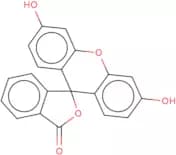
Degré de pureté :Min. 95%Fluorescein diacetate
CAS :Fluorogenic substrate targeting esterases , hGSTP1-1
Formule :C24H16O7Couleur et forme :PowderMasse moléculaire :416.38 g/mol4-Methylumbelliferyl β-D-glucuronide
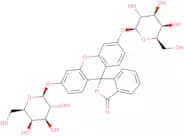
CAS :Fluorogenic substrate for b-glucuronidase GUSFormule :C16H16O9Degré de pureté :Min. 95%Masse moléculaire :352.29 g/molFluorescein di-beta-D-galactopyranoside
CAS :Fluorogenic substrate for beta-galactosidase
Formule :C32H32O15Degré de pureté :Min. 98 Area-%Couleur et forme :Slightly Yellow PowderMasse moléculaire :656.59 g/mol4-Trifluoromethylumbelliferyl b-D-glucuronide potassium salt
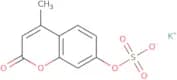
CAS :4-Trifluoromethylumbelliferyl b-D-glucuronide potassium salt is a fluorogenic substrate for beta-glucuronidase. Upon hydrolysis, the fluorogenic moiety (blueish) 4-trifluoromethylumbelliferone (also known as TFMU) is released. 4-Trifluoromethylumbelliferyl b-D-glucuronide potassium salt is commonly used in bacterial detection and for drug metabolism studies as well as lysosomal storage disorder screening.Formule :C16H12F3O9KDegré de pureté :Min. 95 Area-%Couleur et forme :White PowderMasse moléculaire :444.35 g/mol4-Methylumbelliferyl sulfate potassium salt
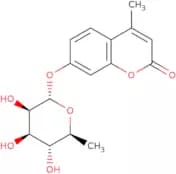
CAS :4-Methylumbelliferyl sulfate potassium salt serves as a superior fluorogenic substrate in enzyme detection assays. Upon enzymatic hydrolysis, it releases a highly fluorescent 4-methylumbelliferone moiety, enabling real-time analysis and quantification of enzyme activities. This product is ideal for a variety of biological assay applications, including in vitro diagnostics, drug discovery, and research purposes. Its excellent sensitivity, specificity, and performance ensure accurate and consistent results every time.Formule :C10H7KO6SDegré de pureté :Min. 98 Area-%Couleur et forme :White PowderMasse moléculaire :294.32 g/mol4-Methylumbelliferyl-alpha-L-rhamnopyranoside
CAS :4-Methylumbelliferyl-alpha-L-rhamnopyranoside is a fluorogenic substrate for alpha-L-rhamnosidase. After enzymatic cleaveage, free 4-methylumbelliferone (also known as hymecromone) is released, exhibiting blue fluorescence upon excitation with UV light. The strongest fluorescence of 4-methylumbelliferone requires deprotonation of the hydroxyl group (thus requires alkaline pH), with a maximal fluorescence intensity obtained with excitation at 350 to 370 nm and emission at 440 to 470 nm. The use of 4-methylumbelliferyl-alpha-L-rhamnopyranosideas a substrate for measuring the alpha-L-rhamnosidase activity is used for detection of bacterial infection.Formule :C16H18O7Degré de pureté :Min. 98 Area-%Couleur et forme :PowderMasse moléculaire :322.32 g/mol6'-(Diethylamino)spiro[isobenzofuran-1(3H),9'-[9H]xanthen]-3'-yl b-D-glucopyranoside
6'-(Diethylamino)spiro[isobenzofuran-1(3H),9'-[9H]xanthen]-3'-yl b-D-glucopyranoside is a fluorogenic substrate that is used in diagnostic applications. It has been shown to be a useful ligand for the determination of enzyme activity, and it can also be used to detect bacterial culture media contaminants. 6'-(Diethylamino)spiro[isobenzofuran-1(3H),9'-[9H]xanthen]-3'-yl b-D-glucopyranoside is used as an enzyme substrate in chemiluminescent assays, and with other reagents, it can be used for the detection of environmental contaminants. This product has a CAS number of 55426-02-8 and can be found on the website www.sigmaaldrich.com/catalog/productDegré de pureté :Min. 95%Masse moléculaire :494.49 g/mol4-Methylumbelliferyl 4-O-(α-L-fucopyranosyl)-β-D-galactopyranoside
CAS :4-Methylumbelliferyl 4-O-(alpha-L-fucopyranosyl)-beta-D-galactopyranoside is a fluorogenic substrate for alpha-L-fucosidase. After enzymatic cleaveage, free 4-methylumbelliferone (also known as hymecromone) is released, exhibiting blue fluorescence upon excitation with UV light. The strongest fluorescence of 4-methylumbelliferone requires deprotonation of the hydroxyl group (thus requires alkaline pH), with a maximal fluorescence intensity obtained with excitation at 350 to 370 nm and emission at 440 to 470 nm. The use of 4-methylumbelliferyl 4-O-(alpha-L-fucopyranosyl)-beta-D-galactopyranosideas a substrate for measuring the alpha-L-fucosidase activity is used for fucosidosis diagnosis and in screening studies of glycoprotein metabolism disorders.Formule :C22H28O12Degré de pureté :Min. 95 Area-%Couleur et forme :PowderMasse moléculaire :484.45 g/mol










![6'-(Diethylamino)spiro[isobenzofuran-1(3H),9'-[9H]xanthen]-3'-yl b-D-glucopyranoside](/_next/image/?url=https%3A%2Fstatic.cymitquimica.com%2Fproducts%2F3D%2Fthumb-webp%2FED139090.webp&w=3840&q=75)
