Substrats fluorescents
369 produits trouvés pour "Substrats fluorescents"
2-[5-(1,3-Dihydro-3,3-dimethyl-1-octadecyl-2H-indol-2-ylidene)-1,3-pentadienyl]-3,3-dimethyl-1-octadecyl-3H-indolium perchlorate
CAS :Formule :C61H99ClN2O4Degré de pureté :95%Masse moléculaire :959.90284,4'-Diaminostilbene-2,2'-disulfonic acid
CAS :Formule :C14H14N2O6S2Degré de pureté :94%Couleur et forme :SolidMasse moléculaire :370.4008Benzo[d][1,3]dioxole-5,6-diamine dihydrochloride
CAS :Formule :C7H10Cl2N2O2Degré de pureté :95%Couleur et forme :SolidMasse moléculaire :225.0725Ethyl α-Acetamido-α-carbethoxy-β-(7-aza-3-indolyl)propionate
CAS :Formule :C17H21N3O5Degré de pureté :95%Couleur et forme :SolidMasse moléculaire :347.36574-METHYLUMBELLIFERYL-β-D-LACTOSIDE
CAS :Formule :C22H28O13Degré de pureté :98%Couleur et forme :SolidMasse moléculaire :500.44991H-Benz[e]indolium,2-[7-[1,3-dihydro-1,1-dimethyl-3-(4-sulfobutyl)-2H-benz[e]indol-2-ylidene]-1,3,5-heptatrienyl]-1,1-dimethyl-3-(4-sulfobutyl)-, inner salt, sodiumsalt
CAS :Formule :C43H47N2NaO6S2Degré de pureté :95%Couleur et forme :SolidMasse moléculaire :774.9629Ref: IN-DA00I74W
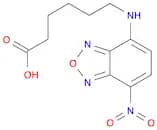
1g189,00€5g612,00€10gÀ demander50g1.950,00€100gÀ demander100mg64,00€250mg80,00€500mg111,00€6-(7-NITRO-2,1,3-BENZOXADIAZOL-4-YLAMINO)HEXANOIC ACID
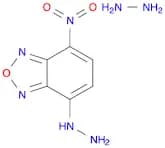
CAS :Formule :C12H14N4O5Degré de pureté :98%Couleur et forme :SolidMasse moléculaire :294.26342,1,3-Benzoxadiazole, 4-hydrazinyl-7-nitro-, compd. with hydrazine (1:1)
CAS :Formule :C6H9N7O3Degré de pureté :98%Couleur et forme :SolidMasse moléculaire :227.18085-Carboxyfluorescein Diacetate
CAS :Formule :C25H16O9Degré de pureté :95%Couleur et forme :SolidMasse moléculaire :460.38912H-1-Benzopyran-2-one, 7-amino-
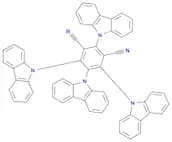
CAS :Formule :C9H7NO2Degré de pureté :97%Couleur et forme :SolidMasse moléculaire :161.15741,3-Benzenedicarbonitrile, 2,4,5,6-tetra-9H-carbazol-9-yl-
CAS :Formule :C56H32N6Degré de pureté :98%Couleur et forme :SolidMasse moléculaire :788.8935Ref: IN-DA001GW9
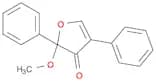
1g72,00€5g183,00€10g219,00€25g521,00€50g606,00€100gÀ demander50mg20,00€100mg30,00€250mg34,00€500mg57,00€2-Methoxy-2,4-diphenylfuran-3(2H)-one
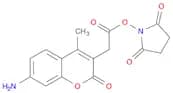
CAS :Formule :C17H14O3Degré de pureté :98.0%Masse moléculaire :266.29132H-1-BENZOPYRAN-3-ACETIC ACID, 7-AMINO-4-METHYL-2-OXO-, 2,5-DIOXO-1-PYRROLIDINYL ESTER
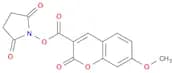
CAS :Formule :C16H14N2O6Degré de pureté :95%Couleur et forme :SolidMasse moléculaire :330.29222H-1-BENZOPYRAN-3-CARBOXYLIC ACID, 7-METHOXY-2-OXO-, 2,5-DIOXO-1-PYRROLIDINYL ESTER
CAS :Formule :C15H11NO7Degré de pureté :95%Couleur et forme :SolidMasse moléculaire :317.2503Spiro[isobenzofuran-1(3H),9'-[9H]xanthen]-3-one, 4',5'-bis[[bis(2-pyridinylmethyl)amino]methyl]-2',7'-dichloro-3',6'-dihydroxy-
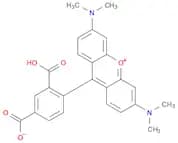
CAS :Formule :C46H36Cl2N6O5Degré de pureté :95%Couleur et forme :SolidMasse moléculaire :823.72125-Carboxytetramethylrhodamine
CAS :Formule :C25H22N2O5Degré de pureté :98%Couleur et forme :SolidMasse moléculaire :430.4526Ref: IN-DA00GRM1
1g183,00€5g579,00€10g613,00€25gÀ demander50gÀ demander10mg37,00€25mg44,00€100mg70,00€250mg116,00€(R)-(-)-Dbd-apy
CAS :Formule :C12H17N5O3SDegré de pureté :98%Couleur et forme :SolidMasse moléculaire :311.36015-Amino-1H-isoindole-1,3(2H)-dione
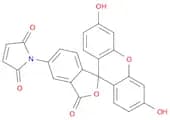
CAS :Formule :C8H6N2O2Degré de pureté :97%Couleur et forme :SolidMasse moléculaire :162.1454Fluorescein-5-maleimide
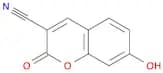
CAS :Formule :C24H13NO7Degré de pureté :95%Couleur et forme :SolidMasse moléculaire :427.36252H-1-Benzopyran-3-carbonitrile, 7-hydroxy-2-oxo-
CAS :Formule :C10H5NO3Degré de pureté :98%Couleur et forme :SolidMasse moléculaire :187.1516Spiro[isobenzofuran-1(3H),9'-[9H]xanthene]-ar-carboxamide, N-[6-[(2,5-dioxo-1-pyrrolidinyl)oxy]-6-oxohexyl]-3',6'-dihydroxy-3-oxo-
CAS :Formule :C31H26N2O10Degré de pureté :75%Couleur et forme :SolidMasse moléculaire :586.54551,5-I-AEDANS
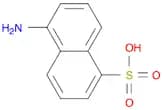
CAS :Formule :C14H15IN2O4SDegré de pureté :93%Couleur et forme :SolidMasse moléculaire :434.24945-Aminonaphthalene-1-sulfonic acid
CAS :Formule :C10H9NO3SDegré de pureté :94%Couleur et forme :SolidMasse moléculaire :223.24845-Bromo-4-methyl-1H-indazole
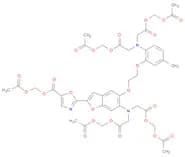
CAS :Formule :C8H7BrN2Degré de pureté :98%Couleur et forme :SolidMasse moléculaire :211.0586Bis(acetoxymethyl) 2,2'-((2-(5-((acetoxymethoxy)carbonyl)oxazol-2-yl)-5-(2-(2-(bis(2-(acetoxymethoxy)-2-oxoethyl)amino)-5-methylphenoxy)ethoxy)benzofuran-6-yl)azanediyl)diacetate
CAS :Formule :C44H47N3O24Degré de pureté :98%Couleur et forme :SolidMasse moléculaire :1001.8497Bromosulfalein
CAS :Formule :C20H8Br4Na2O10S2Degré de pureté :91%Couleur et forme :SolidMasse moléculaire :837.99712H-1-Benzopyran-3-carboxylic acid, 7-(diethylamino)-2-oxo-, hydrazide
CAS :Formule :C14H17N3O3Degré de pureté :97%Couleur et forme :SolidMasse moléculaire :275.30315-((2-Aminoethyl)amino)naphthalene-1-sulfonic acid
CAS :Formule :C12H14N2O3SDegré de pureté :98%Couleur et forme :SolidMasse moléculaire :266.31627-Methoxy-2-oxochromene-3-carboxylic acid
CAS :Formule :C11H8O5Degré de pureté :97%Couleur et forme :SolidMasse moléculaire :220.17828-Anilino-1-naphthalenesulfonic acid
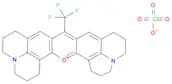
CAS :Formule :C16H13NO3SDegré de pureté :95%Couleur et forme :SolidMasse moléculaire :299.3443Rhodamine700
CAS :Formule :C26H26ClF3N2O5Degré de pureté :90%Couleur et forme :SolidMasse moléculaire :538.94324,4'-Bipyridinium, 1,1'-bis[(2-boronophenyl)methyl]-, dibromide
CAS :Formule :C24H24B2Br2N2O4Degré de pureté :95%Masse moléculaire :585.88845,7-Dihydroindolo[2,3-b]carbazole
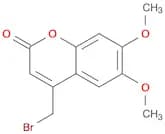
CAS :Formule :C18H12N2Degré de pureté :98%Couleur et forme :SolidMasse moléculaire :256.30134-Bromomethyl-6,7-dimethoxycoumarin
CAS :Formule :C12H11BrO4Degré de pureté :98%Couleur et forme :SolidMasse moléculaire :299.11732-[3-[3,3-Dimethyl-1-(4-sulfobutyl)-1,3-dihydroindol-2-ylidene]propenyl]-3,3-dimethyl-1-(4-sulfobutyl)-3h-indolium inner salt sodium salt
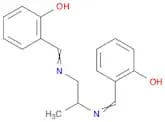
CAS :Formule :C31H39N2NaO6S2Degré de pureté :98%Couleur et forme :SolidMasse moléculaire :622.7709N,N'-bis(salicylidene)-1,2-propanediamine
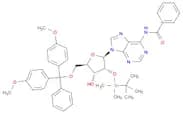
CAS :Formule :C17H18N2O2Degré de pureté :97%Couleur et forme :SolidMasse moléculaire :282.33705'-O-DMT-2'-O-TBDMS-N6-Bz-adenosine
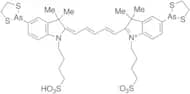
CAS :Formule :C44H49N5O7SiDegré de pureté :96%Couleur et forme :SolidMasse moléculaire :787.9747Bis(dithiarsolanyl)-bis(sulfobutyl) Cyanine 5
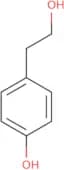
CAS :Produit contrôléFormule :C37H48As2N2O6S6Couleur et forme :NeatMasse moléculaire :959.024-Hydroxyphenethyl alcohol
CAS :Produces a fluorogenic signal in the presence of peroxidaseFormule :C8H10O2Degré de pureté :Min. 98 Area-%Couleur et forme :PowderMasse moléculaire :138.16 g/mol5-Carboxytetramethylrhodamine
CAS :5-Carboxytetramethylrhodamine - (TAMRA) is a widely employed fluorescent dye (orange/red) that is suitable for different uses. In PCR applications, it has been used as both a reporter at the 5â or as a quencher at the 3â end. TAMRA-labelled oligonucleotides have been used to study interactions with DNA or DNA/protein interactions. It is an excellent fluorescent acceptor for FRET applications with a suitable dye pair. It is used as a protein/antibody labelling agent for structural studies, immunochemistry and flow cytometry. Bioconjugation is generally performed through coupling of the carboxylic acid to a primary amine at the N-terminus of a protein, on lysine side chains or amino-modified oligonucleotide.Formule :C25H22N2O5Degré de pureté :Min. 95 Area-%Couleur et forme :Green PowderMasse moléculaire :430.45 g/molNucleic Acid Dye Green I - solution in DMSO (6.11 mg/ml)
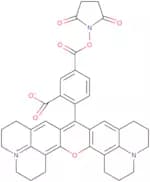
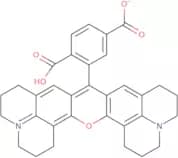
CAS :Nucleic Acid Dye Green I is a DNA-staining dye that has found application in various high resolution assays for the detection of microbial or viral contaminant DNA.Formule :C32H37N4SDegré de pureté :Min. 95%Couleur et forme :Clear LiquidMasse moléculaire :509.73 g/mol5-Carboxy-X-rhodamine, succinimidyl ester
CAS :Single isomer of 5(6)-ROX. It is a fluorescent dye used in RT-PCR methods as an internal reference to determine fluorescence variation that is not associated with the amplification process (plastic of the wells, small differences in concentration or volume, instrument measurements). It produces a constant fluorescence emission signal during the PCR process that is used to normalise the emission produced by the reporter. The fluorescence signal is compatible with that of most reporters. It is used to label the 5â end of oligonucleotides as a reporter in the presence of a quencher at the 3â end (dual labelled probe). During amplification, the dye is cleaved, and the fluorescence increases proportionally with the amount of the specific sequence amplified during the PCR process. The development of the fluorescence signal is therefore specifically related to the amplification of the target sequence. 6-ROX with NHS-activated carboxylic acids reacts with primary amines.Formule :C37H33N3O7Degré de pureté :Min. 95%Couleur et forme :Red To Violet To Black SolidMasse moléculaire :631.67 g/mol6-Carboxytetramethyl rhodamine
CAS :6-Carboxytetramethyl rhodamine is a fluorescent dye that is used to measure the presence of cancer cells in urine samples. It binds to human protein and has been shown to be a useful probe for fluorescence measurements. 6-Carboxytetramethyl rhodamine has also been used as a fluorescence probe for the detection of proliferative diabetic retinopathy and michaelis–menten kinetics in cyclic peptides.
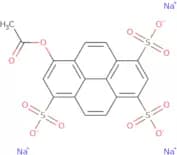
Formule :C25H22N2O5Degré de pureté :Min. 95%Couleur et forme :PowderMasse moléculaire :430.45 g/mol8-Acetoxypyrene-1,3,6-trisulfonic acid trisodium salt
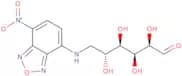
CAS :Fluorogenic substrate for esterase; cell-permeableFormule :C18H9Na3O11S3Degré de pureté :Min. 98.0 Area-%Couleur et forme :PowderMasse moléculaire :566.42 g/mol6-NBDG
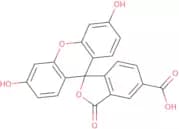
CAS :Nonhydrolyzable fluorescent glucose analog used to monitor glucose uptakeFormule :C12H14N4O8Degré de pureté :Min. 95%Couleur et forme :PowderMasse moléculaire :342.26 g/mol5-Carboxyfluorescein
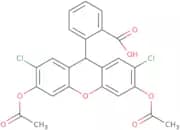
CAS :5-Carboxyfluorescein (5-FAM) is a self-quenching dye and one of the most common labelling agents for biomolecules, cell staining and localisation studies. The fluorescence is pH dependent, therefore it has been used to measure the internal pH of cells. As it is only membrane permeable to dead cells, it can be used as a staining agent to distinguish viable and non-viable cells. It is also used in PCR to label the 5â end of oligonucleotides in the presence of a quencher at the 3â end (dual labelled probe). During the amplification process, the dye is cleaved and the fluorescence increases proportionally with the amount of the specific sequence amplified during the PCR process. The development of the fluorescence signal is therefore specifically related to the amplification of the target sequence. The carboxylic acid can be activated to react with a primary amine.Formule :C21H12O7Degré de pureté :Min. 98 Area-%Couleur et forme :Yellow PowderMasse moléculaire :376.32 g/mol2',7'-Dichlorodihydrofluorescein diacetate
CAS :Cell permeable reagent for use in detection of peroxidase activityFormule :C24H16Cl2O7Degré de pureté :Min. 97 Area-%Couleur et forme :PowderMasse moléculaire :487.29 g/mol3-Bodipy-propanoic acid
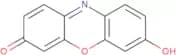
CAS :Reactive fluorescent labeling reagentFormule :C14H15BF2N2O2Couleur et forme :Red PowderMasse moléculaire :292.09 g/molResorufin
CAS :The substructure resorufin is a fluorescent dye that changes color from orange to bright pink; excitation/emission maxima = 563/587 nm.Formule :C12H7NO3Degré de pureté :Min. 95 Area-%Couleur et forme :Purple PowderMasse moléculaire :213.19 g/mol6-Carboxy-X-rhodamine
CAS :Single isomer of 5(6)-ROX. It is a fluorescent dye used in RT-PCR methods as an internal reference to determine fluorescence variation that is not associated with the amplification process (plastic of the wells, small differences in concentration or volume, instrument measurements). It produces a constant fluorescence emission signal during the PCR process that is used to normalise the emission produced by the reporter. The fluorescence signal is compatible with most reporters. It is used to label the 5â end of oligonucleotides as a reporter in the presence of a quencher at the 3â end (dual labelled probe). During the amplification, the dye is cleaved, and the fluorescence increases proportionally with the amount of the specific sequence amplified during the PCR process. The development of the fluorescence signal is therefore specifically related to the amplification of the target sequence. 6-ROX with NHS-activated carboxylic acids reacts with primary amines.
Formule :C33H30N2O5Degré de pureté :Min. 95%Couleur et forme :Red PowderMasse moléculaire :534.6 g/mol
![2-[5-(1,3-Dihydro-3,3-dimethyl-1-octadecyl-2H-indol-2-ylidene)-1,3-pentadienyl]-3,3-dimethyl-1-oct…](/_next/image/?url=https%3A%2Fstatic.cymitquimica.com%2Fproducts%2FIN%2Fthumb-webp%2FDA000WTH.webp&w=3840&q=75)


![Benzo[d][1,3]dioxole-5,6-diamine dihydrochloride](/_next/image/?url=https%3A%2Fstatic.cymitquimica.com%2Fproducts%2FIN%2Fthumb-webp%2FDA008LAR.webp&w=3840&q=75)


![1H-Benz[e]indolium,2-[7-[1,3-dihydro-1,1-dimethyl-3-(4-sulfobutyl)-2H-benz[e]indol-2-ylidene]-1,3,…](/_next/image/?url=https%3A%2Fstatic.cymitquimica.com%2Fproducts%2FIN%2Fthumb-webp%2FDA00I74W.webp&w=3840&q=75)


![Spiro[isobenzofuran-1(3H),9'-[9H]xanthen]-3-one, 4',5'-bis[[bis(2-pyridinylmethyl)amino]methyl]-2'…](/_next/image/?url=https%3A%2Fstatic.cymitquimica.com%2Fproducts%2FIN%2Fthumb-webp%2FDA002WUS.webp&w=3840&q=75)


![Spiro[isobenzofuran-1(3H),9'-[9H]xanthene]-ar-carboxamide, N-[6-[(2,5-dioxo-1-pyrrolidinyl)oxy]-6-…](/_next/image/?url=https%3A%2Fstatic.cymitquimica.com%2Fproducts%2FIN%2Fthumb-webp%2FDA000EUU.webp&w=3840&q=75)




![4,4'-Bipyridinium, 1,1'-bis[(2-boronophenyl)methyl]-, dibromide](/_next/image/?url=https%3A%2Fstatic.cymitquimica.com%2Fproducts%2FIN%2Fthumb-webp%2FDA0073NM.webp&w=3840&q=75)
![5,7-Dihydroindolo[2,3-b]carbazole](/_next/image/?url=https%3A%2Fstatic.cymitquimica.com%2Fproducts%2FIN%2Fthumb-webp%2FDA0082J0.webp&w=3840&q=75)
![2-[3-[3,3-Dimethyl-1-(4-sulfobutyl)-1,3-dihydroindol-2-ylidene]propenyl]-3,3-dimethyl-1-(4-sulfobu…](/_next/image/?url=https%3A%2Fstatic.cymitquimica.com%2Fproducts%2FIN%2Fthumb-webp%2FDA008WK9.webp&w=3840&q=75)