Dérivés d'acides aminés
Les dérivés d'acides aminés sont des composés structurellement liés aux acides aminés, mais qui ont été chimiquement modifiés pour introduire de nouveaux groupes fonctionnels ou altérer leurs propriétés. Ces dérivés sont largement utilisés dans la synthèse de peptides, le développement de médicaments et la recherche biochimique. Chez CymitQuimica, nous offrons une large gamme de dérivés d'acides aminés de haute qualité pour soutenir vos recherches et applications industrielles, garantissant des résultats précis et efficaces dans vos expériences et projets de synthèse.
3957 produits trouvés pour "Dérivés d'acides aminés"
Trier par
Degré de pureté (%)
0
100
|
0
|
50
|
90
|
95
|
100
4-Amino-N-(tert-butoxycarbonyl)-D-phenylalanine
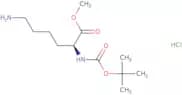
CAS :Formule :C14H20N2O4Degré de pureté :>97.0%(HPLC)Couleur et forme :Light orange to Yellow to Green powder to crystalMasse moléculaire :280.32Boc-Lys-OMe HCl
CAS :<p>Boc-Lys-OMe HCl is an ester hydrochloride of N-Boc-Lysine. It is a macrocyclic compound that has been used in the laboratory as an acidifying agent to convert sodium borohydride to methyl ester hydrochloride. Boc-Lys-OMe HCl is also used in the synthesis of macrocyclic compounds, such as n-boc-l-lysine and other polyamino compounds.</p>Formule :C12H24N2O4·HClDegré de pureté :Min. 95%Couleur et forme :White PowderMasse moléculaire :296.79 g/molFmoc-Pro-Pro-Gly-OH
<p>Fmoc-Pro-Pro-Gly-OH is an activating reagent that has been used in the synthesis of peptides with a C-terminal carboxyl group. It is typically used as a chloroformate ester and reacts with amino groups to form amide bonds. The activation of this reagent can be performed either by reaction with isobutyl or by reaction with piperidine. This product may also be used for the synthesis of tripeptides, pentafluorophenyl esters, and mimetic peptides. Fmoc-Pro-Pro-Gly-OH is typically purified by trituration, followed by evaporation in vacuum and then recrystallization from methanol or ethanol.</p>Formule :C27H29N3O6Degré de pureté :Min. 95%Couleur et forme :PowderMasse moléculaire :491.54 g/molD-Allylglycine
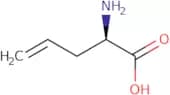
CAS :<p>D-Allylglycine is a l-amino acid with the chemical formula of CH2CH(CH3)COOH. D-Allylglycine binds to the N-methyl-D-aspartate (NMDA) receptor and has been shown in animal studies to have effects on blood pressure, although its clinical relevance remains unclear. It is an enantiopure compound and can be obtained as a trifluoroacetate salt or ethyl diazoacetate ester hydrochloride. D-Allylglycine is also an aminoglycoside and ester hydrochloride that can be used for the treatment of bacterial infections. The amino group in D-allylglycine binds to glutamate receptors, which are found on neurons, and inhibits the release of gamma-aminobutyric acid (GABA). This drug may also have potential as a serotonergic agent due to its ability to inhibit serotonin re</p>Formule :C5H9NO2Degré de pureté :Min. 95%Couleur et forme :White PowderMasse moléculaire :115.13 g/molN-(tert-Butoxycarbonyl)-L-serine β-Lactone
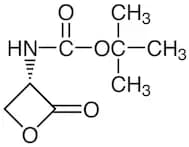
CAS :Formule :C8H13NO4Degré de pureté :>98.0%(N)Couleur et forme :White to Almost white powder to crystalMasse moléculaire :187.20L-Lysine diisocyanate ethyl ester
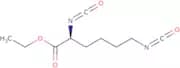
CAS :<p>L-Lysine diisocyanate ethyl ester (LDIEE) is a fluorescence probe that can be used to detect the presence of disulfide bonds. This compound reacts with thiols, such as cysteine, glutathione, and metallothioneins. LDIEE has been shown to bind to human serum proteins and has been used in biological studies for the detection of hydrogen bonding interactions. The biological properties of this compound have not been studied but it is hypothesized that LDIE may have anti-cancer activities due to its ability to react with coumarin derivatives.</p>Formule :C10H14N2O4Degré de pureté :Min. 95 Area-%Couleur et forme :Clear LiquidMasse moléculaire :226.23 g/molN-b-Boc-D-2,3-diaminopropionic acid
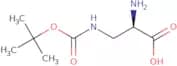
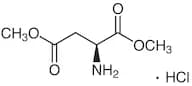
CAS :<p>N-b-Boc-D-2,3-diaminopropionic acid is a chemical compound that belongs to the group of polypeptides. It has been shown to act as a receptor activator in cell-based assays and is capable of binding to taste receptors. N-b-Boc-D-2,3-diaminopropionic acid has also been found to be an effective inhibitor of alpha amylase, which is an enzyme that breaks down starch into maltose and dextrin. This chemical compound could serve as a potential therapeutic agent for type 2 diabetes, obesity, and other metabolic disorders. NBDAPA has also been found in fossilized invertebrates such as squid and urchins.</p>Formule :C8H16N2O4Degré de pureté :Min. 95%Couleur et forme :White to off-white solid.Masse moléculaire :204.22 g/molDimethyl L-Aspartate Hydrochloride
CAS :Formule :C6H11NO4·HClDegré de pureté :>98.0%(T)(qNMR)Couleur et forme :White to Almost white powder to crystalMasse moléculaire :197.62N-[(9H-Fluoren-9-ylmethoxy)carbonyl]-L-homoarginine
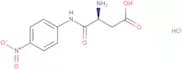
CAS :Formule :C22H26N4O4Degré de pureté :>97.0%(T)(HPLC)Couleur et forme :White to Almost white powder to crystalMasse moléculaire :410.47H-Asp-pNA·HCl
CAS :<p>H-Asp-pNA·HCl is a versatile building block that can be used in the synthesis of complex compounds. It has been shown to be useful in the synthesis of reagents and speciality chemicals, as well as being a reaction component for the synthesis of pharmaceuticals. H-Asp-pNA·HCl is also a useful scaffold for the production of high quality and highly pure products.</p>Formule :C10H11N3O5·HClDegré de pureté :Min. 95%Couleur et forme :SolidMasse moléculaire :289.67 g/molDL-Leucine
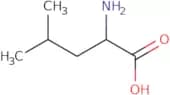
CAS :<p>DL-Leucine is an amino acid that is needed for the formation of proteins. It is also able to inhibit the activity of enzymes by hydrolyzing them. DL-Leucine has been shown to be a potent inhibitor of lysine hydrolases and can be used as an additive in the manufacture of animal feed. DL-Leucine has been shown to be stable in many environments, including those containing chlorine, hydrochloric acid, n-dimethyl formamide, and x-ray crystallography. The enantiomers of DL-leucine have different chemical stability; one form is more stable than the other in acidic environments.</p>Formule :C6H13NO2Degré de pureté :Min. 95%Couleur et forme :PowderMasse moléculaire :131.17 g/molFmoc-L-Gln-OH
CAS :<p>Fmoc-L-Gln-OH is a vasoactive intestinal peptide (VIP) analog that has been shown to be a potent pressor agent. It binds to and activates the VIP receptors in the vascular endothelium, causing vasoconstriction of blood vessels. Fmoc-L-Gln-OH also inhibits mitochondrial superoxide production and colorectal adenocarcinoma growth in vitro. This compound can be synthesized using solid phase chemistry, which is a technique where the building blocks are attached sequentially to an insoluble support material. This process can be activated by trifluoroacetic acid or other activating agents and eliminates the need for protecting groups.<br>Fmoc-L-Gln-OH has been shown to inhibit the uptake of iron from transferrin into cells and to bind hippuric acid as well as many other organic compounds.</p>Formule :C20H20N2O5Degré de pureté :Min. 95%Couleur et forme :PowderMasse moléculaire :368.38 g/molPro-Gly-OH
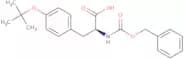
CAS :<p>Pro-Gly-OH is a cyclic peptide that has been shown to have antimicrobial activity. Pro-Gly-OH has been shown to be an intramolecular hydrogen acceptor, which leads to the formation of a carbonyl group. This compound also has site specific interactions with the cell membrane and is taken up by cells. It is active at acidic pHs and can be activated by growth factors.<br>The conformational properties of Pro-Gly-OH are due to hydrogen bonding interactions and amide bond formation.</p>Formule :C7H12N2O3Degré de pureté :Min. 95%Couleur et forme :PowderMasse moléculaire :172.18 g/molZ-O-tert-Butyl-L-tyrosine
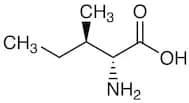
CAS :<p>Z-O-tert-Butyl-L-tyrosine is a fine chemical that is soluble in water and has a wide range of uses. It is a versatile scaffold for the synthesis of complex compounds, and can be used as a building block or reaction component in research chemicals. Z-O-tert-Butyl-L-tyrosine is an important reagent for organic synthesis, especially when combined with other chemicals. This chemical can also be used as a speciality chemical to produce high quality products.</p>Formule :C21H25NO5Degré de pureté :Min. 95%Couleur et forme :White PowderMasse moléculaire :371.43 g/molH-D-Ile-OH
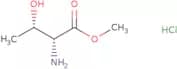
CAS :Formule :C6H13NO2Degré de pureté :>95.0%(HPLC)Couleur et forme :White to Almost white powder to crystalMasse moléculaire :131.18D-Threonine methyl ester hydrochloride
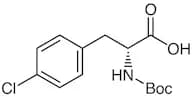
CAS :<p>D-Threonine methyl ester hydrochloride is a versatile building block that is used in the synthesis of complex compounds. It can be used as a reagent, speciality chemical, and useful scaffold in organic chemistry. D-Threonine methyl ester hydrochloride has been shown to react with a variety of electrophiles and nucleophiles to form diverse products. This product is also used as a reaction component for the synthesis of high quality chemical intermediates.</p>Formule :C5H11NO3·HClDegré de pureté :Min. 98%Couleur et forme :PowderMasse moléculaire :169.61 g/molN-(tert-Butoxycarbonyl)-4-chloro-D-phenylalanine
CAS :Formule :C14H18ClNO4Degré de pureté :>98.0%(T)(HPLC)Couleur et forme :White to Almost white powder to crystalMasse moléculaire :299.75DL-Valine
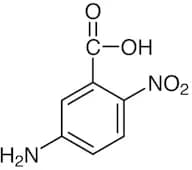
CAS :<p>Valine is a non-essential, branched-chain amino acid that is used for the treatment of bowel disease. Valine is a water-soluble, colorless and odorless crystalline powder that has a sour taste. It can be prepared by reacting valeric acid with ammonia in the presence of an alkali or by hydrolysis of proteins. Valine is also widely distributed in animal tissues, where it participates in the biosynthesis of important biological compounds such as coenzyme A. The optimum concentration to achieve maximum electrochemical impedance spectroscopy (EIS) signal was observed at 20 mM. The EIS signal was found to be dependent on the pH and protein content of the solution matrix. Valine binds to human serum albumin and exhibits strong hydrogen bonding interactions. In addition, valine possesses a signal peptide that helps export it from cells into blood plasma.</p>Formule :C5H11NO2Couleur et forme :PowderMasse moléculaire :117.15 g/mol5-Amino-2-nitrobenzoic Acid
CAS :Formule :C7H6N2O4Degré de pureté :>98.0%(T)Couleur et forme :Light yellow to Amber to Dark green powder to crystalMasse moléculaire :182.14Boc-homo-L-tyrosine
CAS :<p>Boc-homo-L-tyrosine is a high quality reagent, which is a useful intermediate for the synthesis of complex compounds. It is also a useful scaffold that can be used in the creation of fine chemicals and research chemicals. Boc-homo-L-tyrosine has been shown to be versatile, as it can serve as a reaction component in different types of chemical reactions. This compound can be used as a building block and is classified as a speciality chemical. Boc-homo-L-tyrosine has an CAS number of 198473-94-8.</p>Formule :C15H21NO5Degré de pureté :Min. 95%Couleur et forme :White PowderMasse moléculaire :295.33 g/mol




![N-[(9H-Fluoren-9-ylmethoxy)carbonyl]-L-homoarginine](/_next/image/?url=https%3A%2Fstatic.cymitquimica.com%2Fproducts%2F3B%2Fthumb-webp%2FF1014.webp&w=3840&q=75)