Dérivés d'acides aminés
Les dérivés d'acides aminés sont des composés structurellement liés aux acides aminés, mais qui ont été chimiquement modifiés pour introduire de nouveaux groupes fonctionnels ou altérer leurs propriétés. Ces dérivés sont largement utilisés dans la synthèse de peptides, le développement de médicaments et la recherche biochimique. Chez CymitQuimica, nous offrons une large gamme de dérivés d'acides aminés de haute qualité pour soutenir vos recherches et applications industrielles, garantissant des résultats précis et efficaces dans vos expériences et projets de synthèse.
3955 produits trouvés pour "Dérivés d'acides aminés"
Trier par
Degré de pureté (%)
0
100
|
0
|
50
|
90
|
95
|
100
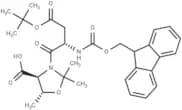
Fmoc-Asp(OtBu)-Thr(psi(Me,Me)pro)-OH
CAS :<p>Fmoc-Asp(OtBu)-Thr(psi(Me,Me)pro)-OH is a dipeptide.</p>Formule :C30H36N2O8Couleur et forme :SolidMasse moléculaire :552.62Glycine
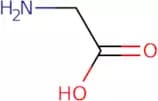
CAS :<p>Glycine is a buffering agent that can be used in electrophoresis for protein samples. It has an optimal pH range of 2.2-3.6 and a pKa of 2.35.</p>Formule :NH2CH2COOHDegré de pureté :Min. 95%Couleur et forme :PowderMasse moléculaire :75.07 g/molLeucylarginine
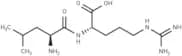
CAS :<p>Leucylarginine hinders antinociception induced by L-arginine.</p>Formule :C12H25N5O3Degré de pureté :98%Couleur et forme :SolidMasse moléculaire :287.36Z-Val-Ala-Asp fluoromethyl ketone
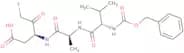
CAS :<p>Z-Val-Ala-Asp fluoromethyl ketone (Z-VAD-fmk) is a pan-caspase inhibitor that is widely used in research studies. It is a synthetic compound that mimics the structure of natural caspase substrates and irreversibly inhibits caspase activity. Z-VAD-fmk has been shown to have anti-apoptotic properties, preventing programmed cell death in various experimental models. This compound is commonly used in studies investigating the role of caspases in cell death pathways and as a tool for evaluating the efficacy of potential therapeutic interventions. Z-VAD-fmk has also been studied for its potential as an adjuvant therapy in various diseases, including cancer and neurodegenerative disorders.</p>Formule :C21H28FN3O7Degré de pureté :Min. 95%Masse moléculaire :453.46 g/molCyclo(Leu-Leu)
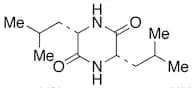
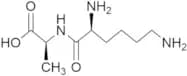
CAS :Produit contrôlé<p>Applications A cyclic peptide, one of the secondary metabolite of a mangrove endophytic fungus (No. 1947) from the South China Sea.<br>References Carmichael, J., et al.: Cancer Res., 47, 936 (1987), Blunt, J., et al.: Nat. Prod. Rep., 20, 1 (2003), Mitova, M., et al.: J. Nat. Prod., 67, 1178 (2004),<br></p>Formule :C12H22N2O2Couleur et forme :NeatMasse moléculaire :226.315(S)-2-((S)-2,6-Diaminohexanamido)-5-((diaminomethylene)amino)pentanoic Acid
CAS :Produit contrôlé<p>Applications H-Lys-Arg-OH acetate salt (CAS# 29586-66-1) is a useful research chemical compound.<br></p>Formule :C12H26N6O3Couleur et forme :NeatMasse moléculaire :302.373L-Threonyl-L-valine
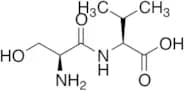
CAS :Produit contrôléFormule :C9H18N2O4Couleur et forme :NeatMasse moléculaire :218.25L-seryl-L-valine
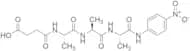
CAS :Produit contrôléFormule :C8H16N2O4Couleur et forme :NeatMasse moléculaire :204.224Suc-Ala-Ala-Ala-pNA
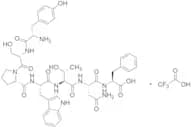
CAS :Produit contrôléFormule :C19H25N5O8Couleur et forme :NeatMasse moléculaire :451.43H-Tyr-Ser-Pro-Trp-Thr-Asn-Phe-OH Trifluoroacetate Salt
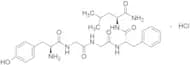
CAS :Produit contrôléFormule :C45H55N9O12·C2HF3O2Couleur et forme :NeatMasse moléculaire :1027.99Leu-Enkephalin Amide H-Tyr-Gly-Gly-Phe-Leu-NH2 Hydrochloride Salt
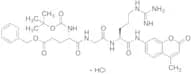
CAS :Produit contrôléFormule :C28H38N6O6·HClCouleur et forme :NeatMasse moléculaire :554.64 + (36.46)Boc-γ-benzyl-Glu-Gly-Arg-7-amido-4-methylcoumarin Hydrochloride
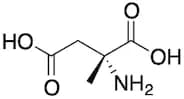
CAS :Produit contrôléFormule :C35H45N7O9•HClCouleur et forme :NeatMasse moléculaire :744.25(R)-2-Amino-2-methylsuccinic Acid
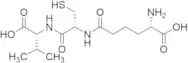
CAS :Produit contrôléFormule :C5H9NO4Couleur et forme :NeatMasse moléculaire :147.1ACV Tripeptide
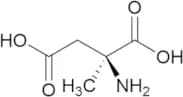
CAS :Produit contrôléFormule :C14H25N3O6SCouleur et forme :NeatMasse moléculaire :363.43(S)-2-Amino-2-methylsuccinic Acid
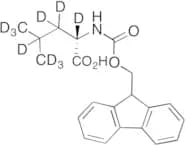
CAS :Produit contrôléFormule :C5H9NO4Couleur et forme :NeatMasse moléculaire :147.1Fmoc-L-Leu-OH-d10
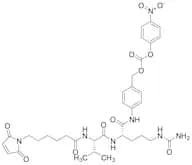
CAS :Produit contrôlé<p>Applications Fmoc-L-Leu-OH-d10 is the labeled analogue of Fmoc-L-Leu-OH (F625015), an amino acid derivative, used in peptide chemistry. It is also one of the novel PPARγ ligands that can activate PPARγ in different ways, that reduces osteoclasts differentiation, and thus are better therapeutic targets in diabetes than traditional antidiabetic drugs.<br>References Haochen, W., et al.: J. Cell. Biochem., 114, 1969 (2013)<br></p>Formule :C21H13D10NO4Couleur et forme :NeatMasse moléculaire :363.47Mc-Val-Cit-PABC-PNP
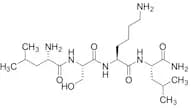
CAS :Produit contrôléFormule :C35H43N7O11Couleur et forme :NeatMasse moléculaire :737.756L-Leucyl-L-seryl-L-lysyl-L-leucinamide
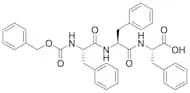
CAS :Produit contrôléFormule :C21H42N6O5Couleur et forme :NeatMasse moléculaire :458.595Z-Phe-Phe-Phe-OH
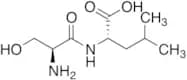
CAS :Produit contrôléFormule :C35H35N3O6Couleur et forme :NeatMasse moléculaire :593.669L-seryl-L-leucine
CAS :Produit contrôléFormule :C9H18N2O4Couleur et forme :NeatMasse moléculaire :218.25L-Prolyl-L-lysine
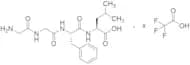
CAS :Produit contrôléFormule :C11H21N3O3Couleur et forme :NeatMasse moléculaire :243.31(Des-Tyr1)-Leu-Enkephalin H-Gly-Gly-Phe-Leu-OH TFA Salt
CAS :Produit contrôlé<p>Applications (Des-Tyr1)-Leu-Enkephalin H-Gly-Gly-Phe-Leu-OH (CAS# 60254-83-3) is a useful research chemical compound.<br></p>Formule :C19H28N4O5·C2HF3O2Couleur et forme :NeatMasse moléculaire :506.47313C6-5-HMF-Val-PFPTH
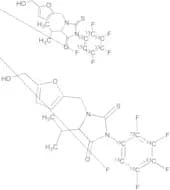
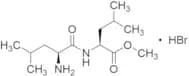
Produit contrôléFormule :C6C12H15F5N2O3SCouleur et forme :NeatMasse moléculaire :440.336H-Leu-Leu-OMe·HBr
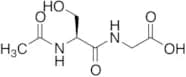
CAS :Produit contrôléFormule :C13H26N2O3·BrHCouleur et forme :NeatMasse moléculaire :339.269Acetyl-L-serylglycine
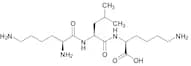
CAS :Produit contrôléFormule :C7H12N2O5Couleur et forme :NeatMasse moléculaire :204.181H-Lys-Leu-Lys-OH Acetate Salt
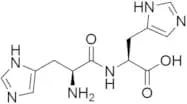
CAS :Produit contrôléFormule :C18H37N5O4Couleur et forme :NeatMasse moléculaire :387.517L-Histidyl-L-histidine TFA
CAS :Produit contrôléFormule :C12H16N6O3Couleur et forme :NeatMasse moléculaire :292.294N-Et-Val-Leu-anilide
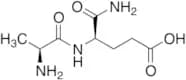
CAS :Produit contrôléFormule :C19H31N3O2Couleur et forme :NeatMasse moléculaire :333.468H-Ala-D-Glu-NH2
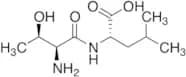
CAS :Produit contrôléFormule :C8H15N3O4Couleur et forme :NeatMasse moléculaire :217.222H-Thr-Leu-OH
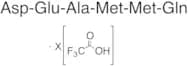
CAS :Produit contrôlé<p>Applications H-Thr-Leu-OH(cas# 50299-12-2) is a useful research chemical.<br></p>Formule :C10H20N2O4Couleur et forme :NeatMasse moléculaire :232.28Asp-Glu-Ala-Met-Met-Gln Trifluoroacetic Acid Salt(A.A Sequence DEAMMQ)
Produit contrôlé<p>Applications Asp-Glu-Ala-Met-Met-Gln Trifluoroacetic Acid Salt is a custom peptide sequence.<br></p>Formule :C27H45N7O12S2·x(C2HF3O2)Couleur et forme :NeatMasse moléculaire :723.81 + x(114.02)Isovaleryl-Phe-Nle-Sta-Ala-Sta-OH
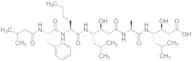
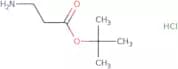
CAS :Produit contrôléFormule :C39H65N5O9Couleur et forme :NeatMasse moléculaire :747.962β-Alanine tert-butyl ester hydrochloride
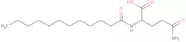
CAS :<p>Beta-alanine tert-butyl ester hydrochloride is a hydrogenated beta-amino acid ester that is used as a peptidomimetic. It has been shown to be absorbed by the intestine and it can be used to focus on chloride channels in the intestinal cells. Beta-alanine tert-butyl ester hydrochloride is an organic solvent and can also be used as an excipient for drug formulations. The molecule has a benzyl group and a chloride group, which are both substituted with hydrogen atoms.</p>Formule :C7H15NO2·HClDegré de pureté :Min. 95%Couleur et forme :White PowderMasse moléculaire :181.66 g/molN2-Lauroyl-L-glutamine
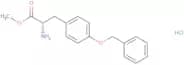
CAS :<p>N2-Lauroyl-L-glutamine is a surfactant that is used in skin care products. It is an amphiphilic molecule that has a hydrophilic head and lipophilic tail, which allows it to form micelles. This surfactant can be found as either the L or D isomer, which are mirror images of each other. The L form is more soluble and less hygroscopic than the D form. N2-Lauroyl-L-glutamine also contains fatty acids, polycarboxylic acid, and monomers. In addition to being used in skin care products, this surfactant can be found in cosmetics such as sunscreens and moisturizers. It also has a polymerization initiator function for silicone polymers and polyurethanes.</p>Formule :C17H32N2O4Degré de pureté :Min. 95%Couleur et forme :White/Off-White SolidMasse moléculaire :328.45 g/molO-Benzyl-L-tyrosine methyl ester hydrochloride
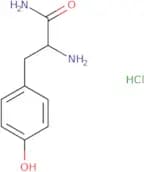
CAS :<p>Please enquire for more information about O-Benzyl-L-tyrosine methyl ester hydrochloride including the price, delivery time and more detailed product information at the technical inquiry form on this page</p>Formule :C17H19NO3·HClDegré de pureté :Min. 95%Couleur et forme :PowderMasse moléculaire :321.8 g/molH-D-Tyr-NH2·HCl
CAS :<p>Versatile small molecule scaffold</p>Formule :C9H12N2O2Degré de pureté :Min. 95%Masse moléculaire :216.66 g/mol(+/-)-BOC-a-phosphonoglycine tri-methyl ester
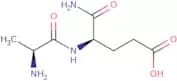
CAS :<p>Reagent in the chemical synthesis</p>Formule :C10H20NO7PDegré de pureté :Min. 95%Couleur et forme :White PowderMasse moléculaire :297.24 g/molH-Ala-D-Glu-NH2
CAS :<p>Please enquire for more information about H-Ala-D-Glu-NH2 including the price, delivery time and more detailed product information at the technical inquiry form on this page</p>Formule :C8H15N3O4Degré de pureté :95%MinMasse moléculaire :217.22 g/molDL-2-Aminoadipic acid
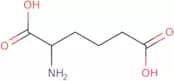
CAS :<p>DL-2-Aminoadipic acid is a metabolite of the amino acid lysine, which is found in many protein-containing foods. It is also synthesized from glutamate, which is an excitatory neurotransmitter and a major regulator of neuronal function. This compound has been shown to have potential as a biomarker for metabolic disorders. DL-2-Aminoadipic acid has been shown to bind to penicillin-binding proteins (PBPs) in the bacterial cell wall and disrupt its formation, leading to the inhibition of peptidoglycan synthesis. DL-2-Aminoadipic acid may also be involved in regulating gamma-aminobutyric acid (GABA), an inhibitory neurotransmitter that inhibits the release of excitatory neurotransmitters. DL-2-Aminoadipic acid has also been shown to inhibit HIV infection by binding to lysine residues on the virus envelope protein gp120.</p>Formule :C6H11NO4Degré de pureté :Min. 95%Couleur et forme :White PowderMasse moléculaire :161.16 g/molN-Acetylglycine
CAS :<p>N-Acetylglycine is a versatile building block for the synthesis of complex organic compounds. It is used as a reagent in research, as an intermediate in chemical reactions, or as a speciality chemical. N-Acetylglycine has been found to be useful as a building block in organic synthesis and can be reacted with other chemicals to form new compounds. N-Acetylglycine has also been shown to have anti-inflammatory properties and is used as an analgesic for pain relief.</p>Formule :C4H7NO3Masse moléculaire :117.11 g/molL-Abrine
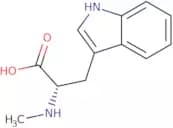
CAS :<p>L-Abrine is a plant toxin that belongs to the group of abrinoids. It is a chiral molecule and can exist as an L-form or D-form. The L-form is used in some analytical methods, such as gas chromatography, while the D-form is used in medical purposes. L-Abrine has been shown to have anti-HIV effects by inhibiting reverse transcriptase and deoxyribonuclease activity. It has also been shown to inhibit colony stimulating factor production and decrease bacterial growth in vitro. L-Abrine inhibits the replication of bacteria by binding to adenylate cyclase and blocking the enzyme's ability to synthesize cAMP from ATP. This inhibition prevents protein synthesis, leading to cell death.</p>Formule :C12H14N2O2Degré de pureté :Min. 95%Couleur et forme :PowderMasse moléculaire :218.25 g/molD-Valinol
CAS :<p>D-Valinol is a fine chemical that has been used as an intermediate in the synthesis of other chemicals. It is also a versatile building block for organic reactions, such as condensation reactions. D-Valinol is a white solid and has CAS No. 4276-09-9. It can be used as a reagent or catalyst in the synthesis of pharmaceuticals, agrochemicals, and other speciality chemicals. D-Valinol is also useful as an intermediate in the production of high quality research chemicals and speciality chemicals.</p>Formule :C5H13NODegré de pureté :Min. 98.0 Area-%Masse moléculaire :103.1 g/molL-Alaninol
CAS :<p>L-Alaninol is a chemical compound that is used as a building block in organic synthesis.</p>Formule :C3H9NOMasse moléculaire :75.11 g/molFmoc-[D10]Leu-OH
CAS :Produit contrôlé<p>Please enquire for more information about Fmoc-[D10]Leu-OH including the price, delivery time and more detailed product information at the technical inquiry form on this page</p>Formule :C21H13D10NO4Degré de pureté :Min. 95%Masse moléculaire :363.47 g/molN-Chloroacetyl-L-tyrosine
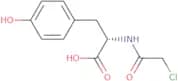
CAS :<p>N-Chloroacetyl-L-tyrosine is a synthetic, proteolytic enzyme that hydrolyzes proteins containing the amino acid L-tyrosine. It has been shown to inhibit the growth of bacteria by inhibiting the activity of enzymes involved with protein synthesis and peptide bond formation. N-Chloroacetyl-L-tyrosine inhibits the activity of diazonium salt and conjugates, which are involved in polypeptide synthesis and DNA replication. It also has an inhibitory effect on functional groups, such as hydroxyl, amine, sulfhydryl, carboxylate, phosphate, and phosphoric acid.</p>Degré de pureté :Min. 95%Masse moléculaire :257.67 g/molD-Selenocystine
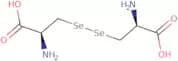
CAS :<p>Selenocystine is a non-protein amino acid that belongs to the group of selenoamino acids. Selenocystine is found in plants and microorganisms, where it plays a role in bacterial metabolism. Selenocystine can be synthesized by bacteria from D-glutamate, cysteine, and hydrogen sulfide. It has been shown to have synergistic effects with other compounds such as carbon sources, hydroxyl ions, and subunits. Selenocystine has been shown to inhibit the growth of certain strains of bacteria that are resistant to antibiotics such as penicillin or erythromycin. These effects are mediated through the mitochondrial membrane potential and may also be due to its ability to inhibit microbial respiration.</p>Formule :C6H12N2O4Se2Degré de pureté :Min. 95%Couleur et forme :PowderMasse moléculaire :334.09 g/molD-Histidinol dihydrochloride
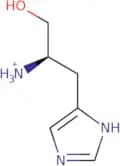
CAS :<p>D-Histidinol dihydrochloride is a non-nucleoside inhibitor of phosphodiesterase enzymes. It has shown to be an effective inhibitor of topoisomerase II and topoisomerase IV, which are essential for DNA replication, repair and recombination. D-Histidinol dihydrochloride has been shown to inhibit the phosphodiesterase activity of several different types of cellular enzymes, including PDE1A4, PDE2A4 and PDE3A4. This drug also has shown to have some structural similarities with the nucleoside diphosphate analogs cAMP and cGMP. D-Histidinol dihydrochloride may be useful in the treatment of diseases that involve damage to DNA or cells.</p>Formule :C6H11N3O·2HClDegré de pureté :Min. 95%Masse moléculaire :214.09 g/mol5-Methyl-L-norleucine
CAS :<p>5-Methyl-L-norleucine is an amide that is a natriuretic and has been shown to have physiological activities. It has been shown to have restenosis and tumor treatment properties, as well as antimicrobial resistance. 5-Methyl-L-norleucine also acts as a cyclic peptide, which may be due to its disulfide bond. This compound is not only effective in treating microbial infections, but it also has anti-inflammatory properties. 5-Methyl-L-norleucine is found in the genus of plants called "Acorus," so it can be used for plant physiology research.</p>Formule :C7H15NO2Degré de pureté :Min. 95%Couleur et forme :White PowderMasse moléculaire :145.2 g/molFmoc-β-azidoalanine
CAS :<p>Fmoc-β-azidoalanine is a cyclic peptide that is synthesized by the Fmoc solid phase peptide synthesis method. It is used as a model for serine proteases, and its ability to bind to other molecules has been shown using molecular modelling and validation. Fmoc-β-azidoalanine has an acidic side chain that can form a disulfide bond with cysteine residues on proteins. This property allows it to be used in crystallography and chemical biology studies. The molecule can also be used in the study of human serum biomolecules.</p>Formule :C18H16N4O4Degré de pureté :Min. 98 Area-%Couleur et forme :PowderMasse moléculaire :352.34 g/mol










![Fmoc-[D10]Leu-OH](/_next/image/?url=https%3A%2Fstatic.cymitquimica.com%2Fproducts%2F3D%2Fthumb-webp%2FFF111392.webp&w=3840&q=75)