Microtubules associés
Les inhibiteurs des protéines associées aux microtubules ciblent les protéines qui interagissent avec les microtubules, les composants structurels du cytosquelette de la cellule qui sont essentiels à la division cellulaire. Ces protéines régulent la stabilité et la dynamique des microtubules pendant la mitose. L'inhibition des protéines associées aux microtubules peut perturber la fonction des microtubules, entraînant un arrêt du cycle cellulaire et l'apoptose, en particulier dans les cellules cancéreuses à division rapide. Ces inhibiteurs sont largement utilisés dans la recherche sur le cancer et le développement de médicaments. Chez CymitQuimica, nous offrons une gamme complète d'inhibiteurs de protéines associées aux microtubules de haute qualité pour soutenir vos recherches sur la division cellulaire, la dynamique du cytosquelette et la thérapie contre le cancer.
262 produits trouvés pour "Microtubules associés"
Trier par
Degré de pureté (%)
0
100
|
0
|
50
|
90
|
95
|
100
Antitubulin agent 1
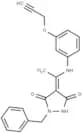
<p>Antitubulin agents-1 disrupts microtubules, ups α-tubulin acetylation, and has anticancer properties.</p>Formule :C21H19N3O3Couleur et forme :SolidMasse moléculaire :361.39Alfalone
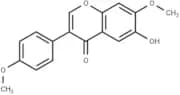
CAS :<p>Alfalone (compound 9ia) is an antimitotic agent. It induces cleavage arrest and initiates the formation of tubercular eggs.</p>Formule :C17H14O5Couleur et forme :SolidMasse moléculaire :298.29TTBK1/2-IN-1
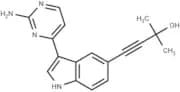
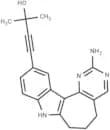
CAS :<p>TTBK1/2-IN-1 (compound 3) is a potent inhibitor of Tau tubulin kinase 1 (TTBK1) and TTBK2, with IC50 values of 816 nM and 384 nM, respectively.</p>Formule :C17H16N4OCouleur et forme :SolidMasse moléculaire :292.335Dictyostatin
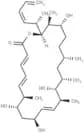
CAS :<p>Dictyostatin: potent microtubule stabilizer & anticancer agent with antiproliferative effects; researched for tauopathies.</p>Formule :C32H52O6Couleur et forme :SolidMasse moléculaire :532.75AMG28
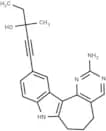
CAS :<p>AMG28 is an inhibitor of Tau tubulin kinase 1 (TTBK1) and TTBK2, with IC50 values of 805 nM and 988 nM, respectively. Additionally, AMG28 suppresses the phosphorylation of tau protein at the Ser422 site, with an IC50 of 1.85 μM.</p>Formule :C20H20N4OCouleur et forme :SolidMasse moléculaire :332.399Tubulin inhibitor 19
<p>Tubulin inhibitor 19 (9b), a potent indole chalcone, strongly blocks tubulin, valuable in cancer studies.</p>Formule :C21H23NO5Couleur et forme :SolidMasse moléculaire :369.41Antitumor agent-200
CAS :<p>Antitumor agent-200 (Compound 2g) is a microtubule synthesis inhibitor that binds to the colchicine site on tubulin, causing G2/M cell cycle arrest and inducing reactive oxygen species (ROS) production. It demonstrates significant inhibitory activity against P-glycoprotein (P-gp) overexpressing cell lines MCF7/ADR and KBV200, with resistance indices (DRI) of 0.83 and 0.58, respectively. In an MCF-7 xenograft model, Antitumor agent-200 (at 25 mg/kg, administered intraperitoneally) achieves a 57.2% tumor growth inhibition rate. This compound is applicable for research in the field of cancer therapy.</p>Formule :C19H21FN2O3SeCouleur et forme :SolidMasse moléculaire :423.34Tubulin inhibitor 22
<p>Compound 4c: Strong tubulin inhibitor with anti-cancer & anti-angiogenic effects; halts MGC-803 cells in G2/M, triggers Caspase-mediated apoptosis.</p>Formule :C20H17BrFNO4Couleur et forme :SolidMasse moléculaire :434.26Tubulin polymerization-IN-34
<p>"Tubulin-IN-34 inhibits oxazolylisoindole microtubule assembly, selective for VL51 lymphoma."</p>Formule :C31H35N3O6Couleur et forme :SolidMasse moléculaire :545.63TTBK1/2-IN-3
CAS :<p>TTBK1/2-IN-3 (compound 10) is a potent inhibitor of Tau tubulin kinase 1 (TTBK1) and TTBK2, with IC50 values of 579 nM and 258 nM, respectively. TTBK1/2-IN-3 can reduce the expression of primary cilia on the surface of human induced pluripotent stem cells (iPSC).</p>Formule :C21H22N4OCouleur et forme :SolidMasse moléculaire :346.426PM-060184
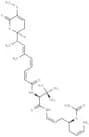
CAS :<p>PM-060184, a tubulin polymerisation inhibitor, is used potentially for the treatment of solid tumours and breast cancer.</p>Formule :C31H45N3O7Degré de pureté :98%Couleur et forme :SolidMasse moléculaire :571.7Tubulin polymerization-IN-35
<p>Tubulin-IN-35 inhibits oxazolylisoindole microtubule formation, targeting VL51 marginal zone lymphoma.</p>Formule :C31H35N3O5Couleur et forme :SolidMasse moléculaire :529.63Tubulin polymerization-IN-8
CAS :<p>Compound IIc inhibits tubulin polymerization, arrests cell cycle at G2/M in HCT116 cells, IC50 12.7 μM, potential for cancer research.</p>Formule :C21H24N4O4SCouleur et forme :SolidMasse moléculaire :428.5Epothilone E
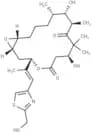
CAS :<p>Epothilone E, a derivative of epothilone, functions by inhibiting microtubule protein activity, thereby halting cell division and exhibiting anti-tumor</p>Formule :C26H39NO7SCouleur et forme :SolidMasse moléculaire :509.66Tubulin inhibitor 15
<p>Tubulin inhibitor 15 is a potent tubulin inhibitor with antiproliferative activity. Tubulin inhibitor 15 exhibits cytotoxicity in HepG2 cells [1].</p>Formule :C16H12FNO2Couleur et forme :SolidMasse moléculaire :269.27Tubulin inhibitor 49
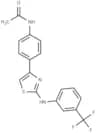
CAS :<p>Tubulin inhibitor 49 (Compound 18) is an inhibitor of tubulin polymerization with an IC50 of 48 μM. It disrupts the microtubule network of cells, causing cell cycle arrest in the G2 phase, and exhibits cytotoxicity with an IC50 of 8.8 μM in HeLa cells.</p>Formule :C18H14F3N3OSCouleur et forme :SolidMasse moléculaire :377.383Tau ligand-1
CAS :<p>Tau ligand-1 (Compound 75) is a ligand of aggregated tau protein that can penetrate the blood-brain barrier. In tissues affected by Alzheimer's disease, progressive supranuclear palsy, corticobasal degeneration, and Pick's disease, Tau ligand-1 shows high affinity for aggregated tau protein, with equilibrium dissociation constants (KD) ranging from 1 to 3.8 nM. It holds potential as a positron emission tomography (PET) tracer for imaging studies of tau-related diseases within the central nervous system.</p>Formule :C17H16FN3OCouleur et forme :SolidMasse moléculaire :297.327PROTAC α-synuclein degrader 6
CAS :<p>PROTACα-synuclein degrader 6 (compound T3) is a PROTAC degrader of α-synuclein and tau, with an EC50 of 1.57 μM and 4.09 μM, respectively. This compound plays a significant role in neurodegenerative disease (ND) research.</p>Formule :C37H39N5O9SMasse moléculaire :729.80Ombrabulin
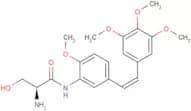
CAS :<p>Ombrabulin is a derivative of CA-4 phosphate. It is known to show antivascular effects through selective disruption of the tubulin cytoskeleton of endothelial cells.</p>Formule :C21H26N2O6Degré de pureté :98%Couleur et forme :SolidMasse moléculaire :402.44