Pharmacopées, ouvrages relatifs à la pharmacie et aux médicaments
Les pharmacopées, la pharmacie et les ouvrages liés aux médicaments constituent la base réglementaire et technique qui garantit la qualité, la sécurité et l'efficacité des produits pharmaceutiques. Les pharmacopées sont des recueils officiels contenant des normes et des spécifications détaillées pour la fabrication et le contrôle de qualité des médicaments. Dans le domaine de la pharmacie, ces documents sont essentiels pour les professionnels qui développent, produisent et dispensent des médicaments, garantissant qu'ils respectent les normes requises. Chez CymitQuimica, nous proposons une vaste collection de produits et réactifs conformes aux spécifications des pharmacopées les plus reconnues au monde. Notre catalogue comprend des ingrédients actifs, des excipients et des standards de référence, tous conçus pour répondre aux besoins des professionnels du domaine de la pharmacie et de la recherche pharmaceutique, facilitant le développement et la production de médicaments sûrs et efficaces.
277 produits trouvés pour "Pharmacopées, ouvrages relatifs à la pharmacie et aux médicaments"
Trier par
Le filtre de pureté n’est pas visible car les produits actuels ne disposent pas de données de pureté associées pour le filtrage.
European Pharmacopoeia 10th Edition (10.3-10.4-10.5) - Book - French - Supplement 10.5
<p>La Pharmacopée Européenne (Ph. Eur.) est un ouvrage de référence unique en matière de contrôle qualité des médicaments. Les normes officielles qui y sont publiées fournissent une base scientifique au contrôle qualité durant toute la vie des médicaments.<br><br>Ces normes sont juridiquement contraignantes — ce qui est expressément stipulé dans la Convention relative à l’élaboration d’une Pharmacopée européenne et dans les législations pharmaceutiques nationales et de l’UE. Les normes qualité de la Ph. Eur. deviennent d’application obligatoire à la même date dans tous les États Parties à la convention.<br><br><br>La 10e Édition en bref<br><br> • Juridiquement contraignante dans 39 pays d’Europe et appliquée dans plus de 120 pays du monde entier<br> • Contient des nouveaux textes et des textes révisés<br> • Divulgue des informations essentielles pour les marchés européens avant toutes les autres pharmacopées<br> • La 10e Edition (Supplément 10.5 inclus) comprend 2447 monographies (y compris les formes pharmaceutiques), 378 textes généraux (y compris les monographies générales et méthodes d’analyse) et environ 2800 descriptions de réactifs.<br><br><br>Calendrier de parution<br><br>La 10e Édition de la Ph. Eur. a été publiée en juillet 2019 et sera complétée par huit suppléments périodiques (10.1 à 10.8) au cours des trois années suivantes. <br><br>Supplément 10.3 publiée en juillet 2020,<br>Supplément 10.4 publiée en octobre 2020,<br>Supplément 10.5 publiée en janvier 2021.<br><br><br>Version papier<br><br>La 10e Édition est composée de trois volumes initiaux (10.0), complétés par huit suppléments non cumulatifs (10.1 à 10.8). Par souci de commodité des utilisateurs, un accès direct aux informations complémentaires (base de données Knowledge) est inclus pour chaque monographie et chaque chapitre général (code Datamatrix). Disponible en français ou en anglais, la version papier contient une clé d’activation (code EPID) qui donne accès aux archives en ligne.</p>Ref: 41-PUB200336-10.5
1uÀ demanderEuropean Pharmacopoeia 10th Edition (10.6-10.7-10.8) - Book - English - Supplement 10.7
<p>The European Pharmacopoeia (Ph. Eur.) is a single reference work for the quality control of medicines. The official standards it contains provide a scientific basis for quality control during the entire life cycle of a product.<br><br>These standards are legally binding – as laid down in the Council of Europe Convention on the Elaboration of a European Pharmacopoeia and in EU and national pharmaceutical legislation. Ph. Eur. quality standards become mandatory on the same date in all States Parties to the convention.<br><br><br>The 10th Edition at a glance<br><br> • Legally binding in 39 European countries and applied in more than 120 countries worldwide.<br> • Provides new and revised texts.<br> • Delivers crucial information for European markets earlier than any other Pharmacopoeia.<br> • The 10th Edition (including Supplement 10.5) contains 2447 monographs (including dosage forms), 378 general texts (including general monographs and methods of analysis) and about 2800 descriptions of reagents.<br><br><br>Initial release and updates<br><br>The 10th Edition of the Ph. Eur. was released in July 2019 and will be updated with eight periodic supplements over the following three years (10.1 to 10.8). <br><br>The subscription contains 3 issues in English:<br><br>Supplement 10.6 published in July 2021,<br>Supplement 10.7 published in October 2021 and<br>Supplement 10.8 published in January 2022.<br><br>Print version<br><br>The 10th Edition consists of three initial volumes (10.0) complemented by eight non-cumulative supplements (10.1 to 10.8). For the convenience of users, direct access to complementary information (Knowledge Database) is included for each monograph and general chapter through a data matrix code. Available in either English or French, the print version contains a subscription key (EPID code) that allows access to online archives.</p>Ref: 41-PUB200334-10.7
1uÀ demanderEuropean Pharmacopoeia 11th Edition (11.6-11.7-11.8) - Book - English-Supplement 11.7
<p>The European Pharmacopoeia (Ph. Eur.) is a single reference work for the quality control of medicines. The official standards it contains provide a scientific basis for quality control during the entire life cycle of a product.<br><br>These standards are legally binding – as laid down in the Council of Europe Convention on the Elaboration of a European Pharmacopoeia and in EU and national pharmaceutical legislation. Ph. Eur. quality standards become mandatory on the same date in all States Parties to the convention.<br><br><br>The 2025 subscriptions to the European Pharmacopoeia (Ph. Eur.), including the initial release (11.6) and the first two supplements (11.7-11.8), are now available for sale in the WebStore of the European Directorate for the Quality of Medicines & HealthCare (EDQM).<br><br>The 11th Edition key facts and figures<br>New edition, legally binding in 39 European countries as of 1 January 2025 and applied in more than 130 countries worldwide.<br>Continuously updated and modernised to meet users' needs. <br>The 11th Edition of the Ph. Eur. contains:<br>2 469 monographs (including dosage forms);<br>386 general texts (including general monographs and methods of analysis);<br>and more than 2 800 descriptions of reagents.<br>Will be released in July 2022 and will be updated with eight periodic supplements over the following three years (11.1 to 11.8).<br><br>Supplement 11.6 published in July 2024,<br>Supplement 11.7 published in October 2024 and<br>Supplement 11.8 published in January 2025.<br><br>Subscribers may choose either of the two formats proposed:<br><br>Online version<br>Online and downloadable access to Supplement 11.6 to Supplement 11.8.<br>Cumulative version.<br>Languages: English, French.<br><br>This will give you access from July 2024 to the end of December 2025.<br>tablet and smartphone friendly: access via all recent common operating systems (Windows, Linux and Mac compatible)<br><br>Print<br>available in English or French<br>includes the first three volumes (11.6) and two non-cumulative updates (11.7 and 11.8)<br>Other highlights:<br><br>Access to the Ph. Eur. online archives is included in all our subscriptions.<br>Special prices for multiple and unlimited licences are available for the online version.<br>A package including both formats is available at a special price.<br></p>Ref: 41-PUB200448-11.7
1uÀ demanderEuropean Pharmacopoeia 11th Edition (11.6-11.7-11.8) - Book - English-Supplement 11.8
<p>The European Pharmacopoeia (Ph. Eur.) is a single reference work for the quality control of medicines. The official standards it contains provide a scientific basis for quality control during the entire life cycle of a product.<br><br>These standards are legally binding – as laid down in the Council of Europe Convention on the Elaboration of a European Pharmacopoeia and in EU and national pharmaceutical legislation. Ph. Eur. quality standards become mandatory on the same date in all States Parties to the convention.<br><br><br>The 2025 subscriptions to the European Pharmacopoeia (Ph. Eur.), including the initial release (11.6) and the first two supplements (11.7-11.8), are now available for sale in the WebStore of the European Directorate for the Quality of Medicines & HealthCare (EDQM).<br><br>The 11th Edition key facts and figures<br>New edition, legally binding in 39 European countries as of 1 January 2025 and applied in more than 130 countries worldwide.<br>Continuously updated and modernised to meet users' needs. <br>The 11th Edition of the Ph. Eur. contains:<br>2 469 monographs (including dosage forms);<br>386 general texts (including general monographs and methods of analysis);<br>and more than 2 800 descriptions of reagents.<br>Will be released in July 2022 and will be updated with eight periodic supplements over the following three years (11.1 to 11.8).<br><br>Supplement 11.6 published in July 2024,<br>Supplement 11.7 published in October 2024 and<br>Supplement 11.8 published in January 2025.<br><br>Subscribers may choose either of the two formats proposed:<br><br>Online version<br>Online and downloadable access to Supplement 11.6 to Supplement 11.8.<br>Cumulative version.<br>Languages: English, French.<br><br>This will give you access from July 2024 to the end of December 2025.<br>tablet and smartphone friendly: access via all recent common operating systems (Windows, Linux and Mac compatible)<br><br>Print<br>available in English or French<br>includes the first three volumes (11.6) and two non-cumulative updates (11.7 and 11.8)<br>Other highlights:<br><br>Access to the Ph. Eur. online archives is included in all our subscriptions.<br>Special prices for multiple and unlimited licences are available for the online version.<br>A package including both formats is available at a special price.<br></p>Ref: 41-PUB200448-11.8
1uÀ demanderEuropean Pharmacopoeia 11th Edition (11.6-11.7-11.8) - Book - English
<p>The European Pharmacopoeia (Ph. Eur.) is a single reference work for the quality control of medicines. The official standards it contains provide a scientific basis for quality control during the entire life cycle of a product.<br><br>These standards are legally binding – as laid down in the Council of Europe Convention on the Elaboration of a European Pharmacopoeia and in EU and national pharmaceutical legislation. Ph. Eur. quality standards become mandatory on the same date in all States Parties to the convention.<br><br><br>The 2025 subscriptions to the European Pharmacopoeia (Ph. Eur.), including the initial release (11.6) and the first two supplements (11.7-11.8), are now available for sale in the WebStore of the European Directorate for the Quality of Medicines & HealthCare (EDQM).<br><br>The 11th Edition key facts and figures<br>New edition, legally binding in 39 European countries as of 1 January 2025 and applied in more than 130 countries worldwide.<br>Continuously updated and modernised to meet users' needs. <br>The 11th Edition of the Ph. Eur. contains:<br>2 469 monographs (including dosage forms);<br>386 general texts (including general monographs and methods of analysis);<br>and more than 2 800 descriptions of reagents.<br>Will be released in July 2022 and will be updated with eight periodic supplements over the following three years (11.1 to 11.8).<br><br>Supplement 11.6 published in July 2024,<br>Supplement 11.7 published in October 2024 and<br>Supplement 11.8 published in January 2025.<br><br>Subscribers may choose either of the two formats proposed:<br><br>Online version<br>Online and downloadable access to Supplement 11.6 to Supplement 11.8.<br>Cumulative version.<br>Languages: English, French.<br><br>This will give you access from July 2024 to the end of December 2025.<br>tablet and smartphone friendly: access via all recent common operating systems (Windows, Linux and Mac compatible)<br><br>Print<br>available in English or French<br>includes the first three volumes (11.6) and two non-cumulative updates (11.7 and 11.8)<br>Other highlights:<br><br>Access to the Ph. Eur. online archives is included in all our subscriptions.<br>Special prices for multiple and unlimited licences are available for the online version.<br>A package including both formats is available at a special price.<br></p>Ref: 41-PUB200448
1u570,00€European Pharmacopoeia 11th Edition (11.6-11.7-11.8) - Online Version - Bilingual
<p>European Pharmacopoeia 2025 subscription:<br><br><br>The European Pharmacopoeia (Ph. Eur.) is a single reference work for the quality control of medicines. The official standards it contains provide a scientific basis for quality control during the entire life cycle of a product.<br><br>These standards are legally binding – as laid down in the Council of Europe Convention on the Elaboration of a European Pharmacopoeia and in EU and national pharmaceutical legislation. Ph. Eur. quality standards become mandatory on the same date in all States Parties to the convention.<br><br><br>The 11th Edition at a glance<br><br> • Legally binding in 39 European countries and applied in more than 120 countries worldwide.<br> • Provides new and revised texts.<br> • Delivers crucial information for European markets earlier than any other Pharmacopoeia.<br> • The 10th Edition (including Supplement 10.5) contains 2447 monographs (including dosage forms), 378 general texts (including general monographs and methods of analysis) and about 2800 descriptions of reagents.<br><br><br>Initial release and updates<br><br>The 11th Edition of the Ph. Eur. was released in July 2024 and will be updated with eight periodic supplements over the following three years (11.1 to 11.8). <br><br>Main volume 11.6 published in July 2024,<br>Supplement 11.7 published in October 2024,<br>Supplement 11.8 published in January 2025.<br><br><br>Electronic version:<br><br> • Completely cumulative versions, bilingual (English and French), with new features and direct access to complementary information (Knowledge Database);<br> • Access to the European Pharmacopoeia Online website from all recent common operating systems (tablet and smartphone friendly);<br> • An application fully compatible with recent Windows and Linux operating systems;<br> • Two installation options for each electronic licence: either individual or shared access (one option to be chosen):<br> • Individual use: install the application on one computer and on one USB stick, for online or offline use and easy access while on the move or in environments where using the book or the website is not possible or practical;<br> • Shared use: install the application on one computer or one USB stick, for online or offline use, for example for non-nominative access in university libraries or laboratories.</p>Ref: 41-PUB200454
1u570,00€European Pharmacopoeia 10th Edition (10.3-10.4-10.5) - Book - French - Supplement 10.4
<p>La Pharmacopée Européenne (Ph. Eur.) est un ouvrage de référence unique en matière de contrôle qualité des médicaments. Les normes officielles qui y sont publiées fournissent une base scientifique au contrôle qualité durant toute la vie des médicaments.<br><br>Ces normes sont juridiquement contraignantes — ce qui est expressément stipulé dans la Convention relative à l’élaboration d’une Pharmacopée européenne et dans les législations pharmaceutiques nationales et de l’UE. Les normes qualité de la Ph. Eur. deviennent d’application obligatoire à la même date dans tous les États Parties à la convention.<br><br><br>La 10e Édition en bref<br><br> • Juridiquement contraignante dans 39 pays d’Europe et appliquée dans plus de 120 pays du monde entier<br> • Contient des nouveaux textes et des textes révisés<br> • Divulgue des informations essentielles pour les marchés européens avant toutes les autres pharmacopées<br> • La 10e Edition (Supplément 10.5 inclus) comprend 2447 monographies (y compris les formes pharmaceutiques), 378 textes généraux (y compris les monographies générales et méthodes d’analyse) et environ 2800 descriptions de réactifs.<br><br><br>Calendrier de parution<br><br>La 10e Édition de la Ph. Eur. a été publiée en juillet 2019 et sera complétée par huit suppléments périodiques (10.1 à 10.8) au cours des trois années suivantes. <br><br>Supplément 10.3 publiée en juillet 2020,<br>Supplément 10.4 publiée en octobre 2020,<br>Supplément 10.5 publiée en janvier 2021.<br><br><br>Version papier<br><br>La 10e Édition est composée de trois volumes initiaux (10.0), complétés par huit suppléments non cumulatifs (10.1 à 10.8). Par souci de commodité des utilisateurs, un accès direct aux informations complémentaires (base de données Knowledge) est inclus pour chaque monographie et chaque chapitre général (code Datamatrix). Disponible en français ou en anglais, la version papier contient une clé d’activation (code EPID) qui donne accès aux archives en ligne.</p>Ref: 41-PUB200336-10.4
1uÀ demanderEuropean Pharmacopoeia 11th Edition (11.6-11.7-11.8) - Package (Book+Online version) English
<p>The European Pharmacopoeia (Ph. Eur.) is a single reference work for the quality control of medicines. The official standards it contains provide a scientific basis for quality control during the entire life cycle of a product.<br><br>These standards are legally binding – as laid down in the Council of Europe Convention on the Elaboration of a European Pharmacopoeia and in EU and national pharmaceutical legislation. Ph. Eur. quality standards become mandatory on the same date in all States Parties to the convention.<br><br><br>The 2025 subscriptions to the European Pharmacopoeia (Ph. Eur.), including the initial release (11.6) and the first two supplements (11.7-11.8), are now available for sale in the WebStore of the European Directorate for the Quality of Medicines & HealthCare (EDQM).<br><br>The 11th Edition key facts and figures<br>New edition, legally binding in 39 European countries as of 1 January 2025 and applied in more than 130 countries worldwide.<br>Continuously updated and modernised to meet users' needs. <br>The 11th Edition of the Ph. Eur. contains:<br>2 469 monographs (including dosage forms);<br>386 general texts (including general monographs and methods of analysis);<br>and more than 2 800 descriptions of reagents.<br>Will be released in July 2022 and will be updated with eight periodic supplements over the following three years (11.1 to 11.8).<br><br>Supplement 11.6 published in July 2024,<br>Supplement 11.7 published in October 2024 and<br>Supplement 11.8 published in January 2025.<br><br>Subscribers may choose either of the two formats proposed:<br><br>Online version<br>Online and downloadable access to Supplement 11.6 to Supplement 11.8.<br>Cumulative version.<br>Languages: English, French.<br><br>This will give you access from July 2024 to the end of December 2025.<br>tablet and smartphone friendly: access via all recent common operating systems (Windows, Linux and Mac compatible)<br><br>Print<br>available in English or French<br>includes the first three volumes (11.6) and two non-cumulative updates (11.7 and 11.8)<br>Other highlights:<br><br>Access to the Ph. Eur. online archives is included in all our subscriptions.<br>Special prices for multiple and unlimited licences are available for the online version.<br>A package including both formats is available at a special price.<br></p>Ref: 41-PUB200460
1u870,00€European Pharmacopoeia 10th Edition (10.3-10.4-10.5) - Book - English - Supplement 10.5
<p>The European Pharmacopoeia (Ph. Eur.) is a single reference work for the quality control of medicines. The official standards it contains provide a scientific basis for quality control during the entire life cycle of a product.<br><br>These standards are legally binding – as laid down in the Council of Europe Convention on the Elaboration of a European Pharmacopoeia and in EU and national pharmaceutical legislation. Ph. Eur. quality standards become mandatory on the same date in all States Parties to the convention.<br><br><br>The 10th Edition at a glance<br><br> • Legally binding in 39 European countries and applied in more than 120 countries worldwide.<br> • Provides new and revised texts.<br> • Delivers crucial information for European markets earlier than any other Pharmacopoeia.<br> • The 10th Edition (including Supplement 10.5) contains 2447 monographs (including dosage forms), 378 general texts (including general monographs and methods of analysis) and about 2800 descriptions of reagents.<br><br><br>Initial release and updates<br><br>The 10th Edition of the Ph. Eur. was released in July 2019 and will be updated with eight periodic supplements over the following three years (10.1 to 10.8). <br><br>Supplement 10.3 published in July 2020,<br>Supplement 10.4 published in October 2020 and<br>Supplement 10.5 published in January 2021.<br><br><br>Print version<br><br>The 10th Edition consists of three initial volumes (10.0) complemented by eight non-cumulative supplements (10.1 to 10.8). For the convenience of users, direct access to complementary information (Knowledge Database) is included for each monograph and general chapter through a data matrix code. Available in either English or French, the print version contains a subscription key (EPID code) that allows access to online archives.</p>Ref: 41-PUB200333-10.5
1uÀ demanderEuropean Pharmacopoeia 10th Edition (10.3-10.4-10.5) - Book - English - Supplement 10.4
<p>The European Pharmacopoeia (Ph. Eur.) is a single reference work for the quality control of medicines. The official standards it contains provide a scientific basis for quality control during the entire life cycle of a product.<br><br>These standards are legally binding – as laid down in the Council of Europe Convention on the Elaboration of a European Pharmacopoeia and in EU and national pharmaceutical legislation. Ph. Eur. quality standards become mandatory on the same date in all States Parties to the convention.<br><br><br>The 10th Edition at a glance<br><br> • Legally binding in 39 European countries and applied in more than 120 countries worldwide.<br> • Provides new and revised texts.<br> • Delivers crucial information for European markets earlier than any other Pharmacopoeia.<br> • The 10th Edition (including Supplement 10.5) contains 2447 monographs (including dosage forms), 378 general texts (including general monographs and methods of analysis) and about 2800 descriptions of reagents.<br><br><br>Initial release and updates<br><br>The 10th Edition of the Ph. Eur. was released in July 2019 and will be updated with eight periodic supplements over the following three years (10.1 to 10.8). <br><br>Supplement 10.3 published in July 2020,<br>Supplement 10.4 published in October 2020 and<br>Supplement 10.5 published in January 2021.<br><br><br>Print version<br><br>The 10th Edition consists of three initial volumes (10.0) complemented by eight non-cumulative supplements (10.1 to 10.8). For the convenience of users, direct access to complementary information (Knowledge Database) is included for each monograph and general chapter through a data matrix code. Available in either English or French, the print version contains a subscription key (EPID code) that allows access to online archives.</p>Ref: 41-PUB200333-10.4
1uÀ demanderCombistats licence
<p>CombiStats is a calculation program for the statistical analysis of data from biological dilution assays according to Ph. Eur. general chapter 5.3.</p>Ref: 41-COMBI003
licence800,00€European Pharmacopoeia 11th Edition (11.6-11.7-11.8) - Book - French
<p>The European Pharmacopoeia (Ph. Eur.) is a single reference work for the quality control of medicines. The official standards it contains provide a scientific basis for quality control during the entire life cycle of a product.<br><br>These standards are legally binding – as laid down in the Council of Europe Convention on the Elaboration of a European Pharmacopoeia and in EU and national pharmaceutical legislation. Ph. Eur. quality standards become mandatory on the same date in all States Parties to the convention.<br><br><br>The 2025 subscriptions to the European Pharmacopoeia (Ph. Eur.), including the initial release (11.6) and the first two supplements (11.7-11.8), are now available for sale in the WebStore of the European Directorate for the Quality of Medicines & HealthCare (EDQM).<br><br>The 11th Edition key facts and figures<br>New edition, legally binding in 39 European countries as of 1 January 2025 and applied in more than 130 countries worldwide.<br>Continuously updated and modernised to meet users' needs. <br>The 11th Edition of the Ph. Eur. contains:<br>2 469 monographs (including dosage forms);<br>386 general texts (including general monographs and methods of analysis);<br>and more than 2 800 descriptions of reagents.<br>Will be released in July 2022 and will be updated with eight periodic supplements over the following three years (11.1 to 11.8).<br><br>Supplement 11.6 published in July 2024,<br>Supplement 11.7 published in October 2024 and<br>Supplement 11.8 published in January 2025.<br><br>Subscribers may choose either of the two formats proposed:<br><br>Online version<br>Online and downloadable access to Supplement 11.6 to Supplement 11.8.<br>Cumulative version.<br>Languages: English, French.<br><br>This will give you access from July 2024 to the end of December 2025.<br>tablet and smartphone friendly: access via all recent common operating systems (Windows, Linux and Mac compatible)<br><br>Print<br>available in English or French<br>includes the first three volumes (11.6) and two non-cumulative updates (11.7 and 11.8)<br>Other highlights:<br><br>Access to the Ph. Eur. online archives is included in all our subscriptions.<br>Special prices for multiple and unlimited licences are available for the online version.<br>A package including both formats is available at a special price.<br></p>Ref: 41-PUB200451
1uÀ demanderEuropean Pharmacopoeia 12th Edition-Online only format. Bilingual
<p>EUROPEAN PHARMACOPOEIA 12th EDITION<br> <br>European Pharmacopoeia - Individual licence - Bilingual<br><br>As from the 12th Edition:<br>The European Pharmacopoeia is moving to an online-only format.<br>New publication cycle: each edition will comprise three issues published over a 12 month period (e.g. 12,1, 12,2, 12.3)<br>New 365-days licences (from the activation day of the licence key) with an access to all texts (current, future and archives).<br><br>This licence will grant access to all texts (past, current and future) for 365 days from the activation date.<br><br>Note: for orders placed in May and June 2025, licence keys (EPID) will be sent in July (at the latest).<br><br>Languages: bilingual (English & French).<br><br>ISBN: 978-92-871-9611-8<br><br>The former three-year cycle comprising one edition and eight supplements will be replaced by an annual edition made up of three issues, numbered .1 to .3 (for example, the 12th Edition will consist of Issues 12.1, 12.2 and 12.3). Each of these issues will contain the new and revised texts adopted at one of the three European Pharmacopoeia Commission (EPC) sessions held annually. What will not change is the implementation schedule, which remains January, April and July, respectively, of the year following publication of a text. A detailed calendar presenting the EPC sessions and adoption and implementation dates will be published in due time.<br><br>All subscriptions to the 11th Edition will remain valid during the transitional period until the end of 2025. As of 1 January 2026, users will only be able to subscribe to the online version. </p>Ref: 41-PUB200528
1u650,00€The British Pharmacopoeia 2025 - Package: Six-volume printed edition, including the BP 2025 - Single user online licence- Single user download for offline use
<p>The BP 2024 complete package<br><br> • Six-volume printed edition, including the BP (Veterinary) 2023<br> • Single-user online licence<br> • Single-user download for offline use<br><br><br>BP 2024<br>Available from 1 August 2023 | Effective from 1 January 2024 | Superseding the BP 2023.<br><br> BP 2024 supersedes the BP 2023 and becomes legally effective on 1 January 2024. This edition incorporates new monographs from both the BP and Ph. Eur. along with a significant number of revised monographs.<br><br>27 new BP monographs, 17 new Ph. Eur. monographs.<br><br>93 amended BP monographs.<br><br>All monographs from the Ph. Eur. 11th edition and Ph. Eur. supplements 11.1 and 11.2.<br><br>Ph. Eur. supplements 11.3 to 11.5 included as in-year online and download product updates.<br><br>The BP 2024 package<br>The complete package is a great value-for-money option including:<br><br>A six-volume printed edition, including the BP (Veterinary) 2023<br><br>A single-user online licence*<br><br>A single-user download for offline use*<br><br>Other formats are available to ensure users get the best value access to the information they need.<br><br>Add the BP Archive option to the standard package and receive online access to all the BP editions from 2014 to date.<br><br>Online users can also choose to add the British Approved Names (BAN) 2023 to their package, gaining easy access to this useful reference source of medicinal substance names.</p>The British Pharmacopoeia 2025 - Package: Six-volume printed edition, including the BP (Veterinary) 2025 - Single user online licence- Single user download for offline use
<p>The BP 2025 complete package<br><br> • Six-volume printed edition, including the BP (Veterinary) 2024<br> • Single-user online licence<br> • Single-user download for offline use<br><br><br>BP 2025<br>Available from 1 August 2024 | Effective from 1 January 2025 | Superseding the BP 2025.<br><br> BP 2025 supersedes the BP 2024 and becomes legally effective on 1 January 2025. This edition incorporates new monographs from both the BP and Ph. Eur. along with a significant number of revised monographs.<br><br>14 new BP monographs, 32 new Ph. Eur. monographs.<br><br>105 amended BP monographs.<br><br>All monographs from the Ph. Eur. 11th edition and Ph. Eur. supplements 11.3 and 11.5.<br><br>Ph. Eur. supplements 11.6 to 11.8 included as in-year online and download product updates.<br><br>The BP 2025 package<br>The complete package is a great value-for-money option including:<br><br>A six-volume printed edition, including the BP (Veterinary) 2025<br><br>A single-user online licence*<br><br>A single-user download for offline use*<br><br>Other formats are available to ensure users get the best value access to the information they need.<br><br>Add the BP Archive option to the standard package and receive online access to all the BP editions from 2014 to date.<br><br>Online users can also choose to add the British Approved Names (BAN) 2023 to their package, gaining easy access to this useful reference source of medicinal substance names.</p>Drug Information and Literature Evaluation
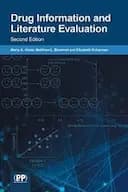
<p>Edited by Marie A. Abate and Matthew L. Blommel<br><br>Second Edition<br><br>Scheduled closure of pharmpress.com<br><br>ISBN 9780857114457<br><br>Published Feb 2023<br><br>252pp<br><br><br>DESCRIPTION:<br><br> A concise guide to medical literature evaluation and the provision of medication and health information. It provides an overview, advantages and disadvantages of all commonly used information resources available to health professionals in print, online or apps. Taking the user from first principles, Drug Information and Literature Evaluation 2nd Edition, addresses each type of resource in turn and provides a step-by-step guide to evaluating clinical studies. The chapters have been updated and expanded, alongside a new chapter focused on literature analysis and application of adverse drug events. It also includes additional worked examples and self-assessment questions for each chapter. <br> </p>Basic Pharmacokinetics
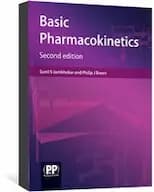
<p>Jambhekar, Sunil S; Breen, Philip J<br><br>Second edition<br><br>Scheduled closure of pharmpress.com<br><br>Sunil S Jambhekar - Professor of Pharmaceutics, LECOM-Bradenton School of Pharmacy, Florida, USA and Philip J Breen - Associate Professor of Pharmaceutics, School of Pharmacy, University of Arkansas Medical Center, USA<br><br>ISBN 978 0 85369 980 4<br><br>Published Mar 2012<br><br>Paperback 246 x 189mm (496pp)<br><br><br>DESCRIPTION:<br><br> Basic Pharmacokinetics provides an understanding of the principles of pharmacokinetics and biopharmaceutics. It addresses clearly and concisely how these principles can be applied to achieve successful drug therapy. The applications of principles and equations are illustrated with related problem sets and problem solving exercises.<br>Features include:<br> - the use of profiles (sketches of relationships among pharmacokinetic variables and parameters) <br> - learning objectives <br> - complete review of mathematical tools required to practice pharmacokinetics.<br>This new edition has been revised and updated to include:<br> - new chapters on metabolite pharmacokinetics and pharmacokinetic data fitting <br> - expanded question data base to include multiple choice questions and true/false questions <br> - a large increase in the number of questions based on pharmacokinetic profiles.<br> Basic Pharmacokinetics is an invaluable textbook for undergraduate and graduate students in pharmacy, medicine, and the pharmaceutical sciences. It enables the reader to become adept at solving pharmacokinetic problems arising in drug therapy and to understand the applications and utility of equations in clinical practice. <br> Basic Pharmacokinetics is also available as an eBook.<br> <br>CONTENTS:<br><br> 1. Introduction and Overview<br> 2. Mathematical Review<br> 3. Intravenous Bolus Administration (One-compartment Model)<br> 4. Clearance Concepts<br> Problem Set 1<br> 5. Drug Absorption From the Gastrointestinal Tract<br> 6. Extravascular Routes of Drug Administration<br> Problem Set 2<br> 7. Bioavilability/bioequivalence<br> Problem Set 3<br> 8. Factors Affecting Drug Absorption: Physicochemical Factors<br> 9. Gastrointestinal Absorption: Role of the Dosage Form<br> 10. Continuous Intravenous Infusion (One-compartment Model)<br> Problem Set 4<br> 11. Multiple Dosing: Intravenous Bolus Administration<br> 12. Multiple Dosing: Extravascular Routes of Drug Administration<br> Problem Set 5<br> 13. Two-compartment Model<br> Problem Set 6<br> 14. Multiple Intermittent Infusions<br> Problem Set 7<br> 15. Nonlinear Pharmacokinetics<br> Problem Set 8<br> 16. Drug Interactions<br> Problem Set 9<br> 17. Pharmacokinetic and Pharmacodynamic Relationships<br> Problem Set 10<br> 18. Metabolite Pharmacokinetics<br> 19. Pharmacokinetic Data Fitting<br> 20. Pharmacokinetics and Pharmacodynamics of Biotechnology Drugs<br> Appendix: Statistical Moment Theory in Pharmacokinetics<br> <br>REVIEWS:<br><br> From the reviews of the previous edition:<br> 'Although directed at entry-level PharmD students, the book also may be useful for medical students, graduates, and pharmaceutical scientists with a lack of pharmacokinetic education...the authors appear to be experts in the field of pharmacokinetics with experience teaching the subject in a pharmacy curriculum...the authors have done a great job of explaining basic pharmacokinetic principles and mathematical equations.'<br> Jamila Stanton, PharmD, BCPS, Doody's Notes, 14th August 2009 <br> 'It explains the basics in a clear way which is appropriate for MPharm undergraduates, however still covers the more advanced areas in a way suitable for practitioners or postgraduate users. This would be ideal for MPharm students who normally study the two subjects at the same time.'<br> Michael Taylor, Lecturer in Pharmaceutics, School of Pharmacy and Pharmaceutical Sciences, University of Central Lancashire, UK, January 2010<br> </p>Couleur et forme :246 x 189mmPharmacy in Public Health
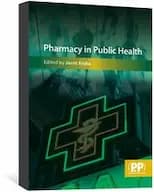
<p>Krska, Janet<br><br>First edition<br><br>Scheduled closure of pharmpress.com<br><br>Edited by Janet Krska - School of Pharmacy and Biomolecular Sciences, Liverpool John Moores University, UK<br><br>ISBN 978 0 85369 879 1<br><br>Published Dec 2010<br><br>Paperback 234 x 156mm (304pp)<br><br><br>DESCRIPTION:<br><br> Pharmacy in Public Health focuses on the important topics in public health relevant to all pharmacists.<br>The role of pharmacists in improving the general health of the public is developing rapidly, directed by changes to health policy in the UK and elsewhere. Often the focus of the pharmacist is on individual patients. However the importance of pharmacy practice in population health should not be underestimated. <br>Case studies are used throughout the book to illustrate how public health initiatives can be implemented in different pharmacy sectors. Specific key concepts are outlined, including:<br> - determinants of health <br> - medicines management<br> - pharmacy within public health: UK and international perspective <br> - needs assessment and public involvement <br> - evidence-based delivery <br> - risks and benefits <br> - health education opportunities <br> - health protection <br> - developing pharmacy services and preventing disease. <br>This accessible and comprehensive book provides the thorough understanding of this discipline that will be needed for practising pharmacists and students to develop into effective public health practitioners.<br> Pharmacy in Public Health is also available as an eBook . <br> <br>CONTENTS:<br><br> Section 1 Overview of Public Health<br> 1. Public Health in the UK<br> 2. Determinants of Health <br> 3. Pharmacy Within Public Health: UK Perspective <br> 4. Public Health Data <br> 5. An International Perspective <br> Section 2 Developing pharmacy public health services<br> 6. Needs Assessment and Public Health Involvement <br> 7. Evidence-based Delivery <br> 8. Working Together <br> 9. Developing Pharmacy Services <br> 10. Risks and Benefits<br> Section 3 Improving public health through pharmacy <br> 11. Health Education Opportunities <br> 12. Health Protection <br> 13. Preventing Disease: Screening in the Pharmacy <br> 14. Medicines Management<br> <br>REVIEWS:<br><br> 2011, American Journal of Pharmaceutical Education <br> "...the merits of the book in providing suggestions on how to interact with local and national populations to improve public health and ensure prevention, and should be seen as a case study of public health which can be adapted to other national governments and pharmacies around the world. Overall, this book is easily understood and presents information in a logical manner that readers can adapt to better the public health of their community, region, and nation<br> Fadi M. Alkhateeb, PhD, MBA, BSPharm, and Isaac Thompson, PharmD Candidate, American Journal of Pharmaceutical Education Volume 75 (5), 2011<br> </p>Couleur et forme :234 x 156mmInjectable Drugs Guide
<p>Gray, Alistair; Wright, Jane; Goodey, Vincent; Bruce, Lynn<br><br>Scheduled closure of pharmpress.com<br><br>Alistair Gray - Senior Clinical Pharmacist (Community and Paediatric Services), Jane Wright - Lead Pharmacist, Lancashire Care NHS Trust, Vincent Goodey - Deputy Director of Pharmacy, and Lynn Bruce - Senior Clinical Pharmacist (Medical Assessment Unit)<br><br>Product code MC_IDG<br><br><br>DESCRIPTION:<br><br> Injectable Drugs Guide is a user-friendly, single point of reference for healthcare professionals in the safe and effective prescribing, administration and monitoring of injectable medicines. The guide consists of a A-Z listing of injectable drugs in monograph format. Each monograph covers:<br> - pre-treatment checks<br> - dosing regimens<br> - preparation and administration<br> - compatibility and stability information<br> - monitoring requirements during treatment<br> - side effects, interactions and pharmacokinetic information.<br> Designed to support the National Patient Safety Agency (NPSA) risk assessment process, each drug has a risk rating, with the text being reviewed and assessed at a number of hospital pharmacies.<br> <br> <br>CONTENTS:<br><br> Preface<br> How to use the Injectable Drugs Guide monographs<br> Injectable Drugs Guide on Medicines Complete<br> Feedback<br> About the authors<br> Contributors<br> Acknowledgements<br> Abbreviations<br> Index of cross-referenced terms<br> Monographs A - Z<br> Appendix 1. The basics of injectable therapy<br> Appendix 2. Good management principles<br> Appendix 3. Usual responsibilities of individual practitioners<br> Appendix 4. Advantages and disadvantages to parenteral therapy<br> Appendix 5. Injection techniques and routes<br> Appendix 6. Extravasation<br> Appendix 7. Intravascular devices<br> Appendix 8. Infusion devices<br> Appendix 9. Syringe drivers<br> Appendix 10. Ideal body weight, dosing in patients with renal or hepatic impairment<br> Appendix 11. Risk ratings<br> </p>Foundation in Pharmacy Practice
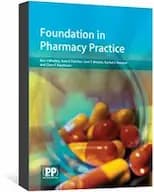
<p>Whalley, Ben J; Fletcher, Kate; Weston, Sam; Howard, Rachel; Rawlinson, Clare<br><br>First edition<br><br>Scheduled closure of pharmpress.com<br><br>Ben J Whalley - Lecturer in Clinical Pharmacy, Reading School of Pharmacy, Kate E Fletcher - Teacher Practitioner, School of Pharmacy, Sam E Weston - Teacher Practitioner, Reading School of Pharmacy, Rachel L Howard - Lecturer in Pharmacy Practice, Reading School of Pharmacy and Clare F Rawlinson - Lecturer in Pharmacy Practice, Reading School of Pharmacy<br><br>ISBN 978 0 85369 747 3<br><br>Published Jun 2008<br><br>Paperback 246 x 189mm (224pp)<br><br><br>DESCRIPTION:<br><br> Foundation in Pharmacy Practice is an essential introductory text for first year students. Providing an overview of the principal pharmacy practice topics in a practical and succinct manner, it serves as a starting point for further study. <br>Major areas covered include: <br> - an introduction to medicines management <br> - essential communication skills <br> - prescription types, legal requirements, interpretation and understanding <br> - packaging and labelling of medicines <br> - compliance, adherence and concordance <br> - sale and supply of medicines. <br> Foundation in Pharmacy Practice is an essential teaching and learning resource for pharmacy students and their teachers. Facilitated by regular signposting and referencing to specific texts, it includes a useful and easily navigated glossary of reference terms.<br>CONTENTS:<br><br> Section 1 Pharmacy and the Pharmacist <br> 1. What Is Pharmacy Practice<br> 2. Structure and Function of the NHS <br> 3. An Overview of Community Pharmacy <br> 4. An Overview of Hospital Pharmacy <br> 5. An Overview of Industrial Sector Pharmacy <br> Section 2 Professional Aspects of Pharmacy <br> 6. An Introduction to Medicines Management<br> 7. An Introduction to Law, Ethics, Confidentiality and Duty of Care <br> 8. An Overview of the Structure and Function of the RPSGB <br> 9. Essential Communication Skills for Pharmacists<br> Section 3 Dispensing <br> 10. Dispensing 1: Prescription Types and Legal Requirements <br> 11. Dispensing 2: Prescription Interpretation and Understanding<br> 12. Labelling and Packaging of Medicines 1: Dispensed Medicines<br> 13. Labelling and Packaging of Medicines 2: Manufacturers Labelling<br> 14. Extemporaneous Dispensing, a Beginner's Guide<br> 15. Principles of Compliance, Adherence and Concordance<br> 16. Sale and Supply of Medicines: Risk and Advice Provision<br> Appendix 1. Major Routes of Drug Administration <br> Glossary of Common Parmacy Practice Terms<br> <br>REVIEWS:<br><br> 08-Sep-08, Doody Enterprises, Inc. <br>'This book is detailed enough to provide readers with a strong background in pharmacy practice and to serve as a useful reference for seasoned professionals. It is comprehensive guide to practice.' <br> Richard P Berardi, RPh, BSc, MHA (Temple University Hospital) Doody Enterprises Sept 2008 <br> </p>Couleur et forme :246 x 189mmFASTtrack: Pharmaceutics - Drug Delivery and Targeting
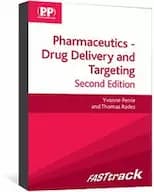
<p>Perrie, Yvonne; Rades, Thomas<br><br>Second edition<br><br>Scheduled closure of pharmpress.com<br><br>Yvonne Perrie - Chair in Drug Delivery, Aston Pharmacy School, Aston University and Thomas Rades - Chair in Pharmaceutical Sciences, The New Zealand National School of Pharmacy.<br><br>ISBN 978 0 85711 059 6<br><br>Published Jun 2012<br><br>Paperback 234 x 156mm (256pp)<br><br><br>DESCRIPTION:<br><br> FASTtrack Pharmaceutics: Drug Delivery and Targeting systematically reviews important concepts and facts for the delivery and targeting of drugs. Relevant examples of drug delivery systems are given throughout the book with a focus on drug delivery systems that have actually reached clinical reality. <br> FASTtrack Pharmaceutics: Drug Delivery and Targeting focuses on what you really need to know in order to pass exams. Concise, bulleted information, chapter overviews, hints, key points, mind maps and an all-important self-assessment section which includes MCQs. <br>Information is presented concisely with self assessment questions/answers and mindmaps to aid learning. The text has been updated for the new edition based on student feedback.<br> Pharmaceutics: Drug Delivery and Targeting is a valuable resource for any pharmacy student needing to study the essentials of this topic.<br> Watch author Yvonne Perrie explaining how pharmaceutical scientists are responsible for the research and development of new medicines, ensuring their safety and quality.<br>Are your exams coming up? Are you drowning in textbooks and lecture notes and wondering where to begin? Take the FASTtrack route to study successfully for your examinations. FASTtrack provides the ultimate lecture notes and is a must-have for all pharmacy students wanting to study and test themselves for forthcoming exams. <br> FASTtrack Pharmaceutics: Drug Delivery and Targeting is also available as an ebook.<br> <br> <br>CONTENTS:<br><br> 1. Controlling Drug Delivery<br> 2. Immediate-Release Drug Delivery Systems I: Increasing the solubility and dissolution rate of drugs<br> 3. Immediate-Release Drug Delivery Systems II: Increasing the permeability and absorption of drugs<br> 4. Delayed-Release Drug Delivery Systems<br> 5. Sustained-Release Drug Delivery Systems<br> 6. Controlled-Release Dosage Forms<br> 7. Site-Directed Drug Targeting<br> 8. Carriers for Drug Targeting<br> Answers to self-assessment<br> Mind maps<br> <br>REVIEWS:<br><br> February 2014 <br>"I believe this book is truly a hidden gem... <br>...The self-assessment MCQs help to solidify knowledge covered in their relevant section, as well as highlighting areas of difficulty which could be easily found within the book and revised again if needed. I found that these questions were of similar difficulty to the MCQs used in lectures and past exam papers, facilitating exam prep... <br>...The diagrams were all very clear, simple and easy to understand, even when explaining complex mechanisms and routes of targeting... <br>...In conclusion I found this book really useful for basic and advanced understanding and revision of such a daunting unit. In addition to this it has also helped with thesis writing for my final year project that has a drug-targeting underlining." <br> Lauren Jones, 4th year student, Portsmouth University, February 2014. <br> </p>Couleur et forme :234 x 156mmRemington Education: Physical Pharmacy
<p>Smith, Blaine Templar<br><br>First edition<br><br>Scheduled closure of pharmpress.com<br><br>Blaine Templar Smith, RPh, PhD, graduate of the University <br>of Oklahoma College of Pharmacy and Nuclear Pharmacy programme<br><br>ISBN 978 0 85711 106 7<br><br>Published Oct 2015<br><br>Paperback 234 x 156mm (192pp)<br><br><br>DESCRIPTION:<br><br> Remington Education: Physical Pharmacy provides a simple, concise view of the concepts and applications of physical pharmacy. It is laid out in an easy-to-understand structure, guiding students through each relevant component of physical pharmacy. <br>Remington Education is a series of guides created specifically for pharmacy students to help them integrate the science of pharmacy into practice. By providing a summary of key information in the relevant subject area and including cases and/or questions and answers for self-assessment, they offer a practical way to check knowledge and track progress before, during, and after a course. <br>Each chapter features: <br> - Learning objectives <br> - Key points boxes <br> - Illustrations<br> - Assessment questions<br> - Further reading and references.<br>Blaine Templar Smith is a graduate of the University of Oklahoma College of Pharmacy and Nuclear Pharmacy programs. He is a registered pharmacist in both Oklahoma and Massachusetts, and has taught for more than 20 years at university level. <br>CONTENTS:<br><br> Intermolecular interactions<br> Pharmaceutical solvents<br> Solubility and dissolution<br> Colligative properties of solutions<br> Interfacial phenomena<br> Disperse systems - Colloids<br> Disperse systems - Coarse dispersions - Suspensions and emulsions<br> Answers to self-assessment questions<br> Index<br> <br> <br>REVIEWS:<br><br> December 2015 <br>"The study of physical pharmacy often fills many students with trepidation but this book, published by Pharmaceutical Press, Royal Pharmaceutical Society, can help to alleviate this by providing a simple introduction to the topic. The author defines physical pharmacy as a subcategory of pharmaceuticals that focuses on the reasons that drug delivery systems behave as they do... <br>"The book is laid out in an easy to understand way, guiding the reader through each relevant component. By providing a summary of important information and including self-assessment questions and answers, the book offers a practical way for students to check knowledge and track progress before, during and after a course in physical pharmacy." <br> Laurence A. Goldberg, The Pharmaceutical Journal, 22 December 2015 <br> </p>Pharmacy Registration Assessment Questions 3
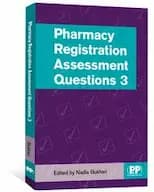
<p>Edited by Bukhari, Nadia<br><br>Third Edition<br><br>Scheduled closure of pharmpress.com<br><br>Nadia Bukhari - Senior Teaching Fellow in Pharmacy Practice & Pre-Reg Co-ordinator, UCL School of Pharmacy.<br><br>ISBN 978 0 85711 357 3<br><br>Published Mar 2019<br><br>Paperback 216 x 138mm (224pp)<br><br><br>DESCRIPTION:<br><br> Pharmacy Registration Assessment Questions 3 is the third volume in a series that follows on from the previous, highly popular Pharmacy Registration Assessment Questions 2. It features more than 400 entirely new, closed book and calculation questions. It can be used in conjunction with the previous volume or on its own. All questions are in line with current GPhC guidance, enabling you to prepare for the pharmaceutical pre-registration exam with confidence. This invaluable tool will help you familiarise yourself with the current style of questions, and give you a head start on preparation, planning and implementation.<br> Questions are based on print versions of BNF 76 and BNF for Children 2018-2019 alongside the most current treatment guidelines available. Questions feature patient information and pictorial representation of conditions, replicating those you may encounter in the real exam. This revision aid gives you the opportunity to practice a variety of question styles found in the assessment including:<br> · single best answer questions<br> · extended matching questions<br> · calculations<br> <br> </p>Drugs of Abuse
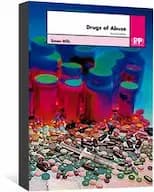
<p>Wills, Simon<br><br>Second edition<br><br>Scheduled closure of pharmpress.com<br><br>Simon Wills - Head of Wessex Drug and Medicines Information Centre, Southampton University Hospitals Trust, UK<br><br>ISBN 978 0 85369 582 0<br><br>Published Apr 2005<br><br>Paperback 234 x 156mm (416pp)<br><br><br>DESCRIPTION:<br><br> Drugs of Abuse is a concise, easy-to-read guide for healthcare professionals who encounter drug abuse. This book has been comprehensively revised since the first edition, and includes new chapters on gamma hydroxybutyrate and the internet as an information resource. Also covered are the prevalence of drug use, a detailed assessment of side effects, and interactions between illicit drugs and conventional medicines.<br>Each chapter covers a particular drug group. These include: <br> - opioids<br> - cannabis<br> - cocaine<br> - amfetamines<br> - ecstasy<br> - LSD<br> - volatile substances<br> - performance-enhancing drugs<br> - OTC and prescription medicines<br> - nicotine<br> - alcohol. <br>Drug abuse is a problem which affects all parts of today's society - it is not constrained to one social class, to 'hard drugs' alone, nor even to illicit substances. This book is an accessible source of detailed information that can be read from cover to cover, or used as a reference. It will appeal to healthcare professionals, as well as to those working with drug users in the community.<br> <br>CONTENTS:<br><br> 1. Introduction<br> 2. Injection of Drugs<br> 3. Opioids<br> 4. Cannabis<br> 5. Cocaine<br> 6. Amphetamine, Methamphetamine, Ecstasy and Related Drugs<br> 7. LSD<br> 8. Gamma Hydroxybutyrate<br> 9. Phencyclidine<br> 10. Volatile Substance Abuse<br> 11. Performance Enhancing Drugs<br> 12. Prescription Drugs<br> 13. Over-the-Counter Products<br> 14. Caffeine<br> 15. Tobacco<br> 16. Alcohol<br> 17. Plants and Fungi<br> 18. Alkyl Nitrates<br> 19. Smart Drugs<br> 20. Internet<br> Appendix A Glossary of Street Terminology<br> Appendix B Legal Status of Drugs in the UK<br> <br>REVIEWS:<br><br> 01-Jul-06, The Pharmaceutical Journal <br>'This book provides detailed information...it is a good source of information for GPs, pharmacists, nurses and social workers.' <br> Uzma Chaudhry, The Pharmaceutical Journal . 2006; 277: 21 <br> 01-Dec-05, Drug Development and Industrial Pharmacy<br> 'The text is written in a clear and concise manner and the format allows one to easily locate desired information. This book is suitable as an educational tool and will likely be a valuable clinical resource for members of the healthcare community who work with drug users.' <br> Linda A. Felton, University of New Mexico, College of Pharmacy, USA <br> </p>Couleur et forme :234 x 156mmBritish National Formulary for Children
<p>Paediatric Formulary Committee<br><br>Scheduled closure of pharmpress.com<br><br>Published jointly by the British Medical Association, Royal Pharmaceutical Society, the Royal College of Paediatrics and Child Health and the Neonatal and Paediatric Pharmacists Group<br><br>Product code MC_BNFC<br><br><br>DESCRIPTION:<br><br> It addresses a significant knowledge gap in many areas of paediatric practice by providing practical information on the use of medicines in children of all ages from birth to adolescence.<br>The BNF for Children includes:<br> - Guidance on the drug management of common childhood conditions<br> - Practical advice on topics such as prescription writing and reporting adverse drug reactions<br> - Hands-on information on prescribing, monitoring, dispensing, and administering medicines for childhood disorders<br> - Comprehensive dosing guidance for children from birth up to 18 years<br> - Details (including indicative prices) of products on the market as well as reference to many essential products that are not licensed<br> - Indication of the licensing status of drugs<br> <br> </p>MCQs in Pharmaceutical Science and Technology
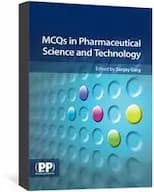
<p>Garg, Sanjay<br><br>First edition<br><br>Scheduled closure of pharmpress.com<br><br>Edited by Sanjay Garg - Associate Professor and Deputy Head, School of Pharmacy, University of Auckland, New Zealand<br><br>ISBN 978 0 85369 913 2<br><br>Published Dec 2010<br><br>Paperback 234 x 156mm (296pp)<br><br><br>DESCRIPTION:<br><br> MCQs in Pharmaceutical Science and Technology is an invaluable resource for students and instructors in pharmaceutical science. With 600 MCQs and answers divided into six sections, the book progresses logically from basic science through to clinical considerations. <br>Multiple choice questions (MCQs) are a key assessment and study tool in pharmacy courses throughout the world. Questions included in each chapter cover basic, conventional and novel delivery systems and allow you to gain valuable practice in this discipline. <br>Topics covered include: <br> - physical pharmaceutics <br> - pharmacokinetics and biopharmaceutics <br> - particle science and calculations <br> - dosage form design <br> - advanced drug delivery systems <br>This book, edited by Sanjay Garg and with contributions from a range of distinguished pharmacy educators worldwide, provides a much-needed examination and study guide for pharmacy students in the scientific aspects of their studies. <br>MCQs in Pharmaceutical Science and Technology is also available as an eBook . <br> <br>CONTENTS:<br><br> Test 1. Physical pharmaceutics<br> Test 2. Pharmacokinetics and biopharmaceutics<br> Test 3. Particle Science and calculations<br> Test 4. Dosage form design<br> Test 5. Advanced drug-delivery systems<br> Test 6. Miscellaneous topics<br> <br> </p>Couleur et forme :234 x 156mmPharmaceutical Compounding and Dispensing
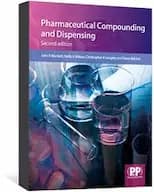
<p>Marriott, John; Wilson, Keith; Langley, Christopher A; Belcher, Dawn<br><br>Second edition<br><br>Scheduled closure of pharmpress.com<br><br>John F Marriott - Senior Lecturer, Pharmacy Practice, Aston University School of Pharmacy, Keith A Wilson - Head of School , Aston University School of Pharmacy, Christopher A Langley - Lecturer in Pharmacy Practice, Aston University School of Pharmacy and Dawn Belcher - Teaching Fellow, Pharmacy Practice, Aston University School of Pharmacy<br><br>ISBN 978 0 85369 912 5<br><br>Published May 2010<br><br>Paperback 246 x 189mm (304pp)<br><br><br>DESCRIPTION:<br><br> Pharmaceutical Compounding and Dispensing is a comprehensive guide to producing extemporaneous formulations safely and effectively. This is a modern, detailed and practical book on the theory and practice of extemporaneous compounding and dispensing. <br>The book covers three core sections:<br> - the history of compounding <br> - pharmaceutical forms and their preparation <br> - product formulae. <br>Pharmacists have been responsible for compounding medicines for centuries. Although most modern medicines are not compounded in a local pharmacy environment, there are still occasions when it is imperative that pharmacists have this knowledge.<br>Fully revised and updated, this new edition of Pharmaceutical Compounding and Dispensing is an indispensable reference for pharmacy students and practicing pharmacists. <br> Videos of dispensing procedures can be viewed with the password from the book. <br> Pharmaceutical Compounding and Dispensing is also available as an eBook. <br> <br>CONTENTS:<br><br> Part 1 - History of compounding<br> 1. Historical perspective<br> 2. Obsolete dosage forms, equipment and methods of preparation<br> 3. Historical weights and measures<br> Part 2 - Pharmaceutical forms and their preparation<br> 4. Key formulation skills<br> 5. Extemporaneous dispensing<br> 6. Solutions<br> 7. Suspensions<br> 8. Emulsions<br> 9. Creams<br> 10. Ointments, pastes and gels<br> 11. Suppositories and pessaries<br> 12. Powders and capsules<br> 13. Specialised formulation issues<br> Part 3 - Product formulae<br> 14. Creams<br> 15. Dusting powders<br> 16. Internal mixtures<br> 17. Liniments, lotions and applications<br> 18. Ointments and pastes<br> 19. Powders<br> 20. Miscellaneous formulae<br> Appendix 1. Glossary of terms used in formulations<br> Appendix 2. Abbreviations commonly used in pharmacy<br> Appendix 3. Changing substance names from British Approved Names to recommended International Non-Proprietary Names<br> <br>REVIEWS:<br><br> February 2011, American Journal of Pharmaceutical Education<br> "The book is well received, since there are few textbooks or reference books available devoted specifically to compounding. The authors should be commended for emphasizing the historical content in tandem with the preparation instruction...the book remains a good resource for anyone interested in compounding"<br> Christine R. Birnie, PhD, American Journal of Pharmaceutical Education 75(1), Feb 2011<br> </p>Couleur et forme :246 x 189mmPharmacy Registration Assessment Questions 4
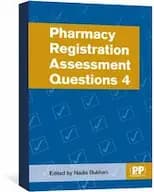
<p>Edited by Bukhari, Nadia<br><br>Fourth Edition<br><br>Scheduled closure of pharmpress.com<br><br>Nadia Bukhari - Senior Teaching Fellow in Pharmacy Practice & Pre-Reg Co-ordinator, UCL School of Pharmacy.<br><br>ISBN 978 0 85711 384 9<br><br>Published Apr 2020<br><br>Paperback 216 x 138mm (224pp)<br><br><br>DESCRIPTION:<br><br> Pharmacy Registration Assessment Questions 4 is the fourth volume in a series that follows on from the previous, highly popular Pharmacy Registration Assessment Questions 3. It features more than 400 entirely new, closed book and calculation questions. It can be used in conjunction with the previous volumes or on its own. All questions are in line with current GPhC guidance, enabling you to prepare for the pharmaceutical pre-registration exam with confidence. This invaluable tool will help you familiarise yourself with the current style of questions, and give you a head start on preparation, planning and implementation.<br> Questions are based on print versions of BNF 78 and BNF for Children 2019-2020 alongside the most current treatment guidelines available. Questions feature patient information and pictorial representation of conditions, replicating those you may encounter in the real exam. This revision aid gives you the opportunity to practice a variety of question styles found in the assessment including:<br> · single best answer questions<br> · extended matching questions<br> · calculations<br> <br> </p>Hospital Pharmacy
<p>Stephens, Martin<br><br>Second edition<br><br>Scheduled closure of pharmpress.com<br><br>Edited by Martin Stephens- Associate Medical Director, Clinical Effectiveness and Medicines Management, Southampton University Hospitals NHS Trust, Southampton, UK<br><br>ISBN 978 0 85369 900 2<br><br>Published Mar 2011<br><br>Paperback 234 x 156mm (352pp)<br><br><br>DESCRIPTION:<br><br> Hospital Pharmacy outlines the changes in pharmacy practice within the hospital setting and discusses the vast range of services that are provided. Each chapter is devoted to an area of pharmacy practice and discusses its history, current practice and future developments. <br>This new edition has been completely revised and updated and includes chapters on: <br> - pharmacy in the acute independent sector <br> - controlled drugs in hospital pharmacy <br> - clinical pharmacy<br> - pharmacist prescribing <br> - mental health <br> - consultant pharmacists. <br>This book is essential reading for pharmacy undergraduates, pre-registration graduates and newly qualified pharmacists as well as a key reference text for all hospital pharmacists departments. With its broad all-encompassing coverage it will also be of interest to other healthcare professionals. <br> Hospital Pharmacy is also available as an eBook. <br> <br>CONTENTS:<br><br> 1. Hospital Pharmacy within the NHS<br> 2. Pharmacy in the acute independent sector<br> 3. Purchasing medicines<br> 4. Medicines supply and automation<br> 5. Controlled drugs in hospital pharmacy <br> 6. Technical services<br> 7. Quality assurance<br> 8. Medicines iInformation<br> 9. Clinical pharmacy <br> 10. Pharmacist prescribing<br> 11. Strategic medicines management<br> 12. Risks with medicines<br> 13. Mental health pharmacy<br> 14. Community health services<br> 15. Information technology<br> 16. Research and development<br> 17. Workplace development<br> 18. Consultant pharmacists<br> 19. Managing services<br> <br>REVIEWS:<br><br> Patrick McDonnell, Pharm.D. <br>"a book that details the features of pharmacy services within and from hospital-based <br>pharmacies in the United Kingdom...This book certainly provides readers with a solid understanding of the practice of hospital-based pharmacy in the U.K. <br> Patrick McDonnell, Pharm.D. (Temple University School of Pharmacy) <br> </p>Couleur et forme :234 x 156mmPediatric Injectable Drugs
<p>Phelps, Stephanie J; Hak, Emily B; Crill, Catherine M.<br><br>Scheduled closure of pharmpress.com<br><br>Edited by Stephanie J. Phelps, Emily B. Hak, and Catherine M. Crill<br><br>Product code MC_PED<br><br>Published Nov 2011<br><br><br>DESCRIPTION:<br><br> <br> </p>Martindale: The Complete Drug Reference
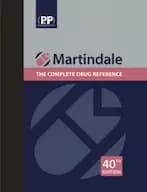
<p>Brayfield, Alison<br><br>Scheduled closure of pharmpress.com<br><br>Product code MC_MART<br><br><br>DESCRIPTION:<br><br> Martindale: The Complete Drug Reference is a comprehensive and reliable reference resource on drugs and medicines used throughout the world. It is prepared by an experienced team of pharmacists who receive training in literature evaluation and search techniques. They use their professional expertise to provide a digest of the available literature, selecting the most <br>clinically relevant and appropriate information from reliable published sources. <br> <br> <br> </p>British National Formulary
<p>Joint Formulary Committee<br><br>Scheduled closure of pharmpress.com<br><br>Published jointly by BMJ Publishing Group Ltd and Royal Pharmaceutical Society<br><br>Product code MC_BNF<br><br><br>DESCRIPTION:<br><br> The BNF provides up-to-date, practical guidance on prescribing, dispensing, and administering medicines. This essential reference reflects current best practice as well as legal and professional guidelines relating to the uses of medicines, including: <br> - Guidance on the drug management of common conditions<br> - Details of medicines with special reference to their uses, cautions, contra-indications, side-effects, doses, and relative costs<br> - Guidance on prescribing, monitoring, dispensing, and administering medicines<br> <br> for Children at NHS User registration . <br> <br> </p>Dietary Supplements
<p>Mason, Pamela<br><br>Scheduled closure of pharmpress.com<br><br>Pamela Mason - Independent Pharmaceutical Consultant<br><br>Product code MC_DIET<br><br><br>DESCRIPTION:<br><br> Dietary supplements have become increasingly popular in recent years. Research into the safety and efficacy of these substances is intensifying, with a large number of quality trials being published. Dietary Supplements includes the latest findings on the most commonly used dietary supplements.<br> Dietary Supplements is an essential reference source for health professionals advising patients on the safe use and prescription of Dietary Supplements.<br> <br> <br> <br> <br> </p>Introduction to Clinical Pharmaceutics (An)
<p>Florence, A T<br><br>First edition<br><br>Scheduled closure of pharmpress.com<br><br>Alexander T Florence - Former Dean, School of Pharmacy, University of London, UK<br><br>ISBN 978 0 85369 691 9<br><br>Published Feb 2010<br><br>Paperback 234 x 156mm (208pp)<br><br><br>DESCRIPTION:<br><br>This unique textbook covers the role of basic pharmaceutics in clinical outcomes and in explaining the behaviour of medicines in the body. It includes adverse reactions due to formulations and excipients. <br>An Introduction to Clinical Pharmaceutics covers recent developments such as personalised therapies and nanotechnology. All of the principles underpinning clinical pharmaceutics are supported using relevant examples from recent literature and clinical case studies, including issues of: <br> - formulation and excipients <br> - surface tension <br> - rheology <br> - solubility <br> - crystallisation and precipitation <br> - aggregation <br> - absorption <br>Examples and implications of each phenomenon are discussed with a reminder of the underlying pharmaceutics. This book is aimed at undergraduate pharmacy students, those on taught Masters courses of clinical and hospital pharmacy, and new practitioners who require an update on the relevance of the subject that is virtually unique to pharmacy.<br> An Introduction to Clinical Pharmaceutics is also available as an eBook. <br> <br>CONTENTS:<br><br> Introduction<br> Book Outline<br> 1. What Is Clinical Pharmaceutics? <br> 2. Excipients: Not Always Inert<br> 3. Thinking Chemically<br> 4. Looking at Formulations<br> 5. Adverse Events and Formulations and Devices<br> 6. Generic Medicines: Conventional Drugs and Biologicals<br> 7. Paediatric, Geriatric Medicines and Special Formulation <br> 8. The Future: Delivery Systems for Modern Therapeutics<br> <br> </p>Couleur et forme :234 x 156mmFacilitating Learning in Healthcare
<p>Carter, Sarah<br><br>First edition<br><br>Scheduled closure of pharmpress.com<br><br>Edited by Sarah Carter - Research Manager, University of London School of Pharmacy, UK.<br><br>ISBN 978 0 85369 954 5<br><br>Published Oct 2011<br><br>Paperback 234 x 156mm (160pp)<br><br><br>DESCRIPTION:<br><br>This practical and easy-to-read guide is designed for people from non-teaching backgrounds who have been asked to facilitate the learning process in the healthcare disciplines. It will enable new teachers, lecturers, assessors, tutors and facilitators to quickly and easily understand common educational concepts, to learn how to effectively assist learning, and to reflect and improve upon their own teaching practice. <br>Containing top tips, personal accounts and exercises, this book includes: <br> - teaching and learning theories and concepts <br> - developing course material <br> - teaching strategies and approaches to learning <br> - assessing learning <br> - evaluating teaching <br> - reflecting on teaching and learning. <br> Facilitating Learning in Healthcare is a useful practical resource for new teachers, mentors and group supervisors in all healthcare disciplines.<br> Facilitating Learning in Healthcare is also available as an ebook.<br> <br>CONTENTS:<br><br>1. Introducing Teaching and Learning <br>2. Developing Course Material <br>3. Teaching Strategies and Approaches to Learning <br>4. Assessing Learning <br>5. Evaluating Teaching <br>6. Reflecting on Teaching and Learning <br>REVIEWS:<br><br> May-2012, Nursingtimes.net<br> "...If teaching is not your main role, this book provides sufficient depth to support your development as an educator along with extensive reference lists to guide your further reading...This is a book that fills an important space on my bookshelf and has proven to be a fantastic, concise resource for teaching and learning theory. For practitioners like me who are developing their teaching skills or undertaking teaching qualifications, this book brings together a range of literature, theories and approaches into one accessible volume."<br> Simon Browes, Doctoral research student, nursingtimes.net, May 2012<br> 2012, Nursing Standard<br> "The book would be useful as adjunct reading for those embarking on teaching for the first time. It provides a wealth of information on approaches to use that support learning, its assessment and evaluation, some of which are innovative and could be fun to use. It is well written...I especially like the way the bibliography is broken down into subject areas, enabling readers to spot texts supporting their special interests."<br> Dame Betty Kershaw, Nursing Standard, 2012<br> Jan-2012, British Journal of Clinical Pharmacology<br> "...This book will allow teachers new to the field of healthcare education to understand the common educational concepts and techniques, to learn how to effectively assist learning, and to reflect upon and improve their own teaching practice. This book is however not intended to be a comprehensive teaching manual. It is rather, an easy-to-read guide which will allow the teacher [to] understand common educational concepts and apply these to their every day teaching practice."<br> David Williams, RCSI/Beaumont Hospital, British Journal of Clinical Pharmacology, January 2012<br> 04-Nov-2011, International Journal of Pharmaceutical Compounding <br> "As Colleges of Pharmacy seem to be shifting more and more pharmacy education activities to practicing pharmacists, this book will be of some value to those that have limited experience in teaching. It contains tips, personal accounts, and exercises...This book can be of great value to practitioners as well as college faculty and is written by experienced authors."<br> International Journal of Pharmaceutical Compounding, 4 November 2011<br> </p>Couleur et forme :234 x 156mmIntroducing Palliative Care (IPC 6)
<p>Edited by Andrew Wilcock, Robert Twycross and Claire Stark Toller<br><br>Sixth Edition<br><br>Scheduled closure of pharmpress.com<br><br>ISBN 9780857114174<br><br>Published Sep 2021<br><br>Paperback 416pp<br><br><br>DESCRIPTION:<br><br> Introducing Palliative Care is the well-established introductory resource for students and qualified healthcare professionals in the area of palliative care. The sixth edition has been fully revised in line with current practice. It is split into four parts to cover essential aspects of palliative care and include essential Palliative Care Formulary containing core information about drugs used in palliative care. New edition updates include: Fully revised in line with current practice and the latest edition of the Palliative Care Formulary (PCF7) Split into 4 parts to cover essential aspects of palliative care Updated essential Palliative Care Formulary containing core information about drugs used in palliative care Ethics chapter includes an expanded section on medically-assisted dying Although medically oriented, there is much of use to undergraduates and graduates of other disciplines. The clinical focus is on advanced cancer, but the general principles and most of the details are equally applicable to patients dying from other incurable, progressive, life-threatening conditions. About the Editors Andrew Wilcock is Macmillan Clinical Reader in Palliative Medicine and Medical Oncology, Nottingham University and Honorary Consultant Physician, Hayward House, Nottingham University, Hospitals NHS Trust. Robert Twycross is Emeritus Clinical Reader in Palliative Medicine, Oxford University. Claire Stark Toller is Consultant in Palliative Medicine, Mountbatten Hampshire and University Hospital Southampton NHS Trust. <br>CONTENTS:<br><br> Preface <br> <br> IPC and beyond <br> <br> Abbreviations <br> <br> Part 1 <br> <br> 1. Scope of palliative care <br> <br> 2. Ethical aspects <br> <br> 3. Communication <br> <br> 4. Psychological aspects <br> <br> 5. Spiritual aspects <br> <br> 6. Bereavement <br> <br> <br> Part 2 <br> <br> 7. Symptom management: principles and pain <br> <br> 8. Symptom management: alimentary <br> <br> 9. Symptom management: respiratory <br> <br> 10. Symptom management: genito-urinary <br> <br> 11. Symptom management: psychological & neurological <br> <br> 12. Symptom management: other <br> <br> 13. Emergencies <br> <br> 14. End-of-life care: planning and last days of life <br> <br> <br> Part 3 <br> <br> 15. Children: general aspects <br> <br> 16. Children: symptom management <br> <br> 17. Children: bereavement <br> <br> <br> Part 4 <br> <br> 18. The Essential Palliative Care Formulary <br> <br> <br> Appendices <br> <br> 1. Curriculum for under-graduate medical education <br> <br> 2. Verifying and certifying a death in the UK <br> <br> 3. Palliative care resources for covid-19 <br> <br> </p>Pharmaceutical Journal (The)
<p>Scheduled closure of pharmpress.com<br><br>ISSN 0031-6873<br><br><br>DESCRIPTION:<br><br> All the latest news, information and learning resources on pharmacy and pharmaceutical sciences Published by the Royal Pharmaceutical Society, The Pharmaceutical Journal is updated online daily with authoritative content on global pharmacy and pharmaceutical science. You can also download the PJ app on Android and iPhone for easy access to content when on the move. The Pharmaceutical Journal brings you the latest news on policies and clinical research to developments affecting the pharmacy profession and the industry. It provides insightful comment articles and career advice, as well as comprehensive learning and continuing professional development (CPD) resources. The Pharmaceutical Journal is free with RPS Membership - Join now <br> </p>MCQs in Pharmaceutical Calculations
<p>Donnelly, Ryan; Barry, Johanne<br><br>First edition<br><br>Scheduled closure of pharmpress.com<br><br>Ryan F Donnelly - Lecturer in Pharmaceutics and Johanne Barry - Teaching Fellow, Queen's University Belfast<br><br>ISBN 978 0 85369 836 4<br><br>Published Jun 2009<br><br>Paperback 216 x 138mm (224pp)<br><br><br>DESCRIPTION:<br><br> MCQs in Pharmaceutical Calculations aims to help pre-registration trainees and pharmacy students with their revision, enabling them to perform calculations accurately and with confidence. <br>Pharmacists frequently perform simple calculations as part of their professional practice. It is therefore vital that they are able to employ basic numeracy skills accurately so as not to compromise patient safety. <br>This book contains: <br> - 360 calculations questions in three commonly used multiple choice formats <br> - questions based on important areas in pharmaceutical science and practice: <br> - manipulation of formulae and dilutions <br> - dosing <br> - pharmacokinetics <br> - formulation and dispensing <br> - pharmaceutical chemistry <br> - descriptive answers giving the reasoning behind the answers.<br> MCQs in Pharmaceutical Calculations will be indispensable to pre-registration trainees and pharmacy students to help them prepare for their future career.<br> MCQs in Pharmaceutical Calculations is also available as an eBook.<br> <br>CONTENTS:<br><br> 1. Manipulation of Formulae and Dilutions <br> 2. Dosing <br> 3. Pharmacokinetics <br> 4. Formulations and Dispensing <br> 5. Pharmaceutical Chemistry <br> 6. Practice Tests<br> <br>REVIEWS:<br><br> 24-Jul-09, IJPC <br>'Not only is this book a good review for pharmacy students AND pharmacists, but it can also serve to provide training to pharmacy technicians.' <br> The International Journal of Pharmaceutical Compounding, Volume 6, Issue 30 24th July 2009 <br> </p>Couleur et forme :216 x 138mmDrugs in Use
<p>Edited by Linda J Dodds and Kay M G Wood<br><br>Sixth Edition<br><br>Scheduled closure of pharmpress.com<br><br>ISBN 9780857114181<br><br>Published Nov 2021<br><br>Paperback 234 x 156 mm (710pp)<br><br><br>DESCRIPTION:<br><br> Drugs in Use helps you bridge the gap between theoretical knowledge about medicines and its practical application to patients. The new sixth edition of this popular text has been extensively revised and includes seven new chapters on atrial fibrillation, chronic asthma, chronic pain, sepsis in adults, sepsis in children, deprescribing and supporting adherence. The use of self-study questions and answers to accompany each case helps to challenge you to consider the many options often available when drug-therapy decisions are made. Whenever appropriate, the patient journey is followed across primary and secondary care, reflecting the fact that many chronic conditions are now managed predominantly in primary care. Optimising medicines to ensure only what is needed and what is acceptable to the patient is prescribed is a significant challenge for newly qualified healthcare professionals. This book demonstrates how to apply the knowledge and skills acquired from pharmacology texts and formal learning. It is a valuable resource not only for students, but also for pharmacists and new prescribers. Linda J Dodds, BPharm, PG Cert (HE), MSc (ClinPharm), FRPharmS Kay M G Wood, BSc, DipClinPharm, PhD, PG Cert (HE), FHEA, MRPharmS <br>CONTENTS:<br><br> 1. Hypertension<br> 2. Non-ST elevation myocardial infarction<br> 3. Atrial fibrillation<br> 4. ST elevation myocardial infarction<br> 5. Heart failure<br> 6. Stroke<br> 7. Type 1 diabetes<br> 8. Type 2 diabetes<br> 9. Acute kidney injury<br> 10. Acute asthma<br> 11. Chronic asthma<br> 12. Chronic obstructive pulmonary disease<br> 13. Dyspepsia and peptic ulcer disease<br> 14. Ulcerative colitis<br> 15. Alcohol-related liver disease<br> 16 .Rheumatoid arthritis<br> 17. Epilepsy<br> 18. Parkinsons disease<br> 19. Depression<br> 20. Schizophrenia<br> 21. Substance misuse<br> 22. Dementia<br> 23. Oncology<br> 24. Symptom control in palliative care<br> 25. Chronic pain<br> 26. Eczema<br> 27. Psoriasis<br> 28. Surgery<br> 29. Sepsis in an adult<br> 30. Sepsis in a child<br> 31. Polypharmacy<br> 32. Supporting medicines adherence <br> <br> </p>Medicines Use Reviews
<p>Youssef, Susan<br><br>First edition<br><br>Scheduled closure of pharmpress.com<br><br>Susan Youssef - Former Senior Lecturer at DeMontfort University, Leicester, UK<br><br>ISBN 978 0 85369 887 6<br><br>Published May 2010<br><br>Paperback 216 x 138mm (192pp)<br><br><br>DESCRIPTION:<br><br> Provides evidence-based information, tips and guidance on how to conduct successful Medicines Use Reviews (MURs). <br>The ten main chapters identify and discuss specific medical conditions seen in community pharmacy while further sub chapters include advice on treatment options and relevant practical tips. <br>This comprehensive book also includes: <br> - an overview of MURs <br> - explanation of the accreditation process <br> - advice on MUR form documentation <br> - guidance on providing a patient-focused service.<br>This excellent reference enables pharmacists to provide high quality advice to patients. It will be invaluable for all pharmacists carrying out MURs, pre-registration and newly registered pharmacists, clinical pharmacy students, accredited pharmacists setting up a MUR service, pharmacy students and lecturers in pharmacy practice. <br> Medicines Use Reviews is also available as an eBook. <br> <br>CONTENTS:<br><br> Introduction to Medicine Use Reviews <br> 1. Gastrointestinal Conditions <br> 2. Cardiovascular Conditions <br> 3. Respiratory Conditions <br> 4. Neurological Conditions <br> 5. Endocrine Conditions <br> 6. Urinary Tract Conditions <br> 7. Haematological Conditions <br> 8. Bone and Joint Disorders <br> 9. Eye Conditions <br> 10. Skin Conditions<br> <br>REVIEWS:<br><br>"I didn't expect Youssef's book to be as good as it is: very clear, covers topic from different points of view, brilliantly written." <br> RLM, Day Lewis Pharmacy, July 2016<br> <br>"Excellent book. To be used with the BNF. All counselling points summarised with a few words. Can easily be assessed, carried around. Really good for quickly looking up drugs during reviews." <br> Olaola, Amazon.co.uk, September 2011 <br><br>RESOURCES:<br><br> MUR training website <br> The author runs a website associated with this book. This website has been developed by practising pharmacists to help pharmacists who want ideas on how to develop their MUR skills. There are several case scenarios for you to work through, accompanied by the main MUR points and the MUR outcomes. There are also videos showing MUR snapshots. <br> Visit www.murtraining.co.uk <br><br> The MUR training website and resources do not express the views or concerns of the Royal Pharmaceutical Society of Great Britain or Pharmaceutical Press. Pharmaceutical Press can accept no responsibility or liability whatsoever in respect of their operation or content.<br> </p>Couleur et forme :216 x 138mmClinical Pharmacokinetics
<p>Dhillon, Soraya; Kostrzewski, Andrzej J<br><br>First edition<br><br>Scheduled closure of pharmpress.com<br><br>Edited by Soraya Dhillon - Foundation Professor of Pharmacy and Head of School of Pharmacy, University of Hertfordshire and Andrzej Kostrzewski - Senior Principal Pharmacist, Guys, Kings and St Thomas'<br><br>ISBN 978 0 85369 571 4<br><br>Published Mar 2006<br><br>Paperback 234 x 156mm (280pp)<br><br><br>DESCRIPTION:<br><br> Clinical Pharmacokinetics is a practical guide to the use of pharmacokinetic principles in clinical practice. Over 30 clinical cases with self-study questions and answers are presented throughout to bridge the gap between pharmacokinetic concepts and their practical application to individual patients. <br>Pharmacokinetics is the study of the process of drug absorption, distribution, metabolism and elimination. The aim of applying pharmacokinetic principles is to individualise the dose of drug, and optimise the outcome achieved in each patient. <br>Its application reduces the chance of under-treatment, inadvertent poisoning and dose related adverse effects. <br>CONTENTS:<br><br> 1. Basic pharmacokinetics <br> 2. Therapeutic drug monitoring <br> 3. Clinical pharmacokinetics in renal impairment <br> 4. The effect of liver dysfunction on pharmacokinetics <br> 5. Clinical pharmacokinetics in the elderly <br> 6. Aminoglycosides <br> 7. Digoxin <br> 8. Theophylline <br> 9. Lithium <br> 10. Antiepileptics<br> 11. Ciclosporin <br> 12. Clinical case studies <br> <br>REVIEWS:<br><br> 01-Dec-06, Irish Pharmacy Journal <br>'...the language in the book [is] easy to understand, the font and format appealing and the chapter layout clear and uncluttered...overall this is a useful pharmacokinetics book providing background information and guidance not only to academic students of Pharmacokinetics but also to those needing to apply the principles of pharmacokinetics to real-life clinical situations.' <br> Irish Pharmacy Journal, December 2006, 457<br> 01-Oct-06, The Annals of Pharmacotherapy<br> 'The editors have been successful in making Clinical Pharmcokinetics a quick reference for practical, real-life pharmacokinetic examples...this reference would be a useful supplemental guide for pharmacy students and a helpful addition to pharmacy libraries in patient-care arenas and colleges of pharmacy.' Laurie S Mauro, The Annals of Pharmacotherapy, 2006; 40: 1893 <br> 01-Oct-06, New Zealand Pharmacy <br>'This book is a very practical and relevant resource for any health professional working with drugs which require the application of pharmacokinetic principles because of their narrow therapeutic range, or with patients whose metabolism of drugs may be altered because of their age, renal or liver function...it would also be valuable for students wanting a current resource covering pharmacokinetic principles and relating them to clinical application.' <br> New Zealand Pharmacy, October 2006 <br> </p>Couleur et forme :234 x 156mmAHFS - Drug Information
<p>Scheduled closure of pharmpress.com<br><br>Product code MC_AHFS_DI<br><br><br>DESCRIPTION:<br><br> Published by the American Society of Health-System Pharmacists (ASHP), AHFS Drug Information has been the leading source of evidence-based drug information available to healthcare professionals for almost 50 years. <br>The quality and consistency of the information make it the most widely respected drug reference for addressing critical questions that require objective evidence. It is evidence-based and peer-reviewed by over 500 pharmacists, physicians, and other healthcare professionals and is supported by extensive objective research from primary sources. AHFS DI is compiled without the influence of manufacturers, insurers, regulators or other interested parties. <br><br> <br> <br> <br> </p>Journal of Pharmacy and Pharmacology
<p>Jones, DS<br><br>Scheduled closure of pharmpress.com<br><br>Edited by D Jones, Queen's University of Belfast, UK<br><br>ISSN 0022-3573<br><br>Paperback 275 x 210mm<br><br><br>DESCRIPTION:<br><br> The Royal Pharmaceutical Society's learned journals are published by Oxford University Press on behalf of the Society. Journal of Pharmacy and Pharmacology, one of the leading pharmaceutical sciences journals has been published continuously since 1870 and monthly since 1949. The Journal publishes original research papers, critical reviews and rapid communications on the latest developments in the pharmaceutical sciences. <br> Aims and Scope <br> JPP keeps pace with new research on how drug action may be optimized by new technologies, and attention is given to understanding and improving drug interactions in the body. At the same time, the journal maintains its established and well-respected core strengths in areas such as pharmaceutics and drug delivery, experimental and clinical pharmacology, biopharmaceutics and drug disposition, and drugs from natural sources. JPP publishes at least one special issue on a topical theme each year. <br> Abstracting and Indexing <br> Journal of Pharmacy and Pharmacology is included in the following abstracting and indexing databases: <br> - CAB Abstracts - including Abstracts of Hygiene and Communicable Diseases, Index Veterinarius, Nutrition Abstracts and Reviews A, Review of Aromatic and Medicinal Plants, Tropical Diseases Bulletin, Veterinary Bulletin, and Veterinary Science Database <br> - Cambridge Scientific Abstracts - including International Pharmaceutical Abstracts, and Neurosciences Abstracts <br> - Chemical Abstracts/CAplus Elsevier Databases - including CrossFire Beilstein, EMBASE/Excerpta Medica, and Scopus <br> - MANTIS Database <br> - Medline <br> - OCLC ArticleFirst <br> - Thomson Reuters Databases - including Biological Abstracts, BIOSIS Previews, Biotechnology Citation Index, Chemistry Reaction Center, ChemPrep, Current Chemical Reactions, Current Chemical Reactions Database, Current Contents: Life Sciences, Derwent Drug File, Index Chemicus, Reaction Citation Index, and Science Citation Index <br> - Zetoc <br>Readership <br>Its audience includes pharmaceutical scientists,pharmacologists,regulatory professionals,formulation scientists, process chemists and analytical chemists <br> <br> </p>Herbal Medicines
<p>Pharmaceutical Press Editorial<br><br>Scheduled closure of pharmpress.com<br><br>Product code MC_HERB<br><br><br>DESCRIPTION:<br><br> Herbal Medicines is written by experts in the fields of pharmacognosy, phytochemistry, phytopharmacy, clinical herbal medicines, phytopharmacovigilance and regulation of herbal medicinal products. It is an invaluable online resource for pharmacists and other healthcare professionals who require evidence-based information on herbal medicines used for treatment and prevention of health problems.<br>The resource contains:<br> - Chemical structures and photographs of the plant and crude drug material <br> - Over 180 monographs<br> - Uses, dosage, evidence of efficacy, adverse effects, contraindications, use in pregnancy and lactation, drug interactions. <br> <br> <br> </p>Martindale: The Complete Drug Reference
<p>Robert Buckingham<br><br>40th Edition<br><br>Scheduled closure of pharmpress.com<br><br>Edited by Robert Buckingham<br><br>ISBN 9780857113672<br><br>Published May 2020<br><br>Hardback, 2 volumes276 x 219 mm (4912pp)<br><br><br>DESCRIPTION:<br><br> The worlds most comprehensive reference source about drugs and medicines The new edition of Martindale: The Complete Drug Reference, provides you with practical, evidence-based, global guidance, allowing you to quickly understand the characteristics of drugs and their clinical uses. Over 120 new monographs include: New antibacterials, such as delafloxacin, eravacycline, omadacycline, ozenoxacin, and plazomicin Further antivirals, including drugs active against HIV (bictegravir, dapivirine, doravirine, ibalizumab), smallpox (tecovirimat), cytomegalovirus (letermovir), influenza (baloxavir marboxil), and hepatitis C (glecaprevir, pibrentasvir, voxilaprevir) New treatment options for migraine (erenumab, fremanezumab, galcanezumab), narcolepsy (solriamfetol), hyperkalaemia (sodium zirconium cyclosilicate), postpartum depression (brexanolone), eosinophilic asthma (benralizumab), hypoactive sexual desire disorder (bremelanotide), glaucoma (netarsudil), African trypanosomiasis (fexinidazole), and irritable bowel syndrome (tenapanor) New antidiabetic drugs, including ertugliflozin, evogliptin, semaglutide, and sotagliflozin Further antineoplastics for treating cancers including PARP inhibitors (niraparib, rucaparib, talazoparib), PI3K inhibitors (alpelisib, copanlisib, duvelisib), and CAR-T therapies (axicabtagene ciloleucel, tisagenlecleucel) Novel targeted treatments for retinal dystrophy (voretigene neparvovec), neurotrophic keratitis (cenegermin), paroxysmal nocturnal haemoglobinuria (ravulizumab), hereditary transthyretin amyloidosis (inotersen, patisiran), spinal muscular atrophy (nusinersen), and hereditary angioedema (lanadelumab) Updated coverage of proprietary preparations in 43 countries including Australia, China, UK, and USA Martindale: The Complete Drug Reference is a one-stop authoritative, invaluable reference work covering all aspects of drugs and medicines, essential on any bookshelf. It provides you with: Over 6,400 drug monographs summarising the nomenclature, properties, and actions of each substance - all in one book, giving you quick and easy access Over 125,000 preparations from 43 countries and regions Nearly 700 treatment reviews, with references from the published literature 5,600 + pharmaceutical terms and routes of administration in 13 major European languages Over 60,000 reference citations and over 25,000 international manufacturers and distributors Herbals, diagnostic agents, radiopharmaceuticals, pharmaceutical excipients, toxins, poisons <br>CONTENTS:<br><br> <br> <br> Preface<br> <br> A guide to Martindale<br> <br> Abbreviations<br> <br> Contracted Names for Ions and Groups<br> <br> Atomic Weights of the Elements<br> <br> Volume A<br> Monographs on drugs and ancillary substances<br> Analgesics Anti-inflammatory Drugs and Antipyretics <br> Anthelmintics <br> Antibacterials<br> Antidementia Drugs <br> Antidepressants <br> Antidiabetics<br> Antiepileptics <br> Antifungals<br> Antigout Drugs <br> Antihistamines <br> Antimalarials<br> Antimigraine Drugs<br> Antimyasthenics<br> Antineoplastics<br> Antiparkinsonian Drugs<br> Antiprotozoals <br> Antivirals <br> Anxiolytic Sedatives Hypnotics and Antipsychotics<br> Blood Products Plasma Expanders and Haemostatics <br> Bone Modulating Drugs <br> Bronchodilators and Anti-asthma Drugs <br> Cardiovascular Drugs<br> Chelators Antidotes and Antagonists <br> Contrast Media <br> Corticosteroids <br> Cough Suppressants Expectorants Mucolytics and Nasal<br> Decongestants<br> Dermatological Drugs and Sunscreens <br> Disinfectants and Preservatives <br> Electrolytes<br> Gases <br> Gastrointestinal Drugs <br> General Anaesthetics <br> Growth Hormone and its Modulators <br> Immunosuppressants <br> Local Anaesthetics <br> Miotics Mydriatics and Antiglaucoma Drugs <br> Muscle Relaxants <br> Neuromuscular Blockers <br> Nutritional Agents and Vitamins <br> Obstetric Drugs<br> Pesticides and Repellents <br> Pharmaceutical Excipients <br> Radiopharmaceuticals <br> Sex Hormones and their Modulators <br> Stimulants and Anorectics<br> Thyroid and Antithyroid Drugs<br> Urological Drugs <br> Vaccines Immunoglobulins and Antisera <br> Miscellaneous Drugs and Other Substances <br> <br> Volume B<br> Preparations <br> Directory of Manufacturers<br> Pharmaceutical Terms in Various Languages <br> General Index <br> Cyrillic Index <br> </p>