Oligosaccharides
Les oligosaccharides sont des glucides composés d'un petit nombre d'unités monosaccharidiques liées par des liaisons glycosidiques. Ces molécules jouent des rôles importants dans divers processus biologiques, notamment la reconnaissance cellulaire, la signalisation et les réponses immunitaires. Dans cette section, vous trouverez une large sélection d'oligosaccharides essentiels pour la recherche en glycosciences, biochimie et biologie moléculaire. Ces composés sont essentiels pour étudier les structures complexes des glucides, leurs fonctions et leurs interactions avec d'autres biomolécules. Chez CymitQuimica, nous proposons des oligosaccharides de haute qualité pour répondre à vos besoins en recherche et développement, garantissant des résultats précis et fiables dans vos expériences.
Sous-catégories appartenant à la catégorie "Oligosaccharides"
- Aminoéthyl Glycosides, Aminopropyl Glycosides(14 produits)
- Glycanes liant les Asn(33 produits)
- Oligosaccharides biotinées(13 produits)
- Groupes sanguins et antigènes de Lewis(11 produits)
- Oligosaccharides du groupe sanguin(13 produits)
- Cellooligosaccharides(1 produits)
- Cyclodextrines(183 produits)
- Disaccharides(192 produits)
- Oligosaccharides d'épitopes(19 produits)
- Fructooligosaccharides(2 produits)
- Oligosaccharides fonctionnels(554 produits)
- Oligosaccharides fonctionnalisés(1 produits)
- Galactosamine(41 produits)
- Galactoses(261 produits)
- Galb (1-3) GalNAc(21 produits)
- Série Ganglio(11 produits)
- Séries Globo et Isoglobo(17 produits)
- Glucosamine(128 produits)
- Acides glucuroniques(51 produits)
- Glycoprotéines, Glycopeptides(59 produits)
- Glycosaminoglycane(26 produits)
- Oligosaccharides du lait maternel(22 produits)
- O-Glycanes marqués(9 produits)
- Oligosaccharides marqués(36 produits)
- LacNAc(53 produits)
- Séries Lacto et Néolacto(14 produits)
- Lacto-N-biose(10 produits)
- Lactooligosaccharides(7 produits)
- Liaison attachée aux oligosaccharides(19 produits)
- Maltooligosaccharides(6 produits)
- Oligosaccharides du lait(31 produits)
- N-Glycanes(149 produits)
- Glycosides naturels(177 produits)
- Oligosaccharides naturels(103 produits)
- O-Glycane(18 produits)
- Building Blocks d’Oligosaccharides(7 produits)
- Remplacement des oligosaccharides(2 produits)
- Oligosaccharides par composant Sucre(225 produits)
- Oligoses(24 produits)
- Autres Oligosaccharides(14 produits)
- Oligomères de PEG(33 produits)
- Sucres phosphatés(17 produits)
- Sucres protégés(526 produits)
- Réactifs pour la synthèse d'oligosaccharides(254 produits)
- Glycanes de liaison Ser, Thr(9 produits)
- Oligosaccharides sialylés(3 produits)
- Sphingoglycolipides(42 produits)
- Acides aminés de sucre, Peptides de sucre(20 produits)
- Antigènes de sucre(31 produits)
- Building Blocks Sucrés par Oligosaccharides Cibles(225 produits)
- Conjugués de sucre(100 produits)
- Sucres sulfatés(16 produits)
- Tétrasaccharides(34 produits)
- Trisaccharides et autres(95 produits)
- Xylooligosaccharides(5 produits)
Affichez 47 plus de sous-catégories
2278 produits trouvés pour "Oligosaccharides"
Trier par
Degré de pureté (%)
0
100
|
0
|
50
|
90
|
95
|
100
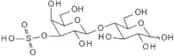
Lactose 3'-sulfate
CAS :Unusual lactose sulphate isolated from canine milk (beagle-Canis familiaris), which does not appear to have previously been isolated from milk or other natural sources. The structure was established by 2D NMR spectroscopy and mass spectrometry.Formule :C12H22O14SDegré de pureté :Min. 95%Couleur et forme :Beige PowderMasse moléculaire :422.36 g/molNeoagarotetraose
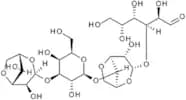
CAS :Agarose is a polysaccharide found in red algae, typically Gelidium and Gracilaria. It is a strictly alternating polysaccharide of α-1,3 linked D-galactose and β-1,4 linked L-3,6 anhydrogalactose with occasional sulfation at position 6 of the anhydrogalactose residue. Agaro-oligosaccharides result from cleavage at galactose residues and neoagaro-oligosaccharides from cleavage at 3,6-anhydro residues. Neoagarotetraose is reported to have potential for novel cosmeceuticals.Formule :C24H38O19Degré de pureté :Min. 98 Area-%Couleur et forme :White PowderMasse moléculaire :630.55 g/molAllyl 2,4,6-tri-O-(3,4,6-tri-O-acetyl-2-deoxy-2-phthalimido-β-D-glucopyranosyl)-3-O-benzyl-α-D-mannopyranoside
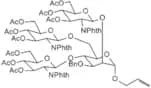
Allyl 2,4,6-tri-O-(3,4,6-tri-O-acetyl-2-deoxy-2-phthalimido-b-D-glucopyranosyl)-3-O-benzyl a -D -mannopyranoside is a glycosylated oligosaccharide. It is synthesized from 3,4,6 tri O acetyl 2 deoxy 2 phthalimido b D glucopyranosyl chloride and allyl alcohol by the click reaction with sodium azide in the presence of palladium catalysis. This product has been fluorinated at the 6 position of allose. The purity of this product is high and it has been modified on the saccharide chain with methyl groups at the C1 and C2 positions of glucose. Allyl 2,4,6 tri O (3 4 6 tri O acetyl 2 deoxy 2 phthalimido b D glucFormule :C76H79N3O33Degré de pureté :Min. 95%Masse moléculaire :1,562.44 g/molD-Cellopentose heptadecaacetate
CAS :D-Cellopentose heptadecaacetate is a fluorinated, monosaccharide that is synthesized from the sugar cellobiose. It is an oligosaccharide and a complex carbohydrate with one of its glycosidic bonds modified by methylation. D-Cellopentose heptadecaacetate has been shown to be effective in inhibiting glycosylation reactions and can be used as a sugar substitute or for custom synthesis. This product has been shown to have high purity and is available at CAS No. 83058-38-2.Formule :C64H86O43Degré de pureté :Min. 95%Couleur et forme :White to off-white solid.Masse moléculaire :1,543.34 g/molLewis X trisaccharide
CAS :<p>Milk oligosaccharide; antigen; expressed on gastric mucosa and cancer cells</p>Formule :C20H35NO15Degré de pureté :Min. 90 Area-%Couleur et forme :PowderMasse moléculaire :529.49 g/mol(D-Galactopyranosyl)-b-D-thiogalactopyranoside
CAS :(D-Galactopyranosyl)-b-D-thiogalactopyranoside is a synthetic disaccharide, specifically used in biochemical and molecular biology research. It is often derived through chemical synthesis using various monosaccharide precursors, designed to mimic natural disaccharides with a modified linkage. This compound acts as a non-metabolizable analog of lactose and can inhibit enzymes like β-galactosidase due to its structural similarity. Importantly, its sulfur-containing thiol linkage imparts unique stability and reactivity characteristics distinct from natural glycosidic bonds.The primary application of (D-Galactopyranosyl)-b-D-thiogalactopyranoside is in research studies exploring carbohydrate-protein interactions, enzyme inhibition assays, and the specificity of galactoside-binding proteins. It serves as a tool to elucidate the mechanics of glycosidases and to develop enzyme assays critical for the study of metabolic pathways involving galactosides. Further, it finds use in diagnostics as a reporter substrate in assays where differentiation from native substrates is necessary. Its role in these applications highlights the compound's utility in advancing scientific knowledge of carbohydrate biochemistry.Formule :C12H22O10SDegré de pureté :Min. 95%Couleur et forme :White PowderMasse moléculaire :358.36 g/mol4-O-Methyl-α-D-glucurono-β-D-xylan
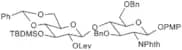
CAS :4-O-Methyl-alpha-D-glucurono-beta-D-xylan is produced by the hydrolysis of xylan. It can be used in studies to find new soluble chromogenic substrates for the assay of xylanases and glucanases.Couleur et forme :Powder4-Methoxyphenyl 4-O-(4,6-O-benzylidene-3-O-tert-butyldimethylsilyl-2-O-levulinoyl-β-D-glucopyranosyl)-3,6-di-O-benzyl-2-deoxy-2-phth alimido-β-D-glucopyranoside
4-Methoxyphenyl 4-O-(4,6-O-benzylidene-3-O-tert-butyldimethylsilyl-2-O-levulinoyl-b-D-glucopyranosyl)-3,6-di-O-benzyl -2,6'-dideoxygalactopyranoside is a modification of the natural carbohydrate galactose. The sugar moiety has been methylated and glycosylated with a levulinate ester and then fluorinated. This compound is highly pure and can be synthesized on custom order.Formule :C59H67NO15SiDegré de pureté :Min. 95%Masse moléculaire :1,058.24 g/molGT1b-Ganglioside sodium
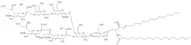
CAS :GT1b (sodium salt) has a core tetrasaccharide structure (Galβ1,3GalNAcβ1,4Galβ1,4Glc) with two sialic acids (NeuAc) linked α2,3/α2,8 to the inner galactose residue, sialic acid (NeuAc) linked α2,3 to the terminal galactose residue and ceramide linked β to position 1 on the reducing terminal glucose residue (Ledeen, 2009). GT1b is one of the major gangliosides in neuronal and glial membranes, it interacts with the myelin-associated glycoprotein (MAG) and is essential for long-term axon-myelin stability. GT1b ganglioside also acts as a receptor for bacterial toxins, such as, tetanus and botulinum toxins (Nishik,i 1996), as well as for viruses, a few examples include: Merkel cell polyomavirus, JC virus, BK virus, norovirus, and others (Low, 2006).Formule :C95H165N5O48·xNaCouleur et forme :White PowderMasse moléculaire :2,145.33 g/molLewis A trisaccharide methyl glycoside
CAS :Lewis A trisaccharide methyl glycoside is a sugar that is synthesized by the chemical modification of an oligosaccharide. The methyl glycoside is then fluorinated and reacted with a complex carbohydrate to produce Lewis A trisaccharide methyl glycoside. It has CAS No. 186315-40-2, which identifies it as a synthetic compound. This product has high purity, and can be custom synthesized to meet your needs. It is also available in both a glycosylated and non-glycosylated form.Formule :C21H37NO15Degré de pureté :Min. 95%Couleur et forme :PowderMasse moléculaire :543.52 g/molMaltotriose monohydrate
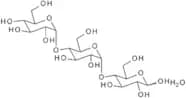
CAS :Shortest chain oligosaccharide that can be classified as a maltodextrin. A component of liquid glucose (a commercial sweetener composed of glucose, maltose, maltotriose and maltotetrose).Formule :C18H32O16•H2ODegré de pureté :Min. 90 Area-%Couleur et forme :White Off-White PowderMasse moléculaire :522.45 g/mol3-O-(a-D-Mannopyranosyl)-D-mannopyranose
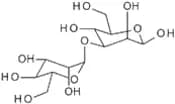
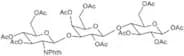
CAS :Isolated from the products of the acid reversion of D-mannoseFormule :C12H22O11Degré de pureté :Min. 95 Area-%Couleur et forme :White PowderMasse moléculaire :342.3 g/mol1,2,3,6-Tetra-O-acetyl-4-O-[2,4,6-tri-O-acetyl-3-O-(3,4,6-tri-O-acetyl-2-deoxy-2-phthalimido-b-D-glucopyranosyl)-b-D-galactopyranosy l]-b-D-glucopyranose
The modification of this product has been completed with a high level of purity and the CAS number is 57-49-6. It is an oligosaccharide that is a complex carbohydrate. This product can be synthesized through custom synthesis and it is a synthetic product. It is classified as a monosaccharide, methylation, glycosylation, and polysaccharide. The chemical formula for this compound is C12H14O11. This compound has been fluorinated to increase its solubility in water.Formule :C46H55NO27Degré de pureté :Min. 95%Masse moléculaire :1,053.92 g/molKojibiose
CAS :A rare sugar, prebiotic fibre and inhibitor of α-glucosidases. It inhibits animal-, plant- and microorganism-derived α-glucosidases I. In rodent models for diabetes, it ameliorates arachidic acid-induced liver injury and reduces hepatic inflammatory markers.Formule :C12H22O11Degré de pureté :Min. 99 Area-%Couleur et forme :White PowderMasse moléculaire :342.3 g/mol2'-Fucosyllactose - min 90%
CAS :Substrate for fucosidase; used in infant formula; improves health in infantsFormule :C18H32O15Degré de pureté :Min. 90%Couleur et forme :White PowderMasse moléculaire :488.44 g/mol3'-Sialyl Lewis X, sodium salt
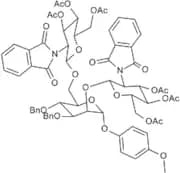
CAS :<p>Sialyl Lewis X (SLeX) is a carbohydrate antigen, related to cell adhesion and it has been shown that inhibition of SLeX synthesis leads to decreased adhesion of trophoblast cells to endometrial epithelial cells (Collins, 2006). Sialyl Lewis X is displayed on the terminus of glycolipids that are present on the surface of white blood cells and it has been shown that SLeX has an important role in inflamation processes. The inital adhesion of white blood cells to a site of injury is mediated by E-selectins which are specific for SLeX. Cell-cell recognition between leukocytes and endothelial cells in blood is believed to occur in part through interactions between lectins and oligosaccharide ligands. SLeX is frequently expressed in human cancer cells and primary tumors. It has been demonstrated that SLeX was involved in the adhesion of tumor cells to vascular endothelium. The potential role of SLeX in the tumor metastatic process has been supported by several clinical studies (Liang, 2016).</p>Formule :C31H51N2NaO23Degré de pureté :Min. 95%Couleur et forme :White PowderMasse moléculaire :842.73 g/mol4-Methoxyphenyl 3,4-di-O-benzyl-2,6-di-O-(3,4,6-tri-O-acetyl-2-deoxy-2-phthalimido-β-D-glucopyranosyl)-α-D-mannopyranoside
<p>4-Methoxyphenyl 3,4-di-O-benzyl-2,6-di-O-(3,4,6-tri-O-acetyl-2-deoxy-2-phthalimido-b-D-glucopyranosyl)-a-D -mannopyranoside is a synthetic glycoside that can be custom synthesized to order. It is considered to be of high purity with a CAS number 58314−10−1. This product has been fluorinated and glycosylated and is synthetically produced. 4MPBP has the following modifications: methylation, modification, and glycosylation. 4MPBP is an oligosaccharide that is composed of saccharides and a complex carbohydrate.</p>Formule :C67H68N2O25Degré de pureté :Min. 95%Masse moléculaire :1,301.26 g/molLewis X tetrasaccharide
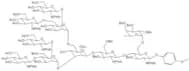
CAS :<p>Lewis X tetrasaccharide (LX4) is a glycan that is found on the surface of human cells. It is an important diagnostic marker for microbial infections and has been shown to be present on the surfaces of both normal skin cells and malignant cells. The presence of LX4 can be detected using a monoclonal antibody in vitro. This glycan can also be used as a model system to study ischemia–reperfusion injury, since it has been shown to be sensitive to oxidative changes caused by reactive oxygen species generated during reperfusion. Studies have also shown that LX4 binds to enzymes such as malonic acid oxydoreductase, which are involved in the metabolism of lysine, arginine, and proline.</p>Formule :C26H45NO20Degré de pureté :Min. 90%Couleur et forme :White PowderMasse moléculaire :691.64 g/mol4-Methoxyphenyl 4-O-{4-O-[[2-O-Ac-3-O-[2,4-di-O-(3,4 ,6-tri-O-Ac-2-PhthN-β-D-Glc)-3,6-di-O-Bn-α-D-Man]-6-O-[3,4-di-O-Ac-2 ,6-di-O-(3,4 ,6-tri-O-Ac-2-PhthN-β-D-Glc)-α-D-Man]-β-D-Man]]-3,6-di-O-Bn -2-PhthN-β-D-Glc}-3-O-Bn-6-O-(tri-O-Bn-α-L-Fuc)-2-PhthN-β-D-
CAS :<p>This compound is a synthetic glycosylation reagent that is used for the modification of proteins and polysaccharides. It can be used to introduce various sugars and oligosaccharides to proteins, such as Methylation, Click modification, Polysaccharide, Fluorination, saccharide, Modification, sugar, Oligosaccharide. The compound has a CAS No. 946164-26-7 and is available for custom synthesis with high purity.</p>Formule :C201H204N6O72Degré de pureté :Min. 95%Masse moléculaire :3,855.77 g/mol2-O-(b-D-Mannopyranosyl)-D-mannopyranose
CAS :β-(1→2)-Oligomannoside constituents of the Candida albicans cell wall have been shown to possess immunostimulatory properties, as evidenced by induction of cytokine production, including tumor necrosis factor (TNF) production, in humans and mice. In particular, oligosaccharide fractions, isolated and fractionated from the C. albicans cell wall, have been shown to induce TNF production in mouse macrophages. Therefore, biological studies employing well-defined synthetic β-(1→2)-linked oligomannoside compounds are of interest for verifying and studying in detail the proposed immunostimulatory properties of such constructs.Formule :C12H22O11Degré de pureté :Min. 90 Area-%Couleur et forme :PowderMasse moléculaire :342.3 g/mol