Oligosaccharides
Les oligosaccharides sont des glucides composés d'un petit nombre d'unités monosaccharidiques liées par des liaisons glycosidiques. Ces molécules jouent des rôles importants dans divers processus biologiques, notamment la reconnaissance cellulaire, la signalisation et les réponses immunitaires. Dans cette section, vous trouverez une large sélection d'oligosaccharides essentiels pour la recherche en glycosciences, biochimie et biologie moléculaire. Ces composés sont essentiels pour étudier les structures complexes des glucides, leurs fonctions et leurs interactions avec d'autres biomolécules. Chez CymitQuimica, nous proposons des oligosaccharides de haute qualité pour répondre à vos besoins en recherche et développement, garantissant des résultats précis et fiables dans vos expériences.
Sous-catégories appartenant à la catégorie "Oligosaccharides"
- Aminoéthyl Glycosides, Aminopropyl Glycosides(14 produits)
- Glycanes liant les Asn(33 produits)
- Oligosaccharides biotinées(13 produits)
- Groupes sanguins et antigènes de Lewis(11 produits)
- Oligosaccharides du groupe sanguin(13 produits)
- Cellooligosaccharides(1 produits)
- Cyclodextrines(183 produits)
- Disaccharides(192 produits)
- Oligosaccharides d'épitopes(19 produits)
- Fructooligosaccharides(2 produits)
- Oligosaccharides fonctionnels(554 produits)
- Oligosaccharides fonctionnalisés(1 produits)
- Galactosamine(41 produits)
- Galactoses(261 produits)
- Galb (1-3) GalNAc(21 produits)
- Série Ganglio(11 produits)
- Séries Globo et Isoglobo(17 produits)
- Glucosamine(128 produits)
- Acides glucuroniques(51 produits)
- Glycoprotéines, Glycopeptides(59 produits)
- Glycosaminoglycane(26 produits)
- Oligosaccharides du lait maternel(22 produits)
- O-Glycanes marqués(9 produits)
- Oligosaccharides marqués(36 produits)
- LacNAc(53 produits)
- Séries Lacto et Néolacto(14 produits)
- Lacto-N-biose(10 produits)
- Lactooligosaccharides(7 produits)
- Liaison attachée aux oligosaccharides(19 produits)
- Maltooligosaccharides(6 produits)
- Oligosaccharides du lait(31 produits)
- N-Glycanes(149 produits)
- Glycosides naturels(177 produits)
- Oligosaccharides naturels(103 produits)
- O-Glycane(18 produits)
- Building Blocks d’Oligosaccharides(7 produits)
- Remplacement des oligosaccharides(2 produits)
- Oligosaccharides par composant Sucre(225 produits)
- Oligoses(24 produits)
- Autres Oligosaccharides(14 produits)
- Oligomères de PEG(33 produits)
- Sucres phosphatés(17 produits)
- Sucres protégés(526 produits)
- Réactifs pour la synthèse d'oligosaccharides(254 produits)
- Glycanes de liaison Ser, Thr(9 produits)
- Oligosaccharides sialylés(3 produits)
- Sphingoglycolipides(42 produits)
- Acides aminés de sucre, Peptides de sucre(20 produits)
- Antigènes de sucre(31 produits)
- Building Blocks Sucrés par Oligosaccharides Cibles(225 produits)
- Conjugués de sucre(100 produits)
- Sucres sulfatés(16 produits)
- Tétrasaccharides(34 produits)
- Trisaccharides et autres(95 produits)
- Xylooligosaccharides(5 produits)
Affichez 47 plus de sous-catégories
2278 produits trouvés pour "Oligosaccharides"
Trier par
Degré de pureté (%)
0
100
|
0
|
50
|
90
|
95
|
100
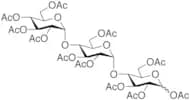
D-Maltotriose Peracetate
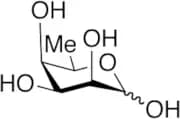
CAS :Produit contrôlé<p>Applications Protected Maltotriose.<br>References Brayer, G., et al.: Biochem., 39, 4778 (2000),<br></p>Formule :C40H54O27Couleur et forme :NeatMasse moléculaire :966.846-Deoxy-D-talose
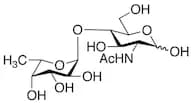
CAS :Produit contrôlé<p>Stability Hygroscopic<br>Applications 6-Deoxy-D-talose is an derivative of D-Talose (T005560), a monosaccharide sugar that can convert between aldose and ketose forms in pyridine in the presence of aluminum oxide.<br>References Davies, S.G., et al.: Org. Biomolec. Chem., 3, 348 (2005);<br></p>Formule :C6H12O5Couleur et forme :NeatMasse moléculaire :164.162-Acetamido-2-deoxy-4-O-(α-L-fucopyranosyl)-D-glucopyranose
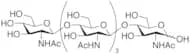
CAS :Produit contrôlé<p>Applications Oligosaccharide which participates in cell adhesion between bacterial and eukaryotic cells<br>References Perret, S., et al.: Biochem. J., 389, 325 (2005), Marotte, K., et al.: ChemMedChem., 2, 1328 (2007),<br></p>Formule :C14H25NO10Couleur et forme :NeatMasse moléculaire :367.35N,N’,N’’,N’’’,N’’’’-Pentaacetylchitopentaose
CAS :Produit contrôlé<p>Stability Hygroscopic<br>Applications Studies have shown this compound to have anti tumor effects.<br>References Suzuki, K., et al.: Carbohydrate Research, 151, 403 (1986)<br></p>Formule :C40H67N5O26Couleur et forme :NeatMasse moléculaire :1034.001,5-a-L-Arabinoheptaose
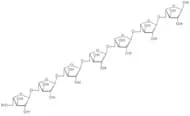
CAS :<p>1,5-a-L-Arabinoheptaose is a sugar that is found in the cell walls of bacteria. The chemical modification of this sugar has been studied extensively. The modification of this sugar with methyl groups and click chemistry has been shown to alter its properties, such as binding affinity and solubility. This modified sugar can be used for glycosylation reactions or custom synthesis. 1,5-a-L-Arabinoheptaose is also available in high purity and with a custom synthesis.</p>Formule :C35H58O29Degré de pureté :Min. 95%Couleur et forme :PowderMasse moléculaire :942.82 g/mol1,3:1,4 b-Glucotriose (A)
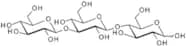
CAS :<p>1,3:1,4 b-Glucotriose (A) is a custom synthesis that is available with a purity of ≥98%. It is a fluorinated polysaccharide with a complex structure that can be modified to produce different variations. The methylation status of the compound can be customized as well. This product is an oligosaccharide and polysaccharide sugar that contains one glucose unit. It has been synthesized from the monosaccharide sugar and it can be used for chemical modification or for research purposes.</p>Formule :C18H32O16Degré de pureté :Min. 95%Couleur et forme :White PowderMasse moléculaire :504.44 g/molLacto-N-fucopentaose II-APD-KLH
CAS :Lacto-N-fucopentaose II-APD-KLH is a fluorinated, monosaccharide, synthetic, oligosaccharide, complex carbohydrate. It has CAS No. 21973-23-9 and a custom synthesis. Lacto-N-fucopentaose II-APD-KLH can be used as a glycosylation or polysaccharide with click modification or methylation. The high purity of this product is 99%.Degré de pureté :Min. 95%4-O-(b-D-Galactopyranosyl)-D-glucosamine HCl
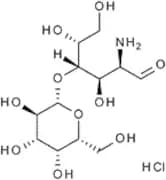
CAS :<p>4-O-(b-D-Galactopyranosyl)-D-glucosamine HCl is a synthetic, water soluble, non-digestible oligosaccharide. It has regulatory effects on the utilisation of glucose and lacto-n-neotetraose by various cells in vitro. This compound also inhibits the development of intestinal pathogens in humans and elucidates their sequence specificity. 4-O-(b-D-Galactopyranosyl)-D-glucosamine HCl is used to study the role of this molecule in infant nutrition.</p>Formule :C12H23NO10·HClDegré de pureté :Min. 95%Couleur et forme :PowderMasse moléculaire :377.77 g/mola1-3,a1-6-Mannotriose-BSA
<p>a1-3,a1-6-Mannotriose-BSA is a carbohydrate that is synthesized by the modification of maltotriose with a fluorinated alcohol. It is an oligosaccharide made up of three glucose units linked together in a 1,3 configuration and one glucose unit linked together in a 1,6 configuration. The molecular weight of this carbohydrate is 793 Daltons. This product has been shown to be high purity and custom synthesis for use in research.</p>Degré de pureté :Min. 95%Couleur et forme :PowderMethyl 6-O-(b-D-galactopyranosyl)-b-D-galactopyranoside
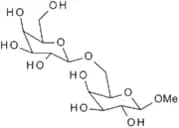
Methyl 6-O-(b-D-galactopyranosyl)-b-D-galactopyranoside is a white crystalline solid that belongs to the category of carbohydrates. It is a synthetic carbohydrate with a molecular weight of 496.06 and a CAS number of 3489-94-3. This product has been custom synthesized for research purposes, and can be purchased in high purity (>98%) from various suppliers. It is an oligosaccharide that contains a single sugar unit, which is galactose. This product has been modified with fluorination and methylation to prevent hydrolysis by esterases and glucuronidases, respectively. It also has glycosylation sites on the terminal glucose residues that allow for further modification with other carbohydrates or proteins. The methyl 6-O-(b-D-galactopyranosyl)-b-D-galactopyranoside can be used as an affinity ligandFormule :C13H24O11Degré de pureté :Min. 95%Masse moléculaire :356.32 g/molBenzyl 4-O-a-D-glucosaminyl-b-D-xylopyranoside
Benzyl 4-O-a-D-glucosaminyl-b-D-xylopyranoside is a methylated saccharide. It is a product of the Click modification of an oligosaccharide with benzyl alcohol. Benzyl 4-O-a-D-glucosaminyl-b-D-xylopyranoside is produced by glycosylation of D-(+)-glucose with glucuronic acid and galactose. The product can be used as a synthetic building block for complex carbohydrate synthesis, fluorination, or click modification.Degré de pureté :Min. 95%6-O-Sulphated Lewisa-BSA
<p>Lewisa-BSA is a modified form of BSA that contains 6-O sulfated sugars. This carbohydrate is used in the treatment of diabetes and other metabolic disorders. Lewisa-BSA is synthesized by the modification of BSA with a series of oligosaccharide residues. The carbohydrate chains are then methylated, glycosylated, and finally sulfated. This process provides Lewisa-BSA with high purity and high stability.</p>Degré de pureté :Min. 95%3'-Sialyllactosyl azide
3'-Sialyllactosyl azide is a complex carbohydrate that is modified with fluorination, saccharide modification, and methylation. 3'-Sialyllactosyl azide is synthesized from a monosaccharide by glycosylation, methylation, click modification, or polysaccharides. The CAS number for this compound is 814-07-1. This product can be custom synthesized to meet the customer's needs.Degré de pureté :Min. 95%1,4-b-D-Cellohexaitol
CAS :<p>1,4-B-D-cellobiohexaitol is a potent inhibitor of cellobiose phosphorylase and has been shown to inhibit the activity of this enzyme in a competitive manner. 1,4-B-D-cellobiohexaitol binds to cellulose and other sugars, which may be related to its toxicity. It is not toxic to animals because they do not have the same sugar binding sites as bacteria. 1,4-B-D-cellobiohexaitol has been shown to be effective against Streptomyces lividans and S. coelicolor. This substance inhibits Streptomyces growth by binding to glucose and galactose present in the cell wall of these organisms.</p>Formule :C36H64O31Degré de pureté :Min. 95%Masse moléculaire :992.87 g/molMan-7D2 N-Glycan
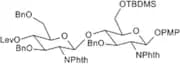
<p>Man-7D2 N-glycan is a custom synthesis of mannose. It is a modification of the glycan, which is an oligosaccharide that consists of many monosaccharides linked together. The process of glycosylation involves the addition of one or more sugars to an existing carbohydrate molecule. In this case, the sugar is mannose and it has been modified by fluorination, methylation, and click chemistry. This product can be used as a substitute for natural glycans in research applications. The CAS number for this product is 59569-81-1.</p>Degré de pureté :Min. 95%4-Methoxyphenyl 4-O-(3,6-di-O-benzyl-2-deoxy-4-O-levulinoyl-2-phthalimido-b-D-glucopyranosyl)-3-O-benzyl-6-O-tert-butyldimethylsilyl -2-deoxy-2-phthalimido-b-D-glucopyranoside
<p>4-Methoxyphenyl 4-O-(3,6-di-O-benzyl-2-deoxy-4-O-levulinoyl-2-phthalimido-b-D-glucopyranosyl)-3,6,3'-tri O -benzylidene -2,4′-(1,3,5) triazine -6,7′-[1,3]dioxane</p>Formule :C67H72N2O16SiDegré de pureté :Min. 95%Masse moléculaire :1,189.38 g/molb1-4-Galactosyl-Galactose-BSA
b1-4-Galactosyl-Galactose-BSA is a carbohydrate, modification and saccharide that is an Oligosaccharide and sugar. It is custom synthesized and has high purity. This compound can be fluorinated, complexed, or methylated. It also contains glycosylation or click modification.Degré de pureté :Min. 95%Methyl b-N-acetyllactosamine
CAS :<p>Methyl b-N-acetyllactosamine is a sulfated glycosaminoglycan (GAG) that is expressed in the brain and is involved in the development of myelin. This compound has been shown to inhibit the transfer of sulfate groups, which are essential for the synthesis of GAGs. Methyl b-N-acetyllactosamine inhibits transglycosylation reactions, which is a process by which sugar moieties are transferred from one molecule to another. This inhibition results in decreased cross-coupling reactions and decreases the production of GAGs. Methyl b-N-acetyllactosamine has been shown to have potent inhibitory properties against sulfonylating enzymes, such as regiospecifically catalyzed sulfonylation and transglycosylation. It also has been shown to inhibit the transition state in an enzymatic reaction involving triazoles.</p>Formule :C15H27NO11Degré de pureté :Min. 95%Masse moléculaire :397.38 g/molGlobo-N-tetraose-APD-HSA
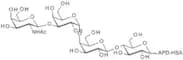
Globo-N-tetraose conjugated to HSA with acetyl-phenylenediamine spacerDegré de pureté :Min. 95%Acarbose tridecaacetate
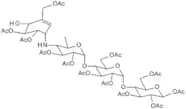
CAS :<p>Acarbose tridecaacetate is a bacterial extract that has been shown to inhibit the growth of various strains of bacteria. This extract was extracted from the fields and contains aluminum oxide impurities. Acarbose tridecaacetate has shown efficacy in seed culture and actinomyces, which are two types of bacteria. The sequence of this extract has been determined using aluminum oxide. Acarbose tridecaacetate is soluble in a variety of solvents, including organic solvents and solvents. It can be purified by chromatography to remove any bulk drug or organic solvent that may be present.</p>Formule :C51H69NO31Degré de pureté :Min. 95%Couleur et forme :White PowderMasse moléculaire :1,192.08 g/mol