Colorants, teintes, teintures, imagerie fluorescente
Les colorants, teintures et solutions colorantes sont des outils essentiels en biologie moléculaire, cruciaux pour visualiser et étudier l'ADN, les chromosomes et les noyaux cellulaires. Ces composés permettent aux chercheurs de mettre en évidence des composants cellulaires spécifiques, facilitant ainsi l'observation et l'analyse détaillées au microscope. Dans cette catégorie, vous trouverez une large gamme de colorants et de teintures de haute qualité utilisés dans diverses techniques de coloration, y compris des colorants fluorescents pour l'analyse de l'ADN et des chromosomes, des colorants histologiques pour les échantillons de tissus et des colorants spécifiques pour les structures cellulaires. Ces outils sont indispensables en recherche génétique, cytologie, histologie et diagnostics, offrant clarté et contraste dans les échantillons biologiques. Chez CymitQuimica, nous proposons une sélection complète de colorants, teintures et solutions colorantes pour soutenir vos recherches en biologie moléculaire et garantir des résultats précis et fiables dans vos études.
Sous-catégories appartenant à la catégorie "Colorants, teintes, teintures, imagerie fluorescente"
- Colorants acides(49 produits)
- Azobenzènes(270 produits)
- Colorants azoïques(7 produits)
- Colorants de base(27 produits)
- Colorants de coumarine(71 produits)
- Colorants cyanine, colorants squarylium(53 produits)
- Colorants DCM(4 produits)
- Diarylethenes(12 produits)
- Colorants dipyrrométhéniques(26 produits)
- Colorants directs(17 produits)
- Colorants dispersés(2 produits)
- Sensibilisateurs de colorants(12 produits)
- Colorants(416 produits)
- Teintures et colorants(911 produits)
- Génération de colorants insolubles(14 produits)
- Génération de colorants solubles(11 produits)
- Hexaarylbiimidazole(4 produits)
- Indicateurs(575 produits)
- Colorants mordants(10 produits)
- Colorants dans le proche infrarouge (NIR)(28 produits)
- Colorants à l'huile(15 produits)
- Autres teintures et colorants(2 produits)
- Colorants au pérylène(17 produits)
- Colorants photochromiques(40 produits)
- Colorants phtalocyaniques, colorants porphyriniques(101 produits)
- Colorants à base de quinacridone(8 produits)
- Spiropyranes(16 produits)
- Réactifs colorés et colorants(243 produits)
- Réactifs colorés et colorants pour la microscopie(5 produits)
- Colorants de cuve(5 produits)
- Colorants xanthènes(65 produits)
Affichez 23 plus de sous-catégories
755 produits trouvés pour "Colorants, teintes, teintures, imagerie fluorescente"
Trier par
Degré de pureté (%)
0
100
|
0
|
50
|
90
|
95
|
100
C.I.Solvent Red 109
CAS :<p>6-Fluoro-3-indoxyl-beta-D-galactopyranoside, also known as Rifapentine, is a highly effective antituberculosis drug from the class of rifamycins. It is specifically designed to combat tuberculosis infections by targeting the active compounds in Mycobacterium tuberculosis strains. Rifapentine works by inhibiting bacterial growth through its bactericidal activity. By binding to DNA-dependent RNA polymerase, it prevents transcription and replication, effectively stopping the spread of the infection.</p>Degré de pureté :Min. 95%C.I.Basic Yellow 25
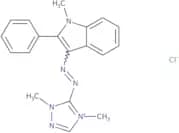
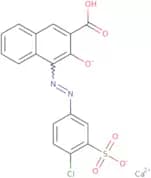
CAS :<p>C.I. Basic Yellow 25 is a methoxylated, basic dye that belongs to the class of cationic surfactants. It is used as a cross-linking agent in coatings, adhesives, and inks. The chromophore of this compound is hydroxyl group, which reacts with chloride to form an ion pair with a constant charge ratio of 2:1, which can be stabilized by the cross-linking reaction. This compound is reactive and is able to crosslink with other molecules containing carbonyl groups. C.I. Basic Yellow 25 can also act as a polymerization inhibitor for polyvinyl chloride (PVC) resin and has been shown to be effective in preventing the formation of chlorinated dioxins during PVC production</p>Degré de pureté :Min. 95%Pigment Red 32
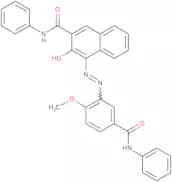
CAS :<p>Pigment Red 32 is an organic pigment that is soluble in propylene glycol and surface-active agents. It has a particle diameter of about 0.1 microns and an average particle size of 0.2 microns, with a maximum of 100% dispersion in water. Pigment Red 32 has been shown to be acidic, fluorescent, thiophosphoric, non-polar, styrene-based, and organic solvent-soluble. This pigment is used in the production of plastics and paints for devices such as TV screens due to its ability to liquefy under radiation or heat. Pigment Red 32 also contains functional groups that impart both hydrophobic and hydrophilic properties to the molecule.br>br><br>Pigment Red 32 can be found in paint products including acrylics, alkyds, latexes, oil paints, and watercolors.br>br><br>Pigment Red 32 can be found in plastics products including ABS res</p>Degré de pureté :Min. 95%Acridine orange 10-nonylbromide
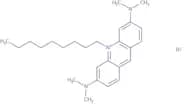
CAS :<p>Acridine orange 10-nonylbromide is a fluorescent dye that binds to DNA and RNA. It is used in biochemistry to stain cells and tissues for examination under a microscope. Acridine orange 10-nonylbromide has been shown to bind to the mitochondria in human white blood cells, thereby inhibiting mitochondrial membrane potential, which leads to cell lysis. Acridine orange 10-nonylbromide also has an index of high values with water vapor, making it an ideal candidate for use as an indicator in ecological studies. Acridine orange 10-nonylbromide can be used as a probe for the study of biological samples because it binds reversibly to nucleic acids, giving it chemical stability. Acridine orange 10-nonylbromide also has monoclonal antibodies that are specific for the physiological function of proteins, which makes it useful as a probe for biochemical research involving protein synthesis or degradation.</p>Formule :C26H38BrN3Degré de pureté :Min. 95%Couleur et forme :SolidMasse moléculaire :472.5 g/molFast Sulphon Black F
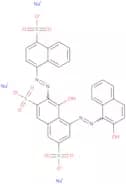
CAS :<p>Fast Sulphon Black F is a stable, water-soluble dye that can be used for electrochemical measurements. It is an irreversible oxidation agent that has been shown to oxidize organic solvents and metal ions. The kinetic of the reaction with sodium salts was found to be first order in Fast Sulphon Black F and second order in sodium salt. This dye also has a potential use as a redox indicator in wastewater treatment systems. Fast Sulphon Black F is soluble in organic solvents, which may make it useful for optical sensors.</p>Formule :C30H20N4O11S3•Na3Degré de pureté :(%) Min. 95%Couleur et forme :PowderMasse moléculaire :777.67 g/molC.I.Reactive violet 5
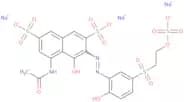
CAS :<p>C.I. Reactive Violet 5 is a dye that is used in the textile industry and for the detection of bacterial strains in biological samples. The dye is a 4-hydroxycinnamic acid derivative that has been shown to have a hydrophobic effect on bacteria, which may be due to its chemical structure and ability to form hydrogen bonds with water molecules. C.I. Reactive Violet 5 also binds to colloidal gold particles, making it an excellent stain for biological samples such as activated sludge wastewater treatment samples where bacteria are abundant.</p>Formule :C20H16N3Na3O15S4Degré de pureté :Min. 95%Couleur et forme :PowderMasse moléculaire :735.6 g/molC.I.Reactive Red 111
CAS :<p>C.I.Reactive Red 111 is a reactive dye that can be used in the manufacture of textile and paper products. It has been shown to have optimum reactivity with anionic groups, such as sulfonic acid and carboxylate, at pH levels between 2-11. This dye has a wide range of application parameters, including stability and color development time. C.I.Reactive Red 111 is also resistant to oxidation by sulfuric acid and other corrosive chemicals at high concentrations, which makes it suitable for use in industrial environments where strong oxidizing agents are present.</p>Degré de pureté :Min. 95%ICG-alkyne
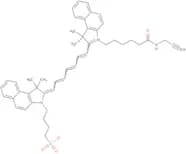
CAS :<p>The non-invasive near-infrared fluorescence imaging dye ICG is used in ophthalmologic angiography to determine cardiac output and liver blood flow and function. The ICG alkyne can be used to label azido functionalised biomolecules eg glycans, lipids and peptides via click chemistry protocols.</p>Formule :C48H53N3O4SDegré de pureté :Min. 95%Couleur et forme :PowderMasse moléculaire :768 g/molPigment Red 58:2
CAS :<p>Please enquire for more information about Pigment Red 58:2 including the price, delivery time and more detailed product information at the technical inquiry form on this page</p>Degré de pureté :Min. 95%C.I.Food Red 7:1
CAS :<p>C.I.Food Red 7:1 is a copper salt pigment that is used as a food coloring agent. It has bactericidal activity and is known to be synergistic with famotidine, erythromycin, hydrochloric acid, and dry extract. C.I.Food Red 7:1 also has chemical stability and can be used as a cross-linking agent for chondroitin sulfate in the production of pharmaceuticals.</p>Formule :C20H11AlN2O10S3Degré de pureté :Min. 95%Masse moléculaire :562.48 g/molDBCO-Cy3 ditriethylamine
CAS :<p>Please enquire for more information about DBCO-Cy3 ditriethylamine including the price, delivery time and more detailed product information at the technical inquiry form on this page</p>Formule :C50H54N4O11S3•(C6H15N)2Degré de pureté :Min. 95%Masse moléculaire :1,185.56 g/molC.I.Solubilised Sulphur Blue 7
CAS :<p>C.I. Solubilised Sulphur Blue 7 is a research chemical that belongs to the group of copolymers. It is commonly used in the field of biomaterials and cellulose research. This compound has been found to have neuroprotective properties, making it potentially beneficial for the treatment of neurological disorders. C.I. Solubilised Sulphur Blue 7 has also been used in various applications such as dyeing, staining, and as an indicator or probe in scientific experiments. It can be dissolved in solvents like methanol or isooctane for ease of use. This compound has shown interactions with substances like buserelin, xylose, arachidonic acid, and aluminum, indicating its versatility and potential for further research.</p>Degré de pureté :Min. 95%C.I.Disperse Blue 291:1
CAS :<p>Please enquire for more information about C.I.Disperse Blue 291:1 including the price, delivery time and more detailed product information at the technical inquiry form on this page</p>Degré de pureté :Min. 95%Acid fuchsin calcium
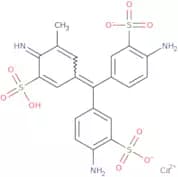
CAS :<p>Acid fuchsin is a water-soluble, non-toxic, acidic dye that is used in histology to stain connective tissue and mucous membranes. It is used as an indicator for calcium in the presence of acid phosphatase. Acid fuchsin can be detected by light microscopy when it is stained on a section of tissue or cells. This dye can be used with immunocytochemistry or cytogenetics to assess the morphology of cells and tissues. The staining intensity varies according to the concentration of the acid fuchsin solution, which can be quantified by measuring the absorbance at 510 nm. A reference range for this measurement would be 0.1 - 1 μg/ml (10 - 100 μM).</p>Formule :C20H19N3O9S3·xCaCouleur et forme :PowderMasse moléculaire :541.58 g/molC.I.Acid Orange 87
CAS :<p>Please enquire for more information about C.I.Acid Orange 87 including the price, delivery time and more detailed product information at the technical inquiry form on this page</p>Degré de pureté :Min. 95%C.I.Acid Yellow 158:1
CAS :<p>Please enquire for more information about C.I.Acid Yellow 158:1 including the price, delivery time and more detailed product information at the technical inquiry form on this page</p>Degré de pureté :Min. 95%Patent Blue V sodium salt
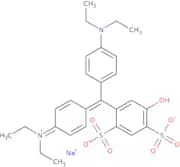
CAS :<p>C.I. Acid Blue 3 is a synthetic, water-soluble dye that has been used in analytical chemistry for the detection of metal hydroxides and other metal ions. The dye can be activated by radiation or by heating to produce a bright blue color that is stable under acidic conditions. C.I. Acid Blue 3 has been shown to cause toxicity in animals, and may have potential carcinogenic effects in humans due to its ability to cross the blood-brain barrier and accumulate in the brain. The molecular weight of this compound is approximately 464 g/mol and it has a molecular formula of C 18 H 20 N 2 NaO 7 S 2 .</p>Formule :C27H32N2O7S2•xNaCouleur et forme :Blue PowderMasse moléculaire :582.67 g/molDisperse Red 9
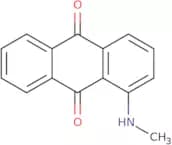
CAS :<p>Disperse Red 9 is a dye that is used in analytical chemistry to measure the amount of hydrogen bonding interactions. It has a linear regression analysis and molecular modeling to determine its molecular structure. Disperse Red 9 is also used for toxicity studies and the determination of various chemical structures. The mechanism of the reaction between Disperse Red 9 and hydrogen is intramolecular hydrogen bonding, which can be seen by nmr spectra. Disperse Red 9 has been shown to have toxic effects on animals, as well as other side-effects such as skin irritation. This dye has an intramolecular hydrogen bond with a cationic surfactant, which makes it soluble in water.</p>Formule :C15H11NO2Degré de pureté :Min. 95%Couleur et forme :Red PowderMasse moléculaire :237.25 g/molPigment Yellow 116
CAS :<p>Pigment Yellow 116 is a yellow pigment that is used in the production of plastics and paints. It absorbs light in the blue region of the spectrum and has an average particle diameter of 3.5 nm. Pigment Yellow 116 is a polycarboxylic acid with a heterocycle, which allows it to be soluble in organic solvents. Pigment Yellow 116 has been shown to be photostable, meaning that it does not break down when exposed to ultraviolet radiation. This pigment can be polymerized by free radicals or radiation initiated polymerization, allowing for patterning applications such as printing on textiles, paper, or film.</p>Degré de pureté :Min. 95%C.I.Acid green 54
CAS :<p>Please enquire for more information about C.I.Acid green 54 including the price, delivery time and more detailed product information at the technical inquiry form on this page</p>Degré de pureté :Min. 95%