Colorants, teintes, teintures, imagerie fluorescente
Les colorants, teintures et solutions colorantes sont des outils essentiels en biologie moléculaire, cruciaux pour visualiser et étudier l'ADN, les chromosomes et les noyaux cellulaires. Ces composés permettent aux chercheurs de mettre en évidence des composants cellulaires spécifiques, facilitant ainsi l'observation et l'analyse détaillées au microscope. Dans cette catégorie, vous trouverez une large gamme de colorants et de teintures de haute qualité utilisés dans diverses techniques de coloration, y compris des colorants fluorescents pour l'analyse de l'ADN et des chromosomes, des colorants histologiques pour les échantillons de tissus et des colorants spécifiques pour les structures cellulaires. Ces outils sont indispensables en recherche génétique, cytologie, histologie et diagnostics, offrant clarté et contraste dans les échantillons biologiques. Chez CymitQuimica, nous proposons une sélection complète de colorants, teintures et solutions colorantes pour soutenir vos recherches en biologie moléculaire et garantir des résultats précis et fiables dans vos études.
Sous-catégories appartenant à la catégorie "Colorants, teintes, teintures, imagerie fluorescente"
- Colorants acides(49 produits)
- Azobenzènes(270 produits)
- Colorants azoïques(7 produits)
- Colorants de base(27 produits)
- Colorants de coumarine(71 produits)
- Colorants cyanine, colorants squarylium(53 produits)
- Colorants DCM(4 produits)
- Diarylethenes(12 produits)
- Colorants dipyrrométhéniques(26 produits)
- Colorants directs(17 produits)
- Colorants dispersés(2 produits)
- Sensibilisateurs de colorants(12 produits)
- Colorants(416 produits)
- Teintures et colorants(911 produits)
- Génération de colorants insolubles(14 produits)
- Génération de colorants solubles(11 produits)
- Hexaarylbiimidazole(4 produits)
- Indicateurs(575 produits)
- Colorants mordants(10 produits)
- Colorants dans le proche infrarouge (NIR)(28 produits)
- Colorants à l'huile(15 produits)
- Autres teintures et colorants(2 produits)
- Colorants au pérylène(17 produits)
- Colorants photochromiques(40 produits)
- Colorants phtalocyaniques, colorants porphyriniques(101 produits)
- Colorants à base de quinacridone(8 produits)
- Spiropyranes(16 produits)
- Réactifs colorés et colorants(243 produits)
- Réactifs colorés et colorants pour la microscopie(5 produits)
- Colorants de cuve(5 produits)
- Colorants xanthènes(65 produits)
Affichez 23 plus de sous-catégories
755 produits trouvés pour "Colorants, teintes, teintures, imagerie fluorescente"
Trier par
Degré de pureté (%)
0
100
|
0
|
50
|
90
|
95
|
100
C.I.Reactive Yellow 162
CAS :<p>Please enquire for more information about C.I.Reactive Yellow 162 including the price, delivery time and more detailed product information at the technical inquiry form on this page</p>Degré de pureté :Min. 95%Acid Red 266
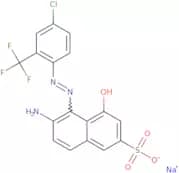
CAS :<p>Acid Red 266 is a hydroxyl-containing polymeric dye that is used in the textile and paper industries as a colorant, pigment, or dye. It has been shown to be an efficient control agent for the polymerization of polyvinyl acetate. Acid Red 266 can also be used to form films with high light stability and good mechanical properties. The hydroxyl group present in this molecule causes it to have a polarizing effect on UV absorption. Acid Red 266 is made of particles that are soluble in water and alcohols, but insoluble in oils. This acid dye is also sensitive to heat, so it should not be exposed to temperatures over 60°C.</p>Formule :C17H10ClF3N3O4S•NaDegré de pureté :Min. 95%Masse moléculaire :467.78 g/molAcridine orange base
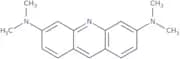
CAS :<p>Acridine orange is a fluorescent dye that can pass through the cell membrane and bind to the cytoplasmic structures of cells. It can be used as a probe for determining the presence of cell nuclei, mitochondria, and other organelles. Acridine orange is also used in experiments to determine mitochondrial membrane potential. In this type of experiment, acridine orange is added to cells and its uptake into mitochondria is observed. The dye changes color from orange to green when it binds with the mitochondria because it emits green fluorescence at higher excitation wavelengths than red fluorescence. Acridine orange has been shown to increase fatty acid synthesis by binding with fatty acid synthase, which is an enzyme involved in fatty acid biosynthesis. Acridine orange also increases ATP levels by inhibiting oxidative phosphorylation in mitochondria.</p>Formule :C17H19N3Couleur et forme :Orange PowderMasse moléculaire :265.35 g/molBromocresol green
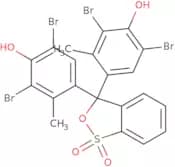
CAS :<p>Bromocresol green is a cationic surfactant that is used as a fluorescent indicator dye. It binds to proteins and can be detected with an optical sensor. Bromocresol green has been shown to react with hydrochloric acid, which may be due to the protonation of the cationic group. This reaction is reversible and depends on pH. The binding of bromocresol green to serum proteins results in a decrease in fluorescence intensity due to quenching by adsorption at the protein-protein interface. The kinetic data for this dye have been found to depend on α1-acid glycoprotein concentration.</p>Formule :C21H14Br4O5SCouleur et forme :PowderMasse moléculaire :698.01 g/molC.I.Acid Yellow 42
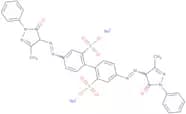
CAS :<p>C.I.Acid Yellow 42 is a reactive dye that belongs to the class of chromatic compounds. It is used in photolithography and as a pH indicator, but is also an environmental pollutant. C.I.Acid Yellow 42 is hydrated and has radical mechanism of photodecomposition, which makes it subject to radiation and mineralization. C.I.Acid Yellow 42 can be used in assays for detecting ions such as copper, iron, zinc, or mercury at efficiencies greater than other dyes in the same class. It can also be synthesized from organic materials or biodegradable substances such as dyes from natural sources or phenol-formaldehyde resins with low toxicity to humans and the environment.>>END>></p>Formule :C32H26N8O8S2•Na2Degré de pureté :Min. 95%Couleur et forme :PowderMasse moléculaire :760.71 g/mol5-Cyano-2,3-di-(p-tolyl)tetrazolium chloride
CAS :<p>5-Cyano-2,3-di-(p-tolyl)tetrazolium chloride is a tetrazolium dye used as an indicator of eukaryotic cells in a range or media including waste water resulting in a cyan color. It is commonly used in microbiology laboratories to measure the viability of cells. The redox potentials of 5-Cyano-2,3-di-(p-tolyl)tetrazolium chloride are reduced by the presence of active respiratory cells, resulting in fluorescent formazan.</p>Formule :C16H14ClN5Couleur et forme :PowderMasse moléculaire :311.77 g/molC.I.Mordant Orange 6
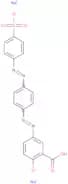
CAS :<p>C.I. Mordant Orange 6 is an alkanoic acid with a hydroxyl group and a sodium carbonate counter ion in the form of a coordination complex that is chemically stable in the presence of light and heat. The synthesis of this compound involves the reaction of 2-nitrobenzaldehyde with sodium hydroxylsulfonate followed by hydrolysis of the product with sodium carbonate. This synthetic process is used to produce C.I. Mordant Orange 6 in large quantities, which are then purified using chromatography or recrystallization techniques.<br>The biological studies on C.I. Mordant Orange 6 have shown that it has antimicrobial properties, but it does not show cytotoxic effects against human cells in culture at concentrations up to 10 µg/mL, making it a potential candidate for use as an antimicrobial agent for applications such as food packaging materials.br>br>C.I. Mordant Orange 6 also has been shown to</p>Formule :C19H14N4O6S·2NaDegré de pureté :Min. 95%Masse moléculaire :472.38 g/molC.I.Solvent Yellow 189
CAS :<p>C.I. Solvent Yellow 189 is a monomer that is used in coatings, paints, and printing inks. It is a polymeric dye with high activity and excellent light resistance. The hydrophobic nature of this dye makes it ideal for use in coatings that require water-repellent or weatherproof properties. C.I. Solvent Yellow 189 has been shown to be reactive with formamide as well as styryl dyes to form copolymers with high crosslinked content for high-performance devices such as light barriers and filters.</p>Degré de pureté :Min. 95%Pigment yellow 152
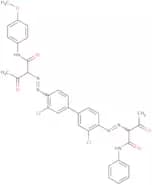
CAS :<p>Pigment Yellow 152 is a polycarboxylic acid that contains an allyl group, a hydrofluoric acid, and a hydroxyl group. It is one of the most common yellow pigments in general use. Pigment Yellow 152 polymerizes with an initiator to form polymers that are used in paints and varnishes. The polymerization process requires light or heat to activate. Pigment Yellow 152 has functional groups that give it the ability to fluoresce under ultraviolet light, which makes it useful as a sensor for low oxygen levels in mines and other locations where there is little air movement.</p>Formule :C36H34Cl2N6O6Degré de pureté :Min. 95%Masse moléculaire :717.6 g/molC.I.Reactive Orange 13
CAS :<p>C.I.Reactive Orange 13 is a reactive dye that can be used for the detection of bacterial strains, including Legionella pneumophila and Pseudomonas aeruginosa. The dye reacts with metal ions to form a precipitate, which can be detected by measuring the viscosity or turbidity of the solution. C.I.Reactive Orange 13 has been shown to bind to biomass from fungi and bacteria, which is why it is often used for monitoring water quality in wastewater treatment plants and for detecting microbial contamination in food products. C.I.Reactive Orange 13 is also an effective metal chelator that can be used for kinetic studies on borohydride reduction reactions involving iron and other transition metals.</p>Formule :C24H15ClN7O10S3·3NaDegré de pureté :Min. 95%Masse moléculaire :762.04 g/molC.I.Reactive Red 239
CAS :<p>Please enquire for more information about C.I.Reactive Red 239 including the price, delivery time and more detailed product information at the technical inquiry form on this page</p>Degré de pureté :Min. 95%C.I.Vat Orange 4
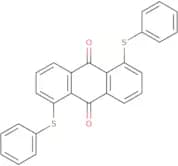
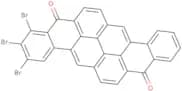
CAS :<p>C.I. Vat Orange 4 is a synthetic organic compound that is used as a pigment and a coating. It is soluble in organic solvents and can be used as an additive to polyethylene glycols, monomers, and coatings. C.I. Vat Orange 4 has been shown to react with radiation and metal hydroxides to form the polymerization inhibitor propionate. This polymerization inhibitor prevents polymerization reactions from occurring at high temperatures or when exposed to thermal energy.</p>Degré de pureté :Min. 95%Acridine orange biological stain
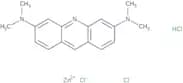
CAS :<p>Acridine orange is a fluorescent dye that is used as a biological stain. It binds to DNA and stains the cells it has bound to, making them more visible under an ultraviolet light. This dye also produces kinetic data on the micronucleus test in mice and rats. Acridine orange can be used to detect genotoxic effects in animals and humans, such as genetic damage or cancer. Kinetic studies have shown statistically significant increases in plasma mass spectrometry, but no significant changes in erythrosine uptake were observed. Acridine orange has been shown to cause genotoxic effects on brain cells and testicular cells.</p>Formule :C17H20ClN3ZnCl2Couleur et forme :PowderMasse moléculaire :369.96 g/molC.I.Basic Yellow 25
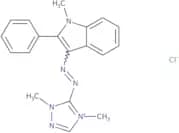
CAS :<p>C.I. Basic Yellow 25 is a methoxylated, basic dye that belongs to the class of cationic surfactants. It is used as a cross-linking agent in coatings, adhesives, and inks. The chromophore of this compound is hydroxyl group, which reacts with chloride to form an ion pair with a constant charge ratio of 2:1, which can be stabilized by the cross-linking reaction. This compound is reactive and is able to crosslink with other molecules containing carbonyl groups. C.I. Basic Yellow 25 can also act as a polymerization inhibitor for polyvinyl chloride (PVC) resin and has been shown to be effective in preventing the formation of chlorinated dioxins during PVC production</p>Degré de pureté :Min. 95%Acid Black 234, Technical grade
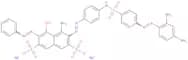
CAS :<p>Acid Black 234 is a reactive dye that is used in the textile industry. It has a hydroxy group and can be used for wastewater treatment. Acid Black 234 is not soluble in water but can be dissolved in organic solutions. It has high penetrant properties and its chemical stability depends on the pH of the solution. Acid Black 234 undergoes an adsorption mechanism, which involves a reaction with chloride ions to form a complex that binds to the surface of the fabric.</p>Degré de pureté :Min. 95%L-Glutathione, reduced, tested to USP spec
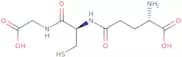
CAS :<p>Glutathione is a tripeptide cysteine-glycine-glutamic acid which exists in cells in the reduced form (this product) or oxidised form. Reduced glutathione (GSH) is an antioxidant protecting cell components from endogenous and exogeneous reactive oxygen and nitrogen species. Reduced glutathione has also been intensely used in the affinity purification of proteins with glutathione S-transferase (GST) tag. In the protein purification process, glutathione is used for the elution of GST-fused recombinant proteins from a glutathione-immobilised resins. In the elution buffers, reduced glutathione is typically used in the 10 â 40 mM concentration range.</p>Formule :C10H17N3O6SDegré de pureté :(Titration) 98.0 To 101.0%Couleur et forme :White Off-White Crystalline PowderMasse moléculaire :307.32 g/molPigment yellow 126
CAS :<p>Pigment Yellow 126 is a nitro-fatty acid ester, which has an average particle diameter of 3.5 microns and a hydroxyl group at the terminal position of the molecule. This product can be used in coatings, plastics, paper, textiles, and paints. Pigment Yellow 126 is also used as a radiation absorber in x-ray films and fluorescent lamps. This product reacts with deionized water to form fatty acids and aliphatic hydrocarbons.</p>Degré de pureté :Min. 95%Couleur et forme :PowderC.I.Acid Orange 60
CAS :<p>C.I. Acid Orange 60 is a polyolefin that is used as an additive for ophthalmic lenses to reduce the possibility of fogging by absorbing moisture and oxygen. It is also used in the production of ionizable dyes, nucleophilic substances, reactive substances, and surfactants. This product is typically applied using an organic solvent or chemical ionization mass spectrometry.</p>Degré de pureté :Min. 95%Pigment Red 58:2
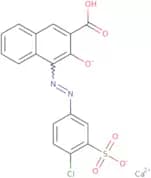
CAS :<p>Please enquire for more information about Pigment Red 58:2 including the price, delivery time and more detailed product information at the technical inquiry form on this page</p>Degré de pureté :Min. 95%Basic yellow 40
CAS :<p>Basic yellow 40 is a basic dye that belongs to the group of dyes. It is an orange-yellow powder that is soluble in water and alcohol. Basic yellow 40 has been used as an additive in food, drugs, and cosmetics. Basic yellow 40 has been shown to inhibit cancer cell growth by binding to the phospholipid membrane and inhibiting the synthesis of fatty acids and cholesterol. The optimum concentration for this compound is 10-4 M.</p>Formule :C22H24N3O2·ClCouleur et forme :PowderMasse moléculaire :397.9 g/mol