Colorants, teintes, teintures, imagerie fluorescente
Les colorants, teintures et solutions colorantes sont des outils essentiels en biologie moléculaire, cruciaux pour visualiser et étudier l'ADN, les chromosomes et les noyaux cellulaires. Ces composés permettent aux chercheurs de mettre en évidence des composants cellulaires spécifiques, facilitant ainsi l'observation et l'analyse détaillées au microscope. Dans cette catégorie, vous trouverez une large gamme de colorants et de teintures de haute qualité utilisés dans diverses techniques de coloration, y compris des colorants fluorescents pour l'analyse de l'ADN et des chromosomes, des colorants histologiques pour les échantillons de tissus et des colorants spécifiques pour les structures cellulaires. Ces outils sont indispensables en recherche génétique, cytologie, histologie et diagnostics, offrant clarté et contraste dans les échantillons biologiques. Chez CymitQuimica, nous proposons une sélection complète de colorants, teintures et solutions colorantes pour soutenir vos recherches en biologie moléculaire et garantir des résultats précis et fiables dans vos études.
Sous-catégories appartenant à la catégorie "Colorants, teintes, teintures, imagerie fluorescente"
- Colorants acides(49 produits)
- Azobenzènes(270 produits)
- Colorants azoïques(7 produits)
- Colorants de base(27 produits)
- Colorants de coumarine(71 produits)
- Colorants cyanine, colorants squarylium(53 produits)
- Colorants DCM(4 produits)
- Diarylethenes(12 produits)
- Colorants dipyrrométhéniques(26 produits)
- Colorants directs(17 produits)
- Colorants dispersés(2 produits)
- Sensibilisateurs de colorants(12 produits)
- Colorants(416 produits)
- Teintures et colorants(911 produits)
- Génération de colorants insolubles(14 produits)
- Génération de colorants solubles(11 produits)
- Hexaarylbiimidazole(4 produits)
- Indicateurs(575 produits)
- Colorants mordants(10 produits)
- Colorants dans le proche infrarouge (NIR)(28 produits)
- Colorants à l'huile(15 produits)
- Autres teintures et colorants(2 produits)
- Colorants au pérylène(17 produits)
- Colorants photochromiques(40 produits)
- Colorants phtalocyaniques, colorants porphyriniques(101 produits)
- Colorants à base de quinacridone(8 produits)
- Spiropyranes(16 produits)
- Réactifs colorés et colorants(243 produits)
- Réactifs colorés et colorants pour la microscopie(5 produits)
- Colorants de cuve(5 produits)
- Colorants xanthènes(65 produits)
Affichez 23 plus de sous-catégories
755 produits trouvés pour "Colorants, teintes, teintures, imagerie fluorescente"
Trier par
Degré de pureté (%)
0
100
|
0
|
50
|
90
|
95
|
100
C.I.Direct Orange 102
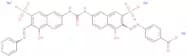
CAS :<p>C.I.Direct Orange 102 is a dye that can be used in the diagnosis of viral infections, such as hepatitis and herpes zoster. C.I.Direct Orange 102 has been shown to have antiviral activity against a number of viruses, including human pathogen and virus. It binds to viral RNA polymerase and prevents transcription of viral RNA into DNA by binding to the enzyme's active site and blocking access to the DNA template strand</p>Formule :C34H21N6Na3O11S2Couleur et forme :PowderMasse moléculaire :822.67 g/molAcid Red 374
CAS :<p>Acid Red 374 is a non-selective cation dye that can be used in various diagnostic applications, such as DNA microarray analysis, flow cytometry, and immunohistochemistry. Acid Red 374 has been shown to inhibit the growth of cancer cells by selectively binding to the nucleic acids in these cells. It also inhibits the growth of prostate cancer cells and hematopoietic cells. Acid Red 374 has antimicrobial activity against methicillin-resistant Staphylococcus aureus (MRSA) and herpes simplex virus.</p>Formule :C38H32N4O11S3•Na3Degré de pureté :Min. 95%Masse moléculaire :885.85 g/mol4-Acetoxycinnamic acid
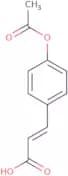
CAS :<p>4-Acetoxycinnamic acid is a staphylococcal bactericide that inhibits bacterial growth and is active against many gram-positive bacteria, including Staphylococcus aureus. It is also active against many gram-negative bacteria, such as Escherichia coli and Pseudomonas aeruginosa. 4-Acetoxycinnamic acid has been shown to inhibit the growth of Staphylococcus aureus in an in vitro experiment by interfering with membrane permeability and inhibiting lipid synthesis. 4-Acetoxycinnamic acid has been shown to have antimicrobial activity against gram-positive and gram-negative bacteria, including methicillin resistant S. aureus (MRSA).</p>Formule :C11H10O4Degré de pureté :Min. 97 Area-%Couleur et forme :PowderMasse moléculaire :206.19 g/molBasic fuchsin
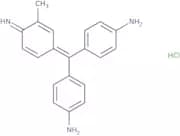
CAS :<p>Basic fuchsin is a basic dye that has been used in wastewater treatment. It is a red-violet color and is used to stain cell nuclei and other biological structures. Basic fuchsin can be adsorbed on particles, which are then removed from the water by filtration. The adsorption of basic fuchsin on particles is reversible and depends on the pH of the solution. This property makes it suitable for use as a surface methodology for staining DNA in nuclear dna preparations.</p>Formule :C20H20N3ClCouleur et forme :Green PowderMasse moléculaire :337.85 g/molReactive red 66
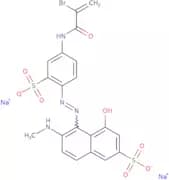
CAS :<p>Reactive red 66 is a reactive dye that is used for wastewater treatment. The high resistance to hydrochloric acid, photo-oxidation, and protease activity make it an ideal candidate for this application. Reactive red 66 has been shown to have the ability to react with proteins and other compounds in the water to form covalent bonds. These bonds are then broken down by reductive mechanisms such as photocatalytic activity, which results in the formation of radicals. Functional groups on the molecule are responsible for its color, while transfer mechanisms between molecules allow it to be soluble in water at low concentrations.</p>Formule :C20H15BrN4Na2O8S2Degré de pureté :Min. 95%Masse moléculaire :629.37 g/molC.I.Direct Black 155
CAS :<p>Please enquire for more information about C.I.Direct Black 155 including the price, delivery time and more detailed product information at the technical inquiry form on this page</p>Degré de pureté :Min. 95%C.I.Solvent Orange 3
CAS :<p>C.I. Solvent Orange 3 is a fluorescent dye that is used as a tracer in analytical chemistry to measure the water permeability of a sample by measuring the rate of diffusion of the dye. It is also used for sample preparation and kinetic studies when performing dispersive solid-phase extraction or surface methodology. The results show that C.I. Solvent Orange 3 has high water solubility and good stability, but can be decomposed by radiation, such as ultraviolet light and gamma rays, with an activation energy of around 100-150 kJ/mol and an induction time of 5-10 minutes. The compound has been detected in oroxylum indicum and curcuma aromatica plants, as well as angelicae dahuricae, titration calorimetry, and human serum samples from China. The compound is able to form hydrogen bonding interactions with other molecules such as glycol ethers, which are commonly found in Chinese herbs such as Angelica Dah</p>Formule :C12H12N4Degré de pureté :Min. 95%Couleur et forme :PowderMasse moléculaire :212.25 g/molAcid Red 361
CAS :<p>Acid Red 361 is a red dyestuff that is used as a cross-linking agent in the production of laminates. It is also used in the production of dyebaths and can be used as an introducing agent for plant cells. Acid Red 361 has been shown to form lamellar structures at a concentration of 0.05% in the dyebath, and to have a molecular weight of about 600 Da. This dye has been found to polymerize with other dyes, and can be identified by mass spectrometry. Acid Red 361 also consists of c1-6 alkyl groups, which are hydroxyl groups that are attached to benzene rings.</p>Degré de pureté :Min. 95%Pigment Red 174
CAS :<p>Pigment Red 174 is a red pigment with a strong red color that is used as an ingredient in paints, coatings and inks. Pigment Red 174 is used as an ejecting or dispersing agent for liquid systems such as paint, coatings and inks. It also has a high viscosity and binding ability. Pigment Red 174 is insoluble in water but soluble in formic acid and can be dissolved by irradiation with thermal energy. Pigment Red 174 has functional groups that are capable of forming hydrogen bonds with other molecules. This pigment has the same properties as many other pigments, including being newtonian and radiation-sensitive.</p>Degré de pureté :Min. 95%C.I.Sulphur green 14
CAS :<p>Please enquire for more information about C.I.Sulphur green 14 including the price, delivery time and more detailed product information at the technical inquiry form on this page</p>Degré de pureté :Min. 95%C.I.Disperse Orange 70
CAS :<p>Please enquire for more information about C.I.Disperse Orange 70 including the price, delivery time and more detailed product information at the technical inquiry form on this page</p>Degré de pureté :Min. 95%Solvent Orange 14, Technical grade Dye content
CAS :<p>Please enquire for more information about Solvent Orange 14, Technical grade Dye content including the price, delivery time and more detailed product information at the technical inquiry form on this page</p>Formule :C22H17N5Degré de pureté :Min. 95%Masse moléculaire :351.4 g/molC.I.Disperse Yellow 201
CAS :<p>Please enquire for more information about C.I.Disperse Yellow 201 including the price, delivery time and more detailed product information at the technical inquiry form on this page</p>Degré de pureté :Min. 95%New Fuchsin
CAS :<p>Please enquire for more information about New Fuchsin including the price, delivery time and more detailed product information at the technical inquiry form on this page</p>Formule :C22H24ClN3Masse moléculaire :365.91 g/molPigment red 166
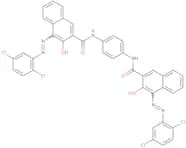
CAS :<p>Pigment Red 166 is a hydroxyl group glycol ester. It is a mixture of red, orange and yellow pigments that are used in paints and coatings. Pigment Red 166 has a particle size of less than 1 micron and a thermal expansion coefficient of about 2.5 x 10⁻⁶ K-1. This pigment has an inorganic acid content of about 0.4%. The shape of the pigment is spherical, with a diameter of about 20 nm. Pigment Red 166 exhibits fluorescence when irradiated with radiation from the ultraviolet to the infrared region of the spectrum, which corresponds to its aliphatic hydrocarbon content.</p>Formule :C40H24Cl4N6O4Couleur et forme :PowderMasse moléculaire :794.47 g/molCI Reactive Blue 203
CAS :<p>CI Reactive Blue 203 is a reactive dye that changes color from blue to purple when heated. It is used in forensics, where it can be used to detect the presence of alkali metal ions. CI Reactive Blue 203 has been shown to react with fungal cells and peroxidase enzymes, yielding a violet color. This dye is also used as a surfactant, thickener, and vinyl stabilizer in textile production. CI Reactive Blue 203 has been shown to bind to antibodies and can be used for staining purposes in histology. This dye binds to methoxy groups on proteins and can be used for detection purposes in ELISA tests.</p>Formule :C28H29N5O21S6•Na4Degré de pureté :Min. 95%Couleur et forme :PowderMasse moléculaire :1,055.91 g/molPigment red 49
CAS :<p>Pigment Red 49 is a diazonium salt that has been used as a dye in many areas of industry. The red color can be obtained by reacting pigment red 49 with sodium salts, hydrochloric acid, and ethylene diamine. Pigment Red 49 is also used in clinical studies to detect the presence of nitrogen atoms. This substance can cause allergic reactions and is classified as a particle. It has also been found to have an effect on radiation and glycol esters. Pigment Red 49 interacts with cationic surfactants, which are compounds that have a cationic charge due to the presence of at least one quaternary ammonium group. Pigment Red 49 is soluble in fatty acids and glycol esters.</p>Formule :C20H13N2NaO4SDegré de pureté :Min. 98%Couleur et forme :PowderMasse moléculaire :400.38 g/molC.I.Direct Red 83
CAS :<p>C.I.Direct Red 83 is a complex of copper and polycarboxylic acid that is used in wastewater treatment. It is also used as an indicator dye in biological studies to measure the rate of reaction between carboxylic acids and amino-groups, which are both necessary for the formation of nucleic acids. C.I.Direct Red 83 has been shown to have strong absorptive properties, with a maximum absorption at 546 nm in aqueous solution. This dye has also been shown to bind to receptors on the cell membrane, specifically those receptors that are involved in thermally induced reactions.</p>Degré de pureté :Min. 95%C.I. Pigment Red 48:4
CAS :<p>C.I. Pigment Red 48:4 is a synthetic red pigment with an anhydrous sodium chloride matrix that has been used in analytical methodology, and in the production of polyester and electro-luminescent materials. The pigment is soluble in organic solvents such as acetone, toluene, and ethyl acetate. C.I. Pigment Red 48:4 is stable at temperatures up to 130°C, but decomposes at higher temperatures. This pigment has a redox potential of -0.05 V vs Ag/AgCl (reference electrode). C.I. Pigment Red 48:4 is light resistant and has shown good resistance to fading due to weathering or UV radiation when used in printing ink or colorants for plastics such as polyesters or vinyls.BR><br>COLOR: <br>PURITY: >99%<br>MELTING POINT: >200°C<br>SPECIFIC GRAVITY: 1.</p>Formule :C18H11ClMnN2O6SDegré de pureté :Min. 95%Couleur et forme :Red PowderMasse moléculaire :473.75 g/molNitrazine Yellow
CAS :<p>Nitrazine Yellow is a reversible, reusable, imine-based fluorescent dye that absorbs in the near-infrared region of the spectrum. This compound has been shown to be an acceptor and an inorganic amide. Nitrazine Yellow also has transition metal properties and is a heterocyclic ring. It can be used as a hydrogen bond donor or proton acceptor, depending on its environment. Nitrazine Yellow can react with hydroxylamine to form coupler products that are metastable and can be detected by fluorometric analysis.</p>Formule :C16H8N4Na2O11S2Degré de pureté :Min. 95%Couleur et forme :PowderMasse moléculaire :542.37 g/mol