Colorants, teintes, teintures, imagerie fluorescente
Les colorants, teintures et solutions colorantes sont des outils essentiels en biologie moléculaire, cruciaux pour visualiser et étudier l'ADN, les chromosomes et les noyaux cellulaires. Ces composés permettent aux chercheurs de mettre en évidence des composants cellulaires spécifiques, facilitant ainsi l'observation et l'analyse détaillées au microscope. Dans cette catégorie, vous trouverez une large gamme de colorants et de teintures de haute qualité utilisés dans diverses techniques de coloration, y compris des colorants fluorescents pour l'analyse de l'ADN et des chromosomes, des colorants histologiques pour les échantillons de tissus et des colorants spécifiques pour les structures cellulaires. Ces outils sont indispensables en recherche génétique, cytologie, histologie et diagnostics, offrant clarté et contraste dans les échantillons biologiques. Chez CymitQuimica, nous proposons une sélection complète de colorants, teintures et solutions colorantes pour soutenir vos recherches en biologie moléculaire et garantir des résultats précis et fiables dans vos études.
Sous-catégories appartenant à la catégorie "Colorants, teintes, teintures, imagerie fluorescente"
- Colorants acides(49 produits)
- Azobenzènes(270 produits)
- Colorants azoïques(7 produits)
- Colorants de base(27 produits)
- Colorants de coumarine(71 produits)
- Colorants cyanine, colorants squarylium(53 produits)
- Colorants DCM(4 produits)
- Diarylethenes(12 produits)
- Colorants dipyrrométhéniques(26 produits)
- Colorants directs(17 produits)
- Colorants dispersés(2 produits)
- Sensibilisateurs de colorants(12 produits)
- Colorants(416 produits)
- Teintures et colorants(911 produits)
- Génération de colorants insolubles(14 produits)
- Génération de colorants solubles(11 produits)
- Hexaarylbiimidazole(4 produits)
- Indicateurs(575 produits)
- Colorants mordants(10 produits)
- Colorants dans le proche infrarouge (NIR)(28 produits)
- Colorants à l'huile(15 produits)
- Autres teintures et colorants(2 produits)
- Colorants au pérylène(17 produits)
- Colorants photochromiques(40 produits)
- Colorants phtalocyaniques, colorants porphyriniques(101 produits)
- Colorants à base de quinacridone(8 produits)
- Spiropyranes(16 produits)
- Réactifs colorés et colorants(243 produits)
- Réactifs colorés et colorants pour la microscopie(5 produits)
- Colorants de cuve(5 produits)
- Colorants xanthènes(65 produits)
Affichez 23 plus de sous-catégories
755 produits trouvés pour "Colorants, teintes, teintures, imagerie fluorescente"
Trier par
Degré de pureté (%)
0
100
|
0
|
50
|
90
|
95
|
100
C.I.Sulphur Blue 5
CAS :<p>Please enquire for more information about C.I.Sulphur Blue 5 including the price, delivery time and more detailed product information at the technical inquiry form on this page</p>Formule :C12H9N3O5Degré de pureté :Min. 95%Masse moléculaire :275.22 g/molC.I. Solvent blue 19
CAS :<p>C.I. Solvent blue 19 is an azo dye that is used as a colorant in analytical chemistry and as a sample preparation reagent for organic compounds. C.I. Solvent blue 19 is used to measure the thermal expansion of polymers, such as polyethylene, polypropylene, and polystyrene. It is also used in the determination of total nitrogen content in samples by combustion analysis or other methods. The carcinogenic potential of C.I. Solvent blue 19 has been studied using animal models and cellular cultures, but it has not been found to cause cancer under these conditions. Cationic surfactants are effective at removing this dye from wastewater treatment systems and may be used for bladder infections due to its antibacterial properties against E-coli bacteria. C.I. Solvent blue 19 is prepared by reacting p-hydroxybenzoic acid with aniline and nitrobenzene in the presence of hydrochloric acid or</p>Formule :C21H16N2O2Degré de pureté :Min. 95 Area-%Couleur et forme :Blue PowderMasse moléculaire :328.36 g/molC.I.Disperse Orange 5
CAS :<p>The regression method is used to remove the effects of an experimental variable on a response. The regression method is usually applied in cases where there are two variables, one of which is the independent variable and the other is the dependent variable. The independent variable may be a physical parameter that can be controlled by the experimenter, such as temperature or pressure. The dependent variable may be a physical property like viscosity or density. In this case, we are using supercritical CO2 as our independent variable and cellulose acetate as our dependent variable. Supercritical CO2 has been shown to have a very high solubility for cellulose acetate monomers, which makes it useful for polymerizing cellulose acetate into polyesters and polyamides. This technique has been used to make devices such as electrodes with good electrical conductivity, membranes with good permeability, and organic semiconductors with good electron transport properties.</p>Degré de pureté :Min. 95%C.I.Direct Yellow 147
CAS :<p>Please enquire for more information about C.I.Direct Yellow 147 including the price, delivery time and more detailed product information at the technical inquiry form on this page</p>Degré de pureté :Min. 95%C.I.Solvent Blue 24
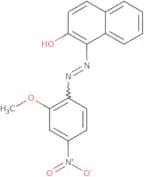
CAS :<p>Please enquire for more information about C.I.Solvent Blue 24 including the price, delivery time and more detailed product information at the technical inquiry form on this page</p>Degré de pureté :Min. 95%C.I.Solvent Red 13
CAS :<p>Please enquire for more information about C.I.Solvent Red 13 including the price, delivery time and more detailed product information at the technical inquiry form on this page</p>Degré de pureté :Min. 95%Reactive Blue 5
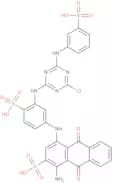
CAS :<p>Reactive Blue 5 is a reactive dye that is used as a component in detergent compositions. It has shown to be effective in the removal of biological materials, such as bacteria, yeast and fungi. Reactive Blue 5 has also been shown to have an inhibitory effect on tumour necrosis factor-alpha (TNF-α). The kinetic data for the dye was determined by measuring its rate of reaction with polymer concentration and by gravimetric analysis. The transport rate of Reactive Blue 5 has been found to increase with increasing pH levels. This dye is also used as a conditioning agent for textile products, as well as an environmental pollutant indicator.</p>Formule :C29H20ClN7O11S3Degré de pureté :Min. 95%Couleur et forme :PowderMasse moléculaire :774.16 g/molCarthamus yellow
CAS :<p>Carthamus yellow is a colorant that is used as a food additive and in cosmetics. It has been shown to be nontoxic and nonirritating and is approved by the FDA for use in foods, drugs, and cosmetics. Carthamus yellow is extracted from the flowers of Carthamus tinctorius plants. It is an orange-yellow powder with a light odor that can be used as a coloring agent in food, drugs, and cosmetics.</p>Formule :C14H16O7Degré de pureté :Min. 95%Couleur et forme :SolidMasse moléculaire :296.27 g/molLeucomalachite Green
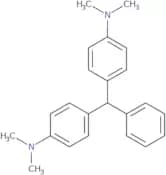
CAS :<p>Leucomalachite Green is a green luminescent compound that exhibits significant cytotoxicity in vitro. This chemical can be used to measure the water vapor flow rate of a sample. The leucomalachite green assay can be performed using a liquid chromatography-mass spectrometry (LC-MS/MS) method with fluorescence detection. Leucomalachite Green has been used as an indicator for the presence of water vapor with a sensitivity range of 0.1% to 100%. It is also used in clinical pathology, toxicity studies, and cellular physiology research.</p>Formule :C23H26N2Degré de pureté :Min. 98 Area-%Couleur et forme :PowderMasse moléculaire :330.47 g/molPigment red 170
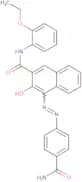
CAS :<p>Pigment Red 170 is a mouse monoclonal antibody that binds to fatty acids. It has been shown to adsorb to the surface of cells and inhibit the growth of cells by interfering with their ability to take up fatty acids. Pigment Red 170 is used in a model system for studying the binding constants between antibodies and fatty acids. The glycol ester of pigment red 170 is hydrolyzed by hydrochloric acid to form an iron oxide, which can be used as a pigment in paints or dyes. Pigment Red 170 also has photochemical properties, with absorption peaks at 350 nm and 450 nm, making it useful for staining tissues and microorganisms such as gram-positive bacteria, fungi, protozoa, and erythrocytes.</p>Formule :C26H22N4O4Degré de pureté :Min. 95%Couleur et forme :Red PowderMasse moléculaire :454.48 g/molC.I.Reactive Orange 4
CAS :<p>C.I.Reactive Orange 4 is a synthetic dye that is used in the textile industry to give colors to fabrics. It is also used as an additive in foods, drugs, and cosmetics. C.I.Reactive Orange 4 is activated by UV irradiation and can be decomposed by wastewater treatment processes such as activated sludge and dyebath with hydrogen peroxide. HPLC analyses suggest that this dye is adsorbed on activated sludge surfaces and can be removed by adsorption kinetic techniques such as the use of a dyebath with hydrogen peroxide.</p>Degré de pureté :Min. 95%C.I.Vat green 7
CAS :<p>Please enquire for more information about C.I.Vat green 7 including the price, delivery time and more detailed product information at the technical inquiry form on this page</p>Degré de pureté :Min. 95%Pigment red 5
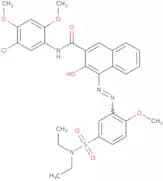
CAS :<p>Pigment Red 5 is a red pigment that belongs to the group of diazonium salts. It is used in the production of detergent compositions and film-forming polymers. Pigment Red 5 is a skin cancer agent, which can be used as a sensitizing agent in photodynamic therapy. This compound has been shown to exhibit cytotoxic effects on human melanoma cells and other cancer cells by inhibiting glycol ester synthesis, glycol ether synthesis, and DNA synthesis. Pigment Red 5 has also been shown to inhibit malonic acid-induced erythrocyte hemolysis in mice.</p>Formule :C30H31ClN4O7SDegré de pureté :Min. 95%Couleur et forme :PowderMasse moléculaire :627.11 g/mol16a-Methyl-9,11-dehydro prednisolone
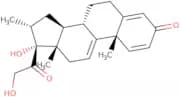
CAS :Produit contrôlé<p>Prednisolone is a steroid hormone that has been used for the treatment of inflammatory bowel disease. It has been shown to be effective in the treatment of bowel diseases and is also used as a replacement therapy for adrenal insufficiency. Prednisolone has an excellent safety profile and does not cause insulin resistance or weight gain, unlike some other steroids. It can be used to treat inflammatory diseases such as rheumatoid arthritis and psoriasis. The anti-inflammatory properties of prednisolone are due to its ability to bind to the mineralocorticoid receptor, which prevents the binding of cortisol. This blocks the conversion of cholesterol into pregnenolone, which is required for the production of glucocorticoids and mineralocorticoids. 16a-Methyl-9,11-dehydro prednisolone (16D) is a metabolite that can be found in blood plasma after oral administration of prednisolone. 16D binds</p>Formule :C22H28O4Degré de pureté :Min. 97 Area-%Couleur et forme :PowderMasse moléculaire :356.46 g/molC.I.Reactive green 19
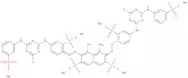
CAS :<p>C.I.Reactive green 19 is a synthetic, reactive dye that has been shown to be an effective tyrosinase inhibitor. This dye binds to the active site of tyrosinase and inhibits its activity. It also inhibits the monophenolase activity of tyrosinase, which then prevents the conversion of tyrosine to melanin. C.I.Reactive green 19 has been shown to have toxicological effects on plant tissue and is not recommended for use on live plants or in gardens or nurseries.</p>Degré de pureté :Min. 95%C.I.Direct green 26
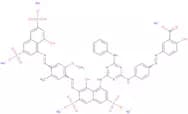
CAS :<p>C.I.Direct green 26 is a cationic surfactant that can be used as a dye for diagnostic purposes, as well as an inhibitor for chain reactions. It has been shown to inhibit the process of chondroitin sulfate biosynthesis in cartilage degradation, and has been suggested as a possible treatment for osteoarthritis and other joint diseases. C.I.Direct green 26 has also been shown to have a cytotoxic effect on human leukemia cells in vitro, but not on normal cell lines, suggesting that it may be useful in cancer therapy. C.I.Direct green 26 is soluble in sodium carbonate or sodium hydroxide solution and is activated by radiation energy or heat from sodium hydroxide solution, which can kill bacteria and viruses on surfaces such as glass or stainless steel.</p>Formule :C50H38N12O18S4•Na5Degré de pureté :Min. 95%Couleur et forme :PowderMasse moléculaire :1,338.12 g/molReactive black bis-vinyl
CAS :<p>Please enquire for more information about Reactive black bis-vinyl including the price, delivery time and more detailed product information at the technical inquiry form on this page</p>Degré de pureté :Min. 95%C.I.Solubilised Vat Red 1
CAS :<p>Sulfamic acid is a sulfonamide that can be used as an industrial coagulant. It is also used to stabilize metal ions and can be used in the treatment of wastewater. Sulfamic acid has a chelate ring structure, which binds to metals such as iron and aluminum, making them insoluble. This prevents the metals from entering the environment, which is why it is often used in environmental pollution control. The structural formula for sulfamic acid consists of a sulfur atom bonded to two nitrogen atoms, with three oxygen atoms as its side chains. The sulfur atom has two hydroxyl groups and one methyl group attached to it. Sulfamic acid contains one or more aliphatic hydrocarbon chains that are attached to the sulfur atom through an oxygen atom on each end of the chain. One oxygen atom has a hydrogen atom attached to it, while the other end of the chain is left uncharged due to a lack of electrons. Sulfamic acid contains a chlorine atom at</p>Degré de pureté :Min. 95%C.I.Solvent green 28
CAS :<p>C.I.Solvent green 28 is a fine chemical, useful building block, and research chemicals. It is a versatile building block for the synthesis of complex compounds with high quality and high purity. C.I.Solvent green 28 is a versatile intermediate for organic reactions, such as condensation reactions, cycloadditions, and polymerizations. It is also a useful scaffold for the preparation of complex molecules by its incorporation into other chemical structures.END></p>Formule :C34H34N2O4Degré de pureté :Min. 95%Couleur et forme :PowderMasse moléculaire :534.64 g/molC.I.Acid Yellow 117
CAS :<p>C.I. Acid Yellow 117 is a dye that has been used in the textile industry, but is now used primarily as a food colorant. It is not metabolized by the body and is excreted unchanged in urine and feces. C.I. Acid Yellow 117 may cause symptoms such as nausea, vomiting, abdominal pain, diarrhea, headache and dizziness at high levels of exposure (above 10 milligrams per day). The dye can also cause methemoglobinemia in children who have glucose-6-phosphate dehydrogenase deficiency or who are taking an oxidizing drug such as sulfonamides or nitrofurantoin. C.I. Acid Yellow 117 binds to form a water-soluble complex with calcium ions when it enters wastewater treatment plants where it can be removed by activated sludge treatment processes or by precipitation with lime or aluminum sulfate before release into rivers or oceans. C.I. Acid Yellow 117 has been shown to inhibit cell</p>Degré de pureté :Min. 95%