Composés polycycliques
Sous-catégories appartenant à la catégorie "Composés polycycliques"
- Acridines(98 produits)
- Anthraquinones(533 produits)
- Acides anthraquinonesulfoniques(16 produits)
- Azobenzènes(270 produits)
- Azonaphtalènes(98 produits)
- Azoxybenzènes(12 produits)
- Azulènes(11 produits)
- Benzimidazoles(1.476 produits)
- Benzodioxanes(27 produits)
- Benzofuranes(928 produits)
- Benzothiophènes(701 produits)
- Benzotriazoles(438 produits)
- Binaphthyls(133 produits)
- Carbazoles(464 produits)
- Chromanes, Chromenes(482 produits)
- Coumarines(1.127 produits)
- Cyclophanes(11 produits)
- Fluorènes et Fluorénones(384 produits)
- Imidazopyridines(10 produits)
- Indans(118 produits)
- Indazoles(2.040 produits)
- Indenes(22 produits)
- Indoles(3.992 produits)
- Indolines(119 produits)
- Isatines(234 produits)
- Isobenzofuranes(17 produits)
- Phtalimides N-substitués(154 produits)
- Naphtalènes(2.440 produits)
- Naphtyridine(17 produits)
- Naphtoquinone(2 produits)
- Perylènes(36 produits)
- Phénazines(25 produits)
- Phtalazines(33 produits)
- Phtalimide(154 produits)
- Hydrocarbures aromatiques polycycliques (HAP)(272 produits)
- Polyphénol(270 produits)
- Ptéridines(52 produits)
- Pyrènes(87 produits)
- Quinuclidine(1 produits)
- Tétracènes(7 produits)
4575 produits trouvés pour "Composés polycycliques"
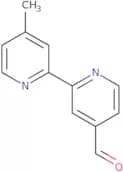
4'-Methyl-2,2'-bipyridine-4-carboxaldehyde
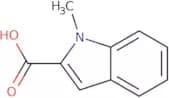
CAS :4'-Methyl-2,2'-bipyridine-4-carboxaldehyde is a heterocyclic compound that contains a nitro group. It has the chemical formula C8H6N2O and the molecular weight of 122.15 g/mol. This compound belongs to the class of formyl compounds and it is composed of two formyl groups and one hydrogen atom. The bipyridines are linked by a methylene bridge to form a six-membered ring. The compound can be used as an intermediate for the synthesis of other organic compounds such as pharmaceuticals, dyes, water repellents, pesticides, and herbicides.Formule :C12H10N2ODegré de pureté :Min. 95%Couleur et forme :PowderMasse moléculaire :198.22 g/mol1-Methylindole-2-Carboxylic Acid
CAS :1-Methylindole-2-Carboxylic Acid is a chemical that belongs to the group of phenylacetic acid compounds. It has been shown to inhibit lymphocyte activation and t-cell proliferation in vitro, which may be due to its ability to interfere with the production of interleukin. 1-Methylindole-2-Carboxylic Acid also has an antitumor effect on animals and can reduce the tumor burden by inhibiting DNA synthesis, protein synthesis, and mineralization. The molecular modeling studies have shown that 1-Methylindole-2-Carboxylic Acid binds in the active site of protein kinase C as a competitive inhibitor and prevents ATP from binding to the enzyme.
Formule :C10H9NO2Degré de pureté :Min. 95%Couleur et forme :PowderMasse moléculaire :175.18 g/mol2-(2-Butoxyethyl)-1H-isoindole-1,3(2H)-dione
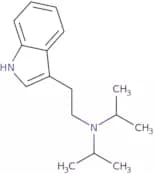
CAS :2-(2-Butoxyethyl)-1H-isoindole-1,3(2H)-dione is a versatile building block and intermediate with a range of chemical properties. It is a useful scaffold for the synthesis of complex compounds with different functional groups. 2-(2-Butoxyethyl)-1H-isoindole-1,3(2H)-dione can be used as an organic solvent and reaction component in organic synthesis as well as being an effective catalyst or reagent in reactions involving other chemicals. This compound has been selected by the Chemical Abstracts Service (CAS) as one of their high quality products.Formule :C14H17NO3Degré de pureté :Min. 95%Couleur et forme :PowderMasse moléculaire :247.29 g/mol3-(2-Diisopropylaminoethyl)indole hydrochloride
CAS :Produit contrôlé3-(2-Diisopropylaminoethyl)indole hydrochloride is an inhibitor of the enzyme monoamine oxidase (MAO). MAO is responsible for the degradation of monoamines such as serotonin, dopamine, and norepinephrine. 3-(2-Diisopropylaminoethyl)indole hydrochloride inhibits these enzymes in order to increase the levels of these neurotransmitters in the brain. These effects are observed with a sectional study on the host plant species. 3-(2-Diisopropylaminoethyl)indole hydrochloride has been shown to have low potency for inhibiting 5-HT1A and 5-HT2A receptors in rat studies, but it is not active against 5-HT2C receptors. This drug was used to measure urinary serotonin and dopamine levels in human urine samples.
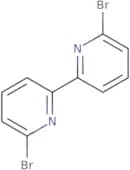
Formule :C16H25ClN2Degré de pureté :Min. 95%Masse moléculaire :280.84 g/mol6,6'-Dibromo-2,2'-bipyridine
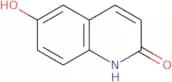
CAS :6,6'-Dibromo-2,2'-bipyridine is a synthetic molecule that is used to produce amines. It can be synthesized in a cross-coupling reaction involving the reaction of an amine with bromine and a palladium catalyst. 6,6'-Dibromo-2,2'-bipyridine reacts with formaldehyde to form 2,4-diaminobiphenyls. This reaction is catalyzed by acid or base. 6,6'-Dibromo-2,2'-bipyridine has been shown to be reactive and photoexcited. Its photophysical properties make it a useful synthetic intermediate for the production of amines.Formule :C10H6Br2N2Degré de pureté :Min. 95%Couleur et forme :PowderMasse moléculaire :313.98 g/mol6-Hydroxyquinoline-(1H)-2-one
CAS :6-Hydroxyquinoline-(1H)-2-one is an organic compound that has been shown to inhibit the uptake of carbostyril by bacterial cells. This inhibition causes increased uptake of xanthurenic acid and anthranilic acid, which are two compounds that are found in wastewater treatment. 6-Hydroxyquinoline-(1H)-2-one may be a potential anticancer agent, as it inhibits the growth of astroglia cells and bladder cancer cells. It also reacts with acylation reactions to form quinolinic acid, which has been shown to have anticancer effects.Formule :C9H7NO2Degré de pureté :Min. 95%Couleur et forme :White SolidMasse moléculaire :161.16 g/mol2-Bromo-1H-imidazole
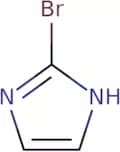
CAS :2-Bromo-1H-imidazole is an environmental pollutant that has been detected in the atmosphere, water, and soil. It is used as a pesticide and has been found to be an impurity in biphenyl. 2-Bromo-1H-imidazole can be used as a substrate for the Suzuki coupling reaction or as a starting material for the synthesis of imidazole derivatives. The compound spontaneously fragments under acidic conditions to form nitric acid and hydrogen bromide. 2-Bromo-1H-imidazole has been shown to inhibit hepatitis C virus (HCV) replication and induce cancer cell apoptosis in vitro.
2-Bromo-1H-imidazole is also known to cause DNA fragmentation in cells through oxidation by reactive oxygen species or through spontaneous decomposition of the molecule into acid, bromine radicals, and ammonia.Formule :C3H3BrN2Degré de pureté :Min. 95%Couleur et forme :PowderMasse moléculaire :146.97 g/molIndole-3-acetyl-L-alanine acid methyl ester
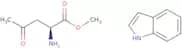
CAS :Please enquire for more information about Indole-3-acetyl-L-alanine acid methyl ester including the price, delivery time and more detailed product information at the technical inquiry form on this page
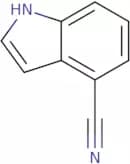
Formule :C14H16N2O3Degré de pureté :Min. 95%Masse moléculaire :260.29 g/mol4-Cyanoindole
CAS :The 4-cyanoindole is a fluorescent molecule that binds to proteins and affects protein homeostasis. It has been shown to bind to the sodium salt form of proteins, which are typically found in human liver cells. The binding of 4-cyanoindole to these proteins leads to its reduction by borohydride and fluorescence resonance energy transfer (FRET) between the molecule and the protein. This binding can be detected using a fluorescence lifetime spectroscopy technique, which detects changes in the fluorescence's lifetime as well as intensity. The binding of 4-cyanoindole to proteins has been shown to have anti-cancer properties. It has also been used for detection of monoclonal antibodies against cancer cells or for fluorescent labeling of cancer cells for immunofluorescent microscopy.Formule :C9H6N2Couleur et forme :White PowderMasse moléculaire :142.16 g/mol6-Fluoroindole-3-acetic acid
CAS :6-Fluoroindole-3-acetic acid is a molecule that has been synthesized by the reaction of 6-fluoroindole with acetic anhydride. When mixed with acetonitrile, the fluorescence of 6-fluoroindole-3-acetic acid can be seen in the solution. The fluorescence intensity is proportional to the concentration of this molecule. 6-Fluoroindole-3-acetic acid is used as a template molecule for fluorescence labeling experiments. It interacts with hormones and can be used to identify their conformations and interactions. This compound has been shown to have anticancer properties in mice, and it may also be effective against cancer cells in humans. It has also been shown to inhibit the growth of pisum sativum (pea).
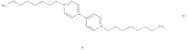
Formule :C10H8FNO2Degré de pureté :Min. 95%Couleur et forme :PowderMasse moléculaire :193.17 g/mol1,1'-Di-n-octyl-4,4'-bipyridinium Dibromide
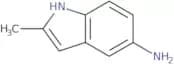
CAS :1,1'-Di-n-octyl-4,4'-bipyridinium Dibromide is a bifunctional organometallic compound. It is used as a catalyst in the reduction of nitro groups or other electron-deficient centers and in the transfer process with azides. This chemical has shown selectivity for aliphatic substrates over aromatic ones. The catalytic activity of 1,1'-Di-n-octyl-4,4'-bipyridinium Dibromide can be enhanced by replacing the hydrogen atom on the nitrogen atom with an alkene group. 1,1'-Di-n-octyl-4,4'-bipyridinium Dibromide is also a radical cation that can be reduced by electron donors to form radicals.Formule :C26H42Br2N2Degré de pureté :Min. 95%Couleur et forme :Slightly Yellow PowderMasse moléculaire :542.43 g/mol5-Amino-2-methylindole
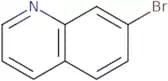
CAS :5-Amino-2-methylindole is a hyaluronic acid inhibitor that has been shown to have an inhibitory effect on the growth of some bacteria. It inhibits the synthesis of bacterial enzymes and growth factors, which are required for bacterial cell division. 5-Amino-2-methylindole also inhibits the production of a number of important enzymes in bacteria, including benzofuran derivatives, as well as p. aeruginosa. This drug is used as a topical treatment in cases where there is tissue damage or inflammation. 5-Amino-2-methylindole has been shown to be effective against gram positive bacteria such as Streptococcus pyogenes and Enterococcus faecalis, but not against gram negative bacteria such as Pseudomonas aeruginosa or Escherichia coli.Formule :C9H10N2Degré de pureté :Min. 95%Couleur et forme :Yellow To Dark Brown SolidMasse moléculaire :146.19 g/mol7-Bromoquinoline
CAS :7-Bromoquinoline is a synthetic molecule that was first synthesized in the early 1980s. It is an analog of 7-bromoquinoline, which has been shown to have cytotoxic properties against cancer cells. The synthesis of 7-bromoquinoline involves a cross-coupling reaction with chloroacetonitrile and N-methylformamide. The nmr spectra for this compound are very similar to those for 7-bromoquinoine, but it lacks the secondary amine peak at δ 10.7 ppm. Primary culture cells were used to test the bioactivity of 7-bromoquinoline, and these cells were disrupted by adding trypsin after incubation with various concentrations of 7-bromoquinoline. This study showed that the quinoline derivatives had cytotoxic effects on cultured cells at low concentrations, suggesting that they may be useful as anticancer agents. Molecular modeling studies show thatFormule :C9H6BrNDegré de pureté :Min. 95%Couleur et forme :PowderMasse moléculaire :208.05 g/mol3-(2-Chlorophenyl)-2-phenyl-3H-indole
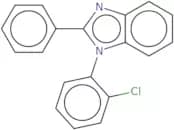
CAS :3-(2-Chlorophenyl)-2-phenyl-3H-indole is a versatile building block that can be used as a precursor in the synthesis of a wide range of complex compounds. 3-(2-Chlorophenyl)-2-phenyl-3H-indole has been shown to be an effective reagent for the synthesis of heterocycles and useful for the preparation of diverse speciality chemicals. 3-(2-Chlorophenyl)-2-phenyl-3H-indole is also an important intermediate in the synthesis of pharmaceuticals, agrochemicals, dyes, and perfumes. It is also a useful scaffold for organic chemistry reactions and can serve as a reaction component because it contains two reactive groups.Formule :C19H13ClN2Degré de pureté :Min. 95%Masse moléculaire :304.77 g/molXanthotoxol
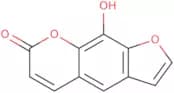
CAS :Xanthotoxol is a naturally occurring furanocoumarin, which is derived from various plant species, primarily within the Apiaceae family. This compound exhibits its biological activity through several mechanisms, including the inhibition of enzyme pathways, modulation of signaling pathways, and interaction with cellular proteins, impacting various physiological processes.Formule :C11H6O4Degré de pureté :Min. 95%Couleur et forme :Brown PowderMasse moléculaire :202.16 g/mol1,5-Dimethyl-1H-indole-3-carbaldehyde
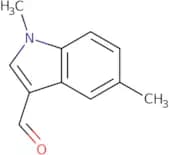
CAS :1,5-Dimethyl-1H-indole-3-carbaldehyde is a useful building block for organic synthesis. It is an important reagent for the synthesis of complex compounds and it has been used as a versatile building block in organic chemistry. This compound can be used as a starting point for the preparation of other chemicals, such as pharmaceuticals, pesticides, and dyes. 1,5-Dimethyl-1H-indole-3-carbaldehyde is also a fine chemical that has been used for research purposes. There are no known commercial uses for this compound.Formule :C11H11NODegré de pureté :Min. 95%Couleur et forme :PowderMasse moléculaire :173.21 g/mol5-Fluoro-1-Methyl-1H-Indole-3-Carbaldehyde
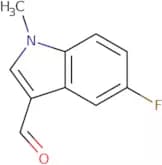
CAS :5-Fluoro-1-Methyl-1H-Indole-3-Carbaldehyde is a high quality chemical that is used as a reagent, an intermediate for the synthesis of pharmaceuticals, and in the production of fine chemicals. 5FMICA is also a useful scaffold for developing valuable building blocks. This chemical has been shown to be a versatile building block for the synthesis of complex compounds. 5FMICA can be used as a reaction component for the preparation of speciality chemicals and research chemicals.Formule :C10H8FNODegré de pureté :Min. 95%Couleur et forme :PowderMasse moléculaire :177.18 g/mol2,2'-Bipyridine-6,6'-(1H,1'H)dione
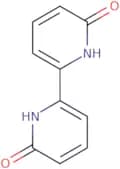
CAS :2,2'-Bipyridine-6,6'-(1H,1'H)dione is a high-quality compound that is used as a reagent to provide a variety of useful compounds. This compound can be used as a building block for various chemical syntheses or as a component in many reactions. It is also a versatile building block and can be used in the synthesis of other compounds. 2,2'-Bipyridine-6,6'-(1H,1'H)dione has been shown to be an effective intermediate for organic synthesis.Formule :C10H8N2O2Degré de pureté :Min. 95%Couleur et forme :Off-White To Light Brown SolidMasse moléculaire :188.18 g/mol3-Aminoquinuclidine dihydrochloride
CAS :3-Aminoquinuclidine dihydrochloride (3-AQDH) is a chiral quinuclidine derivative that is an acetylcholine receptor agonist. It has been shown to bind to the α7 nicotinic acetylcholine receptor with high affinity and selectivity. 3-AQDH has also been shown to crosslink the cholinergic receptor, which may lead to increased sensitivity of the receptor. The binding constants between 3-AQDH and the α7 nicotinic acetylcholine receptors are very high and it has been shown to be enantiopure in its synthesis. 3-AQDH also has a hydrophilic interaction chromatography profile, which separates it from other compounds. This agent may have potential use as a drug for treating Alzheimer's disease and Parkinson's disease due to its ability to inhibit acetylcholinesterase activity.
Degré de pureté :Min. 95%Couleur et forme :PowderMasse moléculaire :199.12 g/mol2-Mercapto-1H-imidazole
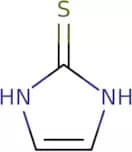
CAS :2-Mercapto-1H-imidazole is an irreversible inhibitor of xanthine oxidase. It binds to the nitrogen atoms of the enzyme's active site and forms a strong hydrogen bond with the oxygen atom of the xanthine substrate. The steric interactions between 2-mercapto-1H-imidazole and the substrate prevent binding and catalysis. The crystal structures of 2-mercapto-1H-imidazole in complex with xanthine oxidase have been determined using X-ray crystallography. FTIR spectroscopy has shown that 2-mercapto-1H-imidazole coordinates in a geometry similar to that of the reactant, hydrochloric acid. Electrochemical impedance spectroscopy (EIS) has revealed that proton transfer takes place when 2-mercapto-1H imidazole binds to xanthine oxidase, which is consistent with reaction mechanism involving electFormule :C3H4N2SDegré de pureté :Min. 95%Couleur et forme :PowderMasse moléculaire :100.14 g/mol7-Deaza-6-hydroxypurine
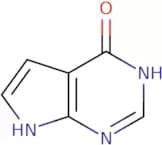
CAS :7-Deaza-6-hydroxypurine is a skeleton of nucleosides that inhibits enzymes. It has been shown to inhibit the activity of hydrochloric acid, a tumor metastasis promoter. The constant for this drug was determined using molecular modeling and inhibition constants. 7-Deaza-6-hydroxypurine has anticancer activity and can be used for the treatment of cancer. This drug is used as a noncompetitive inhibitor in which it binds to two different sites on the enzyme. It has also been shown to bind to subunits, which are parts of a protein that make up its structure, in biological studies.br> 7-Deaza-6-hydroxypurine is an inhibitor that binds to two different sites on an enzyme. It has been shown to have anticancer activity and can be used for the treatment of cancer. This drug is used as a noncompetitive inhibitor in which it binds to two different sites on the enzyme. ItFormule :C6H5N3ODegré de pureté :Min. 95%Couleur et forme :PowderMasse moléculaire :135.12 g/mol1-Methylindole-6-carboxylic acid
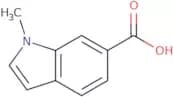
CAS :1-Methylindole-6-carboxylic acid is a versatile building block that is used in the synthesis of more complex compounds. It can be used as a reagent, speciality chemical, and useful building block for pharmaceuticals and other research chemicals. 1-Methylindole-6-carboxylic acid has been shown to be an effective intermediate for the production of a number of different compounds. The compound can also act as a reaction component or scaffold for chemical reactions.Formule :C10H9NO2Degré de pureté :Min. 95%Couleur et forme :PowderMasse moléculaire :175.18 g/mol6-Ethoxypurine
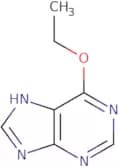
CAS :6-Ethoxypurine is a nucleoside analog that inhibits the enzyme ribonucleotide reductase, which converts ribonucleotides to deoxyribonucleotides. It is used in cell culture to measure the effects of radiation and hydrochloric acid on the production of ATP. 6-Ethoxypurine has been shown to inhibit influenza virus replication with an IC50 of 10 μM. This compound has reactive hydroxyl groups that allow it to participate in hydrogen bonding, which can be beneficial for interactions with other molecules. 6-Ethoxypurine also exhibits nucleophilic properties, which allows it to react with other chemical species and can be useful for generating new chemical compounds.Formule :C7H8N4ODegré de pureté :Min. 95%Couleur et forme :PowderMasse moléculaire :164.16 g/mol5,7-Dimethoxyindole
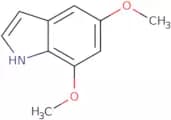
CAS :5,7-Dimethoxyindole is a potent inhibitor of the enzyme oxidase. 5,7-Dimethoxyindole has been shown to inhibit the growth of a number of fungi, including Phytophthora infestans and Cryptococcus neoformans. The molecular modeling studies have shown that this molecule can form an H-bond with the acceptor in the active site of the enzyme and prevent access by substrate. This inhibition has been shown to be competitive with respect to ferrous ions and noncompetitive with respect to other cofactors. 5,7-Dimethoxyindole also inhibits integrase enzymes, which are involved in DNA integration during viral replication. 5,7-Dimethoxyindole was found to bind to a pharmacophore model for integrase inhibitors and formylation reactions. This compound is also magnetic due to its high electron density at the methoxy group.
Formule :C10H11NO2Degré de pureté :Min. 95%Couleur et forme :PowderMasse moléculaire :177.2 g/mol5-Bromo-6-chloroindolyl 1,3-diacetate
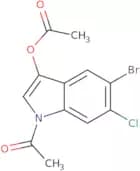
CAS :5-Bromo-6-chloroindolyl 1,3-diacetate is a versatile building block that can be used in the synthesis of complex compounds. It is a useful intermediate for the synthesis of speciality chemicals with high quality. 5-Bromo-6-chloroindolyl 1,3-diacetate is a reagent and reaction component for research chemicals with CAS No. 108847-96-7. It has a variety of applications in the manufacture of fine chemicals and pharmaceuticals, as well as being a useful scaffold for the production of new compounds.Formule :C12H9BrClNO3Degré de pureté :Min. 95%Couleur et forme :Off-White PowderMasse moléculaire :330.57 g/mol2,3,3-Trimethyl-3H-benzo[e]indole
CAS :2,3,3-Trimethyl-3H-benzo[e]indole is a reactive molecule that has been shown to be an effective treatment for cervical cancer. It can be used in conjunction with monoclonal antibodies that have been designed to target the acidic protonation sites on the surface of cervical cancer cells. This active form binds to the site and emits fluorescence when illuminated with a laser, which can then be detected by a confocal microscope. This technique can also be used for the diagnosis of other cancers. 2,3,3-Trimethyl-3H-benzo[e]indole is not toxic to human serum as it does not react with this type of tissue.Formule :C15H15NDegré de pureté :Min. 98 Area-%Couleur et forme :PowderMasse moléculaire :209.29 g/mol(1R,4R)-tert-Butyl 2,5-diazabicyclo[2.2.1]heptane-2-carboxylate hydrochloride
CAS :Tert-Butyl 2,5-diazabicyclo[2.2.1]heptane-2-carboxylate hydrochloride (TBDAHC) is a fine chemical that is an intermediate for the synthesis of other compounds. TBDAHC is a versatile building block that can be used in research chemicals, reaction components, and specialty chemicals. It is also a useful scaffold for making complex compounds and useful building blocks. The compound has high quality and can be used as a reagent in organic chemistry.
Formule :C10H18N2O2·HClDegré de pureté :Min. 95%Couleur et forme :White PowderMasse moléculaire :234.72 g/molQuinoline-2,8-diol
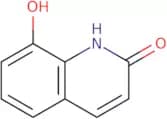
CAS :Quinoline-2,8-diol is a bacterial strain that can be used to remove fatty acids from wastewater. The recombinant cytochrome P450 in this strain can degrade fatty acids, which are carcinogenic and have been shown to cause hepatic steatosis. In addition, the quinoline-2,8-diol strain has shown an ability to inhibit xenograft tumor growth in mice by activating cytochrome P450 and inducing apoptosis. This bacterial strain also has the potential to produce xanthurenic acid from tyrosine. Xanthurenic acid is toxic and has been shown to inhibit polymerase chain reaction (PCR) amplification of DNA. Quinoline-2,8-diol may be used as a model for experimental studies of xanthurenic acid's effects on energy metabolism and DNA synthesis.
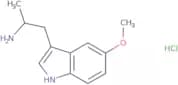
Formule :C9H7NO2Degré de pureté :Min. 95 Area-%Couleur et forme :PowderMasse moléculaire :161.16 g/mol5-Methoxy-3(2-aminopropyl)indole hydrochloride
CAS :Produit contrôlé5-Methoxy-3(2-aminopropyl)indole hydrochloride is a useful reagent for the synthesis of complex compounds and a versatile building block for the preparation of speciality chemicals. It is used in the production of fine chemicals, such as reagents and intermediates. This compound also has potential use as a research chemical or as a reaction component in organic syntheses.Formule :C12H16N2O·HClDegré de pureté :Min. 95%Masse moléculaire :240.73 g/mol2-Azabicyclo[2.2.1]heptane
CAS :2-Azabicyclo[2.2.1]heptane is a lactam that has been synthesized in the laboratory. The compound exhibits significant antiproliferative activity and is shown to have a stereoselective, stereogenic, nucleophilic attack on amides. 2-Azabicyclo[2.2.1]heptane has been used to study the mechanisms of neurodegenerative diseases such as Parkinson's disease and Alzheimer's disease. The conformational properties of this compound can be determined by NMR spectra, which show that it has a skeleton with significant conformational flexibility.Formule :C6H11NDegré de pureté :Min. 95%Couleur et forme :Red PowderMasse moléculaire :97.16 g/molDichloro[9,9-dimethyl-4,5-bis(diphenylphosphino)xanthene]palladium(II)
CAS :Produit contrôléDichloro[9,9-dimethyl-4,5-bis(diphenylphosphino)xanthene]palladium(II) is a fine chemical that can be used as a building block in the synthesis of compounds with diverse structures. It is a research chemical and reagent that has been found to be useful in the synthesis of complex organic compounds. This compound is also versatile enough to be used as an intermediate or scaffold in the synthesis of many different types of organic compounds.Formule :C39H32Cl2OP2PdDegré de pureté :Min. 95%Couleur et forme :Yellow PowderMasse moléculaire :755.94 g/molThiamine monophosphate chloride dihydrate
CAS :Thiamine monophosphate chloride dihydrate is a form of the vitamin thiamine. It has been used in control analysis to measure the activity of enzymes that require thiamine as a cofactor, such as transketolase and pyruvate kinase. Thiamine monophosphate chloride dihydrate has also been studied in biochemical properties, where it was found that this compound can be cleaved by picolinic acid to form thiazole phosphate. The matrix effect is an important factor in polymerase chain reactions and has been shown to be dependent on the presence of dinucleotide phosphate. This compound is an essential component of energy metabolism and plays a role in protein synthesis. Thiamine monophosphate chloride dihydrate also has toxicological studies, including a model system using wild-type strains of yeast. These studies have shown that this compound leads to physiological effects such as inhibition of glycolysis and lactic acid production.
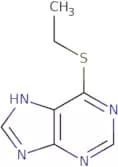
Formule :C12H18N4O4PS•Cl•(H2O)2Degré de pureté :Min. 99 Area-%Couleur et forme :PowderMasse moléculaire :416.82 g/mol6-Ethylmercaptopurine
CAS :6-Ethylmercaptopurine is a purine analogue that inhibits the synthesis of DNA. It is used as an inhibitor of protein synthesis and in the treatment of inflammatory bowel disease. 6-Ethylmercaptopurine has been shown to inhibit the activity of ATPase, which may be responsible for its ability to suppress the proliferation of cells. This drug can also act as an analog to adenosine, which can be used to determine ATP levels in a cell or tissue sample by measuring the amount of p-nitrophenyl phosphate produced. 6-Ethylmercaptopurine has been shown to block phosphatase activity, which may lead to inflammation in some cases.
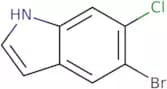
6-Ethylmercaptopurine has a molecular weight of 194.2 g/mol and an optimum pH of 4.5Formule :C7H8N4SDegré de pureté :Min. 95%Couleur et forme :Off-White PowderMasse moléculaire :180.23 g/mol5-Bromo-6-chloro-1H-indole
CAS :5-Bromo-6-chloro-1H-indole is a fine chemical that is used as a building block for research chemicals, reagents, and speciality chemicals. It is soluble in chloroform and benzene, but insoluble in water. This product can be used as a reaction component or a useful intermediate in the production of complex compounds. 5-Bromo-6-chloro-1H-indole has been reported to be an effective scaffold for the synthesis of many novel compounds with potential applications such as pharmaceuticals, agrochemicals, and dyes.
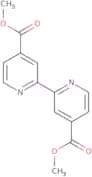
Formule :C8H5BrClNDegré de pureté :Min. 95%Couleur et forme :PowderMasse moléculaire :230.49 g/mol4,4'-Bis(methoxycarbonyl)-2,2'-bipyridine
CAS :4,4'-Bis(methoxycarbonyl)-2,2'-bipyridine is a ligand that can be used in cross-coupling reactions. It has been shown to bind to metal ions and form complexes with the ligands. 4,4'-Bis(methoxycarbonyl)-2,2'-bipyridine has a constant value for maximizing the yield of the reaction and is luminescent. This product also has photophysical properties that allow it to be utilized in voltammetry studies. The transfer of this product can be optimized by using chromophores or catalysis. 4,4'-Bis(methoxycarbonyl)-2,2'-bipyridine provides a means for cross-coupling reactions using electrochemical studies and dichroism.
Formule :C14H12N2O4Degré de pureté :Min. 95%Couleur et forme :PowderMasse moléculaire :272.26 g/mol2-Boc-6-hydroxy-1,2,3,4-tetrahydroisoquinoline-1-carboxylic acid
CAS :2-Boc-6-hydroxy-1,2,3,4-tetrahydroisoquinoline-1-carboxylic acid is a useful scaffold with a high quality. It can be used as a building block in the synthesis of complex compounds and fine chemicals. 2-Boc-6-hydroxy-1,2,3,4-tetrahydroisoquinoline-1-carboxylic acid is also a useful intermediate and reagent in organic synthesis. This compound has CAS number 362492-00-0.
Formule :C15H19NO5Degré de pureté :Min. 95%Couleur et forme :PowderMasse moléculaire :293.32 g/mol1-Methyl-N-(9-methyl-9-azabicyclo[3.3.1]non-3-yl)-indazole-3-carboxamide
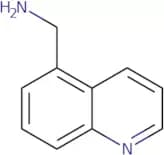
CAS :Produit contrôlé1-Methyl-N-(9-methyl-9-azabicyclo[3.3.1]non-3-yl)-indazole-3-carboxamide is a chemical inhibitor of the 5HT2 receptor, which is responsible for regulating nausea and vomiting. It has been shown to have antiemetic properties, and can be used in chemotherapy to control nausea and vomiting. The 5HT2 receptor is coupled to Gs proteins and inhibits adenylyl cyclase activity, while 1MMAI binds to the 5HT2A receptor and blocks serotonin from binding. This prevents serotonin from activating Gq protein receptors, which are involved in the generation of intracellular calcium concentrations that lead to neurotransmitter release. 1MMAI also inhibits the activation of phospholipase C by serotonin, resulting in decreased levels of diacylglycerol (DAG) and inositol triphosphate (IP3). These changes inhibit plateFormule :C18H24N4ODegré de pureté :Min. 95%Couleur et forme :White Off-White PowderMasse moléculaire :312.41 g/molQuinolin-5-yl-methylamine
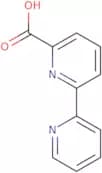
CAS :Quinolin-5-yl-methylamine is a fine chemical that is used as a research chemical. It can be used as a reagent and as a speciality chemical. This compound has a high quality and is versatile in its use. Quinolin-5-yl-methylamine can be used in the synthesis of complex compounds, such as pharmaceuticals, agrochemicals, and polymers. It is also an intermediate that can be used to create other useful compounds, such as building blocks or scaffolds. The CAS number for this compound is 58123-57-2.Formule :C10H10N2Degré de pureté :Min. 95%Couleur et forme :SolidMasse moléculaire :158.2 g/mol2,2'-Bipyridine-6-carboxylic acid
CAS :2,2'-Bipyridine-6-carboxylic acid is a reagent that is used in organic synthesis as a reaction component and building block for the synthesis of heterocyclic compounds. 2,2'-Bipyridine-6-carboxylic acid is also used as a precursor to produce other compounds. 2,2'-Bipyridine-6-carboxylic acid has been shown to be useful in the synthesis of complex compounds with diverse structures, making it a versatile building block. It can also be used as an intermediate in the synthesis of various drugs and speciality chemicals.
Formule :C11H8N2O2Degré de pureté :Min. 95%Couleur et forme :Off-White PowderMasse moléculaire :200.19 g/mol6-Iodoisatin
CAS :6-Iodoisatin is a potential anticancer agent that has been shown to inhibit the growth of murine melanoma cells in vitro. The mechanism of action is not yet fully understood, but it seems that 6-iodoisatin may inhibit the synthesis of melanin and its cross-coupling reaction. This compound also exhibits affinity for tumour cells and can be radiolabeled with a radionuclide such as iodine-131 (I) or iodine-123 (I). 6-Iodoisatin has been shown to have a high biodistribution profile in mice. It accumulates in melanoma tumours at an amount that is ten times higher than that observed in other tissues.
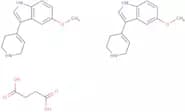
Formule :C8H4INO2Degré de pureté :Min. 95%Couleur et forme :Orange PowderMasse moléculaire :273.03 g/mol5-Methoxy-3-(1,2,5,6-tetrahydro-4-pyridinyl)-1H-indole hemisuccinate
CAS :5-Methoxy-3-(1,2,5,6-tetrahydro-4-pyridinyl)-1H-indole hemisuccinate is a serotonin receptor agonist that has been shown to stimulate the 5HT1A receptor. It stimulates insulin secretion and glucose uptake in rats and inhibits feeding behavior in mice. It has also been shown to have antihypertensive effects on rats by blocking the 5HT2 receptors. In addition, it stimulates regeneration of injured nerve cells. This drug has potential uses as a treatment for neurological diseases such as Parkinson's disease and depression.Formule :C14H16N2O•(C4H6O4)0Degré de pureté :Min. 95%Couleur et forme :Yellow solid.Masse moléculaire :287.33 g/mol(1S,6S)-2,8-Diazabicyclo[4.3.0]nonane
CAS :(1S,6S)-2,8-Diazabicyclo[4.3.0]nonane is a chiral compound that can be made from the reaction of an organic acid with an amino alcohol. The enantiomers of this compound have shown to be effective against methicillin-resistant Staphylococcus aureus (MRSA) and Mycobacterium tuberculosis. The synthetic process for this compound was originally developed in the 1980s by researchers at the University of Illinois. They were able to show that it was possible to make a carbonyl reduction product using imidodicarbonic acid and an organic solvent. This led to the synthesis of moxifloxacin hydrochloride, which is used as a treatment for bacterial infections such as tuberculosis or pneumonia.Formule :C7H14N2Degré de pureté :Min. 95%Couleur et forme :Colourless To Brown LiquidMasse moléculaire :126.2 g/mol[2,3'-Bipyridin]-6'-amine
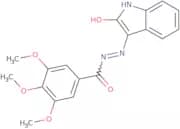
CAS :2,3'-Bipyridin-6'-amine is a chemical compound that is used as a building block for more complex molecules. It has high quality and can be used to make many different compounds. 2,3'-Bipyridin-6'-amine is versatile and can be used in the synthesis of a variety of compounds. It is also an intermediate in a number of reactions, including the formation of pyrimidine analogs. This chemical has been shown to be useful in the creation of new drugs for cancer treatment and other diseases.Formule :C10H9N3Degré de pureté :Min. 95%Couleur et forme :Off-White PowderMasse moléculaire :171.2 g/mol3-(3,4,5-Trimethoxybenzoylhydrazidyl)-2-oxoindoline
CAS :Please enquire for more information about 3-(3,4,5-Trimethoxybenzoylhydrazidyl)-2-oxoindoline including the price, delivery time and more detailed product information at the technical inquiry form on this pageFormule :C18H17N3O5Degré de pureté :Min. 95%Couleur et forme :PowderMasse moléculaire :355.34 g/mol5-Iodoisatin
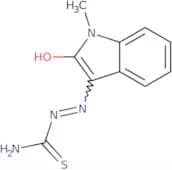
CAS :5-Iodoisatin is a cross-coupling agent that has an inhibitory effect on tumor tissue. It is also used for the synthesis of conjugated drugs and pharmacological research. 5-Iodoisatin, which forms a ternary complex with copper and iodide, inhibits the growth of colorectal carcinoma cells by interfering with their DNA replication and protein production. 5-Iodoisatin can be converted to its active form through the formation of a ternary complex with copper and iodide ions. This inhibition is due to its ability to interact with DNA, RNA polymerase, and other proteins involved in transcription, translation, and replication processes. 5-Iodoisatin is metabolized through conjugation with glucuronic acid or sulfate in the liver; it binds to human mitochondrial DNA and can enter cells via passive diffusion. The carbonyl group in this drug may play an important role in its interaction with cancer cells.Formule :C8H4INO2Degré de pureté :Min. 95%Masse moléculaire :273.03 g/mol1-methylisatin, 3-thiosemicarbazide
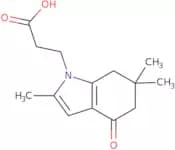
CAS :1-Methylisatin, 3-thiosemicarbazide (MTST) is an antimicrobial agent that has been shown to be effective against a broad range of microorganisms. MTST inhibits the growth of bacteria and fungi by binding to the fatty acid moieties of membrane lipids, which disrupts the integrity of the cell membrane. This disruption can lead to bacterial death. MTST also has antiviral properties that are due to its ability to inhibit virus replication by binding with receptor binding sites on the virus surface. 1-Methylisatin, 3-thiosemicarbazide has been shown to be an effective treatment for autoimmune diseases such as multiple sclerosis and rheumatoid arthritis in animal models.Degré de pureté :Min. 95%3-(2,6,6-Trimethyl-4-oxo-5,6,7-trihydroindolyl)propanoic acid
CAS :Please enquire for more information about 3-(2,6,6-Trimethyl-4-oxo-5,6,7-trihydroindolyl)propanoic acid including the price, delivery time and more detailed product information at the technical inquiry form on this pageFormule :C14H19NO3Degré de pureté :Min. 95%Couleur et forme :PowderMasse moléculaire :249.31 g/mol1-(2-Chloropropanoyl)indoline
CAS :Please enquire for more information about 1-(2-Chloropropanoyl)indoline including the price, delivery time and more detailed product information at the technical inquiry form on this page
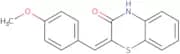
Formule :C11H12ClNODegré de pureté :Min. 95%Masse moléculaire :209.67 g/mol3-((4-Methoxyphenyl)methylene)-1,4-dihydro-4-thiaquinolin-2-one
CAS :Please enquire for more information about 3-((4-Methoxyphenyl)methylene)-1,4-dihydro-4-thiaquinolin-2-one including the price, delivery time and more detailed product information at the technical inquiry form on this pageFormule :C16H13NO2SDegré de pureté :Min. 95%Couleur et forme :PowderMasse moléculaire :283.35 g/mol3-(4-Bromophenyl)-5-(hydroxyimino)-7,7-dimethyl-6,7,8-trihydrocinnoline
CAS :Please enquire for more information about 3-(4-Bromophenyl)-5-(hydroxyimino)-7,7-dimethyl-6,7,8-trihydrocinnoline including the price, delivery time and more detailed product information at the technical inquiry form on this page
Formule :C16H16BrN3ODegré de pureté :Min. 95%Couleur et forme :PowderMasse moléculaire :346.22 g/molEthyl 4-oxo-7-(benzyloxy)hydroquinoline-3-carboxylate
CAS :Please enquire for more information about Ethyl 4-oxo-7-(benzyloxy)hydroquinoline-3-carboxylate including the price, delivery time and more detailed product information at the technical inquiry form on this pageDegré de pureté :Min. 95%5-methyl-3-(phenylmethylthio)-1,2,4-triazino[5,6-b]indole
CAS :Please enquire for more information about 5-methyl-3-(phenylmethylthio)-1,2,4-triazino[5,6-b]indole including the price, delivery time and more detailed product information at the technical inquiry form on this pageDegré de pureté :Min. 95%5-methyl-3-methylthio-1,2,4-triazino[5,6-b]indole
CAS :Please enquire for more information about 5-methyl-3-methylthio-1,2,4-triazino[5,6-b]indole including the price, delivery time and more detailed product information at the technical inquiry form on this pageDegré de pureté :Min. 95%2,10-diaza-5,5,13-trimethyl-9-(4-(isopropyl)phenyl)tricyclo[9.4.0.0<3,8>]pentadeca-1(11),3(8),12,14-tetraen-7-one
CAS :Please enquire for more information about 2,10-diaza-5,5,13-trimethyl-9-(4-(isopropyl)phenyl)tricyclo[9.4.0.0<3,8>]pentadeca-1(11),3(8),12,14-tetraen-7-one including the price, delivery time and more detailed product information at the technical inquiry form on this pageDegré de pureté :Min. 95%Decursidin
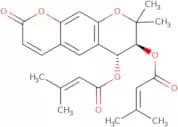
CAS :Decursidin is a chemical compound, classified as a coumarin derivative, which is a bioactive constituent derived from the roots of the Angelica gigas plant. This compound is prominent for its pharmacological activities, attributed to its distinct chemical structure.Degré de pureté :Min. 95%4-(2,6,6-Trimethyl-4-oxo-5,6,7-trihydroindolyl)benzoic acid
CAS :Please enquire for more information about 4-(2,6,6-Trimethyl-4-oxo-5,6,7-trihydroindolyl)benzoic acid including the price, delivery time and more detailed product information at the technical inquiry form on this pageFormule :C18H19NO3Degré de pureté :Min. 95%Couleur et forme :PowderMasse moléculaire :297.35 g/mol2-oxoindoline-3-hydrazone
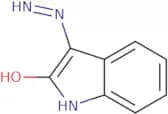
CAS :2-Oxoindoline-3-hydrazone (2OIH) is a heterocyclic compound that has been reported to have anticancer activity. 2OIH is an intramolecular hydrogen bond acceptor, which may account for its anticancer activity. It has been shown to be effective against cancer cells in mammalian cell lines and in vitro studies of human carcinoma cell lines. This compound also showed anticancer activity against bacteria such as Pseudomonas aeruginosa (P. aeruginosa) and Staphylococcus aureus (S. aureus). The geometric isomers of 2OIH have been studied using nmr spectra, and the carbonyl group has been identified as the source of its anti-cancer properties. Structural analysis has revealed that the hydroxyl group on the indole moiety is important for the anti-cancer properties of this molecule.
Formule :C8H7N3ODegré de pureté :Min. 95%Couleur et forme :PowderMasse moléculaire :161.16 g/mol3-(4-phenoxyphenyl)spiro[1,3-thiazolidine-2,3'-indoline]-4,7-dione
CAS :Please enquire for more information about 3-(4-phenoxyphenyl)spiro[1,3-thiazolidine-2,3'-indoline]-4,7-dione including the price, delivery time and more detailed product information at the technical inquiry form on this pageFormule :C22H16N2O3SDegré de pureté :Min. 95%Couleur et forme :PowderMasse moléculaire :388.44 g/mol3-(2-(4-Bromophenyl)-6,6-dimethyl-4-oxo-5,6,7-trihydroindolyl)benzoic acid
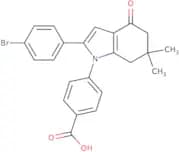
CAS :Please enquire for more information about 3-(2-(4-Bromophenyl)-6,6-dimethyl-4-oxo-5,6,7-trihydroindolyl)benzoic acid including the price, delivery time and more detailed product information at the technical inquiry form on this pageFormule :C23H20BrNO3Degré de pureté :Min. 95%Couleur et forme :PowderMasse moléculaire :438.31 g/mol4-(2-(4-Bromophenyl)-6,6-dimethyl-4-oxo-5,6,7-trihydroindolyl)benzoic acid
CAS :Please enquire for more information about 4-(2-(4-Bromophenyl)-6,6-dimethyl-4-oxo-5,6,7-trihydroindolyl)benzoic acid including the price, delivery time and more detailed product information at the technical inquiry form on this pageFormule :C23H20BrNO3Degré de pureté :Min. 95%Couleur et forme :PowderMasse moléculaire :438.3 g/mol2-[(3-Phenoxyphenyl)methylene]-2H-1,4-benzothiazin-3(4H)-one
CAS :Please enquire for more information about 2-[(3-Phenoxyphenyl)methylene]-2H-1,4-benzothiazin-3(4H)-one including the price, delivery time and more detailed product information at the technical inquiry form on this pageFormule :C21H15NO2SDegré de pureté :Min. 95%Couleur et forme :Powder2-Quinolinecarboxylic Acid
CAS :Produit contrôléApplications 2-Quinolinecarboxylic acid can be found in the studying of ligands for the purpose of copper-catalyzed Ullmann reactions with aryl ethers and aryl iodides.
Formule :C10H7NO2Couleur et forme :NeatMasse moléculaire :173.17endo-3-Azabicyclo[3.3.1]nonan-7-ol
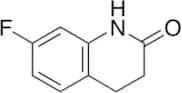
CAS :Produit contrôléFormule :C8H15NOCouleur et forme :NeatMasse moléculaire :141.2117-Fluoro-3,4-dihydroquinolin-2(1H)-one
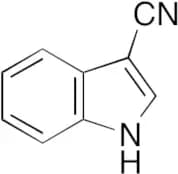
CAS :Produit contrôléFormule :C9H8FNOCouleur et forme :NeatMasse moléculaire :165.1643-Cyanoindole
CAS :Produit contrôléApplications 3-Cyanoindole (cas# 5457-28-3) is a compound useful in organic synthesis.
Formule :C9H6N2Couleur et forme :NeatMasse moléculaire :142.16Methyl 2-(1-(5-Fluoropentyl)-1H-indole-3-carboxamido)-3-phenylpropanoate
Produit contrôléApplications Methyl 2-(1-(5-Fluoropentyl)-1H-indole-3-carboxamido)-3-phenylpropanoate is a useful intermediate for organic synthesis. It is a derivative of I-AMB (I110000(M)), which is an analog of 5-fluoro AMB that was developed on an indole base instead of the indazole base typically associated with AB-PINACA.
References Shevyrin, V., et al.: Chem. Heterocyclic Comp., 50, 583 (2014)Formule :C24H27FN2O3Couleur et forme :NeatMasse moléculaire :410.4811-[4-(Trifluoromethyl)phenyl]-3-azabicyclo[3.1.0]hexane Hydrochloride-d5
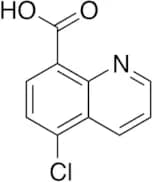
CAS :Produit contrôléFormule :C12D5H7F3N·HClCouleur et forme :NeatMasse moléculaire :268.7175-Chloroquinoline-8-carboxylic Acid
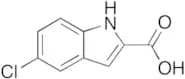
CAS :Produit contrôléFormule :C10H6ClNO2Couleur et forme :NeatMasse moléculaire :207.6135-Chloroindole-2-carboxylic Acid
CAS :Produit contrôléApplications 5-Chloroindole-2-carboxylic Acid is used in the synthesis of 4-(3-aminomethylphenyl)piperidine-1-carboxamides as potent, selective, and orally bioavailable inhibitors of βII tryptase. It is also a reagent used to prepare indole amides with possible antihistaminic activities.
References Levell, J., et al.: Bioorg. Med. Chem., 13, 2859 (2005); Battaglia, S., et al.: Eur. J. Med. Chem., 34, 93 (1999)Formule :C9H6ClNO2Couleur et forme :NeatMasse moléculaire :195.64,9-Bis(5-bromo-2-thienyl)-2,7-bis(2-octyldodecyl)-benzo[lmn][3,8]phenanthroline-1,3,6,8(2H,7H)-tetrone
CAS :Produit contrôléFormule :C62H88Br2N2O4S2Couleur et forme :NeatMasse moléculaire :1149.32O-Benzyl Indacaterol
CAS :Produit contrôléApplications 5-[(1R)-2-[(5,6-Diethyl-2,3-dihydro-1H-inden-2-yl)amino]-1-hydroxyethyl]-8-(phenylmethoxy)-2(1H)-quinolinone is used as a reactant in the preparation of Indacaterol (I499745), a β-adrenoreceptor agonist.
References Baur, Francois, et al.: J. of Med. Chem., 53(9), 3675-3684 (2010)Formule :C31H34N2O3Couleur et forme :Off-White To Light YellowMasse moléculaire :482.614-Hydroxy-7,8-dimethyl-2(1H)-quinolinone
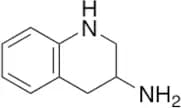
CAS :Produit contrôléFormule :C11H11NO2Couleur et forme :NeatMasse moléculaire :189.211,2,3,4-Tetrahydroquinolin-3-amine
CAS :Produit contrôléApplications 1,2,3,4-Tetrahydroquinolin-3-amine (cas# 40615-02-9) is a useful research chemical.
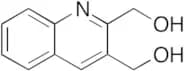
Formule :C9H12N2Couleur et forme :NeatMasse moléculaire :148.2052,3-Quinolinedimethanol
CAS :Produit contrôléFormule :C11H11NO2Couleur et forme :NeatMasse moléculaire :189.211,4-Diazabicyclo[2.2.2]octane bis(Sulfur Dioxide) Adduct
CAS :Produit contrôléApplications 1,4-Diazabicyclo[2.2.2]octane bis(sulfur dioxide) adduct (cas# 119752-83-9) is a useful research chemical.
Formule :C6H12N2O4S2Couleur et forme :NeatMasse moléculaire :240.33-(Ethoxycarbonyl)bicyclo[1.1.1]pentane-1-carboxylic Acid
CAS :Produit contrôléApplications 3-(ETHOXYCARBONYL)BICYCLO[1.1.1]PENTANE-1-CARBOXYLIC ACID (cas# 1823373-90-5) is a useful research chemical.
Formule :C9H12O4Couleur et forme :NeatMasse moléculaire :184.1892-Azabicyclo[2.2.2]octan-3-one
CAS :Produit contrôléApplications 2-Azabicyclo[2.2.2]octan-3-one (cas# 3306-69-2) is a useful research chemical.
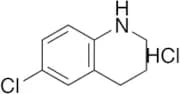
Formule :C7H11NOCouleur et forme :NeatMasse moléculaire :125.176-chloro-1,2,3,4-tetrahydroquinoline hydrochloride
CAS :Produit contrôléFormule :C9H10ClN·HClCouleur et forme :NeatMasse moléculaire :204.0966-Amino-1,2,3,4-tetrahydroisoquinoline Hydrochloride
CAS :Produit contrôléFormule :C9H12N2·HClCouleur et forme :NeatMasse moléculaire :184.6662,6-Dichloro-9-(2’,3’,5’-tri-O-acetyl-β-D-ribofuranosyl)purine
CAS :Produit contrôléApplications Protected nucleoside.
References Elzein, E., et al.: Bioorg. Med. Chem. Lett., 17, 161 (2007), Franchetti, P., et al.: J. Med. Chem., 52, 2393 (2009),Formule :C16H16Cl2N4O7Couleur et forme :NeatMasse moléculaire :447.237,8-Dimethylquinolin-5-amine
CAS :Produit contrôléFormule :C11H12N2Couleur et forme :NeatMasse moléculaire :172.2264-Isoquinolin-4-yl-benzylamine
CAS :Produit contrôléApplications 4-Isoquinolin-4-yl-benzylamine is an analog of amino isoquinolin (A611600). Amino isoquinolin ( A611600) is used for synthesis of Rho kinase inhibitors.
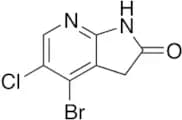
References Kimura, K; Science, 273, 245 (1996);Amano, M; J Biol Chem 274, 32418 (1999)Gassel, M; J Mol Biol, 329, 1021 (2003);Formule :C16H14N2Couleur et forme :NeatMasse moléculaire :234.2964-Bromo-5-chloro-7-aza-2-oxindole
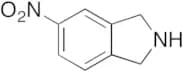
CAS :Produit contrôléFormule :C7H4BrClN2OCouleur et forme :NeatMasse moléculaire :247.4765-Nitroisoindoline Hydrochloride Salt
CAS :Produit contrôléApplications 5-Nitroisoindoline is used as a reagent in organic synthesis of several compounds including that of biphenylcarboxamidoisoindoline derivatives, which act as apolipoprotein B secretion inhibitors, and of benzenesulfonamides which may act as antipsychotic agents.
References Yamada, H., et al.: Preparation of biphenylcarboxamidoisoindoline derivatives as apolipoprotein B secretion inhibitors, WO Patent 2002014277, Feb 21, 2002; Cooper, D., et al.: Preparation of benzenesulfonamides as antipsychotic agents, WO Patent 2003068732, Aug 21, 2003;Formule :C8H9ClN2O2Couleur et forme :NeatMasse moléculaire :200.621,4-Dioxa-8-azaspiro[4.5]decane-8-sulfonyl Chloride
CAS :Produit contrôléFormule :C7H12ClNO4SCouleur et forme :NeatMasse moléculaire :241.6922,4,4-Trimethyl-7-oxabicyclo[4.1.0]hept-2-ene-3-carbonitrile
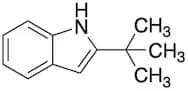
CAS :Produit contrôléFormule :C10H13NOCouleur et forme :NeatMasse moléculaire :163.2162-tert-Butylindole
CAS :Produit contrôléApplications 2-tert-Butyl-1H-indole (cas# 1805-65-8) is a useful research chemical.
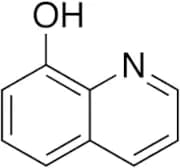
Formule :C12H15NCouleur et forme :NeatMasse moléculaire :173.258-Hydroxyquinoline
CAS :Produit contrôléApplications 8-Hydroxyquinoline (cas# 148-24-3) is a compound useful in organic synthesis.
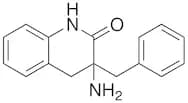
Formule :C9H7NOCouleur et forme :NeatMasse moléculaire :145.163-Amino-3-benzyl-3,4-dihydroquinolin-2(1H)-one
CAS :Produit contrôléApplications 3-Amino-3-benzyl-3,4-dihydroquinolin-2(1H)-one
Formule :C16H16N2OCouleur et forme :NeatMasse moléculaire :252.311,4-Dioxa-8-azaspiro[4.5]decane-8-carboxylic Acid 1,1-Dimethylethyl Ester
CAS :Produit contrôléApplications 1,4-Dioxa-8-azaspiro[4.5]decane-8-carboxylic Acid 1,1-Dimethylethyl Ester (cas# 123387-51-9) is a compound useful in organic synthesis.
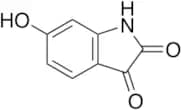
Formule :C12H21NO4Couleur et forme :NeatMasse moléculaire :243.36-Hydroxy-2,3-dihydro-1H-indole-2,3-dione
CAS :Produit contrôléFormule :C8H5NO3Couleur et forme :NeatMasse moléculaire :163.13(1R-exo)-N-(1,7,7-Trimethylbicyclo[2.2.1]hept-2-yl)-2-pyridinemethanamine
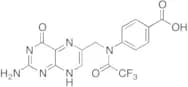
CAS :Produit contrôléFormule :C16H24N2Couleur et forme :NeatMasse moléculaire :244.375N10-Trifluoroacetylpteroic Acid
CAS :Produit contrôléStability Hygroscopic
Applications N10-Trifluoroacetylpteroic acid is a derivative of Pteroic acid (P840110), both of which are used as reagents to synthesize target ligands, like Folic acid (F680300), that have the ability to deliver chemotherapeutic agents specifically to cancer cells.
References Leamon, C., et al.: Bioconjugate Chem., 14, 738 (2003); Leamon, C., et al.: J. Drug Target., 7, 157 (1999); Yonghua, Z., et al.: Anal. Biochem., 332, 168 (2004)Formule :C16H11F3N6O4Couleur et forme :NeatMasse moléculaire :408.291-(2-Chlorophenyl)-3-azabicyclo[3.1.0]hexane Hydrochloride
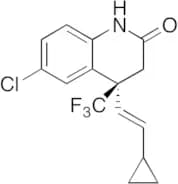
CAS :Produit contrôléFormule :C11H12ClN·HClCouleur et forme :NeatMasse moléculaire :230.134(S,E)-6-Chloro-4-(2-cyclopropylvinyl)-4-trifluoromethyl)-3,4-dihydroquinolin-2(1H)-one
Produit contrôléFormule :C15H13ClF3NOCouleur et forme :NeatMasse moléculaire :315.7182-(Piperidin-2-yl)-1H-indole
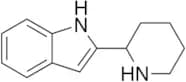
CAS :Produit contrôléFormule :C13H16N2Couleur et forme :NeatMasse moléculaire :200.288-Aminoquinoline-2-carboxylic Acid
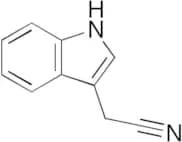
CAS :Produit contrôléFormule :C10H8N2O2Couleur et forme :NeatMasse moléculaire :188.183Indole-3-acetonitrile
CAS :Applications Indole-3-acetonitrile is an indole derivative involved in the biosynthesis of the plant hormone indole acetic acid (I577340) via the indole-3-acetaldoxime pathway.
References Kong, W., et al.: Plant Cell Physiol, 56, 715-726 (2015)Formule :C10H8N2Couleur et forme :Yellow CrystallineMasse moléculaire :156.184-(Hydroxymethyl)bicyclo[2.2.2]octan-1-ol
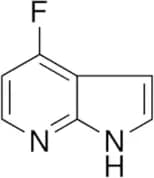
CAS :Produit contrôléFormule :C9H16O2Couleur et forme :NeatMasse moléculaire :156.2224-Fluoro-7-azaindole
CAS :Produit contrôléApplications 4-Fluoro-7-azaindole (cas# 640735-23-5) is a compound useful in organic synthesis.
Formule :C7H5FN2Couleur et forme :NeatMasse moléculaire :136.13




![2,3,3-Trimethyl-3H-benzo[e]indole](/_next/image/?url=https%3A%2Fstatic.cymitquimica.com%2Fproducts%2F3D%2Fthumb-webp%2FFT29018.webp&w=3840&q=75)
![(1R,4R)-tert-Butyl 2,5-diazabicyclo[2.2.1]heptane-2-carboxylate hydrochloride](/_next/image/?url=https%3A%2Fstatic.cymitquimica.com%2Fproducts%2F3D%2Fthumb-webp%2FFB15223.webp&w=3840&q=75)
![2-Azabicyclo[2.2.1]heptane](/_next/image/?url=https%3A%2Fstatic.cymitquimica.com%2Fproducts%2F3D%2Fthumb-webp%2FFA116876.webp&w=3840&q=75)
![Dichloro[9,9-dimethyl-4,5-bis(diphenylphosphino)xanthene]palladium(II)](/_next/image/?url=https%3A%2Fstatic.cymitquimica.com%2Fproducts%2F3D%2Fthumb-webp%2FFD60980.webp&w=3840&q=75)


![1-Methyl-N-(9-methyl-9-azabicyclo[3.3.1]non-3-yl)-indazole-3-carboxamide](/_next/image/?url=https%3A%2Fstatic.cymitquimica.com%2Fproducts%2F3D%2Fthumb-webp%2FFM137557.webp&w=3840&q=75)

![(1S,6S)-2,8-Diazabicyclo[4.3.0]nonane](/_next/image/?url=https%3A%2Fstatic.cymitquimica.com%2Fproducts%2F3D%2Fthumb-webp%2FFD14784.webp&w=3840&q=75)
![[2,3'-Bipyridin]-6'-amine](/_next/image/?url=https%3A%2Fstatic.cymitquimica.com%2Fproducts%2F3D%2Fthumb-webp%2FFB141123.webp&w=3840&q=75)



![5-methyl-3-(phenylmethylthio)-1,2,4-triazino[5,6-b]indole](/_next/image/?url=https%3A%2Fstatic.cymitquimica.com%2Fproducts%2F3D%2Fthumb-webp%2FFM169714.webp&w=3840&q=75)
![5-methyl-3-methylthio-1,2,4-triazino[5,6-b]indole](/_next/image/?url=https%3A%2Fstatic.cymitquimica.com%2Fproducts%2F3D%2Fthumb-webp%2FFM169855.webp&w=3840&q=75)
![2,10-diaza-5,5,13-trimethyl-9-(4-(isopropyl)phenyl)tricyclo[9.4.0.0<3,8>]pentadeca-1(11),3(8),12,1…](/_next/image/?url=https%3A%2Fstatic.cymitquimica.com%2Fproducts%2F3D%2Fthumb-webp%2FFD169536.webp&w=3840&q=75)

![3-(4-phenoxyphenyl)spiro[1,3-thiazolidine-2,3'-indoline]-4,7-dione](/_next/image/?url=https%3A%2Fstatic.cymitquimica.com%2Fproducts%2F3D%2Fthumb-webp%2FFP169783.webp&w=3840&q=75)
![2-[(3-Phenoxyphenyl)methylene]-2H-1,4-benzothiazin-3(4H)-one](/_next/image/?url=https%3A%2Fstatic.cymitquimica.com%2Fproducts%2F3D%2Fthumb-webp%2FFP169832.webp&w=3840&q=75)


![endo-3-Azabicyclo[3.3.1]nonan-7-ol](/_next/image/?url=https%3A%2Fstatic.cymitquimica.com%2Fproducts%2FTR%2Fthumb-webp%2FA795250.webp&w=3840&q=75)

![1-[4-(Trifluoromethyl)phenyl]-3-azabicyclo[3.1.0]hexane Hydrochloride-d5](/_next/image/?url=https%3A%2Fstatic.cymitquimica.com%2Fproducts%2FTR%2Fthumb-webp%2FT791387.webp&w=3840&q=75)
![4,9-Bis(5-bromo-2-thienyl)-2,7-bis(2-octyldodecyl)-benzo[lmn][3,8]phenanthroline-1,3,6,8(2H,7H)-te…](/_next/image/?url=https%3A%2Fstatic.cymitquimica.com%2Fproducts%2FTR%2Fthumb-webp%2FB415075.webp&w=3840&q=75)


![1,4-Diazabicyclo[2.2.2]octane bis(Sulfur Dioxide) Adduct](/_next/image/?url=https%3A%2Fstatic.cymitquimica.com%2Fproducts%2FTR%2Fthumb-webp%2FD417603.webp&w=3840&q=75)
![3-(Ethoxycarbonyl)bicyclo[1.1.1]pentane-1-carboxylic Acid](/_next/image/?url=https%3A%2Fstatic.cymitquimica.com%2Fproducts%2FTR%2Fthumb-webp%2FE940078.webp&w=3840&q=75)
![2-Azabicyclo[2.2.2]octan-3-one](/_next/image/?url=https%3A%2Fstatic.cymitquimica.com%2Fproducts%2FTR%2Fthumb-webp%2FA965798.webp&w=3840&q=75)


![1,4-Dioxa-8-azaspiro[4.5]decane-8-sulfonyl Chloride](/_next/image/?url=https%3A%2Fstatic.cymitquimica.com%2Fproducts%2FTR%2Fthumb-webp%2FD485370.webp&w=3840&q=75)
![2,4,4-Trimethyl-7-oxabicyclo[4.1.0]hept-2-ene-3-carbonitrile](/_next/image/?url=https%3A%2Fstatic.cymitquimica.com%2Fproducts%2FTR%2Fthumb-webp%2FT700390.webp&w=3840&q=75)
![1,4-Dioxa-8-azaspiro[4.5]decane-8-carboxylic Acid 1,1-Dimethylethyl Ester](/_next/image/?url=https%3A%2Fstatic.cymitquimica.com%2Fproducts%2FTR%2Fthumb-webp%2FD485270.webp&w=3840&q=75)
![(1R-exo)-N-(1,7,7-Trimethylbicyclo[2.2.1]hept-2-yl)-2-pyridinemethanamine](/_next/image/?url=https%3A%2Fstatic.cymitquimica.com%2Fproducts%2FTR%2Fthumb-webp%2FT778255.webp&w=3840&q=75)
![1-(2-Chlorophenyl)-3-azabicyclo[3.1.0]hexane Hydrochloride](/_next/image/?url=https%3A%2Fstatic.cymitquimica.com%2Fproducts%2FTR%2Fthumb-webp%2FC377790.webp&w=3840&q=75)

![4-(Hydroxymethyl)bicyclo[2.2.2]octan-1-ol](/_next/image/?url=https%3A%2Fstatic.cymitquimica.com%2Fproducts%2FTR%2Fthumb-webp%2FH949113.webp&w=3840&q=75)