Composés polycycliques
Les composés polycycliques sont des molécules organiques contenant plusieurs cycles interconnectés. Ces composés incluent les hydrocarbures aromatiques polycycliques et d'autres systèmes de cycles complexes. Ils sont importants dans les sciences des matériaux, les produits pharmaceutiques et l'électronique organique. Chez CymitQuimica, nous proposons des composés polycycliques de haute qualité pour soutenir vos recherches et applications industrielles, garantissant des résultats fiables et efficaces dans vos projets.
Sous-catégories appartenant à la catégorie "Composés polycycliques"
- Acridines(97 produits)
- Anthraquinones(533 produits)
- Acides anthraquinonesulfoniques(16 produits)
- Azobenzènes(270 produits)
- Azonaphtalènes(98 produits)
- Azoxybenzènes(12 produits)
- Azulènes(11 produits)
- Benzimidazoles(1.470 produits)
- Benzodioxanes(27 produits)
- Benzofuranes(923 produits)
- Benzothiophènes(690 produits)
- Benzotriazoles(436 produits)
- Binaphthyls(133 produits)
- Carbazoles(462 produits)
- Chromanes, Chromenes(480 produits)
- Coumarines(1.121 produits)
- Cyclophanes(11 produits)
- Fluorènes et Fluorénones(381 produits)
- Imidazopyridines(10 produits)
- Indans(118 produits)
- Indazoles(2.029 produits)
- Indenes(22 produits)
- Indoles(3.984 produits)
- Indolines(119 produits)
- Isatines(231 produits)
- Isobenzofuranes(17 produits)
- Phtalimides N-substitués(153 produits)
- Naphtalènes(2.427 produits)
- Naphtyridine(17 produits)
- Naphtoquinone(2 produits)
- Perylènes(36 produits)
- Phénazines(25 produits)
- Phtalazines(33 produits)
- Phtalimide(153 produits)
- Hydrocarbures aromatiques polycycliques (HAP)(270 produits)
- Polyphénol(261 produits)
- Ptéridines(52 produits)
- Pyrènes(87 produits)
- Quinuclidine(1 produits)
- Tétracènes(7 produits)
Affichez 32 plus de sous-catégories
4574 produits trouvés pour "Composés polycycliques"
Trier par
Degré de pureté (%)
0
100
|
0
|
50
|
90
|
95
|
100
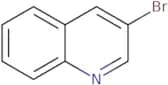
3-Bromoquinoline
CAS :<p>3-Bromoquinoline is a brominated quinoline derivative that can be synthesized by cross-coupling reactions. The compound's chemical structure is similar to the 3-azidoquinoline, which was studied in quantum theory and molecular modeling. The 3-bromoquinoline molecule has been shown to exist in two different coordination geometries: octahedral and trigonal bipyramidal. In the octahedral geometry, the 3-bromoquinoline molecule is bound to three bromine atoms and one nitrogen atom, with an intramolecular hydrogen bond between the nitrogen atom and the quinoline ring system. The trigonal bipyramidal geometry also features an intramolecular hydrogen bond between the nitrogen atom and quinoline ring system, as well as a halogen bonding interaction with one of the three bromine atoms.</p>Formule :C9H6BrNDegré de pureté :Min. 95%Couleur et forme :Yellow PowderMasse moléculaire :208.05 g/mol4-Amino-2,2'-bipyridine
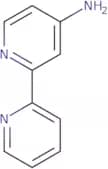
CAS :<p>Please enquire for more information about 4-Amino-2,2'-bipyridine including the price, delivery time and more detailed product information at the technical inquiry form on this page</p>Formule :C10H9N3Degré de pureté :Min. 95%Couleur et forme :PowderMasse moléculaire :171.2 g/mol2-Amino-6-hydroxy-8-mercaptopurine
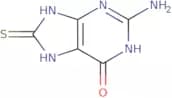
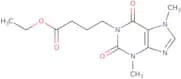
CAS :<p>2-Amino-6-hydroxy-8-mercaptopurine is an antimicrobial agent that inhibits the growth of bacteria by binding to their ribosomes. It has been shown to have a cytotoxic effect in vivo on cancer cells and intestinal parasites, as well as a protective effect against infectious diseases. 2-Amino-6-hydroxy-8-mercaptopurine has also been shown to inhibit the synthesis of proteins in vitro, which may be due to its ability to bind to the ribosomal subunit and inhibit protein synthesis. 2-Amino-6-hydroxy-8-mercaptopurine inhibits bacterial growth by binding to DNA dependent RNA polymerase, thereby preventing transcription and replication. The high frequency of human activity has been shown using a patch clamp technique on human erythrocytes. This active form is metabolized through a number of metabolic transformations, including hydrolysis by esterases or gluc</p>Formule :C5H5N5OSDegré de pureté :Min. 95%Couleur et forme :PowderMasse moléculaire :183.19 g/mol1-(Ethyl-3-carboxypropyl)-3,7-dimethylxanthine
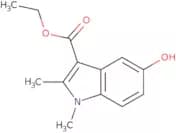
CAS :Produit contrôlé<p>Please enquire for more information about 1-(Ethyl-3-carboxypropyl)-3,7-dimethylxanthine including the price, delivery time and more detailed product information at the technical inquiry form on this page</p>Formule :C13H18N4O4Degré de pureté :Min. 95%Masse moléculaire :294.31 g/molEthyl 1,2-dimethyl-5-hydroxyindole-3-carboxylate
CAS :Produit contrôlé<p>Ethyl 1,2-dimethyl-5-hydroxyindole-3-carboxylate (EDMC) is an implantable drug that is used to treat hypertension. It is a diuretic that can be taken orally or injected. EDMC works by reducing the amount of urea nitrogen in the blood and increasing the amount of chlorine atom in the urine. This leads to an increase in active substances such as malonic acid and a decrease in arthropoda. EDMC has been shown to have antihypertensive activity due to its ability to lower diastolic and systolic pressure. The molecule also contains hydroxyl group and aldehyde groups that are analyzed by analytical chemistry.</p>Formule :C13H15NO3Degré de pureté :Min. 95%Masse moléculaire :233.26 g/molMethyl 3-formyl-4,6-dimethoxy-1-methyl-1H-indole-2-carboxylate
CAS :Produit contrôlé<p>Please enquire for more information about Methyl 3-formyl-4,6-dimethoxy-1-methyl-1H-indole-2-carboxylate including the price, delivery time and more detailed product information at the technical inquiry form on this page</p>Formule :C14H15NO5Degré de pureté :Min. 95%Masse moléculaire :277.27 g/mol3-Azabicyclo[3,3,0]octane HCl
CAS :<p>3-Azabicyclo[3,3,0]octane HCl is an inorganic base that is used as a catalyst for organic reactions. It is often used to convert ester hydrochlorides into chiral esters. 3-Azabicyclo[3,3,0]octane HCl has been shown to be a suitable reducing agent for the reduction of various substances. The reaction proceeds via an intramolecular process and can be used with various parameters. 3-Azabicyclo[3,3,0]octane HCl is crystalline and has a melting point of 179 degrees Celsius. It also has optical activity due to its chirality.</p>Formule :C7H14ClNDegré de pureté :Min. 98 Area-%Couleur et forme :White Off-White PowderMasse moléculaire :147.65 g/mol4-Methylquinoline
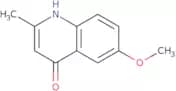
CAS :<p>4-Methylquinoline is a natural compound that is structurally related to coumarin. It serves as an enzyme substrate for various types of enzymes, and has been shown to inhibit the activity of enzymes such as N-acetyltransferase, indoleamine 2,3-dioxygenase, and tryptophan 2,3-dioxygenase. 4-Methylquinoline has also been shown to be effective against infectious diseases such as toxoplasmosis and leishmaniasis. Furthermore, 4-methylquinoline has been shown to have anti-inflammatory properties in autoimmune diseases such as multiple sclerosis. The mechanism of action of 4-methylquinoline is not fully understood but it may interfere with the production of nitric oxide by inhibiting the enzyme nitric oxide synthase.</p>Formule :C10H9NDegré de pureté :Min. 95%Masse moléculaire :143.19 g/mol6-Methoxy-2-methylquinolin-4(1H)-one
CAS :<p>6-Methoxy-2-methylquinolin-4(1H)-one is a heterocyclic molecule that has the ability to undergo oxidation reactions. It is an intermediate in the synthesis of other molecules, such as 4-hydroxyquinoline and 4-hydroxybenzaldehyde. The acidity of 6-methoxy-2-methylquinolin-4(1H)-one can be increased by adding alkali, which will cause it to react with hydroxyl and form a phenylhydrazine. When heated with hydrazine, 6-methoxy-2-methylquinolin-4(1H)-one undergoes tautomerism and forms 2-(phenylhydrazinyl) quinoline. The chemical structure of 6-methoxy-2 methylquinolin 4(1H)-one can be detected by analyzing its spectrum (i.e., absorption or emission spectra). This chemical shows bands</p>Formule :C11H11NO2Degré de pureté :Min. 95%Masse moléculaire :189.21 g/mol4-Aminobicyclo[2.2.2]octan-1-ol hydrochloride
CAS :<p>Please enquire for more information about 4-Aminobicyclo[2.2.2]octan-1-ol hydrochloride including the price, delivery time and more detailed product information at the technical inquiry form on this page</p>Formule :C8H15NO•HClDegré de pureté :Min. 95%Masse moléculaire :177.67 g/mol2-[2-(1H-Indol-3-yl)ethyl]-1,3-dioxoisoindoline-5-carboxylic acid
CAS :Produit contrôlé<p>Please enquire for more information about 2-[2-(1H-Indol-3-yl)ethyl]-1,3-dioxoisoindoline-5-carboxylic acid including the price, delivery time and more detailed product information at the technical inquiry form on this page</p>Formule :C19H14N2O4Degré de pureté :Min. 95%Masse moléculaire :334.33 g/molAnomelin
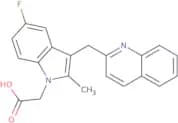
<p>Anomelin is a synthetic anticancer compound, which is derived from complex organic synthesis methodologies. This compound is typically produced through careful laboratory processes due to its intricate chemical structure, which is crafted to target specific molecular pathways involved in cancer cell proliferation.</p>Degré de pureté :Min. 95%Timapiprant
CAS :Produit contrôlé<p>Timapiprant is an amide that acts as a selective inhibitor of the prostanoid receptor CRTH2, which is involved in regulating the inflammatory response. Timapiprant inhibits skin eosinophilia, which is associated with inflammatory skin diseases such as atopic dermatitis and psoriasis. It has been shown to be safe in clinical trials and has a good safety profile. The drug's mechanism of action may be due to its ability to inhibit the production of IL-4 and IL-13 by Th2 cells and its ability to inhibit lung function. Timapiprant has shown efficacy in treating allergic rhinitis, asthma, chronic obstructive pulmonary disease, erythema multiforme, pyoderma gangrenosum, and other types of inflammatory skin diseases.</p>Formule :C21H17FN2O2Degré de pureté :Min. 95%Masse moléculaire :348.37 g/mol1,1'-Bicyclo[1,1,1]pentane-1,3-dicarboxylic acid monomethyl ester
CAS :<p>1,1'-Bicyclo[1,1,1]pentane-1,3-dicarboxylic acid monomethyl ester is a chemical compound used in research and as a building block for complex compounds. It is a high quality and versatile compound that has a wide range of uses in the production of fine chemicals. This compound is an intermediate for the synthesis of 1,4-benzodioxan. CAS No. 83249-10-9</p>Formule :C8H10O4Degré de pureté :Min. 95%Couleur et forme :White PowderMasse moléculaire :170.16 g/molN10-Methyl pteroic acid
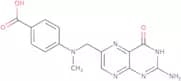
CAS :<p>N10-Methyl pteroic acid is a novel immunosuppressant that inhibits T-cell proliferation and promotes regression of inflammatory bowel disease. It has been shown to be effective in treating cancer patients, with the terminal half-life being approximately 20 hours. N10-Methyl pteroic acid is a potent inhibitor of human acute lymphoblastic leukemia cells. It can also be used as an immunosuppressant for organ transplantation, with desorption from gels using matrix-assisted laser desorption/ionization time-of-flight mass spectrometry (MALDI TOF MS) and bioanalytical methods such as high performance liquid chromatography (HPLC).</p>Formule :C15H14N6O3Degré de pureté :Min. 95%Masse moléculaire :326.31 g/mol5,7-Dichloro-8-hydroxyquinoline
CAS :<p>5,7-Dichloro-8-hydroxyquinoline (5,7-DC8HQ) is a mitochondrial drug that inhibits mitochondrial functions by binding to the ATP synthase. It has been shown to be effective against bacteria resistant to antimicrobial agents in vivo and also showed genotoxic activity in vitro. 5,7-DC8HQ binds to the magnesium site of the ATP synthase protein and prevents the formation of an intramolecular hydrogen bond, which leads to inhibition of ATP synthesis. This drug has also been shown to cause membrane potential depolarization in mitochondria.</p>Formule :C9H5Cl2NODegré de pureté :Min. 98.5 Area-%Couleur et forme :White PowderMasse moléculaire :214.05 g/mol3-{[(3,4-Dichlorophenyl)amino]carbonyl}bicyclo[2.2.1]hept-5-ene-2-carboxylic acid
CAS :<p>Please enquire for more information about 3-{[(3,4-Dichlorophenyl)amino]carbonyl}bicyclo[2.2.1]hept-5-ene-2-carboxylic acid including the price, delivery time and more detailed product information at the technical inquiry form on this page</p>Formule :C15H13Cl2NO3Degré de pureté :Min. 95%Masse moléculaire :326.17 g/molFraxetin
CAS :<p>Fraxetin is a chemical compound known as a coumarin derivative, which is a natural product primarily sourced from various plant species. As a member of the coumarin family, fraxetin is often extracted from the roots, bark, and leaves of plant sources like Fraxinus species and other related flora. The compound operates through an array of biochemical pathways, prominently exhibiting antioxidant and anti-inflammatory properties. It acts by scavenging free radicals and modulating oxidative stress-related pathways, while also influencing the expression of various inflammatory cytokines.</p>Formule :C10H8O5Masse moléculaire :208.17 g/molRef: 3D-Q-100662
1gÀ demander5gÀ demander10gÀ demander500mgÀ demander2500mgÀ demander-Unit-ggÀ demanderCalipteryxin
CAS :<p>Please enquire for more information about Calipteryxin including the price, delivery time and more detailed product information at the technical inquiry form on this page</p>Formule :C24H26O7Degré de pureté :Min. 95%Masse moléculaire :426.46 g/molBenazeprilat
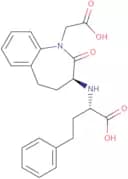
CAS :<p>Benazeprilat is a prodrug that is metabolized to enalaprilat, its active form. It is an inhibitor of angiotensin-converting enzyme (ACE) and has been shown to be effective in the treatment of heart failure. It has also been shown to inhibit ACE activity in vitro and in experimental models of congestive heart failure. Benazeprilat binds to the active site on the ACE molecule and inhibits the conversion of angiotensin I into angiotensin II, which causes vasoconstriction and stimulates aldosterone release from the adrenal cortex. This drug also has effects on energy metabolism by stimulating beta oxidation, which leads to increased levels of ketone bodies in blood plasma.</p>Formule :C22H24N2O5Degré de pureté :Min. 98 Area-%Couleur et forme :White Off-White PowderMasse moléculaire :396.44 g/mol


![3-Azabicyclo[3,3,0]octane HCl](/_next/image/?url=https%3A%2Fstatic.cymitquimica.com%2Fproducts%2F3D%2Fthumb-webp%2FFA38235.webp&w=3840&q=75)

![4-Aminobicyclo[2.2.2]octan-1-ol hydrochloride](/_next/image/?url=https%3A%2Fstatic.cymitquimica.com%2Fproducts%2F3D%2Fthumb-webp%2FFA63102.webp&w=3840&q=75)
![2-[2-(1H-Indol-3-yl)ethyl]-1,3-dioxoisoindoline-5-carboxylic acid](/_next/image/?url=https%3A%2Fstatic.cymitquimica.com%2Fproducts%2F3D%2Fthumb-webp%2FFI124769.webp&w=3840&q=75)

![1,1'-Bicyclo[1,1,1]pentane-1,3-dicarboxylic acid monomethyl ester](/_next/image/?url=https%3A%2Fstatic.cymitquimica.com%2Fproducts%2F3D%2Fthumb-webp%2FFB33677.webp&w=3840&q=75)

![3-{[(3,4-Dichlorophenyl)amino]carbonyl}bicyclo[2.2.1]hept-5-ene-2-carboxylic acid](/_next/image/?url=https%3A%2Fstatic.cymitquimica.com%2Fproducts%2F3D%2Fthumb-webp%2FFD136060.webp&w=3840&q=75)