Composés polycycliques
Sous-catégories appartenant à la catégorie "Composés polycycliques"
- Acridines(98 produits)
- Anthraquinones(533 produits)
- Acides anthraquinonesulfoniques(16 produits)
- Azobenzènes(270 produits)
- Azonaphtalènes(98 produits)
- Azoxybenzènes(12 produits)
- Azulènes(11 produits)
- Benzimidazoles(1.476 produits)
- Benzodioxanes(27 produits)
- Benzofuranes(928 produits)
- Benzothiophènes(701 produits)
- Benzotriazoles(438 produits)
- Binaphthyls(133 produits)
- Carbazoles(464 produits)
- Chromanes, Chromenes(480 produits)
- Coumarines(1.125 produits)
- Cyclophanes(11 produits)
- Fluorènes et Fluorénones(384 produits)
- Imidazopyridines(10 produits)
- Indans(118 produits)
- Indazoles(2.038 produits)
- Indenes(22 produits)
- Indoles(3.987 produits)
- Indolines(119 produits)
- Isatines(234 produits)
- Isobenzofuranes(17 produits)
- Phtalimides N-substitués(154 produits)
- Naphtalènes(2.438 produits)
- Naphtyridine(17 produits)
- Naphtoquinone(2 produits)
- Perylènes(36 produits)
- Phénazines(25 produits)
- Phtalazines(33 produits)
- Phtalimide(154 produits)
- Hydrocarbures aromatiques polycycliques (HAP)(282 produits)
- Polyphénol(270 produits)
- Ptéridines(52 produits)
- Pyrènes(87 produits)
- Quinuclidine(1 produits)
- Tétracènes(7 produits)
4575 produits trouvés pour "Composés polycycliques"
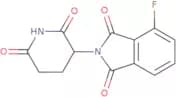
2-(2,6-Dioxo-piperidin-3-yl)-4-fluoroisoindoline-1,3-dione
CAS :2-(2,6-Dioxo-piperidin-3-yl)-4-fluoroisoindoline-1,3-dione (2,6DPI) is a synthetic chemical compound that has been shown to inhibit NF-κB activation in vitro. 2,6DPI is a competitive inhibitor of the p65 subunit of NF-κB and functions by binding to the cysteine residue on the p65 subunit. It has been shown to be effective against inflammatory diseases such as pulmonary disease and inflammation. This drug also inhibits deacetylases, which are enzymes involved in regulating gene expression. 2,6DPI may have therapeutic potential for the treatment of inflammatory diseases and cancer.Formule :C13H9FN2O4Degré de pureté :Min. 95%Couleur et forme :Violet To Grey SolidMasse moléculaire :276.22 g/molIsobergapten
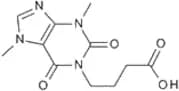
CAS :Isobergapten is a naturally occurring furanocoumarin, which is primarily derived from plants in the Apiaceae family, such as celery and parsley. The compound is structurally characterized by its fused furan and coumarin rings. It exerts its effects through its ability to interact with cellular enzymes and DNA, often influencing photodynamic processes. This interaction can result in modifications to DNA replication and transcription, making it a compound of interest in photochemotherapy and photobiology.Formule :C12H8O4Degré de pureté :Min. 95%Couleur et forme :PowderMasse moléculaire :216.19 g/mol1-(3-Carboxypropyl)-3,7-dimethylxanthine
CAS :Produit contrôlé1-(3-Carboxypropyl)-3,7-dimethylxanthine is a drug that belongs to a class of drugs called multidrugs. It has been shown to inhibit the growth of endothelial cells by blocking the binding of tnf-α to its receptor on these cells. 1-(3-Carboxypropyl)-3,7-dimethylxanthine also inhibits cancer cell proliferation and has been shown to be effective in some human cancer models. This drug interacts with other molecules (e.g., proton) and can have significant effects on magnetic resonance spectroscopy assays as well as in humans.Formule :C11H14N4O4Degré de pureté :Min. 95%Couleur et forme :PowderMasse moléculaire :266.25 g/mol3,4-Dihydroisoquinolin-2(1H)-ylacetic acid
CAS :3,4-Dihydroisoquinolin-2(1H)-ylacetic acid is a chemical compound with the molecular formula of C8H11NO2. It is a useful scaffold for the synthesis of complex compounds and research chemicals. 3,4-Dihydroisoquinolin-2(1H)-ylacetic acid is also a versatile building block for the preparation of fine chemicals. It is used as a reaction component in many organic reactions and can be used as a speciality chemical or reagent due to its high quality.
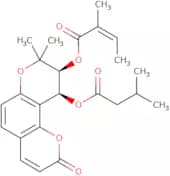
Formule :C11H13NO2Degré de pureté :Min. 95%Couleur et forme :PowderMasse moléculaire :191.23 g/molCalipteryxin
CAS :Please enquire for more information about Calipteryxin including the price, delivery time and more detailed product information at the technical inquiry form on this pageFormule :C24H26O7Degré de pureté :Min. 95%Masse moléculaire :426.46 g/molPraeruptorin E
CAS :Praeruptorin E is a natural furanocoumarin, which is derived from the roots of Peucedanum praeruptorum, a plant commonly used in traditional Chinese medicine. As a bioactive compound, Praeruptorin E exhibits significant pharmacological activities, particularly in cardiovascular, anti-inflammatory, and cytoprotective domains.Degré de pureté :Min. 95%4-fluoro-1-methyl-1,4-diazoniabicyclo[2.2.2]octane
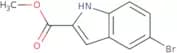
CAS :4-fluoro-1-methyl-1,4-diazoniabicyclo[2.2.2]octane (ditetrafluor) is a fluorine containing compound that can be used to treat cancer cells. It is a chiral molecule with four stereoisomers, two of which are active against cancer cells and the other two are inactive. Ditetrafluor has been shown to have antiviral activity against influenza A virus by inhibiting viral replication, but it does not have any effect on the common cold virus. This drug is also able to inhibit syncytia formation in cultured cells and has been shown to be effective in treating malaria caused by Plasmodium falciparum.Formule :C7H15B2F9N2Degré de pureté :Min. 95%Masse moléculaire :319.82 g/mol5-Bromo-1H-indole-2-carboxylic acid methyl ester
CAS :5-Bromo-1H-indole-2-carboxylic acid methyl ester is a drug that belongs to the class of carboxylates. It has been shown to inhibit the growth of tumor cells in vitro and in vivo. The antitumor activity of this compound may be due to its ability to stabilize planar indole moieties, which are cytotoxic. 5-Bromo-1H-indole-2-carboxylic acid methyl ester interacts with other molecules through intermolecular interactions and can form an indole ring system that has a trifluoromethyl group and a carboxylate group in its structure.
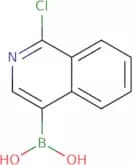
Formule :C10H8BrNO2Degré de pureté :Min. 95%Masse moléculaire :254.08 g/mol(1-Chloroisoquinolin-4-yl)boronic acid
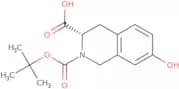
CAS :Please enquire for more information about (1-Chloroisoquinolin-4-yl)boronic acid including the price, delivery time and more detailed product information at the technical inquiry form on this pageFormule :C9H7BClNO2Degré de pureté :Min. 95%Masse moléculaire :207.42 g/molBoc-(3S)-1,2,3,4-tetrahydroisoquinoline-7-hydroxy-3-carboxylic acid
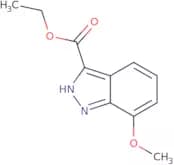
CAS :Boc-(3S)-1,2,3,4-tetrahydroisoquinoline-7-hydroxy-3-carboxylic acid is a synthetic opioid that is chemically related to morphine. It binds to the δ opioid receptor and has a clinical development in the treatment of pain. The drug has been shown to inhibit the binding of gtpγs, which leads to the suppression of neuronal activity. Boc-(3S)-1,2,3,4-tetrahydroisoquinoline-7-hydroxy-3-carboxylic acid also has low molecular weight and low toxicity.Formule :C15H19NO5Degré de pureté :Min. 95%Couleur et forme :PowderMasse moléculaire :293.32 g/molEthyl 7-Methoxy-1H-Indazole-3-Carboxylate
CAS :Produit contrôléPlease enquire for more information about Ethyl 7-Methoxy-1H-Indazole-3-Carboxylate including the price, delivery time and more detailed product information at the technical inquiry form on this pageFormule :C11H12N2O3Degré de pureté :Min. 95%Masse moléculaire :220.22 g/mol8-[(2-Hydroxyethyl)(methyl)amino]-1,3,9-trimethyl-3,9-dihydro-1H-purine-2,6-dione
CAS :Produit contrôléPlease enquire for more information about 8-[(2-Hydroxyethyl)(methyl)amino]-1,3,9-trimethyl-3,9-dihydro-1H-purine-2,6-dione including the price, delivery time and more detailed product information at the technical inquiry form on this page
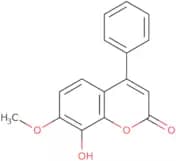
Formule :C11H17N5O3Degré de pureté :Min. 95%Masse moléculaire :267.28 g/mol7-methoxy-8-hydroxy-4-phenylcoumarin
CAS :7-Methoxy-8-hydroxy-4-phenylcoumarin is a coumarin derivative, a type of organic compound characterized by a benzopyrone structure. This compound is typically derived from natural plant sources or synthesized in laboratory settings. Its structural features, such as the methoxy and hydroxy groups, are integral to its potential biological activity.Formule :C16H12O4Degré de pureté :Min. 95%Masse moléculaire :268.26 g/mol6-Chloroindole-2-carboxylic acid
CAS :6-Chloroindole-2-carboxylicacid is a potent inhibitor of β-lactamase enzymes. It has been shown to act as a competitive inhibitor with an affinity for the β-lactamase enzyme in the nanomolar range. 6-Chloroindole-2-carboxylicacid is also a potent compound that can be used in experiments and screening. It has been shown to bind to the β-lactamase enzyme, which inhibits its activity, leading to a decrease in fluorescence. 6-Chloroindole-2-carboxylicacid has also been shown to have an inhibitory effect on bacterial cells by inhibiting protein synthesis, DNA replication, and RNA transcription.
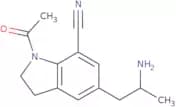
Formule :C9H6ClNO2Degré de pureté :95%NmrMasse moléculaire :195.6 g/mol1-Acetyl-5-(2-aminopropyl)-2,3-dihydro-1H-indole-7-carbonitrile
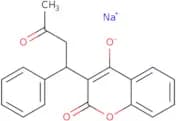
CAS :Produit contrôléPlease enquire for more information about 1-Acetyl-5-(2-aminopropyl)-2,3-dihydro-1H-indole-7-carbonitrile including the price, delivery time and more detailed product information at the technical inquiry form on this pageFormule :C14H17N3ODegré de pureté :Min. 95%Masse moléculaire :243.3 g/mol3-(α-Acetonylbenzyl)-4-hydroxycoumarin sodium
CAS :3-(α-Acetonylbenzyl)-4-hydroxycoumarin sodium is an anticoagulant compound, which is a synthetic derivative of coumarin. It is primarily sourced via chemical synthesis in laboratory settings. Its mode of action involves inhibiting the synthesis of vitamin K-dependent clotting factors, specifically factors II, VII, IX, and X. This inhibition impairs blood coagulation, leading to uncontrolled bleeding.Formule :C19H15NaO4Degré de pureté :Min. 95%Couleur et forme :White PowderMasse moléculaire :330.31 g/molAnomelin
Anomelin is a synthetic anticancer compound, which is derived from complex organic synthesis methodologies. This compound is typically produced through careful laboratory processes due to its intricate chemical structure, which is crafted to target specific molecular pathways involved in cancer cell proliferation.
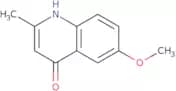
Degré de pureté :Min. 95%6-Methoxy-2-methylquinolin-4(1H)-one
CAS :6-Methoxy-2-methylquinolin-4(1H)-one is a heterocyclic molecule that has the ability to undergo oxidation reactions. It is an intermediate in the synthesis of other molecules, such as 4-hydroxyquinoline and 4-hydroxybenzaldehyde. The acidity of 6-methoxy-2-methylquinolin-4(1H)-one can be increased by adding alkali, which will cause it to react with hydroxyl and form a phenylhydrazine. When heated with hydrazine, 6-methoxy-2-methylquinolin-4(1H)-one undergoes tautomerism and forms 2-(phenylhydrazinyl) quinoline. The chemical structure of 6-methoxy-2 methylquinolin 4(1H)-one can be detected by analyzing its spectrum (i.e., absorption or emission spectra). This chemical shows bandsFormule :C11H11NO2Degré de pureté :Min. 95%Masse moléculaire :189.21 g/mol5,7-Dihydroxycoumarin
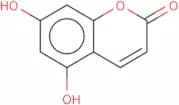
CAS :5,7-Dihydroxycoumarin is a natural product isolated from the dichloromethane extract of the inflorescences of Macaranga triloba.Formule :C9H6O4Degré de pureté :98.76%Couleur et forme :SolidMasse moléculaire :178.142-Aminoindole hydrochloride
CAS :2-Aminoindole hydrochloride is a heterocyclic amine that is formed by the reaction of benzene and an aminoindole. It is a difunctional compound that can react with alcohols to form amides, carbonyl groups to form ketones, or carbamate groups to form ureas. This compound has been shown to act as an activated aromatic amine that reacts with oxygen in the atmosphere to form a variety of products, including chlorinated aromatic amines. 2-Aminoindole hydrochloride has been shown to have carcinogenic effects in rats when administered orally at high doses.
Formule :C8H9ClN2Degré de pureté :Min. 95%Couleur et forme :Slightly Yellow PowderMasse moléculaire :168.62 g/mol




![4-fluoro-1-methyl-1,4-diazoniabicyclo[2.2.2]octane](/_next/image/?url=https%3A%2Fstatic.cymitquimica.com%2Fproducts%2F3D%2Fthumb-webp%2FFF106220.webp&w=3840&q=75)
![8-[(2-Hydroxyethyl)(methyl)amino]-1,3,9-trimethyl-3,9-dihydro-1H-purine-2,6-dione](/_next/image/?url=https%3A%2Fstatic.cymitquimica.com%2Fproducts%2F3D%2Fthumb-webp%2FFH132897.webp&w=3840&q=75)