Composés polycycliques
Sous-catégories appartenant à la catégorie "Composés polycycliques"
- Acridines(98 produits)
- Anthraquinones(533 produits)
- Acides anthraquinonesulfoniques(16 produits)
- Azobenzènes(270 produits)
- Azonaphtalènes(98 produits)
- Azoxybenzènes(12 produits)
- Azulènes(11 produits)
- Benzimidazoles(1.476 produits)
- Benzodioxanes(27 produits)
- Benzofuranes(928 produits)
- Benzothiophènes(701 produits)
- Benzotriazoles(438 produits)
- Binaphthyls(133 produits)
- Carbazoles(464 produits)
- Chromanes, Chromenes(480 produits)
- Coumarines(1.125 produits)
- Cyclophanes(11 produits)
- Fluorènes et Fluorénones(384 produits)
- Imidazopyridines(10 produits)
- Indans(118 produits)
- Indazoles(2.038 produits)
- Indenes(22 produits)
- Indoles(3.987 produits)
- Indolines(119 produits)
- Isatines(234 produits)
- Isobenzofuranes(17 produits)
- Phtalimides N-substitués(154 produits)
- Naphtalènes(2.438 produits)
- Naphtyridine(17 produits)
- Naphtoquinone(2 produits)
- Perylènes(36 produits)
- Phénazines(25 produits)
- Phtalazines(33 produits)
- Phtalimide(154 produits)
- Hydrocarbures aromatiques polycycliques (HAP)(282 produits)
- Polyphénol(270 produits)
- Ptéridines(52 produits)
- Pyrènes(87 produits)
- Quinuclidine(1 produits)
- Tétracènes(7 produits)
4575 produits trouvés pour "Composés polycycliques"
tert-Butyl 4,7-diazaspiro[2.5]octane-4-carboxylate
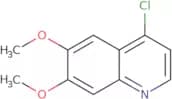
CAS :Please enquire for more information about tert-Butyl 4,7-diazaspiro[2.5]octane-4-carboxylate including the price, delivery time and more detailed product information at the technical inquiry form on this pageDegré de pureté :Min. 95%4-Chloro-6,7-dimethoxyquinoline
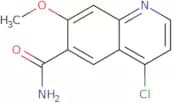
CAS :4-Chloro-6,7-dimethoxyquinoline (4C6DMQ) is a potent inhibitor of the growth of prostate cancer cells. 4C6DMQ is an analog of chloropropyl chloride, which inhibits the growth of epidermal growth factor receptor (EGFR). The binding site for 4C6DMQ on EGFR is the same as that for chloropropyl chloride. 4C6DMQ inhibits EGFR by preventing the activation of downstream signaling cascades, leading to a decrease in cell proliferation and tumor size. The IC50 values for 4C6DMQ are approximately 10 times higher than those for chloropropyl chloride. This drug has been shown to be more potent than other inhibitors of EGFR such as erlotinib and gefitinib.Formule :C11H10ClNO2Degré de pureté :Min. 95%Couleur et forme :White PowderMasse moléculaire :223.66 g/mol4-Chloro-7-methoxyquinoline-6-carboxamide
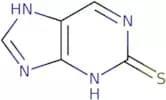
CAS :Intermediate in the synthesis of lenvatinibFormule :C11H9ClN2O2Degré de pureté :Min. 95%Masse moléculaire :236.65 g/mol2-Mercaptopurine
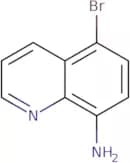
CAS :2-Mercaptopurine (2MP) is a thiopurine drug that is used to treat bowel disease. 2MP inhibits the activity of methyltransferase, which is an enzyme that converts 6-mercaptopurine to 6-thioguanine. This process prevents the conversion of 6-thioguanine into 6-thiouric acid, which is an intermediate in the synthesis of thymine nucleotides. 2MP also inhibits the binding of atp-binding cassette transporter proteins to DNA and blocks the incorporation of purines into RNA and DNA. The drug has been shown to be effective in treating squamous cell carcinoma and other diseases with a high level of activity. 2MP has been shown to be metabolized by erythrocyte polymerase chain reaction and can be detected in biological samples.Formule :C5H4N4SDegré de pureté :Min. 95%Couleur et forme :PowderMasse moléculaire :152.18 g/mol5-Bromoquinolin-8-amine
CAS :5-Bromoquinolin-8-amine is a topoisomerase inhibitor that can be used as an antitumor agent. It has been shown to inhibit the growth of tumor cell lines and suppress the growth of colon carcinoma cells in rats and human colon carcinomas in mice. 5-Bromoquinolin-8-amine interacts with DNA, specifically inhibiting the formation of supercoiled DNA. This interaction may lead to the inhibition of tumor cell growth. 5-Bromoquinolin-8-amine also inhibits protein synthesis by interacting with proteins at the ribosomal level, leading to inhibited cell growth.Formule :C9H7BrN2Degré de pureté :Min. 95%Masse moléculaire :223.07 g/mol8-Boc-3,8-diaza-bicyclo[3.2.1]octane
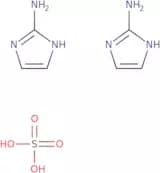
CAS :8-Boc-3,8-diaza-bicyclo[3.2.1]octane is a functional group that can be used in the preparation of pharmaceutical preparations. It is insoluble in water and soluble in organic solvents. This compound has been shown to be effective in the treatment of neurodegenerative diseases such as Alzheimer's disease and Parkinson's disease. 8-Boc-3,8-diaza-bicyclo[3.2.1]octane has also been shown to have protective effects against sae-cd induced cytotoxicity by upregulating the expression of antiapoptotic proteins Bcl2 and Bclxl, which are important for neuronal cell survival.Formule :C11H20N2O2Degré de pureté :Min. 95%Masse moléculaire :212.29 g/mol2-Aminoimidazole sulfate
CAS :2-Aminoimidazole sulfate is a chemical compound that is used as a transfection reagent. It has been shown to have high transfection efficiency with low cytotoxicity. The diameter of the molecule is in the range of 2 - 3 nm, which allows it to be taken up by cells and thus be active in them. This chemical can be dehydrogenated to form imidazole-2-sulfonic acid, which may interact with other molecules. There have been many advances in this area, including modifications and gaseous forms of the molecule. Research into the interactions of this compound with other chemicals and their effects on cellular uptake are ongoing.
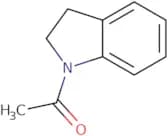
Formule :C3H5N3•(H2O4S)0Degré de pureté :Min. 95%Couleur et forme :Off-White PowderMasse moléculaire :264.26 g/mol1-Acetylindoline
CAS :1-Acetylindoline is an endogenous compound that has been shown to have antioxidative activity. It is also a precursor of indole-3-acetic acid and has been shown to reduce the production of proinflammatory cytokines in vitro. 1-Acetylindoline has been found to have hypoglycemic effects in rats, which may be due to its ability to inhibit the release of insulin from pancreatic beta cells. This substance also possesses peptide hormone activities, being a potent inhibitor of prolactin release in vitro. 1-Acetylindoline has also been shown to have antihyperproliferative effects on prostate cancer cells by inducing cell cycle arrest and apoptosis.
Formule :C10H11NODegré de pureté :Min. 95%Masse moléculaire :161.2 g/moltert-Butyl 6-amino-3-azabicyclo[3.1.0]hexane-3-carboxylate
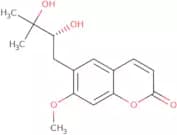
CAS :Please enquire for more information about tert-Butyl 6-amino-3-azabicyclo[3.1.0]hexane-3-carboxylate including the price, delivery time and more detailed product information at the technical inquiry form on this pageFormule :C10H18N2O2Degré de pureté :Min. 95%Masse moléculaire :198.26 g/molPeucedanol methyl ether
CAS :Peucedanol methyl ether is a bioactive natural compound, which is derived from certain species of the Peucedanum genus, commonly found in various geographic regions. This compound is predominantly obtained from natural extracts through advanced chromatographic techniques. Its molecular structure is characterized by its functional groups, which contribute to its biological activities.
Formule :C15H18O5Degré de pureté :Min. 95%7-Chloro-4-piperazinylquinoline
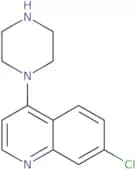
CAS :7-Chloro-4-piperazinylquinoline is a quinoline derivative that belongs to the group of organic solvents. It has anticancer activity and is used as a medicine. 7-Chloro-4-piperazinylquinoline is used as an intermediate in the preparation of sorafenib, which is a potent inhibitor of the protein tyrosine kinase. Sorafenib inhibits cancer cell proliferation and tumor growth by blocking the activity of tyrosine kinases, which are necessary for cellular proliferation and survival. It also inhibits phospholipase A2, which leads to cell death by apoptosis.Formule :C13H14ClN3Degré de pureté :Min. 95%Masse moléculaire :247.72 g/mol5-Chloro-1H-indazole
CAS :5-Chloro-1H-indazole is a molecule that is structurally related to benzodiazepinones and has been shown to have serotoninergic activity. It was one of the first compounds in the benzodiazepinone class to be synthesized, and it was found to have potent cerebral effects in rats with frequencies between 2 and 6 GHz. 5-Chloro-1H-indazole has been synthesized by reacting 2,6-dichlorobenzoic acid with aniline in tetrahydrofuran (THF) solution, followed by reaction with chlorine gas. The synthesis was analysed using proton NMR spectroscopy and anions.Formule :C7H5ClN2Degré de pureté :Min. 95%Masse moléculaire :152.58 g/mol8-[(1E)-2-(3,4-Dimethoxyphenyl)ethenyl]-1,3-diethyl-3,9-dihydro-1H-purine-2,6-dione
CAS :Produit contrôléPlease enquire for more information about 8-[(1E)-2-(3,4-Dimethoxyphenyl)ethenyl]-1,3-diethyl-3,9-dihydro-1H-purine-2,6-dione including the price, delivery time and more detailed product information at the technical inquiry form on this pageFormule :C19H22N4O4Degré de pureté :Min. 95%Couleur et forme :PowderMasse moléculaire :370.4 g/mol4-Acetylimidazole
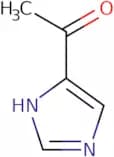
CAS :4-Acetylimidazole is a histidine analogue that has been shown to have anticancer activity in breast cancer cells. It can react with amines and form imidazoles. The hydroxyl group on the 4-position of the imidazole ring is able to undergo dehydration, which leads to the formation of a chloride ion. This reaction mechanism is reversible and can be used in organic synthesis. 4-Acetylimidazole can also act as an h2 receptor antagonist, although it does not bind to the zwitterionic site of the h2 receptor. NMR spectra show that 4-acetylimidazole exists as a zwitterion in water solution, but becomes a monovalent ion when dissolved in an organic solvent such as methanol or acetone. 4-Acetylimidazole is chemically stable and does not react with poloxamer.
Formule :C5H6N2ODegré de pureté :Min. 95%Couleur et forme :Yellow PowderMasse moléculaire :110.11 g/mol2-Chloro-N-[2-(diethylamino)ethyl]-4-quinolinecarboxamide
CAS :2-Chloro-N-[2-(diethylamino)ethyl]-4-quinolinecarboxamide is a carboxamide analog of dibucaine. It is synthesized from chloroacetyl chloride and isatin in the presence of sodium hydroxide. The synthesis has been scaled to an industrial level. 2-Chloro-N-[2-(diethylamino)ethyl]-4-quinolinecarboxamide has been shown to have analgesic properties, similar to those of dibucaine. Radiolysis of this compound gives a carboxylic acid and a heterocyclic ring product.Formule :C16H20ClN3ODegré de pureté :95%MinCouleur et forme :PowderMasse moléculaire :305.8 g/mol7-Hydroxyquinoline
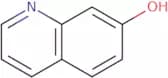
CAS :7-Hydroxyquinoline is a molecule that has been extensively studied in the context of transfer reactions. It is a sodium salt that contains an intermolecular hydrogen bond and an intramolecular hydrogen bond. The proton of 7-hydroxyquinoline can be transferred to the nitrogen atom of a protonated amine, forming an acid complex. This reaction mechanism is kinetically controlled and stabilizes the tautomers of 7-hydoxyquinoline. The hydroxyl group on the quinoline ring can form hydrogen bonds with various groups on other molecules, such as n-dimethyl formamide or deuterium isotope.Formule :C9H7NODegré de pureté :Min. 95%Couleur et forme :Brown PowderMasse moléculaire :145.16 g/mol4,4'-Diphenyl-2,2'-bipyridine
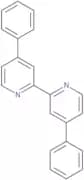
CAS :4,4'-Diphenyl-2,2'-bipyridine is a ligand that can be used to produce more efficient magnesium peroxide catalysts. The efficiency of the catalyst was found to increase with increasing concentrations of the ligand. 4,4'-Diphenyl-2,2'-bipyridine has been shown to bind strongly to chloride ions and may have potential applications in animal health as a supplement. This compound is also useful in electrochemical data studies because it has a relatively high oxidation potential and electrochemical stability. It can also be used for photophysical studies due to its strong fluorescence. 4,4'-Diphenyl-2,2'-bipyridine can be synthesized by reacting carbon tetrachloride with an animal or vegetable oil or fat.Formule :C22H16N2Degré de pureté :Min. 95 Area-%Couleur et forme :PowderMasse moléculaire :308.38 g/mol8-Hydroxyquinoline hemisulfate salt hemihydrate
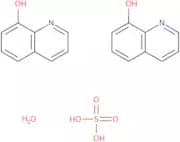
CAS :8-Hydroxyquinoline is a sweet, water soluble, and heat stable inhibitor that has been used in the treatment of kidney disease. 8-Hydoxyquinoline has been shown to inhibit the growth of the rootstock Asiaticus by interfering with cell metabolism. It is also an insecticide that kills insects by causing damage to their cells. 8-Hydoxyquinoline inhibits polymerase chain reaction (PCR) by binding to DNA polymerase, blocking its activity and reducing its ability to synthesize DNA. This drug is also a potent blocker of angiotensinogen synthesis, which leads to reduced blood pressure levels.Formule :C9H7NOH2SO4H2OCouleur et forme :Yellow PowderMasse moléculaire :203.21 g/mol1-Boc-5-Cyano-3-hydroxymethylindole
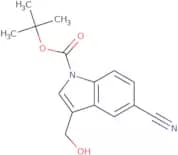
CAS :Please enquire for more information about 1-Boc-5-Cyano-3-hydroxymethylindole including the price, delivery time and more detailed product information at the technical inquiry form on this page
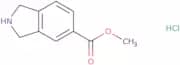
Formule :C15H16N2O3Degré de pureté :Min. 95%Masse moléculaire :272.3 g/molMethyl isoindoline-5-carboxylate HCl
CAS :Please enquire for more information about Methyl isoindoline-5-carboxylate HCl including the price, delivery time and more detailed product information at the technical inquiry form on this pageFormule :C10H12ClNO2Degré de pureté :Min. 95%Masse moléculaire :213.66 g/mol
![tert-Butyl 4,7-diazaspiro[2.5]octane-4-carboxylate](/_next/image/?url=https%3A%2Fstatic.cymitquimica.com%2Fproducts%2F3D%2Fthumb-webp%2FFB141899.webp&w=3840&q=75)

![8-Boc-3,8-diaza-bicyclo[3.2.1]octane](/_next/image/?url=https%3A%2Fstatic.cymitquimica.com%2Fproducts%2F3D%2Fthumb-webp%2FFB29382.webp&w=3840&q=75)
![tert-Butyl 6-amino-3-azabicyclo[3.1.0]hexane-3-carboxylate](/_next/image/?url=https%3A%2Fstatic.cymitquimica.com%2Fproducts%2F3D%2Fthumb-webp%2FFM161190.webp&w=3840&q=75)

![8-[(1E)-2-(3,4-Dimethoxyphenyl)ethenyl]-1,3-diethyl-3,9-dihydro-1H-purine-2,6-dione](/_next/image/?url=https%3A%2Fstatic.cymitquimica.com%2Fproducts%2F3D%2Fthumb-webp%2FFD152904.webp&w=3840&q=75)
![2-Chloro-N-[2-(diethylamino)ethyl]-4-quinolinecarboxamide](/_next/image/?url=https%3A%2Fstatic.cymitquimica.com%2Fproducts%2F3D%2Fthumb-webp%2FFC20289.webp&w=3840&q=75)