


Composés polycycliques
Sous-catégories appartenant à la catégorie "Composés polycycliques"
- Acridines(98 produits)
- Anthraquinones(533 produits)
- Acides anthraquinonesulfoniques(16 produits)
- Azobenzènes(270 produits)
- Azonaphtalènes(98 produits)
- Azoxybenzènes(12 produits)
- Azulènes(11 produits)
- Benzimidazoles(1.476 produits)
- Benzodioxanes(27 produits)
- Benzofuranes(928 produits)
- Benzothiophènes(701 produits)
- Benzotriazoles(438 produits)
- Binaphthyls(133 produits)
- Carbazoles(464 produits)
- Chromanes, Chromenes(480 produits)
- Coumarines(1.125 produits)
- Cyclophanes(11 produits)
- Fluorènes et Fluorénones(384 produits)
- Imidazopyridines(10 produits)
- Indans(118 produits)
- Indazoles(2.038 produits)
- Indenes(22 produits)
- Indoles(3.987 produits)
- Indolines(119 produits)
- Isatines(234 produits)
- Isobenzofuranes(17 produits)
- Phtalimides N-substitués(154 produits)
- Naphtalènes(2.438 produits)
- Naphtyridine(17 produits)
- Naphtoquinone(2 produits)
- Perylènes(36 produits)
- Phénazines(25 produits)
- Phtalazines(33 produits)
- Phtalimide(154 produits)
- Hydrocarbures aromatiques polycycliques (HAP)(282 produits)
- Polyphénol(270 produits)
- Ptéridines(52 produits)
- Pyrènes(87 produits)
- Quinuclidine(1 produits)
- Tétracènes(7 produits)
4575 produits trouvés pour "Composés polycycliques"
8-Boc-3,8-diaza-bicyclo[3.2.1]octane
CAS :8-Boc-3,8-diaza-bicyclo[3.2.1]octane is a functional group that can be used in the preparation of pharmaceutical preparations. It is insoluble in water and soluble in organic solvents. This compound has been shown to be effective in the treatment of neurodegenerative diseases such as Alzheimer's disease and Parkinson's disease. 8-Boc-3,8-diaza-bicyclo[3.2.1]octane has also been shown to have protective effects against sae-cd induced cytotoxicity by upregulating the expression of antiapoptotic proteins Bcl2 and Bclxl, which are important for neuronal cell survival.Formule :C11H20N2O2Degré de pureté :Min. 95%Masse moléculaire :212.29 g/mol6-Bromo-1-methylindazole
CAS :6-Bromo-1-methylindazole is an industrial chemical that can be synthesized by the reaction of formate, methanol, and indazole. The synthesis method involves the esterification of methyl formate with indazole to produce 6-bromo-1-methylindazole. It can also be synthesized by the annulation of methyl formate and cyclopentadiene followed by hydrolysis. This chemical has several isomers that are distinguished from each other based on their synthesis methods. 6-Bromo-1-methylindazole has been shown to have a hydrolysis reaction when it reacts with water, producing methyl bromide and hydrogen bromide.Formule :C8H7BrN2Degré de pureté :Min. 95%Masse moléculaire :211.06 g/mol8-Hydroxyquinoline hemisulfate salt hemihydrate
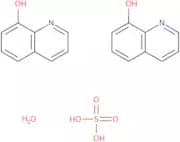
CAS :8-Hydroxyquinoline is a sweet, water soluble, and heat stable inhibitor that has been used in the treatment of kidney disease. 8-Hydoxyquinoline has been shown to inhibit the growth of the rootstock Asiaticus by interfering with cell metabolism. It is also an insecticide that kills insects by causing damage to their cells. 8-Hydoxyquinoline inhibits polymerase chain reaction (PCR) by binding to DNA polymerase, blocking its activity and reducing its ability to synthesize DNA. This drug is also a potent blocker of angiotensinogen synthesis, which leads to reduced blood pressure levels.Formule :C9H7NOH2SO4H2OCouleur et forme :Yellow PowderMasse moléculaire :203.21 g/mol6-Chloro-2-fluoropurine
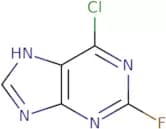
CAS :6-Chloro-2-fluoropurine is an analytical reagent with a monoclonal antibody that binds to the nucleic acid of HL-60 cells and can be used for optical analysis. 6-Chloro-2-fluoropurine has been shown to have significant cytotoxicity against HL-60 cells, which may be due to its ability to bind to intracellular targets. 6-Chloro-2-fluoropurine has also been shown to inhibit the growth of HL-60 cells in a fluorescein angiography study and is used as a diagnostic agent for diagnosis of cancer.Formule :C5H2ClFN4Degré de pureté :Min. 98 Area-%Couleur et forme :Off-White PowderMasse moléculaire :172.55 g/molMethyl isoindoline-5-carboxylate HCl
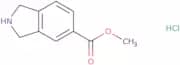
CAS :Please enquire for more information about Methyl isoindoline-5-carboxylate HCl including the price, delivery time and more detailed product information at the technical inquiry form on this pageFormule :C10H12ClNO2Degré de pureté :Min. 95%Masse moléculaire :213.66 g/mol8-[(1E)-2-(3,4-Dimethoxyphenyl)ethenyl]-1,3-diethyl-3,9-dihydro-1H-purine-2,6-dione
CAS :Produit contrôléPlease enquire for more information about 8-[(1E)-2-(3,4-Dimethoxyphenyl)ethenyl]-1,3-diethyl-3,9-dihydro-1H-purine-2,6-dione including the price, delivery time and more detailed product information at the technical inquiry form on this pageFormule :C19H22N4O4Degré de pureté :Min. 95%Couleur et forme :PowderMasse moléculaire :370.4 g/mol1H-Indole-2-carbaldehyde
CAS :1H-Indole-2-carbaldehyde is a solvent that has been used in the protein data and molecular modeling study. The 1H NMR spectrum of this compound showed an intense signal at δ 4.8 ppm, corresponding to the hydroxyl proton. This solvent also has fluorescence properties, as shown by its photophysical and structural analysis. The 1H-indole-2-carbaldehyde molecule has an active methylene group and an oxindole ring with amine substituents.
Formule :C9H7NODegré de pureté :Min. 98%Couleur et forme :PowderMasse moléculaire :145.16 g/mol2,2'-Biquinoline
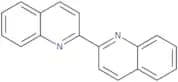
CAS :2,2'-Biquinoline is a coordination compound that has been used as an analytical reagent in the determination of copper and nitrogen. It has been shown to be stable in a variety of matrices, including human serum and copper chloride. 2,2'-Biquinoline is also used as an antimicrobial agent against Gram-positive bacteria, including Staphylococcus aureus. The redox potentials of this compound are dependent on the number of nitrogen atoms present.
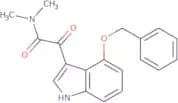
Formule :C18H12N2Degré de pureté :Min. 95%Masse moléculaire :256.3 g/mol4-(Benzyloxy)-N,N-dimethyl-indole-3-glyoxylamide
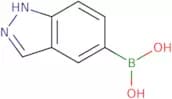
CAS :Please enquire for more information about 4-(Benzyloxy)-N,N-dimethyl-indole-3-glyoxylamide including the price, delivery time and more detailed product information at the technical inquiry form on this pageFormule :C19H18N2O3Degré de pureté :Min. 95%Masse moléculaire :322.36 g/mol1H-Indazole-5-boronic acid
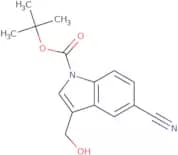
CAS :1H-Indazole-5-boronic acid is a potent compound that belongs to the class of indazole compounds. It has been shown to inhibit protein phosphorylation and induce morphological changes in cells. This compound also inhibits the activity of a number of different cellular enzymes, including protein phosphatases, protein kinases, and protein tyrosine phosphatases. 1H-Indazole-5-boronic acid has been shown to be a promising lead compound for the discovery of novel inhibitors of these enzymes.Formule :C7H7BN2O2Degré de pureté :Min. 95%Masse moléculaire :161.95 g/mol1-Boc-5-Cyano-3-hydroxymethylindole
CAS :Please enquire for more information about 1-Boc-5-Cyano-3-hydroxymethylindole including the price, delivery time and more detailed product information at the technical inquiry form on this page
Formule :C15H16N2O3Degré de pureté :Min. 95%Masse moléculaire :272.3 g/molBenzo[a]phenanthrene
CAS :Benzo[a]phenanthrene is a polycyclic aromatic hydrocarbon that is found in petroleum and coal tar. It has been shown to be a potent inducer of enzymes involved in the detoxification of xenobiotics, such as chrysene-inducible cytochrome P450 1A1 (CYP1A1), s-phenylmercapturic acid-inducible cytochrome P450 2E1 (CYP2E1), and benzo[a]pyrene-inducible glutathione S-transferase (GST). The optimum concentration for benzo[a]phenanthrene is determined by measuring the amount of enzyme activity in rat liver microsomes following the addition of benzo[a]phenanthrene. A fluorescence detector can be used to measure the fluorescence emission from benzo[a]phenanthrene at an excitation wavelength of 300 nm and an emission wavelength of 400 nm.Formule :C18H12Degré de pureté :Min. 95%Couleur et forme :White PowderMasse moléculaire :228.29 g/mol4-Fluoroisoindoline HCl
CAS :4-Fluoroisoindoline HCl is a versatile building block that can be used in the synthesis of complex compounds, research chemicals, and reagents. It is a high quality compound with a wide range of applications. 4-Fluoroisoindoline HCl is also useful as an intermediate for the synthesis of other compounds, or as a reaction component for organic chemistry reactions. This compound has been shown to have potential medical uses in the treatment of Parkinson's disease and cancer.
Formule :C8H8FN·HClDegré de pureté :Min. 95%Couleur et forme :White to brown solid.Masse moléculaire :173.61 g/mol1,4-Diazabicyclo[2.2.2]octane bis(sulfur dioxide) adduct
CAS :1,4-Diazabicyclo[2.2.2]octane bis(sulfur dioxide) adduct is a catalyst that can be used for the reduction of various functional groups. It is typically used to synthesize aziridines from amines and diazo compounds, or from halides and organometallic reagents. 1,4-Diazabicyclo[2.2.2]octane bis(sulfur dioxide) adduct has been shown to inhibit the production of sulfoxides by sulfide-reducing bacteria such as Desulfovibrio desulfuricans and Desulfobulbus propionicus.Formule :C6H12N2O4S2Degré de pureté :Min. 95%Masse moléculaire :240.3 g/mol7,9-Dimethoxycarbonyl-2-ethoxycarbonyl-1H-pyrrolo-[2,3-f]quinoline-4,5-dione
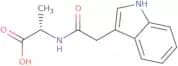
CAS :7,9-Dimethoxycarbonyl-2-ethoxycarbonyl-1H-pyrrolo-[2,3-f]quinoline-4,5-dione is a chemical compound that is used as an intermediate for research chemicals. It has a CAS number of 80721-47-7 and is classified as a fine chemical with the Chemical Abstracts Service (CAS) classification code of 3272. This compound is a versatile building block that can be used in the synthesis of other compounds. 7,9-Dimethoxycarbonyl-2-ethoxycarbonyl-1H-pyrrolo-[2,3f]quinoline 4,5dione can be used to produce high quality products.Formule :C18H14N2O8Degré de pureté :Min. 95%Couleur et forme :Orange PowderMasse moléculaire :386.31 g/molIndole-3-acetic-L-alanine
CAS :Indole-3-acetic-L-alanine is a plant hormone that regulates root formation and transport. It is found in all plants, but the concentration varies depending on the plant, tissue type, and growth conditions. It has been shown to regulate root formation in triticum aestivum by inhibiting auxin transport to the roots. Indole-3-acetic acid also inhibits auxin transport to the shoot apex, leading to increased branching in triticum aestivum. This compound is hydrolyzed by root cell enzymes into indole-3-acetate and L-alanine. Genetic mechanisms underlying this phenomenon are not well understood at this time.Formule :C13H14N2O3Degré de pureté :Min. 95%Couleur et forme :PowderMasse moléculaire :246.26 g/mol5-Nitroindazole
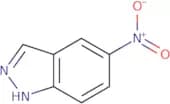
CAS :5-Nitroindazole is a nitro compound that has been shown to have antineoplastic properties. It inhibits the division of cells by binding to DNA and preventing the formation of hydrogen bonds between purine bases, ultimately preventing DNA replication. 5-Nitroindazole has also been shown to inhibit mitochondrial membrane potential and induce apoptosis in human cancer cells. The antimicrobial activities of 5-nitroindazole are due to its chemical structure which allows for hydrogen bonding with cell walls or other components of bacteria. It is also possible that this compound exerts its action by reacting with nitric acid to form a hydroxyl radical, which can cause oxidative damage to bacterial membranes.Formule :C7H5N3O2Degré de pureté :Min. 95%Masse moléculaire :163.13 g/mol4,4'-Diphenyl-2,2'-bipyridine
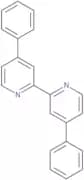
CAS :4,4'-Diphenyl-2,2'-bipyridine is a ligand that can be used to produce more efficient magnesium peroxide catalysts. The efficiency of the catalyst was found to increase with increasing concentrations of the ligand. 4,4'-Diphenyl-2,2'-bipyridine has been shown to bind strongly to chloride ions and may have potential applications in animal health as a supplement. This compound is also useful in electrochemical data studies because it has a relatively high oxidation potential and electrochemical stability. It can also be used for photophysical studies due to its strong fluorescence. 4,4'-Diphenyl-2,2'-bipyridine can be synthesized by reacting carbon tetrachloride with an animal or vegetable oil or fat.Formule :C22H16N2Degré de pureté :Min. 95 Area-%Couleur et forme :PowderMasse moléculaire :308.38 g/mol1,5,7-Triazabicyclo[4.4.0]dec-5-ene
CAS :1,5,7-Triazabicyclo[4.4.0]dec-5-ene is a model system for the reaction mechanism of protonated amines and nucleophilic addition reactions. It has been used as a solid catalyst for the synthesis of crystalline polymorphs of azabenzene from trifluoroacetic acid. The crystal structures of 1,5,7-triazabicyclo[4.4.0]dec-5-ene have been studied by X-ray diffraction data and nitrogen atoms were identified in the molecule. This molecule is stable in a wide range of conditions and can be handled without special precautions because it does not react with atmospheric moisture or oxygen.
Formule :C7H13N3Degré de pureté :Min. 95%Couleur et forme :PowderMasse moléculaire :139.2 g/mol4-Chloro-6-methoxyquinoline
CAS :4-Chloro-6-methoxyquinoline is an inhibitor of bacterial DNA gyrase. It has antibacterial activity against Gram-positive and Gram-negative bacteria, including Staphylococcus aureus, Enterococcus faecalis, and Pseudomonas aeruginosa. 4-Chloro-6-methoxyquinoline is a synthetic compound that was reinvestigated for its antibacterial activity. It has been shown to be effective in the treatment of Staphylococcal infections. The mechanism of action may involve inhibition of topoisomerase II or interference with the synthesis of DNA by binding to the enzyme bacterial DNA gyrase. Quinidine and cinchonidine are quinine derivatives that have been found to inhibit bacterial DNA gyrase. These compounds are found in the bark of Cinchona species, which includes Cinchona ledgeriana, Cinchona officinalis, and Cinchona succirubFormule :C10H8ClNODegré de pureté :Min. 95%Masse moléculaire :193.63 g/mol
![8-Boc-3,8-diaza-bicyclo[3.2.1]octane](/_next/image/?url=https%3A%2Fstatic.cymitquimica.com%2Fproducts%2F3D%2Fthumb-webp%2FFB29382.webp&w=3840&q=75)


![8-[(1E)-2-(3,4-Dimethoxyphenyl)ethenyl]-1,3-diethyl-3,9-dihydro-1H-purine-2,6-dione](/_next/image/?url=https%3A%2Fstatic.cymitquimica.com%2Fproducts%2F3D%2Fthumb-webp%2FFD152904.webp&w=3840&q=75)

![Benzo[a]phenanthrene](/_next/image/?url=https%3A%2Fstatic.cymitquimica.com%2Fproducts%2F3D%2Fthumb-webp%2FFB15612.webp&w=3840&q=75)

![1,4-Diazabicyclo[2.2.2]octane bis(sulfur dioxide) adduct](/_next/image/?url=https%3A%2Fstatic.cymitquimica.com%2Fproducts%2F3D%2Fthumb-webp%2FFD111193.webp&w=3840&q=75)
![7,9-Dimethoxycarbonyl-2-ethoxycarbonyl-1H-pyrrolo-[2,3-f]quinoline-4,5-dione](/_next/image/?url=https%3A%2Fstatic.cymitquimica.com%2Fproducts%2F3D%2Fthumb-webp%2FFD22201.webp&w=3840&q=75)
![1,5,7-Triazabicyclo[4.4.0]dec-5-ene](/_next/image/?url=https%3A%2Fstatic.cymitquimica.com%2Fproducts%2F3D%2Fthumb-webp%2FFT30925.webp&w=3840&q=75)
