Composés polycycliques
Sous-catégories appartenant à la catégorie "Composés polycycliques"
- Acridines(98 produits)
- Anthraquinones(533 produits)
- Acides anthraquinonesulfoniques(16 produits)
- Azobenzènes(270 produits)
- Azonaphtalènes(98 produits)
- Azoxybenzènes(12 produits)
- Azulènes(11 produits)
- Benzimidazoles(1.476 produits)
- Benzodioxanes(27 produits)
- Benzofuranes(928 produits)
- Benzothiophènes(701 produits)
- Benzotriazoles(438 produits)
- Binaphthyls(133 produits)
- Carbazoles(464 produits)
- Chromanes, Chromenes(480 produits)
- Coumarines(1.125 produits)
- Cyclophanes(11 produits)
- Fluorènes et Fluorénones(384 produits)
- Imidazopyridines(10 produits)
- Indans(118 produits)
- Indazoles(2.038 produits)
- Indenes(22 produits)
- Indoles(3.986 produits)
- Indolines(119 produits)
- Isatines(234 produits)
- Isobenzofuranes(17 produits)
- Phtalimides N-substitués(153 produits)
- Naphtalènes(2.438 produits)
- Naphtyridine(17 produits)
- Naphtoquinone(2 produits)
- Perylènes(36 produits)
- Phénazines(25 produits)
- Phtalazines(33 produits)
- Phtalimide(153 produits)
- Hydrocarbures aromatiques polycycliques (HAP)(285 produits)
- Polyphénol(270 produits)
- Ptéridines(52 produits)
- Pyrènes(87 produits)
- Quinuclidine(1 produits)
- Tétracènes(7 produits)
4575 produits trouvés pour "Composés polycycliques"
1-Phenyl-3-oxabicyclo[3.1.0]hexan-2-one
CAS :1-Phenyl-3-oxabicyclo[3.1.0]hexan-2-one (1POX) is a monomer that belongs to the class of cyclopropane compounds and can be used in the synthesis of polymers. It has been shown to react with benzene, irradiation, monoxide, oxiranyl, acetonitrile and trimeric dyes to form reactive intermediates such as ketones and carboxylic acids. These intermediates can undergo photolysis to produce products such as ketones and carboxylic acids. The wavelength of the light used for photolysis can influence the product formation. 1POX is also a substrate for cyclopropane ring formation reactions, which are known for their high reactivity due to the stability of this ring system. The carbonyl group on 1POX is electron withdrawing and stabilizes the planar geometry of 1POX.
Formule :C11H10O2Degré de pureté :Min. 95%Couleur et forme :PowderMasse moléculaire :174.2 g/mol6-Fluoroindole-3-acetic acid
CAS :6-Fluoroindole-3-acetic acid is a molecule that has been synthesized by the reaction of 6-fluoroindole with acetic anhydride. When mixed with acetonitrile, the fluorescence of 6-fluoroindole-3-acetic acid can be seen in the solution. The fluorescence intensity is proportional to the concentration of this molecule. 6-Fluoroindole-3-acetic acid is used as a template molecule for fluorescence labeling experiments. It interacts with hormones and can be used to identify their conformations and interactions. This compound has been shown to have anticancer properties in mice, and it may also be effective against cancer cells in humans. It has also been shown to inhibit the growth of pisum sativum (pea).
Formule :C10H8FNO2Degré de pureté :Min. 95%Couleur et forme :PowderMasse moléculaire :193.17 g/mol8-Azahypoxanthine
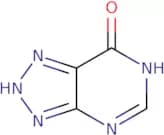
CAS :8-Azahypoxanthine is a hydroxyl analog of hypoxanthine. It contains a nitrogen atom in place of the oxygen atom on the 2-position. 8-Azahypoxanthine has been shown to be an effective inhibitor of purine biosynthesis in yeast cells and can be used as a replacement for xanthine during the synthesis of adenosine triphosphate (ATP) from uracil. 8-Azahypoxanthine was found to have good detection sensitivity, with an estimated detection limit of 0.2 µM. The optimum pH for this compound is 7.8, which is similar to that of wild type strain and tissue culture media. Mutants resistant to 8-azahypoxanthine were generated by exposure to high concentrations (>100 mM) for long periods (>2 days). Mutant strains showed no detectable enzyme activity against orotic acid or glycosidic bond formation with erythromycin
Degré de pureté :Min. 95%Couleur et forme :PowderMasse moléculaire :137.1 g/molSuberosin
CAS :Suberosin is a naturally occurring sesquiterpene lactone, which is isolated from members of the Rutaceae family, such as the plant Feronia limonia. The compound exhibits diverse biological activities, primarily attributed to its complex structure that facilitates interaction with various biological targets. Suberosin's mode of action involves disrupting microbial cell membranes and interfering with critical biochemical pathways, effectively inhibiting microbial growth and propagation.
Formule :C15H16O3Degré de pureté :Min. 95%Masse moléculaire :244.29 g/mol3-Indoleacrylic Acid
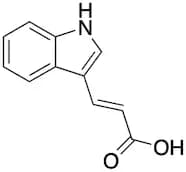
CAS :Produit contrôléApplications 3-Indoleacrylic Acid (cas# 1204-06-4) is a useful research chemical.
Formule :C11H9NO2Couleur et forme :NeatMasse moléculaire :187.19trans-Decahydroquinoline
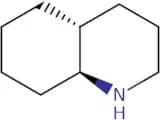
CAS :Trans-decahydroquinoline is a chiral compound that can be synthesized by an asymmetric synthesis. It is an amide with a carbonyl group and a dialkylamino group. Trans-decahydroquinoline can be used to synthesize different compounds, such as enantiopure drugs, pharmaceuticals, and agrochemicals. The synthesis of trans-decahydroquinoline can be accomplished through the aldol cyclization or the addition of an acid to the carbonyl group. The magnetic resonance spectroscopy (NMR) and molecular modeling techniques have been used to study its structure and properties.
Formule :C9H17NDegré de pureté :Min. 95%Masse moléculaire :139.24 g/mol7,8-Dihydroxy-4-methylcoumarin
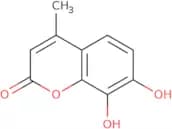
CAS :7,8-Dihydroxy-4-methylcoumarin is a bioactive compound, specifically a derivative of coumarin. This compound is naturally derived from plant sources, where it acts as a metabolite in various biochemical pathways. Its chemical structure is characterized by the presence of two hydroxyl groups at the 7 and 8 positions, along with a methyl group at the 4 position of the coumarin core, contributing to its unique pharmacological profile.
Formule :C10H8O4Degré de pureté :Min. 95%Masse moléculaire :192.17 g/molRef: 3D-FD74019
Produit arrêtéQuinoline-6-sulfonyl chloride
CAS :Please enquire for more information about Quinoline-6-sulfonyl chloride including the price, delivery time and more detailed product information at the technical inquiry form on this page
Formule :C9H6ClNO2SDegré de pureté :Min. 95%Masse moléculaire :227.67 g/mol1,3,7,8-Tetramethylpurine-2,6-dione
CAS :Produit contrôlé1,3,7,8-Tetramethylpurine-2,6-dione is a synthetic compound that has been identified as a possible dietary supplement. It is found in human urine and has been shown to inhibit the growth of fungi such as tebuconazole. The compound has been used as a substitute for theophylline in bovine serum albumin and caffeine in imidazoles. This specific molecule also interacts with some other molecules such as photodecomposition of peroxides or acid solutions.
Formule :C9H12N4O2Degré de pureté :Min. 95%Couleur et forme :PowderMasse moléculaire :208.22 g/mol(1R,4R,5R)-4,7,7-Trimethyl-6-thiabicyclo[3.2.1]octane
CAS :Please enquire for more information about (1R,4R,5R)-4,7,7-Trimethyl-6-thiabicyclo[3.2.1]octane including the price, delivery time and more detailed product information at the technical inquiry form on this pageFormule :C10H18SDegré de pureté :90%MinMasse moléculaire :170.32 g/molMethyl 1,5-dimethyl-1H-indole-2-carboxylate
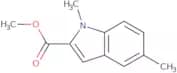
CAS :Produit contrôléPlease enquire for more information about Methyl 1,5-dimethyl-1H-indole-2-carboxylate including the price, delivery time and more detailed product information at the technical inquiry form on this pageFormule :C12H13NO2Degré de pureté :Min. 95%Masse moléculaire :203.24 g/mol2-Amino-6-hydroxy-8-mercaptopurine
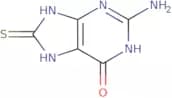
CAS :2-Amino-6-hydroxy-8-mercaptopurine is an antimicrobial agent that inhibits the growth of bacteria by binding to their ribosomes. It has been shown to have a cytotoxic effect in vivo on cancer cells and intestinal parasites, as well as a protective effect against infectious diseases. 2-Amino-6-hydroxy-8-mercaptopurine has also been shown to inhibit the synthesis of proteins in vitro, which may be due to its ability to bind to the ribosomal subunit and inhibit protein synthesis. 2-Amino-6-hydroxy-8-mercaptopurine inhibits bacterial growth by binding to DNA dependent RNA polymerase, thereby preventing transcription and replication. The high frequency of human activity has been shown using a patch clamp technique on human erythrocytes. This active form is metabolized through a number of metabolic transformations, including hydrolysis by esterases or gluc
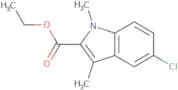
Formule :C5H5N5OSDegré de pureté :Min. 95%Couleur et forme :PowderMasse moléculaire :183.19 g/molEthyl 5-chloro-1,3-dimethyl-1H-indole-2-carboxylate
CAS :Produit contrôléPlease enquire for more information about Ethyl 5-chloro-1,3-dimethyl-1H-indole-2-carboxylate including the price, delivery time and more detailed product information at the technical inquiry form on this page
Formule :C13H14ClNO2Degré de pureté :Min. 95%Masse moléculaire :251.71 g/molTegerrardin A
CAS :Tegerrardin A is an innovative biopesticide derived from microbial fermentation processes, harnessing the potency of naturally occurring microorganisms. It is formulated to exploit the specific biochemical mechanisms within targeted pest populations, effectively disrupting their vital physiological functions. This selective mode of action is achieved through the inhibition of key enzymes essential for pest survival and proliferation, resulting in decreased pest pressure and improved crop health.
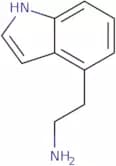
Formule :C15H13NO3Degré de pureté :Min. 95%Masse moléculaire :255.27 g/mol1H-Indole-4-ethanamine
CAS :Produit contrôléPlease enquire for more information about 1H-Indole-4-ethanamine including the price, delivery time and more detailed product information at the technical inquiry form on this page
Formule :C10H12N2Degré de pureté :Min. 95%Masse moléculaire :160.22 g/mol4-Aminobicyclo[2.2.2]octan-1-ol hydrochloride
CAS :Please enquire for more information about 4-Aminobicyclo[2.2.2]octan-1-ol hydrochloride including the price, delivery time and more detailed product information at the technical inquiry form on this page
Formule :C8H15NO•HClDegré de pureté :Min. 95%Masse moléculaire :177.67 g/mol1,2,3,4,5,6-Hexahydro-1,5-methano-pyrido-[1,2-a][1,5]diazocin-8-one
CAS :1,2,3,4,5,6-Hexahydro-1,5-methano-pyrido-[1,2-a][1,5]diazocin-8-one is a cholinergic drug that is used as a research tool in vitro. It has been shown to increase the concentration of acetylcholine in the synapse. It is also known as cytisine and varenicline. 1,2,3,4,5,6-Hexahydro-1,5-methano-pyrido-[1,2-a][1,5]diazocin-8-one binds to nicotinic receptors and stimulates them. This increased activity of nicotinic receptors leads to the release of acetylcholine (ACh), which is an important neurotransmitter in the brain. 1,2,3,4 5 6 hexahydro - 1 5Formule :C11H14N2ODegré de pureté :Min. 95%Masse moléculaire :190.24 g/mol1,2,3,4-Tetrahydro-4,6-dihydroxy-2-methyl-isoquinoline
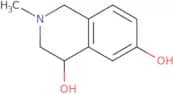
CAS :1,2,3,4-Tetrahydro-4,6-dihydroxy-2-methyl-isoquinoline is a useful building block in the synthesis of various compounds such as pharmaceuticals and pesticides. It is an intermediate for the preparation of other valuable chemicals such as the antihistamine diphenhydramine, which is used to treat allergies. Tetrahydroisoquinoline can also be used as a reagent to synthesize other chemical compounds. This compound has been used in research as well as commercial applications. Tetrahydroisoquinoline is also a versatile scaffold that can be modified to produce different derivatives with different properties.
Formule :C10H13NO2Degré de pureté :Min. 95%Couleur et forme :White PowderMasse moléculaire :179.22 g/mol7-Methylquinoline
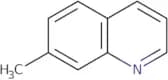
CAS :7-Methylquinoline is an organic compound that can be used to synthesize antimalarial drugs. It is a quinoline derivative with a methyl group at the 7th position. The structure of 7-methylquinoline contains a nitrogen atom and hydrogen atoms, which are bonded to fluorine, chlorine, and bromine atoms. This molecule has been shown to be stable in the presence of Friedel-Crafts catalysts and chloride ions. The reaction mechanism for 7-methylquinoline is intramolecular hydrogen transfer from the chloroform molecule to the quinoline ring system. The formation rate for this compound is slow because it requires two steps: nucleophilic substitution and electrophilic addition reactions.
Formule :C10H9NDegré de pureté :Min. 95%Masse moléculaire :143.19 g/molRef: 3D-FM40554
Produit arrêté7,8-Methylenedioxycoumarin
CAS :7,8-Methylenedioxycoumarin is a furanocoumarin compound, which is a type of organic molecule characterized by a coumarin core with an additional methylenedioxy group. It is primarily sourced from various plant species, particularly those in the Rutaceae family, where it is found in essential oils and extracts. The mode of action of 7,8-Methylenedioxycoumarin involves its natural fluorescing properties, making it highly valuable for use in various biochemical assays where visualization is key. Due to its unique chemical structure, it efficiently absorbs ultraviolet light and emits visible fluorescence, which is exploited in photochemistry and as a biological marker. Its applications extend to the fields of pharmaceuticals and environmental sciences, where it serves in drug development studies and as a tool for tracking organic pollutants in ecosystems. Researchers continue to explore its potential uses due to its distinctive chemical behavior and natural origin.
Formule :C10H6O4Degré de pureté :Min. 95%Masse moléculaire :190.15 g/mol
![1-Phenyl-3-oxabicyclo[3.1.0]hexan-2-one](/_next/image/?url=https%3A%2Fstatic.cymitquimica.com%2Fproducts%2F3D%2Fthumb-webp%2FFP16068.webp&w=3840&q=75)






![(1R,4R,5R)-4,7,7-Trimethyl-6-thiabicyclo[3.2.1]octane](/_next/image/?url=https%3A%2Fstatic.cymitquimica.com%2Fproducts%2F3D%2Fthumb-webp%2FFT60017.webp&w=3840&q=75)
![4-Aminobicyclo[2.2.2]octan-1-ol hydrochloride](/_next/image/?url=https%3A%2Fstatic.cymitquimica.com%2Fproducts%2F3D%2Fthumb-webp%2FFA63102.webp&w=3840&q=75)
![1,2,3,4,5,6-Hexahydro-1,5-methano-pyrido-[1,2-a][1,5]diazocin-8-one](/_next/image/?url=https%3A%2Fstatic.cymitquimica.com%2Fproducts%2F3D%2Fthumb-webp%2FFD117142.webp&w=3840&q=75)