Ligands organométalliques
Dans cette catégorie, vous trouverez un grand nombre de molécules organométalliques utilisées comme ligands dans les biomolécules. Ces ligands organométalliques peuvent être utilisés en chimie organique et en synthèse au laboratoire. Ils jouent un rôle crucial dans la formation de complexes de coordination et la catalyse de diverses réactions chimiques. Chez CymitQuimica, nous offrons une sélection diversifiée de ligands organométalliques de haute qualité pour soutenir vos recherches et besoins industriels.
Sous-catégories appartenant à la catégorie "Ligands organométalliques"
- Ligands de Buchwald(22 produits)
- DPEN(4 produits)
- DPHEN(4 produits)
- JOSIPHOS(4 produits)
- Phosphine(497 produits)
- Porphyrines(75 produits)
2887 produits trouvés pour "Ligands organométalliques"
Trier par
Degré de pureté (%)
0
100
|
0
|
50
|
90
|
95
|
100
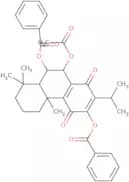
(4bS,8aS,9S,10S)-10-(Acetyloxy)-3,9-bis(benzoyloxy)-4b,5,6,7,8,8a,9,10-octahydro-4b,8,8-trimethyl-2-(1-methylethyl)-1,4-phenanthrene dione
CAS :<p>(4bS,8aS,9S,10S)-10-(Acetyloxy)-3,9-bis(benzoyloxy)-4b,5,6,7,8,8a,9,10-octahydro-4b,8,8-trimethyl-2-(1-methylethyl)-1,4-phenanthrene dione is a potent chemokine molecule that is an agonist of the CXCR2 receptor. It has been shown to inhibit cancer stem cells and chemoattractant production in colon carcinoma cells. This compound selectively targets the translation of lamiaceae mRNA and induces apoptosis in colon carcinoma cells.</p>Formule :C36H38O8Degré de pureté :Min. 95%Masse moléculaire :598.7 g/mol(R)-DPN
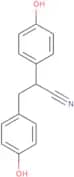
CAS :<p>(R)-DPN is a selective agonist, which is a chemical compound primarily sourced through synthetic organic chemistry techniques. Its mode of action involves specifically binding to and activating the estrogen-related receptor gamma (ERRγ), a member of the nuclear receptor superfamily. By acting as a highly selective ligand, (R)-DPN modulates the transcriptional activity associated with the ERRγ receptor, influencing various biological pathways.</p>Formule :C15H13NO2Degré de pureté :Min. 95%Masse moléculaire :239.27 g/molMots-C
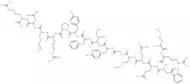
CAS :<p>Mots-C is a mitochondrial-derived peptide, which is encoded by the small open reading frame found within the mitochondrial 12S rRNA. This peptide functions by interacting with the cellular metabolic pathways to enhance mitochondrial bioenergetics and overall cellular metabolism. Mechanistically, Mots-C modulates the folate–methionine cycle, directly impacting glucose regulation and energy utilization, and consequently facilitating cellular adaptation to metabolic stress.</p>Formule :C101H152N28O22S2Degré de pureté :Min. 95%Masse moléculaire :2,174.6 g/molPKCβpseudosubstrate
CAS :<p>PKCβpseudosubstrate is a peptide inhibitor, which is derived from the regulatory domain of protein kinase C beta (PKCβ). It functions by mimicking the substrate's binding sequence, thereby competitively inhibiting the kinase activity of PKCβ. As a pseudosubstrate, it binds to the catalytic domain of PKCβ, preventing the phosphorylation of actual substrates by occupying the active site.</p>Formule :C177H294N62O38S3Degré de pureté :Min. 95%Masse moléculaire :3,995 g/molD-Threonic acid lithium salt
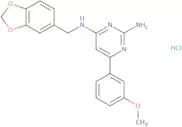
CAS :<p>D-Threonic acid lithium salt is a cell signaling molecule that belongs to the class of ligands. It has been used as a research tool in pharmacology and protein interaction studies. D-Threonic acid lithium salt can activate ion channels, which are cellular membrane proteins that allow ions to flow in or out of cells. D-Threonic acid lithium salt also interacts with receptors, which are proteins on the surface of cells that receive chemical signals from outside the cells. Receptors can be either agonists or antagonists. D-Threonic acid lithium salt is a ligand for receptor tyrosine kinase, which is involved in cell growth and differentiation.</p>Formule :C4H8O5·LiDegré de pureté :Min. 95%AMBMP Hydrochloride
CAS :<p>AMBMP Hydrochloride is a synthetic compound, specifically designed for research purposes in the field of neuroscience. This compound is derived from a series of carefully crafted chemical reactions, typically originating from a laboratory setting specializing in organic synthesis. Its primary mode of action is as a selective ligand targeting specific receptors within the central nervous system, allowing researchers to investigate receptor function and signaling pathways with precision.</p>Formule :C19H18N4O3·HClDegré de pureté :Min. 95%Masse moléculaire :350.37 g/molSLV-2436
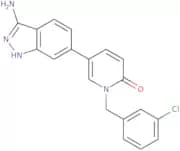
CAS :<p>SLV-2436 is a highly specialized laboratory reagent, which is synthetically derived through an advanced chemical process with rigorous quality control. Its mode of action involves precise interactions at a molecular level, facilitating targeted reactions and transformations essential for a variety of analytical and research applications.</p>Formule :C19H15ClN4ODegré de pureté :Min. 95%Masse moléculaire :350.8 g/mol