Ligands organométalliques
Dans cette catégorie, vous trouverez un grand nombre de molécules organométalliques utilisées comme ligands dans les biomolécules. Ces ligands organométalliques peuvent être utilisés en chimie organique et en synthèse au laboratoire. Ils jouent un rôle crucial dans la formation de complexes de coordination et la catalyse de diverses réactions chimiques. Chez CymitQuimica, nous offrons une sélection diversifiée de ligands organométalliques de haute qualité pour soutenir vos recherches et besoins industriels.
Sous-catégories appartenant à la catégorie "Ligands organométalliques"
- Ligands de Buchwald(22 produits)
- DPEN(4 produits)
- DPHEN(4 produits)
- JOSIPHOS(4 produits)
- Phosphine(497 produits)
- Porphyrines(75 produits)
2887 produits trouvés pour "Ligands organométalliques"
Trier par
Degré de pureté (%)
0
100
|
0
|
50
|
90
|
95
|
100
2-[[5-[4-(Dimethylsulfamoyl)phenyl]-8-methyl-2-oxo-1,6,7,9-tetrahydropyrrolo[3,2-H]isoquinolin-3-ylidene]amino]oxy-4-hydroxybutanoic acid
CAS :<p>2-[[5-[4-(Dimethylsulfamoyl)phenyl]-8-methyl-2-oxo-1,6,7,9-tetrahydropyrrolo[3,2-H]isoquinolin-3-ylidene]amino]oxy-4-hydroxybutanoic acid is a synthetic isoquinoline derivative, often investigated in the field of medicinal chemistry and cancer pharmacology. This compound is typically synthesized through complex organic reactions involving the modification of isoquinoline skeletons, commonly used as scaffolds for designing biologically active molecules.</p>Formule :C24H28N4O7SDegré de pureté :Min. 95%Masse moléculaire :516.6 g/molRo 22-5112
CAS :<p>Ro 22-5112 is an investigational pharmaceutical compound primarily characterized as an adrenergic receptor modulator. It is synthetically derived and designed to interact with specific adrenergic receptors within the human body. The mode of action of Ro 22-5112 involves binding to these receptors, leading to the modulation of adrenergic signaling pathways. This interaction can influence various physiological responses such as heart rate, vascular resistance, and neurotransmitter release.</p>Formule :C20H30O4Degré de pureté :Min. 95%Masse moléculaire :334.45 g/molKif15-IN-2
CAS :<p>Kif15-IN-2 is a chemical inhibitor that specifically targets the kinesin-12 family protein Kif15. It is derived from small molecule libraries through structure-based design and medicinal chemistry processes. The mode of action of Kif15-IN-2 involves the disruption of Kif15's motor function, which is crucial for the proper formation and function of the mitotic spindle during cell division. This inhibition disrupts microtubule dynamics, thereby affecting cell proliferation.</p>Formule :C20H20N6O4SDegré de pureté :Min. 95%Masse moléculaire :440.48 g/molTB5
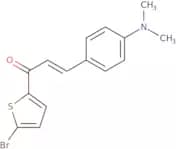
CAS :TB5 is a synthetic peptide that is derived from the naturally occurring Thymosin Beta-4, a protein peptide involved in various cellular processes. It works by binding to actin, a protein essential for cellular structure and movement, promoting cell migration and proliferation. This mechanism aids in accelerated wound healing, tissue repair, and anti-inflammatory responses.Formule :C15H14BrNOSDegré de pureté :Min. 95%Masse moléculaire :336.25 g/molN2-[2-[4-[(2-Naphthalenylcarbonyl)amino]phenyl]acetyl]-L-arginyl-L-isoleucyl-L-α-aspartyl-N-[(2S)-2-methylbutyl]-L-argininamide
CAS :<p>N2-[2-[4-[(2-Naphthalenylcarbonyl)amino]phenyl]acetyl]-L-arginyl-L-isoleucyl-L-α-aspartyl-N-[(2S)-2-methylbutyl]-L-argininamide is a synthetic peptide drug, which is a product of advanced chemical synthesis processes. It functions as a selective inhibitor, targeting specific proteolytic enzymes involved in pathological conditions. The molecular structure allows it to engage in precise interactions with target enzymes, thereby modulating biological pathways and offering therapeutic potential.</p>Formule :C46H66N12O8Degré de pureté :Min. 95%Masse moléculaire :915.09 g/molTC-G 1008
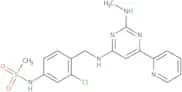
CAS :<p>TC-G 1008 is a small-molecule inhibitor, which is synthesized from pharmaceutical-grade compounds with high specificity and potency. It functions by selectively targeting and modulating signaling pathways within cells, particularly those related to the regulation of inflammatory responses and cellular metabolism.</p>Formule :C18H19ClN6O2SDegré de pureté :Min. 95%Masse moléculaire :418.9 g/molHsp70, His tagged human
CAS :<p>Hsp70, His tagged human, is a recombinant protein, which is derived from human cells and engineered with a hexahistidine (His) tag. It is part of the Heat Shock Protein 70 family, known for its crucial role in cellular stress response. The His tag facilitates purification and detection via affinity chromatography, making it a convenient tool for research applications.</p>Degré de pureté :Min. 95%Phe-Lys(Fmoc)-PAB
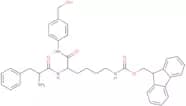
CAS :<p>Phe-Lys(Fmoc)-PAB is a chemical compound that belongs to the category of peptide-based prodrugs, which is derived from synthetic sources with a focus on targeted delivery. This compound consists of phenylalanine and lysine residues, where the lysine is modified with a fluorenylmethyloxycarbonyl (Fmoc) protecting group and a p-aminobenzyl (PAB) linker. The mode of action involves utilizing the stable peptide bond and the cleavable PAB linker to deliver active agents in a controlled fashion, usually by enzyme-mediated cleavage at the target site.</p>Formule :C37H40N4O5Degré de pureté :Min. 95%Masse moléculaire :620.74 g/mol3-[5-[(Dipropylamino)methyl]-1,2,4-oxadiazol-3-yl]-8-fluoro-5-methyl-4H-imidazo[1,5-a][1,4]benzodiazepin-6-one
CAS :<p>3-[5-[(Dipropylamino)methyl]-1,2,4-oxadiazol-3-yl]-8-fluoro-5-methyl-4H-imidazo[1,5-a][1,4]benzodiazepin-6-one is a synthetic compound characterized as a benzodiazepine derivative. This chemical entity is produced via intricate organic synthesis involving the integration of multiple functional groups to yield a structure with promising pharmacological activities. Its primary mode of action involves modulation of the central nervous system through interaction with GABA receptor subtypes. This interaction enhances inhibitory neurotransmission, resulting in anxiolytic, anticonvulsant, and muscle relaxant effects.</p>Formule :C21H25FN6O2Degré de pureté :Min. 95%Masse moléculaire :412.5 g/molPf-04455242 hydrochloride
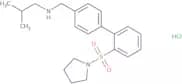
CAS :Pf-04455242 hydrochloride is a selective phosphodiesterase 10A (PDE10A) inhibitor, which is derived synthetically. Its mode of action involves inhibiting the PDE10A enzyme, which plays a critical role in the regulation of intracellular cyclic nucleotides, particularly cyclic AMP and cyclic GMP, in the brain. By selectively targeting PDE10A, this compound modulates neurotransmission pathways that are implicated in psychiatric and neurological disorders.Formule :C21H28N2O2S•HClDegré de pureté :Min. 95%Masse moléculaire :409 g/molBMS-582949
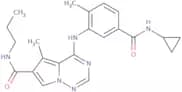
CAS :<p>BMS-582949 is an investigational pharmaceutical compound, specifically a chemokine receptor antagonist, that has been derived through synthetic chemical processes. Its mode of action involves selectively inhibiting the C-C chemokine receptor type 2 (CCR2), a receptor involved in the migration and activation of monocytes and other immune cells. By blocking CCR2, BMS-582949 aims to modulate inflammatory pathways that are implicated in various diseases.</p>Formule :C22H26N6O2Degré de pureté :Min. 95%Masse moléculaire :406.48 g/molObaa
CAS :<p>Obaa is an antimicrobial coating, which is a synthetic compound with engineered properties designed to inhibit bacterial growth. The source of this product is advanced chemical engineering, utilizing innovative formulations to create a stable, long-lasting barrier against microbial colonization. Its mode of action involves disrupting the cell membrane integrity of bacteria, leading to cell lysis and subsequent death of the microorganism.</p>Formule :C28H44O3Degré de pureté :Min. 95%Masse moléculaire :428.6 g/molVPC 23019
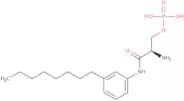
CAS :<p>VPC 23019 is an advanced herbicidal formulation, which is a synthetic chemical compound designed for effective weed control. This product is derived from a complex synthesis process involving multiple chemical precursors, optimized for high efficacy and low environmental persistence. The active ingredient in VPC 23019 targets specific enzymatic pathways in weed species, disrupting essential biological processes such as amino acid synthesis. This mode of action results in the inhibited growth and eventual death of the target plants, while minimizing impact on non-target species and surrounding ecosystems.</p>Formule :C17H29N2O5PDegré de pureté :Min. 95%Masse moléculaire :372.4 g/molCCT020312
CAS :<p>CCT020312 is a small-molecule inhibitor that is a selective and potent inhibitor of the P21-activated kinase 4 (PAK4), which is sourced through synthetic organic chemistry. By inhibiting PAK4, this compound disrupts the signaling pathways that are often upregulated in various malignancies, involving proliferation, survival, and cytoskeletal reorganization. Through competitive binding at the ATP-binding site of PAK4, CCT020312 effectively suppresses kinase activity, which is crucial for downstream signaling events associated with oncogenic processes.</p>Formule :C31H30Br2N4O2Degré de pureté :Min. 95%Masse moléculaire :650.4 g/molMKT-077
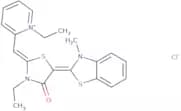
CAS :<p>MKT-077 is a rhodacyanine dye analogue, which is a compound derived from the class of compounds known as rhodacyanines. This particular analogue is synthesized for its biochemical properties, specifically targeting mitochondrial functions. The mode of action of MKT-077 involves the selective accumulation within the mitochondria of cancer cells, where it induces mitochondrial stress and disrupts mitochondrial membrane potential. This disruption leads to apoptotic cell death, making it a potential agent in cancer treatment research.</p>Formule :C21H22ClN3OS2Degré de pureté :Min. 95%Masse moléculaire :432 g/molTopfluor pi(4,5)P2
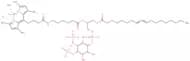
CAS :<p>Topfluor PI(4,5)P2 is a synthetic phosphoinositide, which is chemically modified to include a fluorophore for advanced biological research. It is derived from phosphatidylinositol 4,5-bisphosphate, a critical lipid found in eukaryotic cell membranes. The fluorophore allows researchers to visualize and track the behavior of phosphoinositides in real-time using fluorescence microscopy techniques.</p>Formule :C50H78BF2N3O20P3Degré de pureté :Min. 95%Masse moléculaire :1,182.89 g/molGW-406381
CAS :<p>GW-406381 is a potent and selective agonist for the peroxisome proliferator-activated receptor delta (PPARδ), which is commonly employed in pharmacological research. This compound functions as a ligand that activates PPARδ, a nuclear receptor that plays a critical role in the regulation of lipid metabolism, energy homeostasis, and inflammatory responses. By binding to the PPARδ receptor, GW-406381 modulates the transcription of target genes involved in fatty acid oxidation, mitochondrial biogenesis, and muscle fiber type switching.</p>Formule :C21H19N3O3SDegré de pureté :Min. 95%Masse moléculaire :393.46 g/molSAR 405
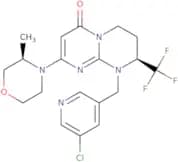
CAS :<p>SAR 405 is a selective inhibitor, which is synthesized chemically, targeting the phosphatidylinositol 3-kinase catalytic subunit type 3 (PIK3C3), also known as Vps34. This inhibitor functions by specifically binding to the ATP-binding site of the kinase, thus blocking its catalytic activity. By inhibiting PIK3C3, SAR 405 disrupts phosphatidylinositol 3-phosphate (PI3P) production, a pivotal element in autophagy and endosomal trafficking processes.</p>Formule :C19H21ClF3N5O2Degré de pureté :Min. 95%Masse moléculaire :443.85 g/molYC-1
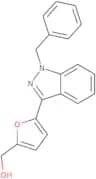
CAS :<p>YC-1 is an activator of soluble guanylate cyclase (sGC), derived from synthetic chemical sources, with a specific mode of action that inhibits the degradation of cyclic guanosine monophosphate (cGMP). By modulating the levels of cGMP, YC-1 affects various biological pathways associated with vasodilation, anti-platelet aggregation, and anti-inflammatory effects.</p>Formule :C19H16N2O2Degré de pureté :Min. 95%Masse moléculaire :304.34 g/molAmelubant
CAS :<p>Amelubant is a synthetic compound designed for use in detailed biochemical research and therapeutic investigations. As a product derived from innovative chemical synthesis techniques, Amelubant is engineered to interact with particular biological pathways, predominantly in the field of inflammatory response modulation. Its mode of action involves specific binding to target receptors, influencing downstream signaling cascades.</p>Formule :C33H34N2O5Degré de pureté :Min. 95%Masse moléculaire :538.6 g/molNada
CAS :<p>Nada is a delactosed fermented dairy beverage, derived from milk sources, with live probiotic cultures as its mode of action. These cultures primarily include strains such as Lactobacillus acidophilus and Bifidobacterium bifidum, known for their ability to promote gut health by modulating the intestinal microbiota, enhancing gut barrier function, and modulating the immune response.</p>Formule :C28H41NO3Degré de pureté :Min. 95%Masse moléculaire :439.6 g/molRLLFT-NH2
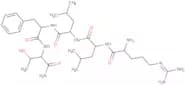
CAS :<p>RLLFT-NH2 is a synthetic neuropeptide, which is designed to mimic naturally occurring neuropeptides with potential modulatory effects in the central nervous system. It is sourced through chemical synthesis, allowing for precise control over its amino acid sequence and modifications. The mode of action of RLLFT-NH2 involves interaction with specific neuropeptide receptors, potentially altering neurotransmission pathways, thereby affecting neural signaling and plasticity.</p>Formule :C31H53N9O6Degré de pureté :Min. 95%Masse moléculaire :647.8 g/molS 32212 hydrochloride
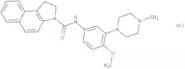
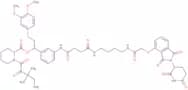
CAS :<p>S 32212 hydrochloride is a selective serotonin receptor antagonist, which is synthesized chemically. Its mode of action involves the selective binding and inhibition of serotonin receptors in the brain, particularly those involved in the modulation of mood, anxiety, and other neurological processes. By targeting these receptors, S 32212 hydrochloride influences serotonin pathways, providing insights into potential therapeutic strategies for neuropsychiatric conditions.</p>Formule :C25H28N4O2·HClDegré de pureté :Min. 95%Masse moléculaire :452.98 g/moldFKBP-1
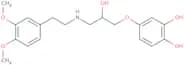
CAS :<p>dFKBP-1 is a heat shock protein derived from Drosophila melanogaster, which is commonly used as a model organism in genetic and molecular biology research. This protein, known as Drosophila FK506-binding protein 1 (dFKBP-1), originates from Drosophila and is involved in essential cellular processes.</p>Formule :C53H64N6O14Degré de pureté :Min. 95%Masse moléculaire :1,009.1 g/mol1-(3,4-Dimethoxyphenethylamino)-3-(3,4-dihydroxyphenoxy)-2-propanol
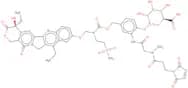
CAS :<p>1-(3,4-Dimethoxyphenethylamino)-3-(3,4-dihydroxyphenoxy)-2-propanol is a synthetic beta-adrenergic blocking agent primarily utilized in scientific research. Derived from laboratory chemical synthesis, this compound is designed to mimic and antagonize the action of endogenous catecholamines on beta-adrenergic receptors. The compound's mode of action involves competitive inhibition of these receptors, reducing heart rate, cardiac output, and vasodilation effects typically mediated by adrenaline and noradrenaline.</p>Formule :C19H25NO6Degré de pureté :Min. 95%Masse moléculaire :363.4 g/molMac glucuronide phenol-linked sn-38
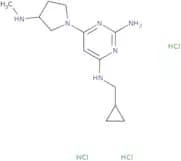
CAS :<p>Mac glucuronide phenol-linked SN-38 is a chemically engineered prodrug derived from irinotecan. This compound serves as a targeted therapeutic agent, designed to enhance the delivery and activation of SN-38, an active metabolite, at tumor sites. The source of this product arises from the selective conjugation of SN-38 with a glucuronide moiety, linked through a phenolic connector, enabling preferential release in the tumor microenvironment.</p>Formule :C50H54N6O20SDegré de pureté :Min. 95%Masse moléculaire :1,091.06 g/molAdriforant hydrochloride
CAS :<p>Adriforant hydrochloride is a synthetic histamine H4 receptor antagonist, which is derived through chemical synthesis. This compound specifically targets the H4 receptor, a member of the histamine receptor family, playing a crucial role in the modulation of immune response and inflammatory processes. The mode of action of adriforant hydrochloride involves competitive inhibition of the H4 receptor, thereby blocking the signaling pathways that contribute to the recruitment and activation of immune cells, such as eosinophils and T cells, which are pivotal in allergic and inflammatory conditions.</p>Formule :C13H25Cl3N6Degré de pureté :Min. 95%Masse moléculaire :371.7 g/molMI-1061
CAS :<p>MI-1061 is a bio-insecticide, which is microbially derived from the bacterium *Metarhizium anisopliae*. This environmentally friendly product utilizes the natural biological processes of its source organism, functioning primarily through spore ingestion by target insect pests. Upon ingestion, the spores germinate, leading to the proliferation of the fungus within the host insect, ultimately causing death through nutrient depletion and physical blockage.</p>Formule :C30H26Cl2FN3O4Degré de pureté :Min. 95%Masse moléculaire :582.4 g/molCDM-NAG
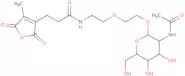
CAS :<p>CDM-NAG is a specialized biochemical substrate, which is a chemical compound derived from the structural modification of chitin. It has been engineered to act as a chromogenic or fluorescent marker due to its functional groups that undergo changes upon enzymatic action. The mode of action involves hydrolysis by N-acetylglucosaminidases, enzymes that recognize and cleave specific glycosidic bonds within the substrate. Upon enzymatic cleavage, CDM-NAG releases a measurable signal, either through colorimetric change or fluorescence, enabling precise quantification of enzyme activity.</p>Formule :C20H30N2O11Degré de pureté :Min. 95%Masse moléculaire :474.5 g/molMyxochelin A
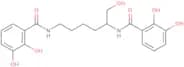
CAS :<p>Myxochelin A is an iron-chelating siderophore, which is a specialized secondary metabolite produced by certain strains of myxobacteria. These microorganisms, often found in soil and decomposing material, synthesize Myxochelin A to scavenge iron from the environment, essential for their survival and growth. The mode of action of Myxochelin A involves the sequestration of ferric iron (Fe^3+) ions through its high-affinity binding sites. This effectively deprives competing microorganisms of the iron required for crucial biological processes, imparting an antimicrobial effect.</p>Formule :C20H24N2O7Degré de pureté :Min. 95%Masse moléculaire :404.4 g/molAxitinib sulfoxide
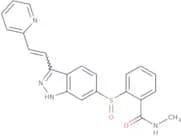
CAS :<p>Axitinib sulfoxide is a small molecule metabolite, which is derived from the parent compound axitinib. Axitinib, a tyrosine kinase inhibitor, targets vascular endothelial growth factor receptors (VEGFRs), primarily utilized in oncological therapeutics. The source of axitinib sulfoxide is the metabolic transformation of axitinib in vivo, involving the oxidation of sulfur atoms by hepatic metabolic enzymes, particularly cytochrome P450.</p>Formule :C22H18N4O2SDegré de pureté :Min. 95%Masse moléculaire :402.5 g/mol(E)-5-(4-Chlorophenyl)-3-phenylpent-2-enoic acid
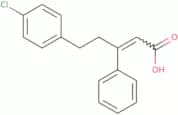
CAS :<p>(E)-5-(4-Chlorophenyl)-3-phenylpent-2-enoic acid is an anti-inflammatory compound, which is synthesized through organic chemical processes. Its mode of action involves the inhibition of cyclooxygenase enzymes, thereby reducing the synthesis of pro-inflammatory mediators such as prostaglandins. This action is critical in diminishing inflammation and associated symptoms.</p>Formule :C17H15ClO2Degré de pureté :Min. 95%Masse moléculaire :286.8 g/molPIM-447 dihydrochloride
CAS :<p>PIM-447 dihydrochloride is a potent small molecule kinase inhibitor, which is synthesized as a selective inhibitor of PIM kinases. These kinases, part of the serine/threonine kinase family, are implicated in various cellular processes, including cell cycle progression and survival, making them a target of interest in oncology research. PIM-447 acts by binding to the ATP-binding pocket of PIM kinases, thereby inhibiting their activity and disrupting downstream signaling pathways that promote tumor growth and survival.</p>Formule :C24H25Cl2F3N4ODegré de pureté :Min. 95%Masse moléculaire :513.38 g/molValspodar
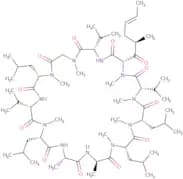
CAS :<p>P-glycoprotein (MDR1) inhibitor; non-immunosuppressive cyclosporin A analog</p>Formule :C63H111N11O12Degré de pureté :Min. 98 Area-%Couleur et forme :PowderMasse moléculaire :1,214.62 g/molAM 36 dihydrochloride
CAS :<p>AM 36 dihydrochloride is a synthetic cannabinoid receptor ligand, which is derived from chemical synthesis processes aimed at targeting specific receptors in the endocannabinoid system. With its action primarily focused on modulating cannabinoid receptor activity, AM 36 dihydrochloride interacts as an agonist or antagonist, depending on the receptor subtype and the biological context.</p>Formule :C27H39ClN2O2Degré de pureté :Min. 95%Masse moléculaire :459.1 g/molA-889425
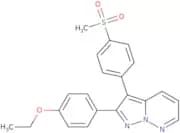
CAS :<p>A-889425 is a novel small molecule compound that serves as a potent and selective antagonist. It is derived from synthetic chemical processes aimed at modulating ion channel activity specifically. The mode of action of A-889425 involves the selective inhibition of specific ion channels, which play critical roles in cellular signaling pathways and are implicated in various physiological processes.</p>Formule :C19H18F3N3O3SDegré de pureté :Min. 95%Masse moléculaire :425.4 g/molErythro-3,4-dimethyl-alpha-[1-(methylamino)ethyl]benzylalcohol hydrochloride
CAS :Produit contrôlé<p>Erythro-3,4-dimethyl-alpha-[1-(methylamino)ethyl]benzylalcohol hydrochloride is a synthetic compound, which is a derivative obtained through intricate chemical synthesis. It functions primarily as a norepinephrine-dopamine reuptake inhibitor, thereby influencing the synaptic levels of these neurotransmitters by blocking their reabsorption into presynaptic neurons, which increases their availability in the synaptic cleft.</p>Formule :C12H19NODegré de pureté :Min. 95%Masse moléculaire :193.28 g/molAST-1306
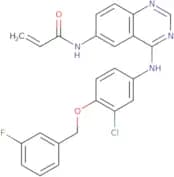
CAS :<p>AST-1306 is an irreversible inhibitor, which is a compound designed to target specific enzymes. It stems from advanced pharmaceutical research in the field of cancer therapeutics with a mechanism of targeting the epidermal growth factor receptor (EGFR) kinase. Through covalent bonding, AST-1306 effectively impairs the function of EGFR by forming a stable, permanent bond with its active site, leading to sustained suppression of downstream signaling pathways involved in cellular proliferation and survival.</p>Formule :C24H18ClFN4O2Degré de pureté :Min. 95%Masse moléculaire :448.88 g/molBombinakinin-GAP
CAS :<p>Bombinakinin-GAP is a neuropeptide, which is derived from the skin secretions of Bombina orientalis, a species of toad. This peptide's source is an amphibian, specifically extracted for its unique biochemical properties. Bombinakinin-GAP functions by interacting with specific receptors in the nervous system, modulating various physiological responses. Its mode of action involves binding to neurokinin receptors, influencing neural signal transmission.</p>Formule :C145H219N39O39S3Degré de pureté :Min. 95%Masse moléculaire :3,228.7 g/molSIS3
CAS :<p>SIS3 is a selective Smad3 inhibitor, which is a small-molecule compound derived through synthetic chemical methods. It is designed to specifically inhibit the phosphorylation and activity of the Smad3 protein, a critical transcription factor involved in the transforming growth factor-beta (TGF-β) signaling pathway. Smad3 is implicated in various cellular processes, including proliferation, differentiation, and apoptosis.</p>Formule :C28H27N3O3·HClDegré de pureté :Min. 95%Masse moléculaire :489.99 g/molN-[(1S,2R,4S)-2-Amino-4-(dimethylcarbamoyl)cyclohexyl]-N'-(5-chloropyridin-2-yl)oxamide
CAS :<p>N-[(1S,2R,4S)-2-Amino-4-(dimethylcarbamoyl)cyclohexyl]-N'-(5-chloropyridin-2-yl)oxamide is a synthetic compound, which is an engineered chemical structure with potential pharmacological properties. This compound is sourced from systematic organic synthesis, employing targeted molecular adjustments to achieve a precise configuration that may interact with specific biological pathways. It operates by potentially modulating receptor activity or enzyme inhibition, although detailed mechanistic studies are necessary to fully elucidate its mode of action. Its unique configuration allows it to possibly interact with certain biomolecules, aiming to alter or inhibit pathological processes.</p>Formule :C16H22ClN5O3Degré de pureté :95%NmrMasse moléculaire :367.8 g/molBMS 777607
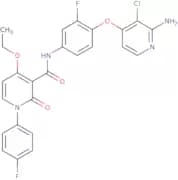
CAS :<p>A potent Met kinase inhibitor (IC50 = 3.9 nM). Also inhibits Axl, Ron, and Tyro-3 (IC50 = 1.1, 1.8 and 4.3 nM, respectively). Anti-proliferative in Met-driven tumors in vitro and in vivo. Induces polyploidy in breast cancer cells and thereby chemoresistance.</p>Formule :C25H19ClF2N4O4Degré de pureté :Min. 95%Masse moléculaire :512.10629CVT 6883
CAS :Produit contrôlé<p>CVT 6883 is a selective adenosine A2B receptor antagonist, which is synthesized through chemical processes designed to enhance specificity and efficacy for A2B receptor blockade. The mode of action involves the inhibition of the adenosine A2B receptor, preventing adenosine from binding and activating this receptor subtype. This inhibition can modulate various physiological and pathological processes since adenosine receptors play critical roles in inflammation and fibrosis.</p>Formule :C21H21F3N6O2Degré de pureté :Min. 95%Couleur et forme :PowderMasse moléculaire :446.43 g/molTyrphostin ag 1007
CAS :<p>Tyrphostin AG 1007 is a synthetic small molecule inhibitor, which is derived from chemical synthesis with a targeted mode of action on protein tyrosine kinases. These kinases are crucial enzymes involved in the signal transduction pathways that regulate various cellular processes, including cell growth, differentiation, and metabolism. By inhibiting these kinases, Tyrphostin AG 1007 interferes with aberrant signaling pathways often implicated in diseases such as cancer and inflammatory disorders.</p>Formule :C17H14N2O2SDegré de pureté :Min. 95%Masse moléculaire :310.37 g/molDeltamethrin-d5
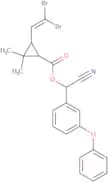
CAS :<p>Deltamethrin-d5 is a labeled pyrethroid isomer, which is an essential tool in analytical chemistry and environmental science. This product is synthetically derived and incorporates deuterium, a stable isotope of hydrogen, thereby serving as an internal standard in mass spectrometric analysis.</p>Formule :C22H19Br2NO3Degré de pureté :Min. 95%Masse moléculaire :510.2 g/mol5-Ht6 antagonist 29
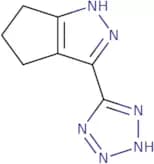
CAS :<p>5-HT6 antagonist 29 is a pharmacological compound, which is synthesized through organic chemistry techniques, typically involving multi-step reactions to yield high specificity. This compound functions as a selective antagonist for the 5-HT6 serotonin receptor, a G-protein-coupled receptor predominantly found in the central nervous system.</p>Formule :C7H8N6Degré de pureté :Min. 95%Masse moléculaire :176.18 g/molBrl 15572 hydrochloride
CAS :<p>Brl 15572 hydrochloride is a selective adenosine A2B receptor antagonist, which is a synthetic chemical compound designed for research purposes. It originates from the synthesis of pharmacological agents aimed at interfering with adenosine receptor-mediated pathways in human physiology. This compound acts by binding to the adenosine A2B receptors with high specificity, inhibiting their activity, and preventing the natural ligand, adenosine, from exerting its effects.</p>Formule :C25H28Cl2N2ODegré de pureté :Min. 95%Masse moléculaire :443.4 g/mol3-(3,4-Dimethoxyphenyl)-N-[4-(trifluoromethyl)phenyl]-2-propenamide
CAS :3-(3,4-Dimethoxyphenyl)-N-[4-(trifluoromethyl)phenyl]-2-propenamide is a synthetic compound that belongs to the class of amides derived from 2-propenamide structures. It is primarily sourced from chemical synthesis processes involving the reaction of substituted phenyl groups with trifluoromethyl phenyl derivatives. The compound’s structural features allow it to engage in various interactions through its aromatic and polar functional groups.Formule :C18H16F3NO3Degré de pureté :Min. 95%Masse moléculaire :351.3 g/mol5-Phenacyloxy-2H-isoquinolin-1-one
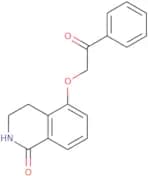
CAS :<p>5-Phenacyloxy-2H-isoquinolin-1-one is a synthetic chemical compound, which is primarily utilized as a biochemical inhibitor. This compound is derived from isoquinolinone sources and is distinguished by its phenacyloxy moiety linking it to the isoquinolinone core structure. Its mechanism of action involves selectively inhibiting specific biological pathways, a characteristic that makes it a valuable tool in the study of enzyme regulation and signal transduction processes. By interfering with these pathways, 5-Phenacyloxy-2H-isoquinolin-1-one provides insights into cellular functions and the biochemical landscape.</p>Formule :C17H13NO3Degré de pureté :Min. 95%Masse moléculaire :279.29 g/molSPDH
CAS :<p>SPDH reacts with primary amines via its NHS ester and forms disulfide bonds via the pyridyldithiol group. The cleavage occurs intracellularly.</p>Formule :C15H18N2O4S2Degré de pureté :Min. 95%Masse moléculaire :354.44 g/mol
![2-[[5-[4-(Dimethylsulfamoyl)phenyl]-8-methyl-2-oxo-1,6,7,9-tetrahydropyrrolo[3,2-H]isoquinolin-3-y…](/_next/image/?url=https%3A%2Fstatic.cymitquimica.com%2Fproducts%2F3D%2Fthumb-webp%2FVJA06359.webp&w=3840&q=75)


![N2-[2-[4-[(2-Naphthalenylcarbonyl)amino]phenyl]acetyl]-L-arginyl-L-isoleucyl-L-α-aspartyl-N-[(2S)-…](/_next/image/?url=https%3A%2Fstatic.cymitquimica.com%2Fproducts%2F3D%2Fthumb-webp%2FZEA83345.webp&w=3840&q=75)

![3-[5-[(Dipropylamino)methyl]-1,2,4-oxadiazol-3-yl]-8-fluoro-5-methyl-4H-imidazo[1,5-a][1,4]benzodi…](/_next/image/?url=https%3A%2Fstatic.cymitquimica.com%2Fproducts%2F3D%2Fthumb-webp%2FXGA40717.webp&w=3840&q=75)



![Erythro-3,4-dimethyl-alpha-[1-(methylamino)ethyl]benzylalcohol hydrochloride](/_next/image/?url=https%3A%2Fstatic.cymitquimica.com%2Fproducts%2F3D%2Fthumb-webp%2FEAA86561.webp&w=3840&q=75)
![N-[(1S,2R,4S)-2-Amino-4-(dimethylcarbamoyl)cyclohexyl]-N'-(5-chloropyridin-2-yl)oxamide](/_next/image/?url=https%3A%2Fstatic.cymitquimica.com%2Fproducts%2F3D%2Fthumb-webp%2FFUA45237.webp&w=3840&q=75)
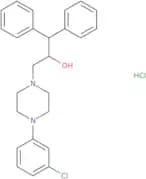
![3-(3,4-Dimethoxyphenyl)-N-[4-(trifluoromethyl)phenyl]-2-propenamide](/_next/image/?url=https%3A%2Fstatic.cymitquimica.com%2Fproducts%2F3D%2Fthumb-webp%2FVKB70018.webp&w=3840&q=75)