Ligands organométalliques
Dans cette catégorie, vous trouverez un grand nombre de molécules organométalliques utilisées comme ligands dans les biomolécules. Ces ligands organométalliques peuvent être utilisés en chimie organique et en synthèse au laboratoire. Ils jouent un rôle crucial dans la formation de complexes de coordination et la catalyse de diverses réactions chimiques. Chez CymitQuimica, nous offrons une sélection diversifiée de ligands organométalliques de haute qualité pour soutenir vos recherches et besoins industriels.
Sous-catégories appartenant à la catégorie "Ligands organométalliques"
- Ligands de Buchwald(22 produits)
- DPEN(4 produits)
- DPHEN(4 produits)
- JOSIPHOS(4 produits)
- Phosphine(497 produits)
- Porphyrines(75 produits)
2887 produits trouvés pour "Ligands organométalliques"
Trier par
Degré de pureté (%)
0
100
|
0
|
50
|
90
|
95
|
100
Mots-C
CAS :<p>Mots-C is a mitochondrial-derived peptide, which is encoded by the small open reading frame found within the mitochondrial 12S rRNA. This peptide functions by interacting with the cellular metabolic pathways to enhance mitochondrial bioenergetics and overall cellular metabolism. Mechanistically, Mots-C modulates the folate–methionine cycle, directly impacting glucose regulation and energy utilization, and consequently facilitating cellular adaptation to metabolic stress.</p>Formule :C101H152N28O22S2Degré de pureté :Min. 95%Masse moléculaire :2,174.6 g/molGSK334429 hydrochloride
CAS :<p>GSK334429 hydrochloride is a selective corticotropin-releasing factor 1 (CRF1) receptor antagonist, which is a synthetic compound developed by GlaxoSmithKline. As a small-molecule antagonist, it acts by binding to the CRF1 receptor, thereby inhibiting the action of corticotropin-releasing factor (CRF). This interruption in CRF signaling is significant as CRF is a key regulator in the body’s response to stress, influencing both endocrine and behavioral reactions.</p>Formule :C20H29F3N4O·HClDegré de pureté :Min. 95%NSC 135130
CAS :<p>NSC 135130 is a synthetic compound that serves as an antioxidant and anti-inflammatory agent. It is derived through chemical synthesis, a process involving the combination of various elements and compounds to produce a novel substance with specific desired properties. The mode of action of NSC 135130 primarily involves the scavenging of free radicals and modulation of inflammatory pathways, thus helping to mitigate oxidative stress and inflammation at the cellular level.</p>Formule :C12H23NO4Degré de pureté :Min. 95%Masse moléculaire :245.32 g/molAZD 8186
CAS :<p>AZD 8186 is a selective small-molecule inhibitor, which is sourced from synthesized chemical compounds, specifically designed to target the phosphoinositide 3-kinase (PI3K) pathway. This inhibitor functions by selectively inhibiting the PI3K isoforms, primarily PI3Kβ and PI3Kδ, which play critical roles in multiple cell signaling pathways related to growth, survival, and proliferation.</p>Formule :C24H25F2N3O4Degré de pureté :Min. 95%Masse moléculaire :457.5 g/molHuman parainfluenza virus type 3, fusion protein, fragment 454-488, acetylated
CAS :<p>Human parainfluenza virus type 3, fusion protein, fragment 454-488, acetylated is a synthetic peptide, which is derived from the fusion protein of the Human Parainfluenza Virus Type 3 (HPIV-3). This fragment is produced through chemical synthesis and is acetylated to mimic the natural post-translational modifications that can occur in viral proteins, enhancing its stability and preserving its biological activity.</p>Formule :C183H294N54O59Degré de pureté :Min. 95%Masse moléculaire :4,194.62 g/molAumitin
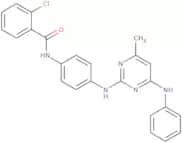
CAS :<p>Aumitin is an innovative compound that is categorized as a bioactive molecule, which is derived from natural sources such as medicinal plants or microorganisms. It exhibits its mode of action through specific interactions with cellular pathways, potentially modulating key processes within the cell. These interactions can lead to alterations in cellular functions such as signaling, metabolism, or growth regulation.</p>Formule :C24H20ClN5ODegré de pureté :Min. 95%Masse moléculaire :429.9 g/molM1001
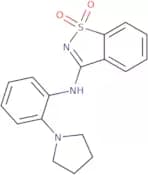
CAS :<p>M1001 is a biochemical reagent, which is synthesized through advanced organic chemistry techniques, with a specific mode of action that targets nucleic acid structures. It functions as an intercalating agent, inserting itself between base pairs in DNA strands. This interaction alters DNA topology, making M1001 invaluable for research applications that involve DNA replication, transcription, and repair studies.</p>Formule :C17H17N3O2SDegré de pureté :Min. 95%Masse moléculaire :327.4 g/molUVI 3003
CAS :<p>UVI 3003 is a light stabilizer that functions as an ultraviolet (UV) absorber, primarily utilized in the protection of various materials from UV radiation. This product is synthesized from advanced chemical compounds designed to absorb UV light and prevent its transmission through the material. The mode of action involves converting UV radiation into harmless thermal energy, which is then dissipated, thereby protecting the underlying matrix from photodegradation.</p>Formule :C28H36O4Degré de pureté :Min. 95%Masse moléculaire :436.58 g/molPS210
CAS :<p>PS210 is a highly advanced chemical compound, which is a synthetic catalyst designed for precision-driven applications in chemical laboratories. It is derived from a meticulous synthesis process involving transition metals and organic ligands. The mode of action of PS210 involves facilitating specific chemical reactions by lowering the activation energy, thereby increasing reaction rates without being consumed in the process.</p>Formule :C19H15F3O5Degré de pureté :Min. 95%Masse moléculaire :380.3 g/molWye 672
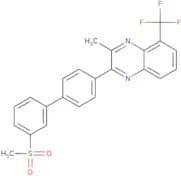
CAS :<p>Wye 672 is a potent, selective inhibitor of ATPase enzymes, which are pivotal in energy transfer and cellular processes. It is synthesized through a complex chemical process that ensures specificity and efficacy. Wye 672 functions by binding to the ATP-binding pocket of the target enzyme, thereby inhibiting its action. This mode of action disrupts the hydrolysis of ATP, a critical process in energy metabolism and signal transduction pathways.</p>Formule :C23H17F3N2O2SDegré de pureté :Min. 95%Masse moléculaire :442.5 g/molPalbociclib dihydrochloride
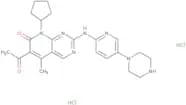
CAS :<p>Palbociclib dihydrochloride is a selective inhibitor of cyclin-dependent kinases 4 and 6 (CDK4/6), which is derived from synthetic chemical processes. Its mode of action involves disrupting the progression of the cell cycle from G1 to S phase, thereby inhibiting cellular proliferation. By specifically targeting and inhibiting CDK4/6, Palbociclib effectively arrests the growth of cancer cells that rely on these kinases for division.</p>Formule :C24H31Cl2N7O2Degré de pureté :Min. 95%Masse moléculaire :520.5 g/molLorlatinib acetate
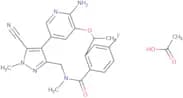
CAS :Produit contrôlé<p>Lorlatinib acetate is a small-molecule tyrosine kinase inhibitor, which is a synthetic pharmaceutical compound designed to specifically inhibit the activity of anaplastic lymphoma kinase (ALK) and C-ros oncogene 1 (ROS1). This compound is derived through complex chemical synthesis to ensure specificity and potency in its mechanism of action. Lorlatinib acetate functions by selectively binding to the ATP-binding site of ALK and ROS1, leading to the inhibition of downstream signaling pathways that promote tumor cell proliferation and survival. This targeted action results in the interruption of cancer cell growth and the induction of apoptosis in cancer cells harboring ALK and ROS1 aberrations.</p>Formule :C23H23FN6O4Degré de pureté :Min. 95%Masse moléculaire :466.5 g/molSAG 21k
CAS :<p>SAG 21k is a synthetic ion channel, which is a laboratory-created entity designed to mimic the functionality of natural ion channels found in biological membranes. These synthetic constructs are engineered through chemical synthesis, allowing precise control over their structural and functional properties. The mode of action of SAG 21k involves the facilitation of ion transport across lipid bilayers, thereby enabling the study of transmembrane ion flow in controlled environments.</p>Formule :C29H28ClF2N3O2SDegré de pureté :Min. 95%Masse moléculaire :556.1 g/molIfenprodil
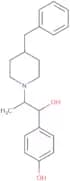
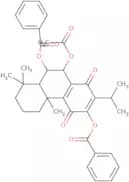
CAS :Produit contrôlé<p>Ifenprodil is a selective NMDA (N-Methyl-D-aspartate) receptor antagonist, which is a synthetic compound designed to modulate glutamatergic neurotransmission. It is derived from a class of organic compounds known as phenylethanolamines. Its primary mode of action involves the inhibition of NMDA receptors containing the GluN2B subunit, which leads to a reduction in excitatory neurotransmission. This specific antagonism is crucial for modulating synaptic plasticity and protecting neural tissue from excitotoxic damage.</p>Formule :(C21H27NO2)·C4H6O6Degré de pureté :Min. 95%Masse moléculaire :800.98 g/mol(4bS,8aS,9S,10S)-10-(Acetyloxy)-3,9-bis(benzoyloxy)-4b,5,6,7,8,8a,9,10-octahydro-4b,8,8-trimethyl-2-(1-methylethyl)-1,4-phenanthrene dione
CAS :<p>(4bS,8aS,9S,10S)-10-(Acetyloxy)-3,9-bis(benzoyloxy)-4b,5,6,7,8,8a,9,10-octahydro-4b,8,8-trimethyl-2-(1-methylethyl)-1,4-phenanthrene dione is a potent chemokine molecule that is an agonist of the CXCR2 receptor. It has been shown to inhibit cancer stem cells and chemoattractant production in colon carcinoma cells. This compound selectively targets the translation of lamiaceae mRNA and induces apoptosis in colon carcinoma cells.</p>Formule :C36H38O8Degré de pureté :Min. 95%Masse moléculaire :598.7 g/molRetosiban
CAS :<p>Retosiban is a pharmaceutical compound that serves as an oxytocin receptor antagonist, derived through synthetic chemical synthesis. Its primary mechanism of action involves the selective inhibition of oxytocin receptors, which are critical in the uterine contractions that occur during labor. By blocking these receptors, Retosiban effectively reduces uterine muscle contractions, thus playing a crucial role in managing preterm labor.</p>Formule :C27H34N4O5Degré de pureté :Min. 95%Masse moléculaire :494.6 g/molPDD 00017272
CAS :<p>Please enquire for more information about PDD 00017272 including the price, delivery time and more detailed product information at the technical inquiry form on this page</p>Formule :C23H25N5O4S3Degré de pureté :Min. 95%Masse moléculaire :531.7 g/molSPK-601
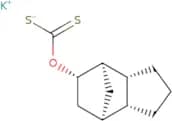
CAS :<p>SPK-601 is a novel antimicrobial peptide-based product, which is derived from engineered microbial strains with proficient peptide synthesis capabilities. This product functions by disrupting the structural integrity of microbial cell walls, leading to cell lysis and eventual death of the targeted microorganisms. Its mechanism of action involves binding to specific lipid components on the bacterial cell surface, resulting in pore formation and an imbalance in osmotic pressures across the cell membrane.</p>Formule :C11H15KOS2Degré de pureté :Min. 95%Masse moléculaire :266.46 g/molFiboflapon sodium
CAS :<p>Fiboflapon sodium is a selective leukotriene B4 receptor antagonist, which is a synthetic compound designed to inhibit specific pathways involved in inflammatory processes. The source of Fiboflapon sodium derives from advanced chemical synthesis aimed at targeting the lipoxygenase pathway, crucial in the production of leukotrienes. Its mode of action involves binding to and blocking the leukotriene B4 receptor, thereby reducing the recruitment and activation of inflammatory cells, particularly neutrophils, in response to pro-inflammatory stimuli.</p>Formule :C38H42N3NaO4SDegré de pureté :Min. 95%Masse moléculaire :659.81 g/molAR 420626
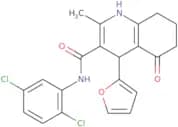
CAS :<p>AR 420626 is an advanced molecular sieve catalyst, which is derived from a robust zeolitic framework with precise pore architecture. Its mode of action is centered on facilitating selective adsorption and catalysis by exploiting the molecular dimensions within its crystalline structure. This enables the catalyst to achieve enhanced specificity and efficiency in molecular transformations.</p>Formule :C21H18Cl2N2O3Degré de pureté :Min. 95%Masse moléculaire :417.29 g/molrac Mepindolol
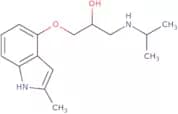
CAS :<p>rac Mepindolol is a beta-adrenergic antagonist, which is a synthetic compound with non-selective beta-blocking activity. Derived from synthetic chemical synthesis, it functions by competitively inhibiting sympathetic neurotransmitters, such as epinephrine and norepinephrine, at beta-adrenergic receptors. This leads to a reduction in heart rate, myocardial contractility, and overall sympathetic activity.</p>Formule :C15H22N2O2Degré de pureté :Min. 95%Masse moléculaire :262.35 g/molHdhodh-in-1
CAS :<p>Hdhodh-in-1 is an advanced analytical tool designed for conducting multidimensional data analysis, which is sourced from integrative computational methodologies. With a focus on high-dimensional datasets, it operates through a sophisticated algorithm that efficiently processes and integrates various data types, including genomic, proteomic, and metabolomic information.</p>Formule :C17H14N2O2Degré de pureté :Min. 95%Masse moléculaire :278.31 g/molAMG 487 (S-enantiomer)
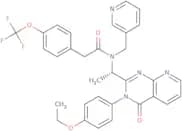
CAS :<p>AMG 487 (S-enantiomer) is a selective CCR9 antagonist, which is a compound that inhibits the chemokine receptor CCR9. This receptor is primarily expressed in the gastrointestinal tract and is involved in the migration of T-cells. AMG 487 is synthesized through enantioselective methods in a laboratory setting, providing a high-purity compound suitable for research purposes.</p>Formule :C32H28F3N5O4Degré de pureté :Min. 95%Masse moléculaire :603.59 g/molCGS 15435
CAS :<p>CGS 15435 is a synthetic compound that functions as a dopamine receptor agonist, derived from chemical synthesis processes involving targeted modifications of organic compounds. It exhibits high affinity and selectivity toward specific subtypes of dopamine receptors, which are G-protein-coupled receptors critical to neurotransmission in the central nervous system.</p>Formule :C20H21ClN2O2Degré de pureté :Min. 95%Masse moléculaire :356.8 g/mol5-(4-Methoxyphenyl)-N-(1-methyl-4-(3-pyridinyl)butyl)-2,4-decadienamide
CAS :<p>5-(4-Methoxyphenyl)-N-(1-methyl-4-(3-pyridinyl)butyl)-2,4-decadienamide is a bioactive compound derived from specific plant sources. This chemical entity functions primarily through modulation of biological pathways, notably influencing signal transduction and cellular responses. Its mode of action involves interaction with specific receptors and enzymes, affecting processes such as inflammation and neural activities.</p>Formule :C27H36N2O2Degré de pureté :Min. 95%Masse moléculaire :420.6 g/molUFP-101
CAS :<p>UFP-101 is a synthetic antimicrobial compound, which is engineered from advanced chemical synthesis methodologies with unique molecular modifications. The compound acts by disrupting microbial cell membranes, resulting in cell lysis and death. This mode of action is particularly effective against a broad spectrum of bacterial strains, including multi-drug-resistant varieties.</p>Formule :C82H138N32O21Degré de pureté :Min. 95%Masse moléculaire :1,908.2 g/molJaspamycin
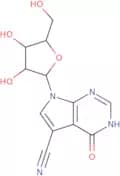
CAS :<p>Jaspamycin is an antitumor antibiotic, which is a natural product isolated from the bacterium *Streptomyces hygroscopicus*. Its mode of action involves disrupting RNA synthesis by inhibiting nucleic acid chain elongation, thereby impeding cell proliferation and leading to cell death in rapidly dividing cancer cells. This mechanism makes Jaspamycin particularly effective as a chemotherapeutic agent.</p>Formule :C12H12N4O5Degré de pureté :Min. 95%Masse moléculaire :292.25 g/molCathepsin Inhibitor 1
CAS :<p>Cathepsin Inhibitor 1 is a selective chemical inhibitor specifically targeting cathepsin enzymes, which is derived through synthetic processes. Cathepsins are proteolytic enzymes predominantly found in lysosomes and play a crucial role in intracellular protein degradation. By inhibiting these enzymes, Cathepsin Inhibitor 1 effectively prevents the breakdown of protein substrates, thus allowing for the regulation of various cellular processes such as apoptosis, antigen presentation, and tissue remodeling.</p>Formule :C20H24ClN5O2Degré de pureté :Min. 95%Masse moléculaire :401.89 g/molCYM 5541
CAS :<p>CYM 5541 is a selective herbicide, which is synthesized from organic chemical compounds. It functions by interfering with the metabolic processes critical to weed growth and development. Specifically, CYM 5541 targets and inhibits specific enzymes that are essential for cell division and photosynthesis in undesirable plants.<br><br>The primary application of CYM 5541 is in agricultural settings, where it is used to manage weed populations that compete with crops for light, nutrients, and water. It is particularly effective in controlling broadleaf and grassy weeds. Through its precise mode of action, CYM 5541 enables efficient, targeted suppression of non-crop vegetation, thereby maintaining the health and yield of the desired plants. Its use in integrated pest management strategies underscores its role in sustainable farming practices, minimizing the environmental impact while maximizing agricultural productivity.</p>Formule :C19H28N2O2Degré de pureté :Min. 95%Masse moléculaire :316.44 g/molCjb 090 dihydrochloride hydrate
CAS :<p>Cjb 090 dihydrochloride hydrate is a potent inhibitor of Protein Kinase C (PKC), which plays a crucial role in cellular signaling pathways. Derived through chemical synthesis, Cjb 090 selectively targets and inhibits PKC activity, thereby disrupting signal transduction mechanisms involved in cell growth, differentiation, and apoptosis.</p>Formule :C26H30Cl4N4ODegré de pureté :Min. 95%Masse moléculaire :556.3 g/molLyn peptide inhibitor
CAS :<p>Lyn peptide inhibitor is a targeted peptide-based inhibitor derived synthetically to interact specifically with the Lyn kinase signaling pathway. As a research tool, it serves to elucidate the functional dynamics of Lyn kinase, which belongs to the Src family of tyrosine kinases involved in signal transduction processes critical to cellular differentiation, proliferation, and survival.</p>Formule :C115H184N30O24Degré de pureté :Min. 95%Masse moléculaire :2,370.9 g/molY-33075
CAS :<p>Y-33075 is a synthetic chemical compound that functions as a selective Rho-associated protein kinase (ROCK) inhibitor, derived from laboratory synthesis processes. It primarily acts by targeting and inhibiting the activity of ROCK, an enzyme that plays a crucial role in modulating cytoskeletal dynamics and cellular contraction through the phosphorylation of downstream substrates. This inhibition effectively reduces smooth muscle contraction, cellular proliferation, and migration by altering the actin cytoskeleton.</p>Formule :C16H16N4ODegré de pureté :Min. 95%Masse moléculaire :280.32 g/molOxcarbazepine - Bio-X ™
CAS :Produit contrôlé<p>Oxcarbazepine is an anti-epileptic drug that is used for the treatment of partial-onset seizures. Although, the mechanism of action for this drug is unclear, it is said to involve the blockage of voltage-gated sodium channels. As a result, the firing of the action potentials which lead to seizures are reduced and so seizure activity is inhibited.</p>Formule :C15H12N2O2Degré de pureté :Min. 95%Couleur et forme :PowderMasse moléculaire :252.27 g/molErythro-3,4-dimethyl-alpha-[1-(methylamino)ethyl]benzylalcohol hydrochloride
CAS :Produit contrôlé<p>Erythro-3,4-dimethyl-alpha-[1-(methylamino)ethyl]benzylalcohol hydrochloride is a synthetic compound, which is a derivative obtained through intricate chemical synthesis. It functions primarily as a norepinephrine-dopamine reuptake inhibitor, thereby influencing the synaptic levels of these neurotransmitters by blocking their reabsorption into presynaptic neurons, which increases their availability in the synaptic cleft.</p>Formule :C12H19NODegré de pureté :Min. 95%Masse moléculaire :193.28 g/molSR8278
CAS :<p>SR8278 is a synthetic, chemical compound that functions as a highly selective inverse agonist of the Rev-Erb nuclear receptors, which is derived from extensive biochemical research. It operates by binding to these orphan nuclear receptors, Rev-Erbα and Rev-Erbβ, inhibiting their activity. This antagonistic action disrupts the regulation of circadian rhythms, metabolism, and inflammatory responses that these receptors typically control. This modulation occurs at the transcriptional level, where SR8278 interferes with gene expression governed by Rev-Erb receptors.</p>Formule :C18H19NO3S2Degré de pureté :Min. 95%Masse moléculaire :361.48 g/mol5-Hydroxymatrine
CAS :<p>5-Hydroxymatrine is an alkaloid compound, which is derived from the roots of Sophora plants, notably Sophora flavescens. This compound is characterized by its structure as a quinolizidine alkaloid and is a modified form of matrine, with a hydroxyl group adding to its chemical complexity.</p>Formule :C15H24N2O2Degré de pureté :Min. 95%Masse moléculaire :264.36 g/molPF-06658607
CAS :<p>PF-06658607 is an investigational drug that is classified as a small molecule inhibitor. It is developed from synthetic chemical sources with a specific mode of action targeting aggrecanases, enzymes that degrade aggrecan, a critical component of cartilage. By inhibiting these enzymes, PF-06658607 aims to prevent the breakdown of cartilage in joints.</p>Formule :C27H24N6O2Degré de pureté :Min. 95%Couleur et forme :PowderMasse moléculaire :464.5 g/molRef: 3D-WPC00224
Produit arrêté














![Erythro-3,4-dimethyl-alpha-[1-(methylamino)ethyl]benzylalcohol hydrochloride](/_next/image/?url=https%3A%2Fstatic.cymitquimica.com%2Fproducts%2F3D%2Fthumb-webp%2FEAA86561.webp&w=3840&q=75)