Ligands organométalliques
Dans cette catégorie, vous trouverez un grand nombre de molécules organométalliques utilisées comme ligands dans les biomolécules. Ces ligands organométalliques peuvent être utilisés en chimie organique et en synthèse au laboratoire. Ils jouent un rôle crucial dans la formation de complexes de coordination et la catalyse de diverses réactions chimiques. Chez CymitQuimica, nous offrons une sélection diversifiée de ligands organométalliques de haute qualité pour soutenir vos recherches et besoins industriels.
Sous-catégories appartenant à la catégorie "Ligands organométalliques"
- Ligands de Buchwald(22 produits)
- DPEN(4 produits)
- DPHEN(4 produits)
- JOSIPHOS(4 produits)
- Phosphine(497 produits)
- Porphyrines(75 produits)
2887 produits trouvés pour "Ligands organométalliques"
Trier par
Degré de pureté (%)
0
100
|
0
|
50
|
90
|
95
|
100
SAG 21k
CAS :<p>SAG 21k is a synthetic ion channel, which is a laboratory-created entity designed to mimic the functionality of natural ion channels found in biological membranes. These synthetic constructs are engineered through chemical synthesis, allowing precise control over their structural and functional properties. The mode of action of SAG 21k involves the facilitation of ion transport across lipid bilayers, thereby enabling the study of transmembrane ion flow in controlled environments.</p>Formule :C29H28ClF2N3O2SDegré de pureté :Min. 95%Masse moléculaire :556.1 g/molJaspamycin
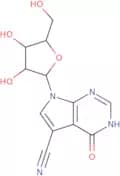
CAS :<p>Jaspamycin is an antitumor antibiotic, which is a natural product isolated from the bacterium *Streptomyces hygroscopicus*. Its mode of action involves disrupting RNA synthesis by inhibiting nucleic acid chain elongation, thereby impeding cell proliferation and leading to cell death in rapidly dividing cancer cells. This mechanism makes Jaspamycin particularly effective as a chemotherapeutic agent.</p>Formule :C12H12N4O5Degré de pureté :Min. 95%Masse moléculaire :292.25 g/molCathepsin Inhibitor 1
CAS :<p>Cathepsin Inhibitor 1 is a selective chemical inhibitor specifically targeting cathepsin enzymes, which is derived through synthetic processes. Cathepsins are proteolytic enzymes predominantly found in lysosomes and play a crucial role in intracellular protein degradation. By inhibiting these enzymes, Cathepsin Inhibitor 1 effectively prevents the breakdown of protein substrates, thus allowing for the regulation of various cellular processes such as apoptosis, antigen presentation, and tissue remodeling.</p>Formule :C20H24ClN5O2Degré de pureté :Min. 95%Masse moléculaire :401.89 g/molCYM 5541
CAS :<p>CYM 5541 is a selective herbicide, which is synthesized from organic chemical compounds. It functions by interfering with the metabolic processes critical to weed growth and development. Specifically, CYM 5541 targets and inhibits specific enzymes that are essential for cell division and photosynthesis in undesirable plants.<br><br>The primary application of CYM 5541 is in agricultural settings, where it is used to manage weed populations that compete with crops for light, nutrients, and water. It is particularly effective in controlling broadleaf and grassy weeds. Through its precise mode of action, CYM 5541 enables efficient, targeted suppression of non-crop vegetation, thereby maintaining the health and yield of the desired plants. Its use in integrated pest management strategies underscores its role in sustainable farming practices, minimizing the environmental impact while maximizing agricultural productivity.</p>Formule :C19H28N2O2Degré de pureté :Min. 95%Masse moléculaire :316.44 g/molMots-C
CAS :<p>Mots-C is a mitochondrial-derived peptide, which is encoded by the small open reading frame found within the mitochondrial 12S rRNA. This peptide functions by interacting with the cellular metabolic pathways to enhance mitochondrial bioenergetics and overall cellular metabolism. Mechanistically, Mots-C modulates the folate–methionine cycle, directly impacting glucose regulation and energy utilization, and consequently facilitating cellular adaptation to metabolic stress.</p>Formule :C101H152N28O22S2Degré de pureté :Min. 95%Masse moléculaire :2,174.6 g/mol5-Hydroxymatrine
CAS :<p>5-Hydroxymatrine is an alkaloid compound, which is derived from the roots of Sophora plants, notably Sophora flavescens. This compound is characterized by its structure as a quinolizidine alkaloid and is a modified form of matrine, with a hydroxyl group adding to its chemical complexity.</p>Formule :C15H24N2O2Degré de pureté :Min. 95%Masse moléculaire :264.36 g/molSR8278
CAS :<p>SR8278 is a synthetic, chemical compound that functions as a highly selective inverse agonist of the Rev-Erb nuclear receptors, which is derived from extensive biochemical research. It operates by binding to these orphan nuclear receptors, Rev-Erbα and Rev-Erbβ, inhibiting their activity. This antagonistic action disrupts the regulation of circadian rhythms, metabolism, and inflammatory responses that these receptors typically control. This modulation occurs at the transcriptional level, where SR8278 interferes with gene expression governed by Rev-Erb receptors.</p>Formule :C18H19NO3S2Degré de pureté :Min. 95%Masse moléculaire :361.48 g/mol