Ligands organométalliques
Dans cette catégorie, vous trouverez un grand nombre de molécules organométalliques utilisées comme ligands dans les biomolécules. Ces ligands organométalliques peuvent être utilisés en chimie organique et en synthèse au laboratoire. Ils jouent un rôle crucial dans la formation de complexes de coordination et la catalyse de diverses réactions chimiques. Chez CymitQuimica, nous offrons une sélection diversifiée de ligands organométalliques de haute qualité pour soutenir vos recherches et besoins industriels.
Sous-catégories appartenant à la catégorie "Ligands organométalliques"
- Ligands de Buchwald(22 produits)
- DPEN(4 produits)
- DPHEN(4 produits)
- JOSIPHOS(4 produits)
- Phosphine(497 produits)
- Porphyrines(75 produits)
2887 produits trouvés pour "Ligands organométalliques"
Trier par
Degré de pureté (%)
0
100
|
0
|
50
|
90
|
95
|
100
Human parainfluenza virus type 3, fusion protein, fragment 454-488, acetylated
CAS :<p>Human parainfluenza virus type 3, fusion protein, fragment 454-488, acetylated is a synthetic peptide, which is derived from the fusion protein of the Human Parainfluenza Virus Type 3 (HPIV-3). This fragment is produced through chemical synthesis and is acetylated to mimic the natural post-translational modifications that can occur in viral proteins, enhancing its stability and preserving its biological activity.</p>Formule :C183H294N54O59Degré de pureté :Min. 95%Masse moléculaire :4,194.62 g/molN-Methylquipazine dimaleate
CAS :<p>N-Methylquipazine dimaleate is a selective ligand product, which is a synthetically produced compound with a specific affinity for serotonin receptors, particularly the 5-HT3 subtype. It is derived from a well-established chemical synthesis process that ensures high purity and consistent activity.</p>Formule :C22H25N3O8Degré de pureté :Min. 95%Masse moléculaire :459.4 g/mol(4bS,8aS,9S,10S)-10-(Acetyloxy)-3,9-bis(benzoyloxy)-4b,5,6,7,8,8a,9,10-octahydro-4b,8,8-trimethyl-2-(1-methylethyl)-1,4-phenanthrene dione
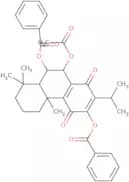
CAS :<p>(4bS,8aS,9S,10S)-10-(Acetyloxy)-3,9-bis(benzoyloxy)-4b,5,6,7,8,8a,9,10-octahydro-4b,8,8-trimethyl-2-(1-methylethyl)-1,4-phenanthrene dione is a potent chemokine molecule that is an agonist of the CXCR2 receptor. It has been shown to inhibit cancer stem cells and chemoattractant production in colon carcinoma cells. This compound selectively targets the translation of lamiaceae mRNA and induces apoptosis in colon carcinoma cells.</p>Formule :C36H38O8Degré de pureté :Min. 95%Masse moléculaire :598.7 g/molY-33075
CAS :<p>Y-33075 is a synthetic chemical compound that functions as a selective Rho-associated protein kinase (ROCK) inhibitor, derived from laboratory synthesis processes. It primarily acts by targeting and inhibiting the activity of ROCK, an enzyme that plays a crucial role in modulating cytoskeletal dynamics and cellular contraction through the phosphorylation of downstream substrates. This inhibition effectively reduces smooth muscle contraction, cellular proliferation, and migration by altering the actin cytoskeleton.</p>Formule :C16H16N4ODegré de pureté :Min. 95%Masse moléculaire :280.32 g/molHdhodh-in-1
CAS :<p>Hdhodh-in-1 is an advanced analytical tool designed for conducting multidimensional data analysis, which is sourced from integrative computational methodologies. With a focus on high-dimensional datasets, it operates through a sophisticated algorithm that efficiently processes and integrates various data types, including genomic, proteomic, and metabolomic information.</p>Formule :C17H14N2O2Degré de pureté :Min. 95%Masse moléculaire :278.31 g/molSR8278
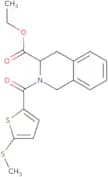
CAS :<p>SR8278 is a synthetic, chemical compound that functions as a highly selective inverse agonist of the Rev-Erb nuclear receptors, which is derived from extensive biochemical research. It operates by binding to these orphan nuclear receptors, Rev-Erbα and Rev-Erbβ, inhibiting their activity. This antagonistic action disrupts the regulation of circadian rhythms, metabolism, and inflammatory responses that these receptors typically control. This modulation occurs at the transcriptional level, where SR8278 interferes with gene expression governed by Rev-Erb receptors.</p>Formule :C18H19NO3S2Degré de pureté :Min. 95%Masse moléculaire :361.48 g/mol5-Hydroxymatrine
CAS :<p>5-Hydroxymatrine is an alkaloid compound, which is derived from the roots of Sophora plants, notably Sophora flavescens. This compound is characterized by its structure as a quinolizidine alkaloid and is a modified form of matrine, with a hydroxyl group adding to its chemical complexity.</p>Formule :C15H24N2O2Degré de pureté :Min. 95%Masse moléculaire :264.36 g/mol