Composés organosiliciés
Dans cette section, vous trouverez un grand nombre de composés organosiliciés. Les composés organosiliciés sont caractérisés par des atomes de carbone liés à des atomes de silicium. D'autres composés non métalliques peuvent également être présents. Ces composés sont largement utilisés en synthèse organique, en science des matériaux et en pharmaceutique en raison de leurs propriétés chimiques uniques. Chez CymitQuimica, nous offrons une large gamme de composés organosiliciés de haute qualité pour soutenir vos recherches et projets industriels.
Sous-catégories appartenant à la catégorie "Composés organosiliciés"
4327 produits trouvés pour "Composés organosiliciés"
Trier par
Degré de pureté (%)
0
100
|
0
|
50
|
90
|
95
|
100
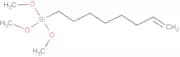
7-Oct-1-enyltrimethoxysilane
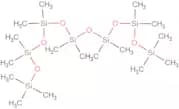
CAS :<p>S12600 - 7-Oct-1-enyltrimethoxysilane</p>Formule :C11H24O3SiDegré de pureté :95%Couleur et forme :ClearMasse moléculaire :232.395Hexadecamethyl heptasiloxane
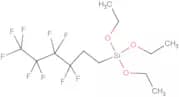
CAS :<p>S09355 - Hexadecamethyl heptasiloxane</p>Formule :C16H48O6Si7Degré de pureté :97%Couleur et forme :LiquidMasse moléculaire :533.149Nonafluorohexyltriethoxysilane
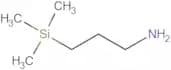
CAS :<p>S25247 - Nonafluorohexyltriethoxysilane</p>Formule :C12H19F9O3SiDegré de pureté :97%Couleur et forme :Liquid, ClearMasse moléculaire :410.3523-Aminopropyltrimethylsilane
CAS :Formule :C6H17NSiDegré de pureté :97%Couleur et forme :ClearMasse moléculaire :131.2941,4-Bis(triethoxysilyl)benzene
CAS :<p>S25067 - 1,4-Bis(triethoxysilyl)benzene</p>Formule :C18H34O6Si2Degré de pureté :98%Couleur et forme :Liquid, ClearMasse moléculaire :402.6343-Bromo-1-triisopropylsilyl pyrrole
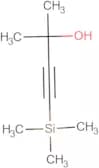
CAS :<p>S03129 - 3-Bromo-1-triisopropylsilyl pyrrole</p>Formule :C13H24BrNSiDegré de pureté :95%Couleur et forme :LiquidMasse moléculaire :302.3312-Methyl-4-trimethylsilyl-3-butyn-2-ol
CAS :<p>S11970 - 2-Methyl-4-trimethylsilyl-3-butyn-2-ol</p>Formule :C8H16OSiDegré de pureté :98%Couleur et forme :SolidMasse moléculaire :156.34-Bromo-1-((2-(trimethylsilyl)ethoxy)methyl)-1H-pyrrolo[2,3-b]pyridine
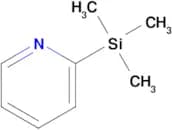
CAS :Degré de pureté :95%Masse moléculaire :327.29699712-(Trimethylsilyl)pyridine
CAS :Formule :C8H13NSiDegré de pureté :97%Couleur et forme :LiquidMasse moléculaire :151.284Methacryloxypropyldimethylmethoxysilane min 95%
CAS :<p>S10610 - Methacryloxypropyldimethylmethoxysilane min 95%</p>Formule :C10H20O3SiDegré de pureté :96%Couleur et forme :LiquidMasse moléculaire :216.352n-Octadecyltrimethoxysilane, includes up to 5-10% C18 Isomers
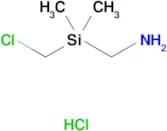
CAS :<p>S12325 - n-Octadecyltrimethoxysilane, includes up to 5-10% C18 Isomers</p>Formule :C21H46O3SiDegré de pureté :95%Couleur et forme :Clear to straw liquidMasse moléculaire :374.681((Chloromethyl)dimethylsilyl)methanamine hydrochloride
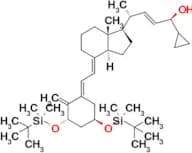
CAS :Degré de pureté :98%Couleur et forme :SolidMasse moléculaire :174.14(1S,4R,E)-4-((1R,3aS,7aR,E)-4-((E)-2-((3S,5R)-3,5-bis(tert-butyldimethylsilyloxy)-2-methylenecyclohexylidene)ethylidene)-7a-methyloctahydro-1H-inden-1-yl)-1-cyclopropylpent-2-en-1-ol
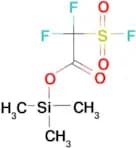
CAS :Degré de pureté :98%Masse moléculaire :641.1400146Trimethylsilyl fluorosulfonyldifluoroacetate
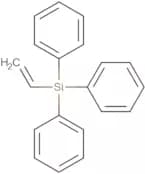
CAS :Formule :C5H9F3O4SSiDegré de pureté :95%Couleur et forme :Liquid, ClearMasse moléculaire :250.26Triphenylvinylsilane
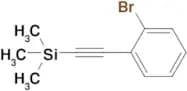
CAS :<p>S20725 - Triphenylvinylsilane</p>Formule :C20H18SiDegré de pureté :98%Couleur et forme :Solid, White to very pale yellow powderMasse moléculaire :286.449(2-Bromophenylethynyl)trimethylsilane
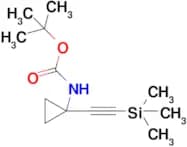
CAS :Degré de pureté :98%Couleur et forme :LiquidMasse moléculaire :253.2140045tert-Butyl (1-((trimethylsilyl)ethynyl)cyclopropyl)carbamate
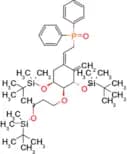
CAS :Degré de pureté :96%Masse moléculaire :253.4170074((Z)-2-((3S,4S,5S)-3,5-Bis((tert-butyldimethylsilyl)oxy)-4-(3-((tert-butyldimethylsilyl)oxy)propoxy)-2-methylenecyclohexylidene)ethyl)diphenylphosphine oxide
Degré de pureté :95%Masse moléculaire :771.2540283Tris(trimethylsilyl)silane)
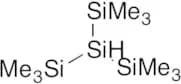
CAS :Produit contrôlé<p>Applications Tris(trimethylsilyl)silane) is used in the synthesis of silated alkenes and alkynes. Also used in the preparation of fused quinolines.<br> Not a dangerous good if item is equal to or less than 1g/ml and there is less than 100g/ml in the package<br>References Kopping, B.et al.: J. Org. Chem., 57, 3994 (1992); Du, W. et al.: Org. Lett., 5, 1765 (2003);<br></p>Formule :C9H28Si4Couleur et forme :NeatMasse moléculaire :248.66N,N-Diethyl(trimethylsilyl)amine
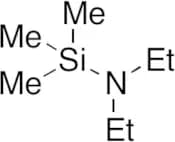
CAS :Produit contrôlé<p>Applications N,N-Diethyl(trimethylsilyl)amine is a chemical reagent with wide application in organic chemistry. Used in stereospecific addition reactions as well as in SN2 nucleophilic substitutions.<br> Not a dangerous good if item is equal to or less than 1g/ml and there is less than 100g/ml in the package<br>References Bassindale, A. et al.: J. Organometal. Chem., 667, 66 (2003); Hagiwara, H. et al.: J. Chem. Soc., Perk Trans., 3, 316 (2002);<br></p>Formule :C7H19NSiCouleur et forme :NeatMasse moléculaire :145.32(1-Ethoxycyclopropoxy)trimethylsilane
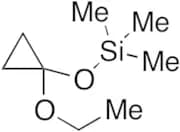
CAS :Produit contrôlé<p>Applications (1-Ethoxycyclopropoxy)trimethylsilane used as a reactant in the synthesis of di-, tri- and tetracyclopropylhydrazines. Also used as reagent in the synthesis of g elsemoxonine which is found in gelsemium plant species that is used in traditional asian medicine.<br> Not a dangerous good if item is equal to or less than 1g/ml and there is less than 100g/ml in the package<br>References Shestakov, A., et al.: Chem. Commun., 52, 2398 (2016); Diethelm, S., et al.: J. Am. Chem. Soc., 137, 6084 (2015);<br></p>Formule :C8H18O2SiCouleur et forme :NeatMasse moléculaire :174.31Triphenylsilane
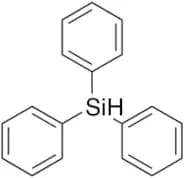
CAS :Produit contrôlé<p>Applications TRIPHENYLSILANE (cas# 789-25-3) is a useful research chemical.<br></p>Formule :C18H16SiCouleur et forme :NeatMasse moléculaire :260.41Trimethylboroxin
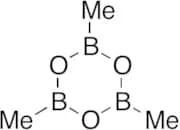
CAS :Produit contrôlé<p>Applications Trimethylboroxin is used in a diverse array of areas, including as a polymerization additive. Trimethylboroxin is also used in the preparation of CBS catalysts for asymmetric reductions.<br> Not a dangerous good if item is equal to or less than 1g/ml and there is less than 100g/ml in the package<br>References Gilmore, N., et al.: Tetrahedron Asy., 14, 2115 (2003); Najera, C., et al.: Adv. Synth. Catal., 346, 1798 (2004);<br></p>Formule :C3H9B3O3Couleur et forme :NeatMasse moléculaire :125.533-(Dimethylphenylsilyl)-cyclobutanone
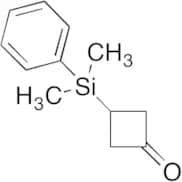
CAS :Produit contrôlé<p>Applications 3-(Dimethylphenylsilyl)-cyclobutanone is an intermediate used in synthesizing 2-Cyclobutenyl-3-trifluoromethyl-5-chloro-1H-indole-1-carboxylic Acid Ethyl Ester, which is synthesized from 5-chloro-2-oxindole (C375030), that is used in the preparation of novel GSK-3β inhibitors as anticancer agents.<br>References Choi, M.J., et al.: Bull. Korean. Chem. Soc., 32, 2015 (2011); Otani, M., et al.: Bioorg. Med. Chem. Lett.. 20, 4259 (2010); Jhan, Y.H., et al.: Tetrahedron. Lett., 54, 1155 (2013); Hsieh, J.C., et al.: Org. Biomolec. Chem., 10, 6404 (2012);<br></p>Formule :C12H16OSiCouleur et forme :NeatMasse moléculaire :204.34Tetrabutylammonium Borohydride
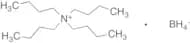
CAS :Produit contrôlé<p>Applications Tetrabutylammonium Borohydride is a strong reducing agent used in the synthesis of hyperbranched polyglycerol grafting on the surface of silica-coated nanoparticles.<br>References Panja, P. et al.: ACS Sust. Chem. Eng., 5, 4879 (2017);<br></p>Formule :C16H36NBH4Couleur et forme :NeatMasse moléculaire :242.46 + 14.84Tetraethylammonium Tetrafluoroborate
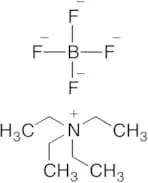
CAS :Produit contrôlé<p>Applications Tetraethylammonium Tetrafluoroborate is used in the preparation of some organic salts of fluoboric acids.<br>References Wilke-D., et al.: Ber. Dtsch Chem. Ges.; 60B, 115 (1927)<br></p>Formule :C8H20BF4N3Couleur et forme :NeatMasse moléculaire :217.06Triethylsilyl Trifluoromethanesulfonate
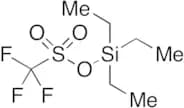
CAS :Produit contrôlé<p>Stability Moisture Sensitive and Hygroscopic<br>Applications Triethylsilyl Trifluoromethanesulfonate is a reagent used in the synthesis of pharmaceuticals such as cocosolide, an immunosuppressive agent.<br> Not a dangerous good if item is equal to or less than 1g/ml and there is less than 100g/ml in the package<br>References Gunasekera, S. et al.: Chem. Eur. J., 22, 8158 (2016);<br></p>Formule :C22H41F3N2O6S2SiCouleur et forme :NeatMasse moléculaire :264.34Tetrakis(acetonitrile)palladium Bis(tetrafluoroborate)
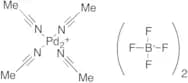
CAS :Produit contrôlé<p>Applications Tetrakis(acetonitrile)palladium Bis(tetrafluoroborate) is used to prepare an α-Diimine-transition metal complex, which is used as a catalyst for polymerization of olefins. It is also a catalyst used in cross coupling reaction for C-C, C-O, and C-N bond formation.<br>References Feldman, J., et al.: Organometallics, 16, 1514 (1997); Johnson, L., et al.: PCT Int. Appl., WO 9623010 A2 19960801 (1996); Poppenbery, J., et al.: Surface Sci., 2011; Pijnenburg, N., et al.: Dalton Transactions, 40, 8896 (2011); Kilpin, K., et al.: Inorg. Chem., 50, 6334 (2011)<br></p>Formule :C8H12B2F8N4PdCouleur et forme :NeatMasse moléculaire :444.243-[[(1,1-Dimethylethyl)diphenylsilyl]oxy]-1,2-propanediol
CAS :Produit contrôlé<p>Applications 3-[[(1,1-Dimethylethyl)diphenylsilyl]oxy]-1,2-propanediol is an intermediate in the synthesis of 1,2-Dioleoyl-rac-glycerol (D482175), which is an analog of 1,3-Dioleoylglycerol (D484210) which is used in the synthesis of amphiphilic gadolinium complexes as MRI contrast agents.<br>References Accardo, A., et. al.: J. Mater. Chem. B., 1, 617 (2013)<br></p>Formule :C19H26O3SiCouleur et forme :NeatMasse moléculaire :330.49N-(Methoxymethyl)-N-[(trimethylsilyl)methyl]benzenemethanamine (>90%)
CAS :Produit contrôlé<p>Applications N-(Methoxymethyl)-N-[(trimethylsilyl)methyl]benzenemethanamine is used in the synthesis of pyrrolidine derivatives as novel sodium channel blockers used to treat ischemic related ailments.<br>References Seki, M. et al.: Bioorg. Med. Chem. Lett., 23, 4230 (2013);<br></p>Formule :C13H23NOSiDegré de pureté :>90%Couleur et forme :NeatMasse moléculaire :237.411,3-Bis(tert-Butyldimethylsiloxy)-2-propanol
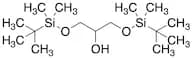
CAS :Produit contrôlé<p>Applications 1,3-Bis(tert-Butyldimethylsiloxy)-2-propanol is an intermediate in the synthesis of 2-Linoleoyl-rac-glycerol (L467960), which is a atty acid monoglycerides in vegetable oils with medium unsaturation.<br>References Compton, D., et al.: J. Pharmacol. Exp. Ther., 277, 586 (1996), Devane, W., et al.: Science, 258, 1946 (1992),<br></p>Formule :C15H36O3Si2Couleur et forme :NeatMasse moléculaire :320.62Borane Ammonia Complex
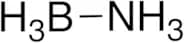
CAS :Produit contrôléFormule :NH3·(BH3)Couleur et forme :NeatMasse moléculaire :17.03 +13.83N-Trimethylsilylacetamide
CAS :Produit contrôlé<p>Stability Moisture Sensitive<br>Applications N-Trimethylsilylacetamide is a silylating agent used in organic synthesis. N-Trimethylsilylacetamide is used in the preparation of the antibacterial agent Cefdinir (C242670).<br>References Takano, R. et al.: J. Carb. Chem., 14, 885 (1995); Rao, K. et al.: Synth. Comm., 37, 2275 (2007);<br></p>Formule :C5H13NOSiCouleur et forme :NeatMasse moléculaire :131.253-[(tert-Butyldimethylsilyl)oxy]-1-propanol
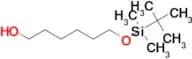
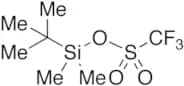
CAS :Produit contrôlé<p>Applications 3-[(tert-Butyldimethylsilyl)oxy]-1-propanol (cas# 73842-99-6) is a compound useful in organic synthesis.<br></p>Formule :C9H22O2SiCouleur et forme :NeatMasse moléculaire :190.36tert-Butyldimethylsilyl Trifluoromethanesulfonate
CAS :Produit contrôlé<p>Stability Moisture Sensitive<br>Applications Tert-Butyldimethylsilyl Trifluoromethanesulfonate is a highly reactive silylating agent and lewis acid capable of converting primary, secondary and tertiary alcohols to their respectctive TBDMS. Tert-Butyldimethylsilyl Trifluoromethanesulfonate is also used to covert ketones and lactones into their enol silyl ethers.<br> Not a dangerous good if item is equal to or less than 1g/ml and there is less than 100g/ml in the package<br>References Hua, D.H. et al.: e-ROS Encyc. Reag. Org. Synth., No pp. given (2001); Suzuki, T. et al.: Synthesis, 4, 555 (2001);<br></p>Formule :C7H15F3O3SSiCouleur et forme :NeatMasse moléculaire :264.341,2-Bis(trimethylsiloxy)ethane
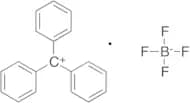
CAS :Produit contrôlé<p>Applications 1,2-Bis(trimethylsiloxy)ethane is an organic reagent, used in the preparation of nonracemic hexahydrofurapyranol which acts as a high-affinity ligand for HIV-1 protease inhibitors.<br> Not a dangerous good if item is equal to or less than 1g/ml and there is less than 100g/ml in the package<br>References Ghosh, A. et al.: Tetra. Lett., 58, 3230 (2017)<br></p>Formule :C8H22O2Si2Couleur et forme :NeatMasse moléculaire :206.43Triphenylmethylium Tetrafluoroborate
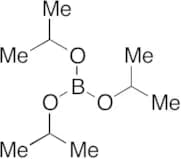
CAS :Produit contrôlé<p>Stability Hygroscopic, Light-sensitive<br>Applications Triphenylmethylium Tetrafluoroborate is reagent used in organic synthesis such as the direct synthesis of 1,1-diphenyl-3-arylindanes.<br>References Surapanich, N. et al.: Synlett., 27, 2689 (2016);<br></p>Formule :C19H15•BF4Couleur et forme :NeatMasse moléculaire :243.32 + 86.81Triisopropyl Borate
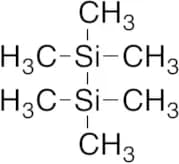
CAS :Produit contrôlé<p>Applications Triisopropyl Borate is a borate ester used in Suzuki couplings.<br> Not a dangerous good if item is equal to or less than 1g/ml and there is less than 100g/ml in the package<br>References Wolfe, J. et al.: J. Am. Chem. Soc., 121, 9550 (1999); Darses, S. et al.: Eur. j. Org. Chem., 8, 1875<br></p>Formule :C9H21BO3Couleur et forme :NeatMasse moléculaire :188.07Hexamethyldisilane
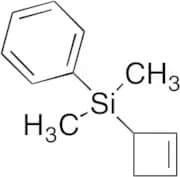
CAS :Produit contrôlé<p>Stability Volatile<br>Applications Hexamethyldisilane is an organic silylating and disilylating reagent. It is also a useful reagent for reductive coupling, reductive deuteration, aroylarylation, carbosilylation, insertion, deuteration and dimerization reactions.<br>References Xiao, G., et al.: Tetrahedron Lett., 59, 1836 (2018); Lu, A., et al.: Angew. Chem. Int. Ed., 57, 3233 (2018); Deb, M., et al.: New J. Chem., 41, 14528 (2017); Hiyama, T., et al.: e-EROS Encyclopedia of Reagents for Organic Synthesis, 1 (2010)<br></p>Formule :C6H18Si2Couleur et forme :NeatMasse moléculaire :146.38(2-Cyclobuten-1-yldimethylsilyl)benzene
CAS :Produit contrôlé<p>Applications (2-Cyclobuten-1-yldimethylsilyl)benzene is an intermediate used in synthesizing 2-Cyclobutenyl-3-trifluoromethyl-5-chloro-1H-indole-1-carboxylic Acid Ethyl Ester, which is synthesized from 5-chloro-2-oxindole (C375030), that is used in the preparation of novel GSK-3β inhibitors as anticancer agents.<br>References Choi, M.J., et al.: Bull. Korean. Chem. Soc., 32, 2015 (2011); Otani, M., et al.: Bioorg. Med. Chem. Lett.. 20, 4259 (2010); Jhan, Y.H., et al.: Tetrahedron. Lett., 54, 1155 (2013); Hsieh, J.C., et al.: Org. Biomolec. Chem., 10, 6404 (2012);<br></p>Formule :C12H16SiCouleur et forme :NeatMasse moléculaire :188.34[3-[(Trimethylsilyl)oxy]-2-cyclohexen-1-yl]-benzene
CAS :Produit contrôlé<p>Applications [3-[(Trimethylsilyl)oxy]-2-cyclohexen-1-yl]-benzene (cas# 108643-81-8) is a compound useful in organic synthesis.<br></p>Formule :C15H22OSiCouleur et forme :NeatMasse moléculaire :246.42Chlorotriethoxysilane
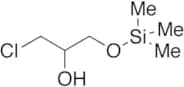
CAS :Produit contrôlé<p>Stability Moisture Sensitive<br>Applications Chlorotriethoxysilane (cas# 4667-99-6) is a useful research chemical.<br></p>Formule :C6H15ClO3SiCouleur et forme :NeatMasse moléculaire :198.72rac 1-O-Trimethylsilyl 3-Chloro-1,2-propanediol
CAS :Produit contrôlé<p>Applications rac 1-O-Trimethylsilyl 3-Chloro-1,2-propanediol (cas# 1246820-26-7) is a compound useful in organic synthesis.<br></p>Formule :C6H15ClO2SiCouleur et forme :NeatMasse moléculaire :182.72Allenylboronic acid pinacol ester
CAS :Produit contrôlé<p>Applications Allenylboronic acid pinacol ester<br></p>Formule :C9H15BO2Couleur et forme :NeatMasse moléculaire :166.03Ethyl [(tert-Butyldimethylsilyl)oxy]acetate
CAS :Produit contrôlé<p>Applications Ethyl [(tert-Butyldimethylsilyl)oxy]acetate (cas# 67226-78-2) is a compound useful in organic synthesis.<br></p>Formule :C10H22O3SiCouleur et forme :NeatMasse moléculaire :218.37[[(3,5-Dimethyl-1H-pyrrol-2-yl)(3,5-dimethyl-2H-pyrrol-2-ylidene)methyl]methane](difluoroborane)
CAS :<p>[[(3,5-Dimethyl-1H-pyrrol-2-yl)(3,5-dimethyl-2H-pyrrol-2-ylidene)methyl]methane](difluoroborane) is a compound that is used in photophysical studies. It has been shown to exhibit low energy levels and fluorescence properties. The chloro atom in this molecule has been shown to have a photostability of approximately 10 μs, which may be due to the lack of electron delocalization that would lead to a significant amount of excited state decay. This compound also exhibits fatty acid microcapsule formation and particle formation, which may be useful for confocal microscopy. [[(3,5-Dimethyl-1H-pyrrol-2-yl)(3,5-dimethyl-2H-pyrrol-2-ylidene)methyl]methane](difluorob</p>Formule :C14H17BF2N2Degré de pureté :Min. 95%Couleur et forme :Red PowderMasse moléculaire :262.11 g/molHexadecyltrimethoxysilane
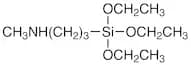
CAS :<p>Hexadecyltrimethoxysilane is a volatile organic compound that has high values in the water vapor range. It is soluble in water and organic solvents, and can be used as a surface treatment agent for hydrophobic surfaces. Hexadecyltrimethoxysilane has been shown to have antimicrobial effects against bacteria such as Staphylococcus aureus and Escherichia coli by disrupting the cell membrane. Hexadecyltrimethoxysilane also inhibits the growth of microorganisms by preventing the synthesis of proteins essential for cellular processes. The transport rate of hexadecyltrimethoxysilane is relatively slow, with an optimum concentration of about 1%. This compound does not react with sodium citrate and has chemical stability.</p>Formule :C19H42O3SiDegré de pureté :Min. 95%Couleur et forme :Clear LiquidMasse moléculaire :346.62 g/molN-Methyl-3-(triethoxysilyl)propan-1-amine
CAS :Formule :C10H25NO3SiDegré de pureté :>97.0%(GC)(T)Couleur et forme :Colorless to Light yellow clear liquidMasse moléculaire :235.401,3-Dimethyl-1,1,3,3-tetraphenyldisilazane
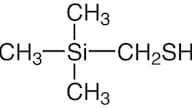
CAS :Formule :C26H27NSi2Degré de pureté :>95.0%(GC)Couleur et forme :White to Light yellow powder to crystalMasse moléculaire :409.68Trimethylsilylmethanethiol
CAS :Formule :C4H12SSiDegré de pureté :>97.0%(GC)Couleur et forme :Colorless to Almost colorless clear liquidMasse moléculaire :120.29(R)-Benzyl-2-[4-(trifluoromethyl)phenyl]-6,7-dihydro-5H-pyrrolo[2,1-c][1,2,4]triazolium Tetrafluoroborate
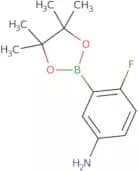
CAS :<p>(R)-Benzyl-2-[4-(trifluoromethyl)phenyl]-6,7-dihydro-5H-pyrrolo[2,1-c][1,2,4]triazolium Tetrafluoroborate is a bactericide that inhibits the production of proteins necessary for cellular growth. It has been shown to inhibit the growth of bacteria such as E. coli in vitro and in animal models. The effective dose for this drug is not known at this time.</p>Formule :C19H17BF7N3Degré de pureté :Min. 95%Couleur et forme :White PowderMasse moléculaire :431.16 g/mol4-Fluoro-3-(4,4,5,5-tetramethyl-1,3,2-dioxaborolan-2-yl)aniline
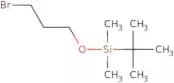
CAS :<p>4-Fluoro-3-(4,4,5,5-tetramethyl-1,3,2-dioxaborolan-2-yl)aniline is a fine chemical and a useful building block. It is used as a reagent in research laboratories and as a speciality chemical. 4-Fluoro-3-(4,4,5,5-tetramethyl-1,3,2-dioxaborolan-2-yl)aniline can be used to synthesize complex compounds that are versatile building blocks for the production of pharmaceuticals.</p>Formule :C12H17BFNO2Degré de pureté :Min. 95%Couleur et forme :White Off-White PowderMasse moléculaire :237.08 g/mol(3-Bromopropoxy)-tert-butyldimethylsilane
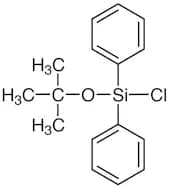
CAS :<p>(3-Bromopropoxy)-tert-butyldimethylsilane is a synthetic molecule that has been shown to inhibit prostate cancer cells. It binds to the phosphate group on the enzyme and inhibits its activity. (3-Bromopropoxy)-tert-butyldimethylsilane can be used as a chemical probe for identifying enzymes involved in phosphatase activity. This molecule has also been shown to have anti-cancer effects in vitro and in vivo assays, by preventing tumor growth and metastasis.</p>Formule :C9H21BrOSiDegré de pureté :Min. 95%Couleur et forme :PowderMasse moléculaire :253.25 g/moltert-Butoxydiphenylchlorosilane (stabilized with CaCO3)
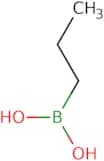
CAS :Formule :C16H19ClOSiDegré de pureté :>95.0%(GC)Couleur et forme :Colorless to Almost colorless clear liquidMasse moléculaire :290.86Propylboronic acid
CAS :<p>Propylboronic acid is a chemical compound that is used as a reagent in organic synthesis. It is a carboxylic acid and an aryl halide, which can be easily converted to other compounds by the addition of nucleophiles. Propylboronic acid has been shown to inhibit serine proteases, such as thrombin, which are involved in the coagulation of blood. It also has been shown to have anti-inflammatory properties and can be used as an antiviral agent against hepatitis C virus (HCV). The use of this chemical may lead to autoimmune diseases, such as lupus erythematosus. The mechanism for this effect is not yet clear, but it may involve inhibition of protein synthesis and induction of apoptosis.</p>Degré de pureté :Min. 95%Masse moléculaire :87.91[4-(Allyloxy)phenyl]boronic acid
CAS :<p>4-(Allyloxy)phenylboronic acid is an intermediate in the manufacture of pharmaceuticals and other organic compounds. It can be used as a building block for more complex compounds and as a reagent in organic synthesis. 4-(Allyloxy)phenylboronic acid is soluble in water and has a melting point of >200°C. This compound is a fine chemical with CAS No. 1117776-68-7 and is useful for research purposes.</p>Formule :C9H11BO3Degré de pureté :Min. 95%Couleur et forme :White PowderMasse moléculaire :177.99 g/mol2-Propynyl [3-(Triethoxysilyl)propyl]carbamate
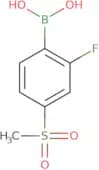
CAS :Formule :C13H25NO5SiDegré de pureté :>90.0%(GC)Couleur et forme :Colorless to Yellow clear liquidMasse moléculaire :303.43(2-Fluoro-4-methylsulfonylphenyl)boronic acid
CAS :<p>2-Fluoro-4-methylsulfonylphenyl)boronic acid is a fine chemical that is useful as a scaffold for the production of other compounds. It can be used as a versatile building block in organic synthesis, and is often used as an intermediate or research chemical. 2-Fluoro-4-methylsulfonylphenyl)boronic acid has been shown to react with many different types of compounds, making it a valuable reagent. This compound is also known for its high quality, which makes it an excellent choice for use in reactions that require speciality chemicals.</p>Formule :C7H8BFO4SDegré de pureté :Min. 95%Couleur et forme :White PowderMasse moléculaire :218.01 g/mol(3,5-Dibromophenyl)triphenylsilane
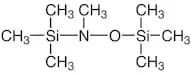
CAS :Formule :C24H18Br2SiDegré de pureté :>98.0%(GC)Couleur et forme :White to Light yellow powder to crystalMasse moléculaire :494.30N-Methyl-N,O-bis(trimethylsilyl)hydroxylamine
CAS :Formule :C7H21NOSi2Degré de pureté :>98.0%(T)Couleur et forme :Colorless to Light yellow to Light orange clear liquidMasse moléculaire :191.42Poly(methylphenylsiloxane)
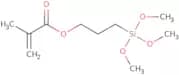
CAS :<p>Poly(methylphenylsiloxane) is a polymer that can be synthesized in a number of ways, but the most common method involves the use of an initiator to start the process. This polymerization process begins by adding a phenyl group (a hydrocarbon molecule consisting of a benzene ring with two hydrogens and one or more hydroxyl groups) to a siloxane chain, which is made up of alternating silicon and oxygen atoms. The structure is then extended by adding more phenyl groups in order to build the desired polymer. Poly(methylphenylsiloxane) has been shown to have an activation energy of 22.0 kJ/mol, as determined by electrochemical impedance spectroscopy. It also has optical properties that depend on its molecular weight, with low-molecular weight polymers being transparent while higher-molecular weight polymers become translucent or opaque.</p>Formule :(C7H8OSi)nCouleur et forme :Clear Liquid3-Methacryloxypropyltrimethoxysilane
CAS :<p>3-Methacryloxypropyltrimethoxysilane is a silane that has been modified with an acrylic group. It is used as an additive for the production of coatings, adhesives, and sealants. 3-Methacryloxypropyltrimethoxysilane is resistant to hydrochloric acid and other chemicals. It is also stable in water and light exposure. This product has shown to have high adsorption properties, which may be due to its hydroxyl groups. 3-Methacryloxypropyltrimethoxysilane has also been shown to have coupling properties that are advantageous for use with polymers and plastics.</p>Formule :C10H20O5SiDegré de pureté :Min. 95%Couleur et forme :Colorless Clear LiquidMasse moléculaire :248.35 g/mol1-Methyl-3-[3-(trimethoxysilyl)propyl]-1H-imidazol-3-ium Chloride
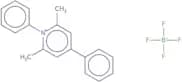
CAS :Formule :C10H21ClN2O3SiDegré de pureté :>95.0%(T)(HPLC)Couleur et forme :Colorless to Light yellow to Light orange clear liquidMasse moléculaire :280.822,6-Dimethyl-1,4-diphenylpyridinium tetrafluoroborate
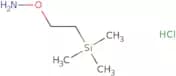
CAS :<p>2,6-Dimethyl-1,4-diphenylpyridinium tetrafluoroborate is a high quality reagent that can be used as a useful intermediate in the synthesis of fine chemicals. It is used as an important building block in the synthesis of many organic compounds and is also an important reaction component. This compound has a wide range of uses and can be used as a versatile building block in organic synthesis or as a speciality chemical for research purposes.</p>Formule :C19H18N·BF4Degré de pureté :Min. 95%Masse moléculaire :347.16 g/molO-(2-Trimethylsilylethyl)hydroxylamine HCl
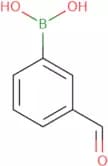
CAS :<p>O-(2-Trimethylsilylethyl)hydroxylamine HCl is a fine chemical that can be used as a versatile building block in the synthesis of complex compounds. It is also an intermediate for research chemicals, reagents, and speciality chemicals. O-(2-Trimethylsilylethyl)hydroxylamine HCl can be used as a reaction component in organic synthesis and has been shown to be useful in the synthesis of new scaffolds.</p>Formule :C5H15NOSi·HClDegré de pureté :Min. 95%Couleur et forme :White PowderMasse moléculaire :169.72 g/mol3-Formylphenylboronic acid - 80%
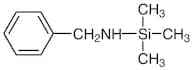
CAS :<p>3-Formylphenylboronic acid is an apical ligand with a phenylpropionic acid substituent. It has been shown to have hypoglycemic effects in rats, and binding constants for proteins ranging from 10 μM to 1 mM. 3-Formylphenylboronic acid binds to the chelate ligand of a macrocyclic structure, which is a molecule consisting of two or more rings that are linked together. This compound has been shown to have inhibitory effects on both the enzyme (vibrational) and fluorescence resonance energy transfer (FRET).</p>Formule :C7H7BO3Degré de pureté :Min. 95%Couleur et forme :PowderMasse moléculaire :149.94 g/molN-Benzyltrimethylsilylamine
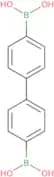
CAS :Formule :C10H17NSiDegré de pureté :>98.0%(T)Couleur et forme :Colorless to Almost colorless clear liquidMasse moléculaire :179.344,4'-Biphenyldiboronic acid
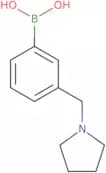
CAS :<p>4,4'-Biphenyldiboronic acid is a boronate ester that can be used as a cross-linker in the synthesis of polymers. It is soluble in organic solvents, but insoluble in water. The chemical structure of 4,4'-biphenyldiboronic acid consists of two phenyl groups and one boronic acid group. This compound has been shown to have a spacing between 2.2 and 2.4 Å for germanium atoms and has been used for microscopy studies with morphology and diffraction experiments.</p>Formule :C12H12B2O4Degré de pureté :Min. 95%Couleur et forme :White Off-White PowderMasse moléculaire :241.84 g/mol(3-(Pyrrolidin-1-ylmethyl)phenyl)boronic acid
CAS :<p>(3-(Pyrrolidin-1-ylmethyl)phenyl)boronic acid (BPABA) is a fine chemical that is a useful building block in the synthesis of organic compounds. It is also a reagent in organic chemistry and research, as well as a speciality chemical and high quality compound. BPABA is versatile as a building block for the synthesis of complex compounds. It has been used in reactions with many different types of substrates, including nucleophilic addition to unsaturated carbon-carbon bonds, alkylation, vinylation, and Michael reaction. BPABA has been shown to be an effective intermediate for the synthesis of biologically active compounds such as antibiotics and antifungals. BPABA is also used for the synthesis of scaffolds in organic chemistry, such as polymers and nanomaterials.</p>Formule :C11H16BNO2Degré de pureté :Min. 95%Couleur et forme :PowderMasse moléculaire :205.06 g/molEthylenedithiobis(trimethylsilane) [Protecting Reagent for Aldehydes and Ketones]
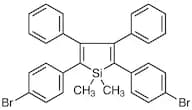
CAS :Formule :C8H22S2Si2Degré de pureté :>97.0%(GC)Couleur et forme :Colorless to Almost colorless clear liquidMasse moléculaire :238.552,5-Bis(4-bromophenyl)-1,1-dimethyl-3,4-diphenylsilole
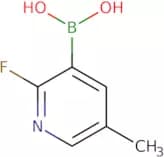
CAS :Formule :C30H24Br2SiDegré de pureté :>95.0%(GC)Couleur et forme :Light yellow to Yellow powder to crystalMasse moléculaire :572.422-Fluoro-5-methylpyridine-3-boronic acid
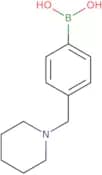
CAS :<p>2-Fluoro-5-methylpyridine-3-boronic acid is a high quality chemical with CAS No. 1072952-45-4 that is a useful building block for the synthesis of complex compounds and speciality chemicals. 2-Fluoro-5-methylpyridine-3-boronic acid is also a versatile building block that can be used in organic reactions as a reaction component for the synthesis of speciality chemicals and other reagents. It can also be used to make fluoroquinolones and related pharmaceuticals, which are used to treat bacterial infections. This compound has many uses in research, including being a valuable scaffold for the synthesis of new drugs.</p>Formule :C6H7BFNO2Degré de pureté :Min. 95%Couleur et forme :White PowderMasse moléculaire :154.93 g/mol4-(1-Piperidylmethyl)phenylboronic acid
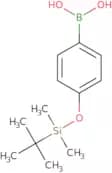
CAS :<p>4-(1-Piperidylmethyl)phenylboronic acid is a fine chemical that is used as a versatile building block in the synthesis of complex compounds. It has been used as a reagent and speciality chemical in research. 4-(1-Piperidylmethyl)phenylboronic acid is also a useful intermediate in organic synthesis, and can be used as a reaction component or scaffold for the preparation of other chemicals.</p>Formule :C12H18BNO2Degré de pureté :Min. 95%Couleur et forme :PowderMasse moléculaire :219.09 g/mol4-(tert-Butyldimethylsilyloxy)phenylboronic acid
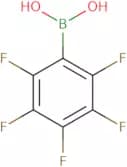
CAS :<p>4-(tert-Butyldimethylsilyloxy)phenylboronic acid (BSPOH) is a molecule that has been shown to have growth factor activity. Studies have shown that BSPOH can stimulate the uptake of iron in cells, which may be due to its ability to increase hepcidin production. This compound also has anti-cancer properties and can induce apoptosis in cancer cell lines.</p>Formule :C12H21BO3SiDegré de pureté :Min. 95%Couleur et forme :White PowderMasse moléculaire :252.19 g/molPentafluorobenzeneboronic acid
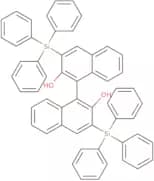
CAS :<p>Pentafluorobenzeneboronic acid is a boronic acid that is used in the synthesis of cationic polymers for use as an environmentally friendly alternative to perfluoroalkyl compounds. Pentafluorobenzeneboronic acid can be synthesized by the reaction of hydrochloric acid and pentafluorophenol. The energy efficiency of this molecule is low, which makes it an attractive candidate for use in polymer synthesis. Pentafluorobenzeneboronic acid reacts with nucleophiles at its α carbon to form a covalent linkage, which is reversible under certain conditions. This chemical has been shown to react with β-unsaturated ketones and trifluoroacetic acid to form polyenes with control experiments being done by adding ammonia gas or water to the reaction mixture.</p>Formule :C6H2BF5O2Degré de pureté :Min. 95%Couleur et forme :SolidMasse moléculaire :211.88 g/mol(R)-3,3'-Bis(triphenylsilyl)-1,1'-binaphthalene-2,2'-diol
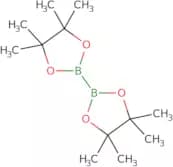
CAS :<p>(R)-3,3'-Bis(triphenylsilyl)-1,1'-binaphthalene-2,2'-diol is a high quality chemical and useful scaffold that can be used as a reagent for the synthesis of complex compounds. This compound has CAS No. 111822-69-6 and is an intermediate for the preparation of fine chemicals and speciality chemicals. It is also a versatile building block that can be used in research or as a reaction component to produce useful scaffolds.</p>Formule :C56H42O2Si2Degré de pureté :Min. 95%Couleur et forme :White PowderMasse moléculaire :803.1 g/molBis(pinacolato)diboron
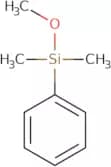
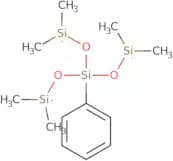
CAS :<p>Bis(pinacolato)diboron is a versatile reagent that is used in organic synthesis. It is a boron-containing compound that inhibits the reaction between amines and hydroxide solutions, forming an intermediate copper complex with a carbonyl group. The mechanism of this inhibition has been explored and found to be due to the presence of a hydroxyl group on the bis(pinacolato)diboron molecule. Bis(pinacolato)diboron reacts with an amine to form an adduct containing a boron-nitrogen double bond. This intermediate then reacts with hydroxide ions from the solution to form the final product, which contains both an amine and hydroxyl groups. The isolated yield of this reaction is typically low, but can be increased by using palladium as a catalyst.</p>Formule :C12H24B2O4Degré de pureté :Min. 98 Area-%Couleur et forme :PowderMasse moléculaire :253.94 g/mol3-(Dimethylsilyloxy)-1,1,5,5-tetramethyl-3-phenyltrisiloxane
CAS :<p>3-(Dimethylsilyloxy)-1,1,5,5-tetramethyl-3-phenyltrisiloxane is a silicon compound that is an organosilicon. It has three functional groups: polyols, fatty acids and silanes. 3-(Dimethylsilyloxy)-1,1,5,5-tetramethyl-3-phenyltrisiloxane is used as a monomer in the production of polydimethylsiloxane polymers. 3-(Dimethylsilyloxy)-1,1,5,5-tetramethyl-3-phenyltrisiloxane is also used as a waveguide material in optical devices.</p>Formule :C12H26O3Si4Degré de pureté :Min. 95%Couleur et forme :PowderMasse moléculaire :330.68 g/mol2-(Trifluoromethoxy)phenylboronic acid
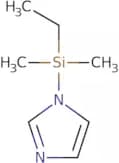
CAS :<p>2-(Trifluoromethoxy)phenylboronic acid (2-TFB) is a boronic acid that is used in cross-coupling reactions. It has been shown to be an effective inhibitor of the Vismodegib pathway, which may offer therapeutic benefits for cancer patients. 2-TFB has also been shown to inhibit the activity of other pathways involved in cancer development, such as the benzamide and suzuki pathways. 2-TFB is metabolized through filtration, which can lead to significant pharmacokinetic properties. This compound can be recycled and reused in cross-coupling reactions, which reduces waste production and costs.</p>Formule :C7H6BF3O3Degré de pureté :Min. 95%Couleur et forme :PowderMasse moléculaire :205.93 g/molDimethylethylsilylimidazole
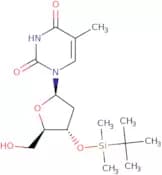
CAS :<p>Dimethylethylsilylimidazole (DMS) is a drug that inhibits the activity of certain enzymes and transporters. It binds to the toll-like receptor and activates downstream signalling pathways, leading to an increased production of reactive oxygen species. DMS also inhibits the activity of DNA polymerase and prevents transcriptional elongation by blocking the dinucleotide phosphate-dependent enzyme. DMS has been shown to be effective in treating chronic cough caused by squamous cell carcinoma. This drug can have adverse effects on other drugs that are metabolized through cytochrome P450 enzymes or are substrates for P-glycoprotein transporters.</p>Formule :C7H14N2SiDegré de pureté :Min. 95%Masse moléculaire :154.29 g/mol3’-O-t-Bulyldimethylsilyl thymidine
CAS :<p>3’-O-t-Bulyldimethylsilyl thymidine is a nucleoside analog that is chemically stable and has been shown to be a potential biomarker for the diagnosis of fetal bovine spongiform encephalopathy (BSE). 3’-O-t-Bulyldimethylsilyl thymidine binds to basic proteins in the cell nucleus, which can be detected by immunoassay. It also has been shown to inhibit protein synthesis in tubule cells of the kidney and skin cancer cells. The drug is metabolized by dephosphorylation to t-butyldeoxyuridine, which is then converted into thymidine.</p>Formule :C16H28N2O5SiDegré de pureté :Min. 95%Couleur et forme :White PowderMasse moléculaire :356.49 g/molDecamethylcyclopentasiloxane
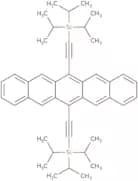
CAS :<p>Decamethylcyclopentasiloxane is a compound that is used in wastewater treatment. It is used as a co-solvent in the removal of fatty acids from wastewater by adsorption on activated carbon. Decamethylcyclopentasiloxane has been shown to be less toxic than other solvents, such as pergolide mesylate, and can be used for the removal of fatty acids from wastewater by adsorption on activated carbon. The process involves the formation of decamethylcyclopentasiloxane-fatty acid complexes at the surface of activated carbon particles. Decamethylcyclopentasiloxane does not cause chronic exposure or emit particles when subjected to high temperatures.</p>Formule :C10H30O5Si5Degré de pureté :Min. 95%Couleur et forme :Colorless Clear LiquidMasse moléculaire :370.77 g/mol6,13-Bis(triisopropylsilylethynyl)pentacene
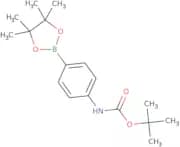
CAS :<p>High performance small molecule for OFET applications</p>Formule :C44H54Si2Degré de pureté :Min. 95%Couleur et forme :Blue PowderMasse moléculaire :639.07 g/moltert-Butyl (4-(4,4,5,5-tetramethyl-1,3,2-dioxaborolan-2-yl)phenyl)carbamate
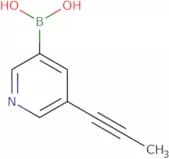
CAS :<p>Tert-butyl (4-(4,4,5,5-tetramethyl-1,3,2-dioxaborolan-2-yl)phenyl)carbamate is a potent antitumor agent that inhibits the proliferation of human tumor cells. It binds to isoforms of protein kinase C and inhibits the activity of protein kinase C. Tert-butyl (4-(4,4,5,5-tetramethyl-1,3,2-dioxaborolan-2-yl)phenyl)carbamate has been shown to have strong inhibitory potency against human tumor cells in cell culture assays with IC50 values as low as 1 nanomolar. The compound has also been shown to selectively inhibit certain cancer cell lines in mice with no effect on normal tissue or other cancerous cells.</p>Formule :C17H26BNO4Degré de pureté :Min. 95%Couleur et forme :White PowderMasse moléculaire :319.2 g/mol(5-(Prop-1-yn-1-yl)pyridin-3-yl)boronic acid
CAS :<p>(5-(Prop-1-yn-1-yl)pyridin-3-yl)boronic acid is a versatile building block that has been used in the synthesis of complex compounds, reagents, and speciality chemicals. It can also be used in reactions as a reaction component or scaffold. This chemical is soluble in most organic solvents and can be used as a high quality intermediate for synthesis of pharmaceuticals or research chemicals. It has been shown to have a CAS number of 917471-30-8.</p>Formule :C8H8BNO2Degré de pureté :Min. 95%Couleur et forme :PowderMasse moléculaire :160.97 g/molAzure B Tetrafluoroborate
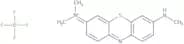
CAS :<p>Azure B Tetrafluoroborate is a potentiator for antibiotics. It is used to enhance the antibacterial efficacy of antibiotics by increasing their ability to penetrate tissues and bacterial biofilms. Azure B Tetrafluoroborate is an organic solvent that can be applied with a handpiece or cavity instrument. It has been shown to increase the in vitro activity of various antibiotics against gram-negative organisms and can be used as a polymeric matrix for coating medical devices such as catheters, endoscopes, and implants. The mechanism of action involves activation of the chemical species within the antibiotic molecule, which then reacts with diode-pumped solid state laser radiation to produce luminescence reactions.</p>Formule :C15H16N3S·BF4Degré de pureté :Min. 95%Masse moléculaire :357.18 g/mol1,2-Bis(chlorodimethylsilyl)ethane [Protecting Reagent for Primary Amines]
CAS :Formule :C6H16Cl2Si2Degré de pureté :>95.0%(GC)Couleur et forme :White or Colorless to Almost white or Almost colorless powder to lump to clear liquidMasse moléculaire :215.262-Cyanoethyltriethoxysilane
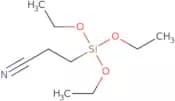
CAS :<p>2-Cyanoethyltriethoxysilane is a cross-linking agent that is used in coatings and adhesives. It has been shown to have an adsorption mechanism that is dependent on the pH of the solution, with a maximum adsorption at pH 3.2 and a minimum at pH 11. The rate of adsorption is also dependent on the concentration of 2-cyanoethyltriethoxysilane, with higher concentrations leading to faster adsorption rates. Kinetic data for 2-cyanoethyltriethoxysilane has been shown using gravimetric analysis to show that it has an adsorption rate constant of 1.0 × 10^4 s^(-1) at pH 3.2 and 6.5 × 10^4 s^(-1) at pH 11, which are independent of the concentration of this molecule in solution. Pluronic P123 was used as a model polymer</p>Formule :C9H19NO3SiDegré de pureté :Min. 97 Area-%Couleur et forme :PowderMasse moléculaire :217.34 g/mol2-Difluoromethoxyphenylboronic acid pinacol ester
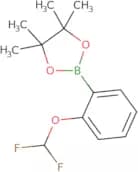
CAS :<p>2-Difluoromethoxyphenylboronic acid pinacol ester is a high quality reagent that can be used as a useful intermediate, fine chemical, or speciality chemical in reactions. This compound is an important building block for synthesizing other chemicals and can also be used to make novel compounds with pharmaceutical properties. 2-Difluoromethoxyphenylboronic acid pinacol ester is versatile and can be used in many different reactions. It has been reported to react with various other molecules to form new scaffolds and building blocks for use in organic synthesis.</p>Formule :C13H17BF2O3Degré de pureté :Min. 95%Couleur et forme :PowderMasse moléculaire :270.08 g/mol3-(Trimethylsilyl)-2-naphthyl trifluoromethanesulfonate
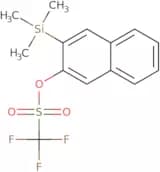
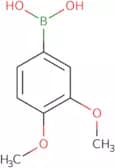
CAS :<p>3-(Trimethylsilyl)-2-naphthyl trifluoromethanesulfonate is a synthetic molecule that is used to synthesize benzofurans. 3-(Trimethylsilyl)-2-naphthyl trifluoromethanesulfonate is activated by reaction with N-bromosuccinimide, which creates an electrophilic carbon center. This electrophilic center reacts with nucleophiles such as alcohols, amines, and thiols to form a new bond. The product of this reaction is benzoylated, which can then undergo further reactions to form other compounds. X-ray crystallography has been used to characterize the structure of 3-(trimethylsilyl)-2-naphthyl trifluoromethanesulfonate.</p>Formule :C14H15F3O3SSiDegré de pureté :Min. 95%Couleur et forme :Colorless Clear LiquidMasse moléculaire :348.41 g/mol3,4-Dimethoxyphenylboronic acid
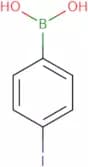
CAS :<p>3,4-Dimethoxyphenylboronic acid is a boronate ester that has been shown to be an effective coupling partner for the Suzuki reaction. It has also been used in cancer therapy and as a photochemical probe for the study of biological properties. 3,4-Dimethoxyphenylboronic acid has been shown to demethylate DNA and inhibit methionine aminopeptidase activity. It also cross-couples with halides, such as chlorides or iodides, and activates tertiary alcohols. 3,4-Dimethoxyphenylboronic acid is soluble in organic solvents and can be used in supramolecular chemistry.</p>Formule :C8H11BO4Degré de pureté :Min. 95%Couleur et forme :White PowderMasse moléculaire :181.98 g/mol4-Iodophenylboronic acid
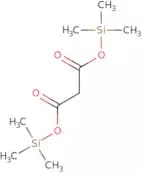
CAS :<p>4-Iodophenylboronic acid is a chemical compound that has been shown to bind to disaccharides and form hydrogen bonding interactions. It has also been shown to enhance the chemiluminescence of ethylene diamine in a light emission assay, which is due to its ability to bind to fatty acids. 4-Iodophenylboronic acid has been used in studies on tumor xenografts and optical properties. 4-Iodophenylboronic acid has also been shown to have vibrational and nmr spectra that differ from other boronic acids. This compound is unique because it binds with water molecules more strongly than any other boronic acid.</p>Formule :C6H6BIO2Degré de pureté :Min. 95%Couleur et forme :PowderMasse moléculaire :247.83 g/molBis(trimethylsilyl)malonate
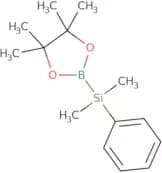
CAS :<p>Bis(trimethylsilyl)malonate is a molecule that is used as a reagent in organic chemistry. It is an ethyl ester of malonic acid and can be synthesized using phosphorus pentoxide and the methyl ketones. The synthesis of covid-19, a pandemic antiviral drug, requires this chemical. Covid-19 has been shown to have anticancer activity in animal studies, as well as clinical chemistry applications for colorectal carcinoma.</p>Formule :C9H20O4Si2Degré de pureté :Min. 95%Couleur et forme :Colourless To Yellow LiquidMasse moléculaire :248.42 g/mol2-(Dimethylphenylsilyl)-4,4,5,5-tetramethyl-1,3,2-dioxaborolane
CAS :<p>2-(Dimethylphenylsilyl)-4,4,5,5-tetramethyl-1,3,2-dioxaborolane is a chiral ligand that can be used in asymmetric synthesis. It has been shown to be effective in the palladium-catalyzed cross-coupling of aldehydes with organoboronic acids. 2-(Dimethylphenylsilyl)-4,4,5,5-tetramethyl-1,3,2-dioxaborolane inhibits the formation of an undesired enolate by binding to the silicon atom and sterically preventing nucleophilic attack at this site. This ligand is also selective for anions with a single negative charge such as chloride and bromide.</p>Formule :C14H23BO2SiDegré de pureté :Min. 95%Couleur et forme :Yellow PowderMasse moléculaire :262.23 g/mol6-(4,4,5,5-Tetramethyl-[1,3,2]dioxaborolan-2-yl)-isoquinoline
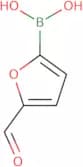
CAS :<p>6-(4,4,5,5-Tetramethyl-[1,3,2]dioxaborolan-2-yl)-isoquinoline is a versatile building block for the synthesis of complex compounds. This product is a reagent that can be used in organic synthesis as a reaction component or as a reagent to form new compounds. 6-(4,4,5,5-Tetramethyl-[1,3,2]dioxaborolan-2-yl)-isoquinoline has shown high quality in research and is useful for the synthesis of fine chemicals and speciality chemicals.</p>Formule :C15H18BNO2Degré de pureté :Min. 95%Couleur et forme :White To Beige SolidMasse moléculaire :255.12 g/mol5-Formylfuran-2-boronic acid
CAS :<p>5-Formylfuran-2-boronic acid is a compound that has been shown to be used in the synthesis of Pd complexes. This compound was found to inhibit the soluble guanylate cyclase and sirtuin 2 enzyme. It also has been shown to have anti-cancer effects, as it may inhibit cancer cell proliferation. 5-Formylfuran-2-boronic acid has been shown to increase the transport properties of potassium dichromate, which may be due to its acidic nature. This red fluorescent compound is soluble in organic solvents and can be activated by light. The optimum concentration of 5-Formylfuran-2-boronic acid is 3 mM in an acidic solution at room temperature.</p>Formule :C5H5BO4Degré de pureté :Min. 95%Couleur et forme :Yellow SolidMasse moléculaire :139.9 g/mol




![4-Bromo-1-((2-(trimethylsilyl)ethoxy)methyl)-1H-pyrrolo[2,3-b]pyridine](/_next/image/?url=https%3A%2Fstatic.cymitquimica.com%2Fproducts%2F10%2Fthumb-webp%2FF600247.webp&w=3840&q=75)



![3-[[(1,1-Dimethylethyl)diphenylsilyl]oxy]-1,2-propanediol](/_next/image/?url=https%3A%2Fstatic.cymitquimica.com%2Fproducts%2FTR%2Fthumb-webp%2FD182005.webp&w=3840&q=75)
![N-(Methoxymethyl)-N-[(trimethylsilyl)methyl]benzenemethanamine (>90%)](/_next/image/?url=https%3A%2Fstatic.cymitquimica.com%2Fproducts%2FTR%2Fthumb-webp%2FM264620.webp&w=3840&q=75)

![3-[(tert-Butyldimethylsilyl)oxy]-1-propanol](/_next/image/?url=https%3A%2Fstatic.cymitquimica.com%2Fproducts%2FTR%2Fthumb-webp%2FB691575.webp&w=3840&q=75)

![[3-[(Trimethylsilyl)oxy]-2-cyclohexen-1-yl]-benzene](/_next/image/?url=https%3A%2Fstatic.cymitquimica.com%2Fproducts%2FTR%2Fthumb-webp%2FT796875.webp&w=3840&q=75)


![Ethyl [(tert-Butyldimethylsilyl)oxy]acetate](/_next/image/?url=https%3A%2Fstatic.cymitquimica.com%2Fproducts%2FTR%2Fthumb-webp%2FE900620.webp&w=3840&q=75)
![[[(3,5-Dimethyl-1H-pyrrol-2-yl)(3,5-dimethyl-2H-pyrrol-2-ylidene)methyl]methane](difluoroborane)](/_next/image/?url=https%3A%2Fstatic.cymitquimica.com%2Fproducts%2F3D%2Fthumb-webp%2FFD62165.webp&w=3840&q=75)




![(R)-Benzyl-2-[4-(trifluoromethyl)phenyl]-6,7-dihydro-5H-pyrrolo[2,1-c][1,2,4]triazolium Tetrafluor…](/_next/image/?url=https%3A%2Fstatic.cymitquimica.com%2Fproducts%2F3D%2Fthumb-webp%2FFB59921.webp&w=3840&q=75)
![[4-(Allyloxy)phenyl]boronic acid](/_next/image/?url=https%3A%2Fstatic.cymitquimica.com%2Fproducts%2F3D%2Fthumb-webp%2FFA121987.webp&w=3840&q=75)
![2-Propynyl [3-(Triethoxysilyl)propyl]carbamate](/_next/image/?url=https%3A%2Fstatic.cymitquimica.com%2Fproducts%2F3B%2Fthumb-webp%2FP2258.webp&w=3840&q=75)

![1-Methyl-3-[3-(trimethoxysilyl)propyl]-1H-imidazol-3-ium Chloride](/_next/image/?url=https%3A%2Fstatic.cymitquimica.com%2Fproducts%2F3B%2Fthumb-webp%2FM3446.webp&w=3840&q=75)
![Ethylenedithiobis(trimethylsilane) [Protecting Reagent for Aldehydes and Ketones]](/_next/image/?url=https%3A%2Fstatic.cymitquimica.com%2Fproducts%2F3B%2Fthumb-webp%2FE0479.webp&w=3840&q=75)

![1,2-Bis(chlorodimethylsilyl)ethane [Protecting Reagent for Primary Amines]](/_next/image/?url=https%3A%2Fstatic.cymitquimica.com%2Fproducts%2F3B%2Fthumb-webp%2FB1688.webp&w=3840&q=75)
![6-(4,4,5,5-Tetramethyl-[1,3,2]dioxaborolan-2-yl)-isoquinoline](/_next/image/?url=https%3A%2Fstatic.cymitquimica.com%2Fproducts%2F3D%2Fthumb-webp%2FFT76191.webp&w=3840&q=75)