Composés organosiliciés
Dans cette section, vous trouverez un grand nombre de composés organosiliciés. Les composés organosiliciés sont caractérisés par des atomes de carbone liés à des atomes de silicium. D'autres composés non métalliques peuvent également être présents. Ces composés sont largement utilisés en synthèse organique, en science des matériaux et en pharmaceutique en raison de leurs propriétés chimiques uniques. Chez CymitQuimica, nous offrons une large gamme de composés organosiliciés de haute qualité pour soutenir vos recherches et projets industriels.
Sous-catégories appartenant à la catégorie "Composés organosiliciés"
4325 produits trouvés pour "Composés organosiliciés"
Trier par
Degré de pureté (%)
0
100
|
0
|
50
|
90
|
95
|
100
1,2,2-Trimethylcyclopropyl Boronic Acid
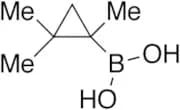
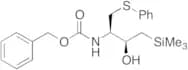
Produit contrôlé<p>Applications 1,2,2-Trimethylcyclopropyl Boronic Acid is the boronic acid analogue of 1,2,2-Trimethylcyclopropane. Boronic acid derivatives are widely used in several applications in organic synthesis.<br></p>Formule :C6H13BO2Couleur et forme :NeatMasse moléculaire :127.977Benzyl ((2R,3S)-3-Hydroxy-1-(phenylthio)-4-(trimethylsilyl)butan-2-yl)carbamate
Produit contrôléFormule :C21H29NO3SSiCouleur et forme :NeatMasse moléculaire :403.614-[[[(1,1-Dimethylethyl)diphenylsilyl]oxy]methyl]-2,2-dimethyl-1,3-dioxolane
CAS :Produit contrôlé<p>Applications 4-[[[(1,1-Dimethylethyl)diphenylsilyl]oxy]methyl]-2,2-dimethyl-1,3-dioxolane is an intermediate in the synthesis of 1,2-Dioleoyl-rac-glycerol (D482175), which is an analog of 1,3-Dioleoylglycerol (D484210) which is used in the synthesis of amphiphilic gadolinium complexes as MRI contrast agents.<br>References Accardo, A., et. al.: J. Mater. Chem. B., 1, 617 (2013)<br></p>Formule :C22H30O3SiCouleur et forme :NeatMasse moléculaire :370.5572-tert-Butyldimethylsilyloxyethanol
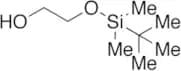
CAS :Produit contrôlé<p>Stability Acid Sensitive<br>Applications 2-tert-Butyldimethylsilyloxyethanol (cas# 102229-10-7) is a compound useful in organic synthesis.<br> Not a dangerous good if item is equal to or less than 1g/ml and there is less than 100g/ml in the package<br></p>Formule :C8H20O2SiCouleur et forme :NeatMasse moléculaire :176.333-(Tetramethyl-1,3,2-dioxaborolan-2-yl)-cyclohex-2-enone
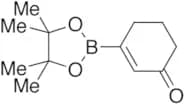
CAS :Produit contrôléFormule :C12H19BO3Couleur et forme :NeatMasse moléculaire :222.089Benzothiophene-5-boronic acid
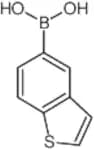
CAS :Produit contrôlé<p>Applications Benzothiophene-5-boronic acid<br></p>Formule :C8H7BO2SCouleur et forme :NeatMasse moléculaire :178.022,6-Dimethyl-4-pyridylboronic Acid
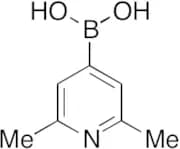
CAS :Produit contrôléFormule :C7H10BNO2Couleur et forme :NeatMasse moléculaire :150.971(4-Ethynylphenyl)trimethylsilane
CAS :<p>Applications (4-Ethynylphenyl)trimethylsilane (cas# 16116-92-0) is a useful research chemical.<br></p>Formule :C11H14SiCouleur et forme :Colourless OilMasse moléculaire :174.324-[[(1,1-Dimethylethyl)dimethylsilyl]oxy]-1-butanamine
CAS :Produit contrôlé<p>Applications 4-[[(1,1-Dimethylethyl)dimethylsilyl]oxy]-1-butanamine is a reactant that is used for the synthesis of various racemic and biotinylation of azamacrocycles.<br>References Krivickas, S.J., et al.: J. Org. Chem. 72, 8280 (2007).<br></p>Formule :C10H25NOSiCouleur et forme :ColourlessMasse moléculaire :203.42-Hydroxyphenylboronic acid
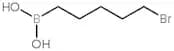
CAS :Produit contrôlé<p>Applications 2-Hydroxyphenylboronic acid<br></p>Formule :C6H7BO3Couleur et forme :NeatMasse moléculaire :137.935-Bromopentylboronic acid
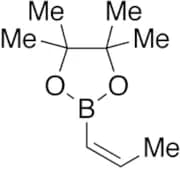
CAS :Produit contrôlé<p>Applications 5-Bromopentylboronic Acid<br></p>Formule :C5H12BBrO2Couleur et forme :NeatMasse moléculaire :194.86cis-1-Propenylboronic Acid Pinacol Ester
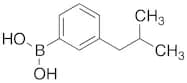
CAS :Produit contrôléFormule :C9H17BO2Couleur et forme :NeatMasse moléculaire :168.0413-Isobutylphenylboronic Acid
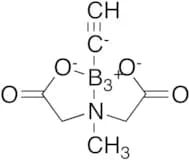
CAS :Produit contrôléFormule :C10H15BO2Couleur et forme :NeatMasse moléculaire :178.036Ethynylboronic Acid MIDA Ester (>90%)
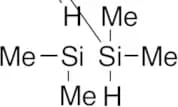
CAS :Produit contrôlé<p>Applications Ethynylboronic Acid MIDA Ester is a useful reagent in preparatino of borono-substited 1(2H)-isoquinolinones by rhodium-catalyzed cycloaddition.<br>References Wang, H., et al.: J. Am. Chem. Soc., 134, 19592 (2012);<br></p>Formule :C7H8BNO4Degré de pureté :>90%Couleur et forme :NeatMasse moléculaire :180.95sym-Tetramethyldisilane
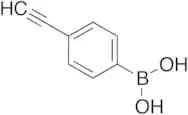
CAS :Produit contrôléFormule :C4H14Si2Couleur et forme :NeatMasse moléculaire :118.3254-(Dihydroxyborophenyl)acetylene
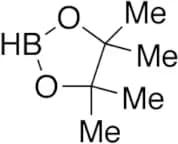
CAS :Produit contrôlé<p>Applications 4-(Dihydroxyborophenyl)acetylene is a reagent used in organic synthesis . It is used in the preparation of purine analogs as PI4K IIIβ inhibitors used in cancer treatment. As well, used in the preparation of demethylase inhibitors for their potential as anti-tumor drugs.<br>References Sala, M. et al. Bioorg. Med. Chem. Lett., 26, 2706 (2016); Wu, F. et al.: J. Med. Chem., 59, 253 (2016);<br></p>Formule :C8H7BO2Couleur et forme :NeatMasse moléculaire :145.95Pinacolborane
CAS :Produit contrôlé<p>Stability Air Sensitive, Moisture Sensitive<br>Applications It is used for synthesis of unsymmetrical biaryls via aromatic C-H borylation-cross-coupling sequence.<br>References Stephens, T. et al.: Org. Lett., 19, 3498 (2017);<br></p>Formule :C6H13BO2Couleur et forme :NeatMasse moléculaire :127.983-Acetylphenylboronic acid
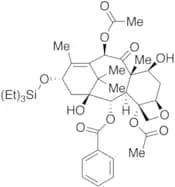
CAS :Produit contrôlé<p>Applications 3-Acetylphenylboronic acid<br></p>Formule :C8H9BO3Couleur et forme :NeatMasse moléculaire :163.9713-O-(Triethylsilyl) Baccatin III
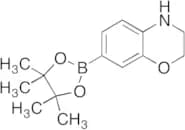
CAS :Produit contrôlé<p>Impurity Paclitaxel - In House Impurity<br>Applications Protected Baccatin III. Paclitaxel - In House Impurity.<br></p>Formule :C37H52O11SiCouleur et forme :NeatMasse moléculaire :700.893,4-Dihydro-2H-1,4-benzoxazine-7-boronic Acid Pinacol Ester
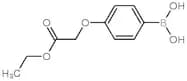
CAS :Produit contrôlé<p>Applications 3,4-Dihydro-2H-1,4-benzoxazine-7-boronic acid pinacol ester is a useful intermediate for the synthesis of naphthamides which functions as VEGFR-2 kinase inhibitors for cancer treatment.<br>References Lv, Y., et al.: ACS Med. Chem. Lett., 5, 592 (2014)<br></p>Formule :C14H20BNO3Couleur et forme :NeatMasse moléculaire :261.124-(2-Ethoxy-2-oxoethoxy)phenylboronic Acid
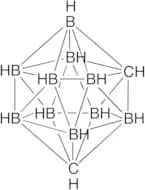
CAS :Produit contrôlé<p>Applications 4-(2-Ethoxy-2-oxoethoxy)phenylboronic acid<br></p>Formule :C10H13BO5Couleur et forme :NeatMasse moléculaire :224.02m-Carborane
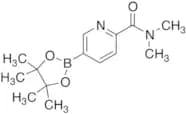
CAS :Produit contrôlé<p>Applications m-Carborane, 98% (cas# 16986-24-6) is a useful research chemical.<br></p>Formule :C2B10Couleur et forme :NeatMasse moléculaire :132.131N,N-Dimethyl-5-(4,4,5,5-tetramethyl-1,3,2-dioxaborolan-2-yl)picolinamide
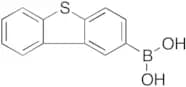
CAS :Produit contrôléFormule :C14H21BN2O3Couleur et forme :NeatMasse moléculaire :276.139Dibenzothiophene-2-boronic acid
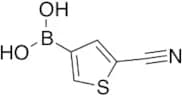
CAS :Produit contrôlé<p>Applications Dibenzothiophene-2-boronic acid is a useful reagent for organic synthesis and other chemical processes.<br>References Duncton, M. A. J., et al.: Org. Lett., 10, 3259 (2008)<br></p>Formule :C7H3ClF2OCouleur et forme :NeatMasse moléculaire :176.548(5-Cyanothiophen-3-yl)boronic Acid
CAS :Produit contrôléFormule :C5H4BNO2SCouleur et forme :NeatMasse moléculaire :152.967Trichloro[2-(chloromethyl)-2-propen-1-yl]silane
CAS :Produit contrôlé<p>Applications Trichloro[2-(chloromethyl)-2-propen-1-yl]silane is an intermediate used in the synthesis of 2-(Chloromethyl)allyl-trimethylsilane (C371430), which is one of the reagents to synthesize Leucasandrolide A Macrolide (I) via Mukaiyama aldol coupling.2-(Chloromethyl)allyl-trimethylsilane was used in catalytic Sakurai reaction of α,β-enones.<br>References Kopecky, D., et al.: J. Am. Chem. Soc., 123, 8420 (2001).Lee, P., et al.: J. Org. Chem., 66, 8646 (2001).<br></p>Formule :C4H6Cl4SiCouleur et forme :NeatMasse moléculaire :223.9881,5-Anhydro-2,3-dideoxy-6-O-[(1,1-dimethylethyl)dimethylsilyl]-D-erythro-Hex-2-enitol
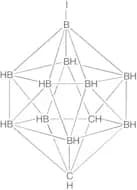
CAS :Produit contrôléFormule :C12H24O3SiCouleur et forme :NeatMasse moléculaire :244.4039-Iodo-o-carborane
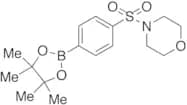
CAS :Produit contrôléFormule :C2H11B10ICouleur et forme :NeatMasse moléculaire :268.1074-(Morpholinosulfonyl)phenylboronic Acid Pinacol Ester
CAS :Produit contrôléFormule :C16H24BNO5SCouleur et forme :NeatMasse moléculaire :353.2414-(4,4,5,5-Tetramethyl-1,3,2-dioxaborolan-2-yl)phenylamine
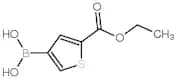
CAS :Produit contrôléFormule :C12H18BNO2Couleur et forme :NeatMasse moléculaire :219.095-(Ethoxycarbonyl)thiophene-3-boronic Acid
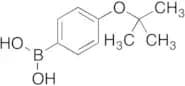
CAS :Produit contrôlé<p>Applications 5-(Ethoxycarbonyl)thiophene-3-boronic Acid is a useful reagent for preparing hydroxyimino(phenyl)propanones as GPBAR1 agonists.<br>References Bissantz, C., et al.: U.S. Pat. Appl. Publ. (2012), US 20120010190 A1<br></p>Formule :C7H9BO4SCouleur et forme :NeatMasse moléculaire :200.024-(tert-Butoxy)phenylboronic Acid
CAS :Produit contrôlé<p>Applications 4-tert-Butoxyphenylboronic Acid is a compound used in the preparation of nitrophenylphenol via cross-coupling reaction of nitrohalobenzenes with phenylboronic acids and deprotection.<br>References Kumamoto, N., et al.: Preparation of nitrophenylphenol, JP 2001055360 (2001);<br></p>Formule :C10H15BO3Couleur et forme :NeatMasse moléculaire :194.044-Carboxyphenylboronic acid
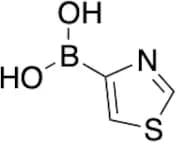
CAS :<p>Applications 4-Carboxyphenylboronic acid is a reagent used in suzuki coupling reactions.<br>References Hu, Z., et al.: Wuji Huaxue Xuebao, 34, 387 (2018); Ibrahim, M., et al.: J. Organomet. Chem., 859, 44 (2018); Erami, R. S., et al.: Catalysts, 7, 76 (2017)<br></p>Formule :C7H7BO4Couleur et forme :NeatMasse moléculaire :165.94Thiazol-4-ylboronic Acid
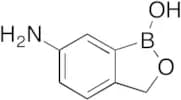
CAS :Produit contrôlé<p>Applications Thiazol-4-ylboronic acid (cas# 1016642-07-1) is a useful research chemical.<br></p>Formule :C3H4BNO2SCouleur et forme :NeatMasse moléculaire :128.9455-Aminoboronphthalide
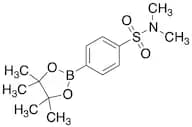
CAS :Produit contrôlé<p>Applications 5-Aminoboronphthalide is used as a reactant in the preparation of 2,1-benzoxaborole peptide isoquinoline derivatives as HCV NS3 protease inhibitors. It is also used as reactant in the synthesis of nanocarrier for chemomechanically driven guest delivery fueled by intracellular ATP.<br>References Li, X., et al.: Bioorg. Med. Chem. Lett., 21, 2048 (2011); Biswas, S., et al.: Nat. Chem., 5, 613 (2013);<br></p>Formule :C7H8BNO2Couleur et forme :NeatMasse moléculaire :148.9554-(N,N-Dimethylaminosulfonyl)phenylboronic acid pinacol ester
CAS :Produit contrôlé<p>Stability Moisture Sensitive<br>Applications 4-(N,N-Dimethylaminosulfonyl)phenylboronic acid pinacol ester<br></p>Formule :C14H22BNO4SCouleur et forme :NeatMasse moléculaire :311.22-Cyclohexylvinylboronic Acid
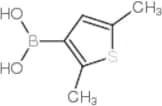
CAS :Produit contrôlé<p>Applications 2-Cyclohexylvinylboronic Acid is used in the synthesis of vinylbenziodoxolones, a novel type of hypervalent iodine(III) reagents.<br>References Stridfeldt, E., et al.: Chem. Eur. J., 22, 16066-16070 (2016)<br></p>Formule :C8H15BO2Couleur et forme :NeatMasse moléculaire :154.012,5-Dimethylthiophene-3-boronic Acid
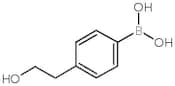
CAS :Produit contrôlé<p>Applications 2,5-Dimethylthiophene-3-boronic acid<br></p>Formule :C6H9BO2SCouleur et forme :NeatMasse moléculaire :156.014-(2-Hydroxyethyl)phenylboronic acid
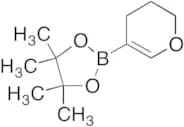
CAS :Produit contrôléFormule :C8H11BO3Couleur et forme :NeatMasse moléculaire :165.9823,4-Dihydro-2H-pyran-5-ylboronic Acid Pinacol Ester
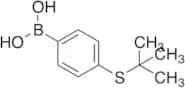
CAS :Produit contrôléFormule :C11H19BO3Couleur et forme :NeatMasse moléculaire :210.0784-(tert-Butylthio)phenylboronic Acid
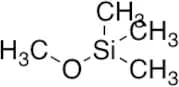
CAS :Produit contrôléFormule :C10H15BO2SCouleur et forme :NeatMasse moléculaire :210.101Methoxytrimethylsilane
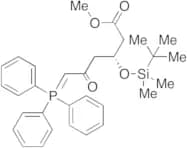
CAS :Produit contrôlé<p>Stability Volatile<br>Applications Methoxytrimethylsilane (cas# 1825-61-2) is a useful research chemical.<br> Not a dangerous good if item is equal to or less than 1g/ml and there is less than 100g/ml in the package<br></p>Formule :C4H12OSiCouleur et forme :NeatMasse moléculaire :104.223Methyl (3R)-3-(tert-Butyldimethylsilanyloxy)-5-oxo-6-(triphenylphosphanylidene)hexanoate
CAS :Produit contrôlé<p>Stability Hygroscopic<br>Applications Methyl (3R)-3-(tert-Butyldimethylsilanyloxy)-5-oxo-6-(triphenylphosphanylidene)hexanoate was used to preapre pyrimidinyl- and pyrrolylheptenoates with HMG-CoA reductase inhibitory activities.<br>References Watanabe, M., et al.: Bioorg. Med. Chem., 5, 437 (1997); Pfefferkorn, J., et al.: J. Med. Chem., 51, 31 (2008);<br></p>Formule :C31H39O4PSiCouleur et forme :NeatMasse moléculaire :534.70(4-[(Trimethylsilyl)ethynyl]phenyl)boronic Acid
CAS :Produit contrôléFormule :C11H15BO2SiCouleur et forme :NeatMasse moléculaire :218.1323-[(tert-Butyldimethylsilyl)oxy]-1-propanal
CAS :Produit contrôlé<p>Applications 3-[(tert-Butyldimethylsilyl)oxy]-1-propanal (cas# 89922-82-7) is a compound useful in organic synthesis.<br></p>Formule :C9H20O2SiCouleur et forme :NeatMasse moléculaire :188.342,6-Dimethylphenylboronic Acid
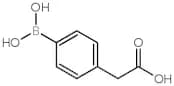
CAS :Produit contrôlé<p>Applications 2,6-Dimethylphenylboronic acid<br></p>Formule :C8H11BO2Couleur et forme :NeatMasse moléculaire :149.984-Carboxymethylphenylboronic acid
CAS :Produit contrôlé<p>Applications 4-Carboxymethylphenylboronic acid<br></p>Formule :C8H9BO4Couleur et forme :NeatMasse moléculaire :179.97trans-Campestanyl 3-(4-(tert-Butyldimethylsilyl)oxy)-ferulate
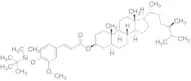
Produit contrôlé<p>Applications trans-Campestanyl 3-(4-(tert-Butyldimethylsilyl)oxy)-ferulate is an intermediate used in the synthesis of trans-Campestanyl Ferulate (C155308), which is used for synthesis of trans-feruloyl-β-sitostanol.<br>References Condo, A., et al.: J. Agric. Food Chem., 49, 4961 (2001);<br></p>Formule :C44H72O4SiCouleur et forme :NeatMasse moléculaire :693.1263-(2-Hydroxypropan-2-yl)phenylboronic Acid
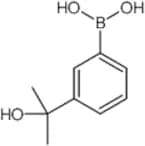
CAS :Produit contrôlé<p>Applications 3-(2-Hydroxypropan-2-yl)phenylboronic acid<br></p>Formule :C9H13BO3Couleur et forme :NeatMasse moléculaire :180.01Allyltrimethylsilane
CAS :Produit contrôlé<p>Stability Volatile<br>Applications Allyltrimethylsilane is used in the allylation of aldehydes, imines, allylic and benzylic alcohols, and chiral α-keto-amides that are derived from (S)-proline esters.<br> Not a dangerous good if item is equal to or less than 1g/ml and there is less than 100g/ml in the package<br>References Yadav, J.S., et al.: Tetrahedron Lett., 43, 3783 (2002); Aggarwal, V.K., et al.: Tetrahedron Lett., 37, 3745 (1996); Wang, D.K., et al.: J. Org. Chem., 64, 4233 (1999); Kaur, G., et al.: Tetrahedron Lett., 38, 2521 (1997); Soai, K., et al.: J. Chem. Soc., Chem. Commun., 15, 1016 (1984)<br></p>Formule :C6H14SiCouleur et forme :NeatMasse moléculaire :114.26Bromotrimethylsilane
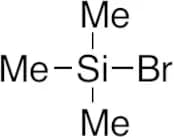
CAS :Produit contrôlé<p>Applications Bromotrimethylsilane is used as a reagent in the synthesis of α-carboxy nucleoside phosphonate analogs as HIV reverse transcriptase-targeting agents.<br> Not a dangerous good if item is equal to or less than 1g/ml and there is less than 100g/ml in the package<br>References Keane, S.J., et al.: J. Org. Chem., ahead of print (2014)<br></p>Formule :C3H9BrSiCouleur et forme :NeatMasse moléculaire :153.093-Trimethylsilyl-1-propanol
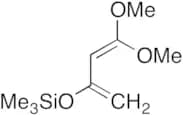
CAS :Produit contrôléFormule :C6H16OSiCouleur et forme :NeatMasse moléculaire :132.281,1-Dimethoxy-3-(trimethylsiloxy)-1,3-butadiene
CAS :Produit contrôléFormule :C9H18O3SiCouleur et forme :NeatMasse moléculaire :202.323B-[3-[[2-Hydroxy-3-[3-(triethoxysilyl)propoxy]propyl]amino]phenyl]boronic acid
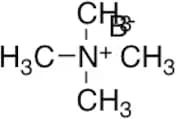
CAS :Produit contrôlé<p>Applications B-[3-[[2-Hydroxy-3-[3-(triethoxysilyl)propoxy]propyl]amino]phenyl]boronic acid was prepared for the use as porous polymeric monolith for the specific capture of cis-diol-containing flavone under neutral condition.<br>References Pan, J., et al.: Chem. Eng. J., 317, 317-330 (2017);<br></p>Formule :C18H34BNO7SiCouleur et forme :NeatMasse moléculaire :415.36Tetramethylammonium Borohydride
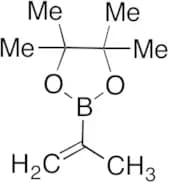
CAS :Produit contrôlé<p>Applications TETRAMETHYLAMMONIUM BOROHYDRIDE (cas# 16883-45-7) is a useful research chemical.<br></p>Formule :C4H12N·BCouleur et forme :NeatMasse moléculaire :84.956Isopropenylboronic Acid Pinacol Ester
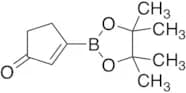
CAS :Produit contrôlé<p>Applications Isopropenylboronic Acid Pinacol Ester, can be used as an intermediate in the synthesis of variety of cyclic and acyclic organic compounds. It is also shown that the α-Substituted Allyl/Croty of this compound can be used for highly Diastereo- and Enantioselective allylboration of aldehydes.<br>References Salaun, J. et al.: Topics in Curr. Chem. 1, 144 (1988); Chen, J. et al.: J. Amer. Chem. Soci., 135, 5316 (2013);<br></p>Formule :C9H17BO2Couleur et forme :NeatMasse moléculaire :168.043-(4,4,5,5-Tetramethyl-1,3,2-dioxaborolan-2-yl)cyclopent-2-en-1-one
CAS :Produit contrôlé<p>Applications 3-(4,4,5,5-tetramethyl-1,3,2-dioxaborolan-2-yl)cyclopent-2-en-1-one (cas# 1370008-65-3) is a useful research chemical.<br></p>Formule :C11H17BO3Couleur et forme :NeatMasse moléculaire :208.06Cyclohepten-1-ylboronic Acid
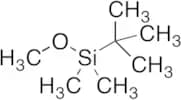
CAS :Produit contrôléFormule :C7H13BO2Couleur et forme :NeatMasse moléculaire :139.988tert-Butylmethoxydimethylsilane
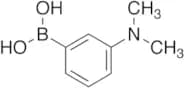
CAS :Produit contrôlé<p>Applications tert-Butylmethoxydimethylsilane is used as a reactant in the preparation of chlorosilanes.<br> Not a dangerous good if item is equal to or less than 1g/ml and there is less than 100g/ml in the package<br>References Masaoka, S., et al.: J. Organomet. Chem., 691, 174 (2006);<br></p>Formule :C7H18OSiCouleur et forme :NeatMasse moléculaire :146.33-(N,N-Dimethylamino)phenylboronic Acid
CAS :Produit contrôlé<p>Applications 3-(N,N-Dimethylamino)phenylboronic Acid (cas# 178752-79-9) is a compound useful in organic synthesis.<br> Not a dangerous good if item is equal to or less than 1g/ml and there is less than 100g/ml in the package<br></p>Formule :C8H12BNO2Couleur et forme :NeatMasse moléculaire :165.00Allylboronic acid pinacol ester
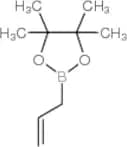
CAS :Produit contrôlé<p>Applications Allylboronic acid pinacol ester<br> Not a dangerous good if item is equal to or less than 1g/ml and there is less than 100g/ml in the package<br></p>Formule :C9H17BO2Couleur et forme :NeatMasse moléculaire :168.041,3-Dihydro-1-hydroxy-2,1-benzoxaborol-5-ol
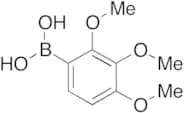
CAS :Produit contrôlé<p>Applications 1,3-Dihydro-1-hydroxy-2,1-benzoxaborol-5-ol is used as a reagent in the synthesis of P4-benzoxaborole-substituted macrocyclic inhibitors of HCV NS3 protease.<br>References Ding, C.Z., et al.: Bioorg. Med. Chem. Lett., 20, 7317 (2010)<br></p>Formule :C7H7BO3Couleur et forme :NeatMasse moléculaire :149.94(2,3,4-Trimethoxyphenyl)boronic Acid
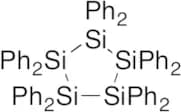
CAS :Produit contrôlé<p>Applications (2,3,4-Trimethoxyphenyl)boronic Acid is a reagent used in the synthesis of heteroaryl, mono and bicyclic compounds which may be used as inhibitors for EGF and PDGF receptor tyrosine kinases. Also used in the synthesis of non-steroidal CYP 17 inhibitors in the treatment of prostate cancer<br>References Hutschenreuter, T. et al.: J. Enz. Inhib. Med. Chem., 19, 17 (2004);<br></p>Formule :C9H13BO5Couleur et forme :NeatMasse moléculaire :212.01Perphenylcyclopentasilane
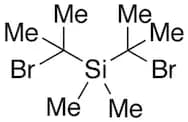
CAS :Produit contrôlé<p>Applications Perphenylcyclopentasilane is an intermediate in the synthesis of Cyclopentasilane (C988380), a reagent used for depositing silicon on surfaces for electronics applications.<br>References Morisaki, Y., et al.: Chem. Lett., 38, 498 (2009);<br></p>Formule :C60H50Si5Couleur et forme :NeatMasse moléculaire :911.47Dimethylbis(α-bromoisopropyl)silane
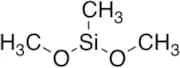
CAS :Produit contrôléFormule :C8H18Br2SiCouleur et forme :NeatMasse moléculaire :302.12Dimethoxy(methyl)silane (>85%)
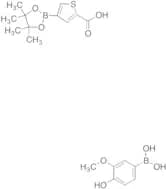
CAS :Produit contrôlé<p>Applications Dimethoxy(methyl)silane (cas# 16881-77-9) is a useful research chemical.<br></p>Formule :C3H9O2SiDegré de pureté :>85%Couleur et forme :NeatMasse moléculaire :105.1882-Carboxythiophene-4-boronic Acid Pinacol Ester
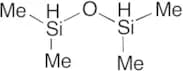
CAS :Produit contrôléFormule :C11H15BO4SCouleur et forme :NeatMasse moléculaire :254.111,1,3,3-Tetramethyldisiloxane
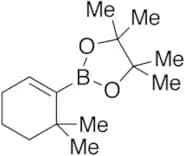
CAS :Produit contrôlé<p>Applications 1,1,3,3-Tetramethyldisiloxane is an organosilane reducing agent and can be used in several reduction reactions including reductive formation of sulfides and reductive etherification.<br> Not a dangerous good if item is equal to or less than 1g/ml and there is less than 100g/ml in the package<br>References Pesti, J., et al.: Org. Process Res. Dev., pages ahead of print (2016);<br></p>Formule :C4H14OSi2Couleur et forme :NeatMasse moléculaire :134.322-(6,6-Dimethyl-1-cyclohexen-1-yl)-4,4,5,5-tetramethyl-1,3,2-dioxaborolane
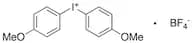
CAS :Produit contrôlé<p>Applications 2-(6,6-Dimethyl-1-cyclohexen-1-yl)-4,4,5,5-tetramethyl-1,3,2-dioxaborolane was used in the preparation of conformationally constrained cyclic carboxylic acid derivatives useful as GPR40 modulators for treating metabolic disorders.<br></p>Formule :C14H25BO2Couleur et forme :NeatMasse moléculaire :236.158Di(p-anisyl)iodonium Tetrafluoborate
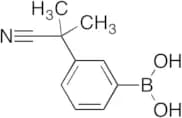
CAS :Produit contrôlé<p>Applications Di(p-anisyl)iodonium Tetrafluoborate (cas# 1426-58-0) is a compound useful in organic synthesis.<br></p>Formule :C14H14IO2·BF4Couleur et forme :NeatMasse moléculaire :427.973-(2-Cyanopropan-2-yl)phenylboronic acid
CAS :Produit contrôléFormule :C10H12BNO2Couleur et forme :NeatMasse moléculaire :189.0191,1,1,5,7,7,7-Heptamethyl-3,3-bis[(trimethylsilyl)oxy]tetrasiloxane
CAS :Produit contrôlé<p>Applications 1,1,1,5,7,7,7-Heptamethyl-3,3-bis[(trimethylsilyl)oxy]tetrasiloxane is used in the analysis of organosilicon compounds (eg hexamethyldisiloxane) using gas chromatography or mass spectrometry.<br>References Wurst, M., et al.: Chromatographia, 6, 359 (1973), Wurst, M.: Chemicky Prumysl, 22, 124 (1972)<br></p>Formule :C13H40O5Si6Couleur et forme :NeatMasse moléculaire :444.967(2,5-Dimethylphenyl)boronic Acid
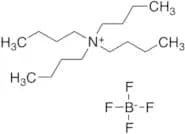
CAS :Produit contrôlé<p>Applications (2,5-Dimethylphenyl)boronic Acid is a useful synthetic intermediate. It can be used to prepare fluorenones/indenofluorenediones.<br>References Liu, T., et al.: Org. Lett., 13, 2452 (2011)<br></p>Formule :C8H11BO2Couleur et forme :NeatMasse moléculaire :149.98Tetrabutylammonium Tetrafluoroborate
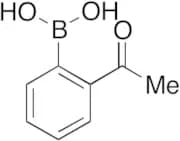
CAS :Produit contrôlé<p>Applications Tetrabutylammonium tetrafluoroborate (cas# 429-42-5) is a useful research chemical.<br></p>Formule :C16H36BF4NCouleur et forme :NeatMasse moléculaire :329.272-Acetylphenylboronic Acid
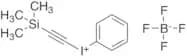
CAS :Produit contrôlé<p>Applications 2-Acetylphenylboronic Acid is a reactant used in the synthesis of potent, selective phenylimidazole-based tissue factor/factor VIIa (FVIIa) inhibitors.<br>References Glunz, P.W., et. al.: Bioorg. Med. Chem. Lett., 25, 21699 (2015)<br></p>Formule :C8H9BO3Couleur et forme :NeatMasse moléculaire :163.97Trimethylsilylethynyl(phenyl)iodonium Tetrafluoroborate
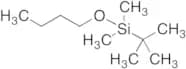
CAS :Produit contrôlé<p>Applications Trimethylsilylethynyl(phenyl)iodonium Tetrafluoroborate is used in synthesis of 1-Alkynyl(triphenyl)arsonium Tetrafluoroborates by onium transfer reaction of 1-Alkynyl(phenyl)iodonium Tetrafluoroborates with Triphenylarsine. Also, used in preparation of Furan- and Thiophene-substituted alkynes and alkynyl ketones by Copper Iodide-catalyzed coupling and carbonylation of Heterocyclic Boronic Acids with Alkynyliodonium salts.<br>References Nagaoka, T., et al.: Tetrah. Lett., 36, 261-4 (1995); Yu, Chan-Mo, et al.: Synlett, 2631-2634 (2005);<br></p>Formule :C11H14ISi•BF4Couleur et forme :NeatMasse moléculaire :301.22 + 86.81(3-Aminopropyl)trimethoxysilane
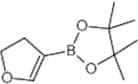
CAS :Produit contrôlé<p>Applications (3-Aminopropyl)trimethoxysilane is used in the synthesis of aspirin imprinted polymer on silica gel surface and appreciation on drug sustained release. Fluorine-doped; lectin functionalized ZnO nanoarrays as 3D nano-biointerface for bacterial detection.<br>References Lu, P., et al.: Gaofenzi Cailiao Kexue Yu Gongcheng, 33, 130 (2017); Zheng, L., Talanta, 167, 600 (2017)<br></p>Formule :C6H17NO3SiCouleur et forme :NeatMasse moléculaire :179.29Butoxy(tert-butyl)dimethylsilane
CAS :Produit contrôléFormule :C10H24OSiCouleur et forme :NeatMasse moléculaire :188.3824,5-Dihydrofuran-3-boronic Acid Pinacol Ester
CAS :Produit contrôléFormule :C10H17BO3Couleur et forme :NeatMasse moléculaire :196.051Benzo[b]thien-3-ylboronic Acid
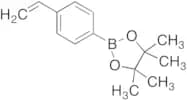
CAS :Produit contrôlé<p>Applications Benzo[b]thien-3-ylboronic acid is used in the synthesis and evaluation of dual wavelength fluorescent benzo[b]thiophene boronic acid derivatives for sugar/glycoprotein sensing.<br>References Akay, S., et al.: Chem. Biol. Drug Des., 70, 279 (2007)<br></p>Formule :C8H7BO2SCouleur et forme :NeatMasse moléculaire :178.022-(4-ethenylphenyl)-4,4,5,5-tetramethyl-1,3,2-dioxaborolane
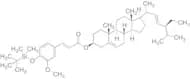
CAS :Produit contrôlé<p>Stability Hygroscopic<br>Applications 2-(4-ethenylphenyl)-4,4,5,5-tetramethyl-1,3,2-dioxaborolane<br></p>Formule :C14H19BO2Couleur et forme :NeatMasse moléculaire :230.11Stigmasteryl-O-tert-butyldimethylsilane Ferulate
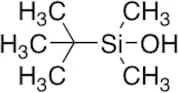
Produit contrôlé<p>Applications Stigmasteryl-O-tert-butyldimethylsilane Ferulate is an intermediate used in the synthesis of Stigmasteryl Ferulate (S686768), which is used for purification and identification of components of γ-oryzanol in rice bran oil.<br>References Xu, Z., et al.: J. Agric. Food Chem., 47, 2724 (1999);<br></p>Formule :C45H70O4SiCouleur et forme :NeatMasse moléculaire :703.12tert-Butyldimethylsilanol
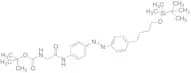
CAS :Produit contrôléFormule :C6H16OSiCouleur et forme :NeatMasse moléculaire :132.28(E)-tert-Butyl (2-((4-((4-(4-((tert-Butyldimethylsilyl)oxy)butyl)phenyl)diazenyl)phenyl)amino)-2-oxoethyl)carbamate
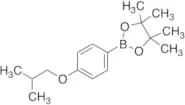
Produit contrôléFormule :C29H44N4O4SiCouleur et forme :NeatMasse moléculaire :540.772-(4- lsobutoxyphenol)-4,4,5,5-tetramethyl-1,3,2-dioxaborolane
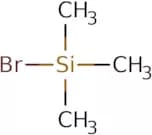
CAS :Produit contrôléFormule :C16H25BO3Couleur et forme :NeatMasse moléculaire :276.179Bromotrimethylsilane
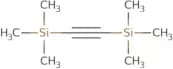
CAS :<p>Bromotrimethylsilane is an inhibitor of the enzyme hydroxyl methyl transferases. It binds to the penicillin-binding protein and inhibits the activity of this enzyme, which is involved in the synthesis of bacterial cell walls. Bromotrimethylsilane has been shown to be active against murine sarcoma virus and other viruses as well as bacterial growth. This compound has also been shown to inhibit the growth of several types of cancer cells, including leukemia cells from mice.</p>Formule :C3H9BrSiDegré de pureté :Min. 95%Couleur et forme :Colorless Clear LiquidMasse moléculaire :153.09 g/molBis(trimethylsilyl)acetylene
CAS :<p>Bis(trimethylsilyl)acetylene (bis-TMS) is a reactive ancillary that can be used in polymerization reactions as an initiator. The bis-TMS is prepared by reaction of trimethylsilyl chloride with acetylene to form the trimethylsilyl acetylene, which is then reacted with copper to generate the bis-TMS. Bis-TMS reacts with nucleophiles such as alcohols and amines to produce polymers through a nucleophilic attack. It also has been used for sample preparation for NMR spectra. Bis-TMS is a synthetic compound that has been characterized using nmr spectroscopy and analytical methods. The molecular formula of bis-TMS is C8H16Si2 and its molecular weight is 196.13 g/mol. The chemical structure of bis-TMS consists of two benzyl groups connected by a single carbon bond at the 3 o'clock position on the central</p>Formule :C8H18Si2Degré de pureté :Min. 95%Couleur et forme :Clear LiquidMasse moléculaire :170.4 g/molDichloro(methyl)octadecylsilane
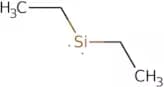
CAS :<p>Dichloro(methyl)octadecylsilane is a liquid that is used to coat the inside of tubes in chromatographic columns. The coating ensures that the stationary phase (the material on which the analyte travels) remains stationary and is not carried away with the mobile phase. It has been shown to be effective at removing hydrogen chloride from water and can be used as a fabricating agent for coatings. Dichloro(methyl)octadecylsilane is used in analytical chemistry, where it has been shown to have a number of uses including being able to remove hydroxy groups from molecules and electron microscopy, where it can be used as a coating for nonpolar solvents.</p>Degré de pureté :Min. 95%Diethylsilane
CAS :<p>Diethylsilane is a chemical species that has a high value. It is an inorganic compound that contains silicon and boron, which are both chemical elements. Diethylsilane has been shown to react with hydroxy groups on the surface of many different materials, such as aluminum oxide or steel. The reaction between diethylsilane and the hydroxyl group results in the formation of silicon-hydrogen bonds, which are strong and stable. This reaction mechanism can be used for synthesizing solids with high values, such as boron nitride.</p>Formule :C4H12SiDegré de pureté :Min. 95%Couleur et forme :Clear LiquidMasse moléculaire :88.22 g/molTrimethylsilyl isocyanate
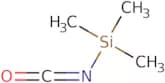
CAS :<p>Trimethylsilyl isocyanate (TMISC) is a 5-membered heteroaryl. It has been shown to bind to the receptor and shows activity in vitro. TMISC has been reported as a potential drug for bowel disease, congestive heart, and inflammatory bowel disease. TMISC binds to the protein receptor with high affinity, but its binding affinity decreases when it is combined with trifluoroacetic acid or palladium-catalyzed coupling. TMISC can be used to synthesize degarelix acetate, which is an anti-androgen drug that is used in the treatment of prostate cancer.</p>Formule :C4H9NOSiDegré de pureté :Min. 95%Masse moléculaire :115.21 g/molTriethoxy(propyl)silane
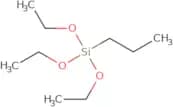
CAS :<p>Triethoxy(propyl)silane is an organosilicon compound that has reactive properties. It is a polymeric material that can be used as a component in paints, coatings, and sealants. The reaction of triethoxy(propyl)silane with sodium hydroxide solution yields hydrogen fluoride, water vapor, and hydrochloric acid. Triethoxy(propyl)silane has been shown to react with hydroxide solution to form polycarboxylic acids. The hydroxyl group on the triethoxy(propyl)silane molecule is responsible for the transport properties of this compound.</p>Formule :C9H22O3SiDegré de pureté :Min. 95%Masse moléculaire :206.35 g/mol4-(4-Oxopiperidine-1-carbonyl)phenylboronic acid
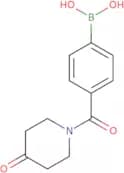
CAS :Produit contrôlé<p>Please enquire for more information about 4-(4-Oxopiperidine-1-carbonyl)phenylboronic acid including the price, delivery time and more detailed product information at the technical inquiry form on this page</p>Formule :C12H14BNO4Degré de pureté :Min. 95%Masse moléculaire :247.05 g/molN,N-Dimethyl 4-boronobenzenesulfonamide
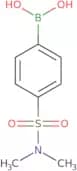
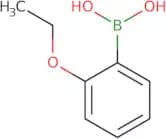
CAS :<p>Please enquire for more information about N,N-Dimethyl 4-boronobenzenesulfonamide including the price, delivery time and more detailed product information at the technical inquiry form on this page</p>Formule :C8H12BNO4SDegré de pureté :Min. 95%Masse moléculaire :229.06 g/mol2-Ethoxyphenylboronic acid
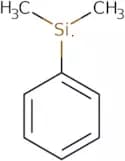
CAS :<p>Ethoxyphenylboronic acid is a triazine compound which inhibits inflammation by inhibiting the kinase that catalyzes the phosphorylation of arachidonic acid. It also inhibits lipid kinase, which is involved in the metabolism of lipids, and it has been shown to inhibit cancer cell growth through hydrogen bond interactions with DNA. Ethoxyphenylboronic acid has been shown to have anti-inflammatory properties and may be useful for the treatment of inflammatory diseases such as arthritis. The compound can also inhibit hydrogen peroxide-induced oxidative damage in cells, due to its ability to release intracellular glutathione.</p>Formule :C8H11BO3Degré de pureté :Min. 95%Masse moléculaire :165.98 g/molDimethylphenylsilane
CAS :<p>Dimethylphenylsilane is a chemical compound that belongs to the group of trifluoroacetic acid derivatives. It is used as an antimicrobial agent and has been shown to be effective against Gram-positive bacteria, Gram-negative bacteria, and yeast. Dimethylphenylsilane has been shown to inhibit the proliferation of microorganisms by binding to the hydroxyl group in methacrylates and irreversible oxidation of unsaturated alkyl compounds. The reaction mechanism for this process is still unclear but it is thought that it may involve a transfer reaction or a reaction intermediate. Dimethylphenylsilane can be used as a solid catalyst in reactions involving unsaturated alkyl compounds.</p>Formule :C8H12SiDegré de pureté :Min. 95%Couleur et forme :Clear LiquidMasse moléculaire :136.27 g/molTrimethylsilylmethanethiol
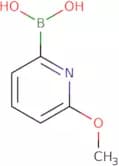
CAS :<p>Trimethylsilylmethanethiol (TMSET) is a thiol that is used as a reagent in organic synthesis. It is soluble in water and it has a high boiling point, making it useful for reactions that require heat. TMSET has been shown to be an effective antiviral agent against hepatitis C virus (HCV) and influenza A virus by binding to the viral receptor on the cell surface and preventing its entry into the cell. TMSET also inhibits neuronal function by binding to the hydroxy group of proteins, thereby disrupting their structure and function.</p>Formule :C4H12SSiDegré de pureté :Min. 95%Masse moléculaire :120.29 g/mol6-Methoxypyridine-2-boronic acid
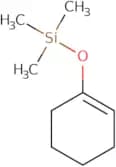
CAS :<p>6-Methoxypyridine-2-boronic acid is a boronate ligand that can be used to form coordination complexes with metals. It has been shown to interact with silver ions, which are the most effective ligands for enhancing the fluorescence of organic dyes. 6-Methoxypyridine-2-boronic acid is able to rigidify organic molecules by binding to their steric and electronic properties, making them more resistant to photodegradation. This property makes it an excellent candidate for the use in the development of fluorescent labels in analytical chemistry.</p>Formule :C6H8BNO3Degré de pureté :Min. 95%Masse moléculaire :152.94 g/mol1-(Trimethylsilyloxy)cyclohexene
CAS :<p>The trimethylsilyloxy group is a very efficient method for the synthesis of antireflection coatings consisting of metal carbonyls. One such metal carbonyl is tetradentate zirconium oxide. Tetradentate zirconium oxide has been shown to be a good catalyst for the reaction between triflic acid and 1-(trimethylsilyloxy)cyclohexene. The ethyl group on the 1-carbon atom of 1-(trimethylsilyloxy)cyclohexene allows it to coordinate with the zirconium atom in tetradentate zirconium oxide, while the triflic acid acts as an acid catalyst to increase the rate of reaction.</p>Formule :C9H18OSiDegré de pureté :Min. 95%Masse moléculaire :170.32 g/molMesitylboronic acid
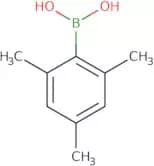
CAS :<p>Mesitylboronic acid is a divalent organoboron compound with the molecular formula CHB(O)OH. It is a white solid that is soluble in organic solvents, but not water. Mesitylboronic acid has been used for the palladium-catalyzed cross-coupling of aryl halides and vinylogous esters, yielding substituted pyridines. Mesitylboronic acid also catalyzes the Suzuki coupling reaction of aryl boronic acids and alkenes, producing substituted indoles. This compound has diagnostic applications due to its ability to form a fluorescent complex with certain metal ions. It also plays an important role in insulin resistance due to its ability to form cross-couplings with unsymmetrical boron compounds.</p>Formule :C9H13BO2Degré de pureté :Min. 95%Masse moléculaire :164.01 g/molTetramethylammonium triacetoxyborohydride
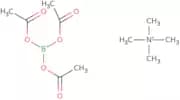
CAS :<p>Tetramethylammonium triacetoxyborohydride is a potent antagonist that binds to the active site of hydrogen-bond forming enzymes. It is used in the treatment of bowel disease, as well as other diseases such as cancer, diabetic neuropathy and inflammatory bowel disease. Tetramethylammonium triacetoxyborohydride has been shown to inhibit the growth of certain bacteria by inhibiting their ability to form hydrogen bonds. This chemical can also be used in asymmetric synthesis, which is the process of synthesizing only one enantiomer from a racemic mixture. Tetramethylammonium triacetoxyborohydride can function as an organocatalyst for this process by activating achiral substrates into chiral ones.</p>Formule :C10H22BNO6Degré de pureté :Min. 95%Couleur et forme :White PowderMasse moléculaire :263.1 g/mol

![4-[[[(1,1-Dimethylethyl)diphenylsilyl]oxy]methyl]-2,2-dimethyl-1,3-dioxolane](/_next/image/?url=https%3A%2Fstatic.cymitquimica.com%2Fproducts%2FTR%2Fthumb-webp%2FD118215.webp&w=3840&q=75)

![4-[[(1,1-Dimethylethyl)dimethylsilyl]oxy]-1-butanamine](/_next/image/?url=https%3A%2Fstatic.cymitquimica.com%2Fproducts%2FTR%2Fthumb-webp%2FD472835.webp&w=3840&q=75)


![Trichloro[2-(chloromethyl)-2-propen-1-yl]silane](/_next/image/?url=https%3A%2Fstatic.cymitquimica.com%2Fproducts%2FTR%2Fthumb-webp%2FT294870.webp&w=3840&q=75)
![1,5-Anhydro-2,3-dideoxy-6-O-[(1,1-dimethylethyl)dimethylsilyl]-D-erythro-Hex-2-enitol](/_next/image/?url=https%3A%2Fstatic.cymitquimica.com%2Fproducts%2FTR%2Fthumb-webp%2FA637880.webp&w=3840&q=75)



![(4-[(Trimethylsilyl)ethynyl]phenyl)boronic Acid](/_next/image/?url=https%3A%2Fstatic.cymitquimica.com%2Fproducts%2FTR%2Fthumb-webp%2FT900203.webp&w=3840&q=75)
![3-[(tert-Butyldimethylsilyl)oxy]-1-propanal](/_next/image/?url=https%3A%2Fstatic.cymitquimica.com%2Fproducts%2FTR%2Fthumb-webp%2FB691565.webp&w=3840&q=75)



![B-[3-[[2-Hydroxy-3-[3-(triethoxysilyl)propoxy]propyl]amino]phenyl]boronic acid](/_next/image/?url=https%3A%2Fstatic.cymitquimica.com%2Fproducts%2FTR%2Fthumb-webp%2FH971470.webp&w=3840&q=75)


![1,1,1,5,7,7,7-Heptamethyl-3,3-bis[(trimethylsilyl)oxy]tetrasiloxane](/_next/image/?url=https%3A%2Fstatic.cymitquimica.com%2Fproducts%2FTR%2Fthumb-webp%2FH264925.webp&w=3840&q=75)


![Benzo[b]thien-3-ylboronic Acid](/_next/image/?url=https%3A%2Fstatic.cymitquimica.com%2Fproducts%2FTR%2Fthumb-webp%2FB206890.webp&w=3840&q=75)