Composés organosiliciés
Dans cette section, vous trouverez un grand nombre de composés organosiliciés. Les composés organosiliciés sont caractérisés par des atomes de carbone liés à des atomes de silicium. D'autres composés non métalliques peuvent également être présents. Ces composés sont largement utilisés en synthèse organique, en science des matériaux et en pharmaceutique en raison de leurs propriétés chimiques uniques. Chez CymitQuimica, nous offrons une large gamme de composés organosiliciés de haute qualité pour soutenir vos recherches et projets industriels.
Sous-catégories appartenant à la catégorie "Composés organosiliciés"
4325 produits trouvés pour "Composés organosiliciés"
Trier par
Degré de pureté (%)
0
100
|
0
|
50
|
90
|
95
|
100
ε-Carotene
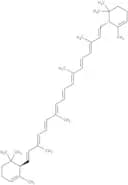
CAS :<p>Epsilon-Carotene is a carotenoid that is found in plants. It is synthesized from beta-carotene through the action of enzymes called beta-carotene ketolases. Epsilon-Carotene can be cleaved by enzymes to produce lycopene and beta-cryptoxanthin. The biosynthesis of Epsilon-Carotene has been studied in a number of clinical studies, including the effect on human tissues and the prevention of cancer. Epsilon-Carotene has also been shown to have anti-inflammatory properties, which may be due to its ability to inhibit prostaglandin synthesis.</p>Formule :C40H56Degré de pureté :Min. 95%Masse moléculaire :536.87 g/molSodium triacetoxyborohydride
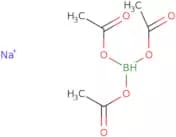
CAS :<p>Sodium triacetoxyborohydride is an oxidizing agent that is used in organic synthesis as a reagent for the reduction of esters and nitriles to alcohols and amines, respectively. This compound has been shown to be effective in reducing the activity of ccr5 receptors, which are important in HIV infection. Sodium triacetoxyborohydride can also be used to reduce antibodies, such as monoclonal antibodies, that have been conjugated with drugs or toxins to produce immunotoxins. Sodium triacetoxyborohydride has also been shown to be an effective agent for the treatment of inflammatory bowel disease and cancer therapy. It has been found to be toxic to some bacteria, fungi, and protozoa.</p>Formule :C6H10BNaO6Couleur et forme :White PowderMasse moléculaire :211.94 g/mol1-(Trimethylsilyloxy)cyclohexene
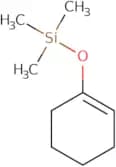
CAS :<p>The trimethylsilyloxy group is a very efficient method for the synthesis of antireflection coatings consisting of metal carbonyls. One such metal carbonyl is tetradentate zirconium oxide. Tetradentate zirconium oxide has been shown to be a good catalyst for the reaction between triflic acid and 1-(trimethylsilyloxy)cyclohexene. The ethyl group on the 1-carbon atom of 1-(trimethylsilyloxy)cyclohexene allows it to coordinate with the zirconium atom in tetradentate zirconium oxide, while the triflic acid acts as an acid catalyst to increase the rate of reaction.</p>Formule :C9H18OSiDegré de pureté :Min. 95%Masse moléculaire :170.32 g/molTriethyl borate
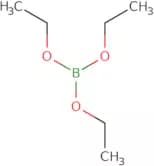
CAS :<p>Triethyl borate is an inorganic acid that is used as a catalyst. It has been shown to react with hydrochloric acid and orthoboric acid to form hydrogen boron hydride (H3BO3) and water. It also reacts with hydrogen chloride, forming hydrogen boron chloride, which can be used to prepare the active form of boric acid. This reaction is reversible and the equilibrium can be shifted by adding a base such as sodium hydroxide or ammonia. Triethyl borate is reactive, so it should only be handled in well-ventilated areas. The structural analysis of this compound reveals that it contains two hydroxyl groups that are involved in intramolecular hydrogen bonding, which helps stabilize its structure. Triethyl borate has been shown to have anti-infectious properties, inhibiting the growth of infectious bacteria such as Staphylococcus aureus and Streptococcus pneumoniae.</p>Formule :C6H15BO3Degré de pureté :Min. 95%Masse moléculaire :145.99 g/mol1-Hexyl-o-carborane
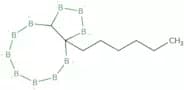
CAS :Produit contrôlé<p>1-Hexyl-o-carborane is a human bioassay that has shown carcinogenic activity. It has been observed to cause cancer in humans through its ability to bind to DNA and alter the cell cycle. 1-Hexyl-o-carborane is an organometallic compound that binds to ferrocene and other organometallic compounds, preventing their use as anticancer drugs. 1-Hexyl-o-carborane can be synthesized by reacting hexylmagnesium bromide with ammonium carbonyl chloride in a one pot reaction.</p>Formule :C8B10H24Degré de pureté :Min. 95%Masse moléculaire :228.39 g/molPhenyl-1,2-carborane
CAS :Produit contrôlé<p>Please enquire for more information about Phenyl-1,2-carborane including the price, delivery time and more detailed product information at the technical inquiry form on this page</p>Formule :C8H16B10Degré de pureté :Min. 95%Couleur et forme :Colourless Or White To Off-White Solid Or Liquid (May Vary)Masse moléculaire :220.32 g/mol(2,4-Dimethylphenyl)boronic acid
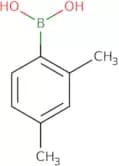
CAS :<p>(2,4-Dimethylphenyl)boronic acid is an arylboronic acid that is used in organic synthesis. The boron atom of the 2,4-dimethylphenyl group coordinates with the metal atom in the catalyst to form a stable complex. This allows for a multilayer reaction and fluorescence to occur. The activated fluorine atoms can be used to boost the reaction by adding them to the substrate and increasing the rate of oxidation. Astragalus membranaceus and rapeseed extracts have been shown to increase the rate of oxidation as well as inhibiting the formation of disaccharides. These extracts also have shown anti-inflammatory effects when tested on rats. (2,4-Dimethylphenyl)boronic acid has also been found to interact with dihydroisoquinolines, which are compounds that are structurally similar to morphine and codeine.</p>Formule :C8H11BO2Degré de pureté :Min. 95%Masse moléculaire :149.98 g/molε caprolactam
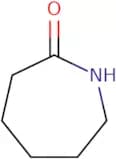
CAS :<p>Epsilon caprolactam is a poly-functional compound that can be used as a monomer for the production of polyamides. It is produced from lysine and caproic acid in the presence of copper chloride by oxidative decarboxylation. Epsilon caprolactam has been shown to have synergistic effects with other compounds, such as toxicity studies on rats and mice. This compound also has an acidic nature due to its carboxylic acid group. Plasma mass spectrometry has shown that there are high values of epsilon caprolactam in the plasma of bacterial strains and it is rapidly metabolized to l-lysine. Epsilon caprolactam is also a solid catalyst for organic reactions, which causes phase transition temperature to increase and promotes reaction mechanisms.</p>Formule :C6H11NODegré de pureté :Min. 95%Couleur et forme :White To Off-White SolidMasse moléculaire :113.16 g/molIron bis(tetrafluoroborate) hexahydrate
CAS :<p>Iron bis(tetrafluoroborate) hexahydrate is a ferrimagnetic, thermally stable coordination compound that has been shown to interact with bidentate ligands. Iron bis(tetrafluoroborate) hexahydrate can be used as a mononuclear section in analogy to the octahedral section of nickel bis(tetrafluoroborate) hexahydrate. The ligands are methyl groups, which are diffracted at 2θ values of 12.8° and 18.3°. The compound is stable in solvents such as dimethylsulfoxide and tetrahydrofuran. It also has chelate ligand transfer properties, which are due to the presence of two hydroxyl groups on each iron atom.</p>Formule :Fe(BF4)2•(H2O)6Degré de pureté :Min. 95%Couleur et forme :SolidMasse moléculaire :337.55 g/molB-Chlorocatecholborane
CAS :<p>B-chlorocatecholborane is a nonpolar solvent that is used in the synthesis of drugs and other organic compounds. It reacts with trifluoromethanesulfonic acid to form a coordination complex, which can be used to synthesize pharmaceuticals. B-chlorocatecholborane can also be used for solid-phase synthesis, which offers an efficient method for chemical reactions. This reagent has been shown to react with 5-hydroxytryptamine 4 (5-ht4) receptor, which is involved in the regulation of appetite and sleep. It also reacts with 2-arachidonoylglycerol (2AG), a lipid molecule that mediates the effects of cannabis on appetite, pain and memory. The structure of this compound was determined using nuclear magnetic resonance spectroscopy and mass spectrometry. The biological properties of B-chlorocatecholborane have not yet been studied.</p>Formule :C6H4BClO2Degré de pureté :Min. 95%Couleur et forme :PowderMasse moléculaire :154.36 g/mol(2-Hydroxyphenyl)boronic acid
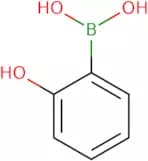
CAS :<p>(2-Hydroxyphenyl)boronic acid is an organic compound that contains a boronate ester group and a hydroxyl group. It is used in the synthesis of lysine-containing peptides, proteins, and other compounds. (2-Hydroxyphenyl)boronic acid is synthesized by cross-coupling reactions using palladium-catalyzed coupling reactions. The most common type of reaction is the Suzuki coupling reaction, which involves the addition of an aryl halide to an aryl or vinyl boronate ester. This reaction is carried out at elevated temperature in organic solvents such as tetrahydrofuran or dioxane. The yield for this reaction can be improved by using catalytic amounts of palladium acetate, which speeds up the rate at which the reaction occurs. The use of catalysts also decreases the need for high temperatures, making it possible to perform this process at</p>Formule :C6H7BO3Degré de pureté :Min. 95%Masse moléculaire :137.93 g/molFmoc-ε-aminocaproic acid-Wang resin (200-400 mesh)
<p>Please enquire for more information about Fmoc-epsilon-aminocaproic acid-Wang resin (200-400 mesh) including the price, delivery time and more detailed product information at the technical inquiry form on this page</p>Degré de pureté :Min. 95%(3,4,5-Trifluorophenyl)boronic acid
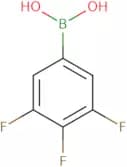
CAS :<p>The trifluorophenylboronic acid is a boronic acid that has been used in the synthesis of vitamin B12. This compound is often used as a catalyst for the Suzuki coupling reaction. It can also be used to synthesize amides and synthons. The trifluorophenylboronic acid is soluble in water, ethanol, and acetone. The pH of the solution depends on the type of base added. For example, when an amine is added to the solution, it increases to approximately 8-9. When a p-hydroxybenzoic acid is added to the solution, it decreases to approximately 2-3.</p>Formule :C6H4BF3O2Degré de pureté :Min. 95%Couleur et forme :PowderMasse moléculaire :175.9 g/molBoron carbide
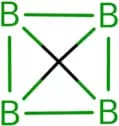
CAS :Produit contrôlé<p>Boron carbide is a chemical compound that belongs to the group of borides. It is used as a solid catalyst in wastewater treatment, which can remove organic contaminants and heavy metals from water. Boron carbide has shown chemical stability when exposed to sodium citrate and it has a low thermal expansion coefficient. The surface properties of this material are characterized by high surface area and high reactivity, which make it suitable for sample preparation and transport. Boron carbide is also resistant to radiation and exhibits good structural stability in particle form. This material has been shown to catalyze reactions with zirconium oxide, but its reaction mechanism is not yet well understood.</p>Formule :B4CDegré de pureté :Min. 95%Masse moléculaire :55.25 g/mol3-Pyridineboronic acid
CAS :<p>3-Pyridineboronic acid is an antimicrobial agent that is used to treat bacterial and fungal infections. 3-Pyridineboronic acid is a prodrug that is metabolized to its active form, pyridinium boronate. This drug has been shown to be effective in the treatment of hypoxic tumors in mice, which are resistant to other anticancer drugs. 3-Pyridineboronic acid also has acidic properties and can be used as an antiseptic for the treatment of skin and eye infections. It can also be used as a hydrogen bonding partner when combined with halides, such as chloride or bromide ions. The drug binds to human serum proteins and forms an acidic complex that prevents bacterial growth by inhibiting protein synthesis. 3-Pyridineboronic acid also inhibits prostate cancer cells by competitively inhibiting the enzyme 4-pyridinylboronic acid reductase (4PBAR).</p>Formule :C5H6BNO2Degré de pureté :Min. 95%Masse moléculaire :122.92 g/mol3-Fluorophenyl boronic acid
CAS :<p>Please enquire for more information about 3-Fluorophenyl boronic acid including the price, delivery time and more detailed product information at the technical inquiry form on this page</p>Formule :C6H6BFO2Degré de pureté :Min. 95%Couleur et forme :PowderMasse moléculaire :139.92 g/mol1-Methyl-1H-imidazole-5-boronic acid pinacol ester
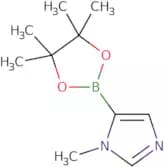
CAS :<p>Please enquire for more information about 1-Methyl-1H-imidazole-5-boronic acid pinacol ester including the price, delivery time and more detailed product information at the technical inquiry form on this page</p>Formule :C10H17BN2O2Degré de pureté :Min. 95%Masse moléculaire :208.07 g/molMethylboronic acid pinacol ester
CAS :<p>Methylboronic acid pinacol ester is an orally administered compound that inhibits the activity of peptidases and imidazole derivatives. It is used as a medicinal preparation for the treatment of cancer and other diseases. Methylboronic acid pinacol ester has been shown to inhibit the growth of bacteria, including Gram-positive bacteria such as methicillin-resistant Staphylococcus aureus (MRSA) and Clostridium perfringens. This compound also has an inhibitory effect on hydroxyl group metabolism, which may be related to its anti-inflammatory properties.</p>Formule :C7H15BO2Degré de pureté :Min. 95%Couleur et forme :Colourless liquid.Masse moléculaire :142 g/mol2-Pyridineboronic acid
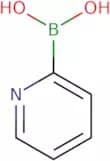
CAS :<p>2-Pyridineboronic acid is a chemical compound that belongs to the group of quinoline derivatives. It is used in pharmaceutical preparations, including as an intermediate for the synthesis of other compounds. 2-Pyridineboronic acid has been shown to have antiproliferative effects on cancer cells and has been found to be active against nicotinic acetylcholine receptors (NAR). The compound also inhibits lipid kinase activity, which is involved in the production of phosphatidylcholine and phosphatidylethanolamine from phosphatidylserine. 2-Pyridineboronic acid can react with hydrochloric acid and electrochemical impedance spectroscopy to produce a solution that has a detection time of about 10 minutes.</p>Formule :C5H6BNO2Degré de pureté :Min. 95%Masse moléculaire :122.92 g/molTrimethyl(methylthio)silane
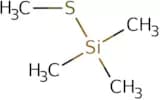
CAS :<p>Trimethyl(methylthio)silane is a synthetic chemical substance with the formula (CH3)3SiH. It is a colorless liquid that is soluble in organic solvents and insoluble in water. Trimethyl(methylthio)silane has been used to synthesize indole alkaloids such as benzylidene acetal, which are important precursors in organic chemistry. This functional group has also been used to synthesize other synthetic compounds, including fatty acids and halides. The synthesis of these substances is often achieved through the use of hydrochloric acid and hydrogen fluoride as catalysts. Trimethyl(methylthio)silane can be prepared by reacting chloromethyl methyl ether with sodium hydroxide followed by decarboxylation of the resulting product with hydrochloric acid.</p>Formule :C4H12SSiDegré de pureté :Min. 95%Masse moléculaire :120.29 g/mol