Composés organosiliciés
Dans cette section, vous trouverez un grand nombre de composés organosiliciés. Les composés organosiliciés sont caractérisés par des atomes de carbone liés à des atomes de silicium. D'autres composés non métalliques peuvent également être présents. Ces composés sont largement utilisés en synthèse organique, en science des matériaux et en pharmaceutique en raison de leurs propriétés chimiques uniques. Chez CymitQuimica, nous offrons une large gamme de composés organosiliciés de haute qualité pour soutenir vos recherches et projets industriels.
Sous-catégories appartenant à la catégorie "Composés organosiliciés"
4325 produits trouvés pour "Composés organosiliciés"
Trier par
Degré de pureté (%)
0
100
|
0
|
50
|
90
|
95
|
100
(3,4,5-Trifluorophenyl)boronic acid
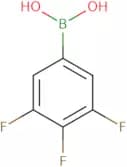
CAS :<p>The trifluorophenylboronic acid is a boronic acid that has been used in the synthesis of vitamin B12. This compound is often used as a catalyst for the Suzuki coupling reaction. It can also be used to synthesize amides and synthons. The trifluorophenylboronic acid is soluble in water, ethanol, and acetone. The pH of the solution depends on the type of base added. For example, when an amine is added to the solution, it increases to approximately 8-9. When a p-hydroxybenzoic acid is added to the solution, it decreases to approximately 2-3.</p>Formule :C6H4BF3O2Degré de pureté :Min. 95%Couleur et forme :PowderMasse moléculaire :175.9 g/molN-α-Allyloxycarbonyl-N-ε-2-Fmoc-L-lysine
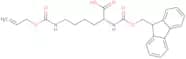
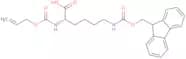
CAS :<p>The synthesis of semaglutide is accomplished by a solid-phase synthetic route. The peptide is synthesized on a polymeric support. The side chains are assembled in the liquid phase and then condensed with the peptide chain. The condensation reaction between the side chains and peptide chain is catalyzed by an acid such as trifluoroacetic acid or ethyl chloroformate. Semaglutide was synthesized using this method to produce high purity, concentration, and yield.</p>Formule :C25H28N2O6Degré de pureté :Min. 95%Couleur et forme :White/Off-White SolidMasse moléculaire :452.5 g/molBiphenyldiMethylsilane
CAS :<p>BiphenyldiMethylsilane is a reactive compound that can be used for the surface modification of metals. It reacts with metal carbonyls, such as ZrO2, to form an oxide layer on the metal surface. This reaction can be monitored by magnetic resonance spectroscopy and chemical structures. The reactive site of this compound is a hydroxyl group, which will react with chloride ions to form a zirconium chloride complex. The chemical ionization technique can be used to determine the surface concentrations of this compound. BiphenyldiMethylsilane is often used in analytical chemistry to detect metal ions on surfaces or in films using infrared spectroscopy or mass spectrometry.</p>Degré de pureté :Min. 95%[4-(1-Cyano-1-methylethyl)phenyl]boronic acid
CAS :<p>Please enquire for more information about [4-(1-Cyano-1-methylethyl)phenyl]boronic acid including the price, delivery time and more detailed product information at the technical inquiry form on this page</p>Formule :C10H12BNO2Degré de pureté :Min. 95%Masse moléculaire :189.02 g/molBiotinyl-epsilonAhx-ω-Conotoxin GVIA trifluoroacetate salt
CAS :Produit contrôlé<p>Please enquire for more information about Biotinyl-epsilonAhx-omega-Conotoxin GVIA trifluoroacetate salt including the price, delivery time and more detailed product information at the technical inquiry form on this page</p>Formule :C136H207N41O46S7Degré de pureté :Min. 95%Masse moléculaire :3,376.81 g/mol4-(tert-Butyldimethylsilyloxymethyl)pyridine
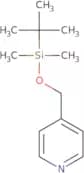
CAS :<p>4-(tert-Butyldimethylsilyloxymethyl)pyridine is a reagent that is used to prepare stoichiometric quantities of triethyloxonium ions in the presence of catalytic amounts of palladium. 4-(tert-Butyldimethylsilyloxymethyl)pyridine is also used as an anticancer agent, which may be due to its ability to inhibit cell proliferation and induce apoptosis. This compound has been shown to prevent the growth of micellar structures and reduce the rate of ester hydrolysis. It also has the ability to convert into two enantiomers, one with a hydroxyl group on the methylene carbon at position 4 and another with an alcohol group on this same carbon.</p>Formule :C12H21NOSiDegré de pureté :Min. 95%Couleur et forme :Yellow LiquidMasse moléculaire :223.39 g/mol4-Chlorophenylboronic acid
CAS :<p>4-Chlorophenylboronic acid is a chemical compound that is used in the industrial preparation of biphenyl. It is produced by the Friedel-Crafts reaction between chlorine and 4-methoxyphenylboronic acid. This reaction can be carried out using a variety of solvents, such as chloroform or carbon tetrachloride. The optimal reaction conditions are acidic pH values, which are achieved by adding sodium carbonate to the solution. The product can be purified by distillation or crystallization. 4-Chlorophenylboronic acid can also be used for the synthesis of organic compounds through cross-coupling reactions with organometallic reagents, such as palladium chloride and triphenylphosphine, or through asymmetric synthesis with chiral ligands like (S)-proline and 2-(diphenylphosphino)ferrocene.</p>Formule :C6H6BClO2Degré de pureté :Min. 95%Couleur et forme :PowderMasse moléculaire :156.37 g/mol2-Pyridineboronic acid
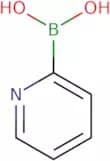
CAS :<p>2-Pyridineboronic acid is a chemical compound that belongs to the group of quinoline derivatives. It is used in pharmaceutical preparations, including as an intermediate for the synthesis of other compounds. 2-Pyridineboronic acid has been shown to have antiproliferative effects on cancer cells and has been found to be active against nicotinic acetylcholine receptors (NAR). The compound also inhibits lipid kinase activity, which is involved in the production of phosphatidylcholine and phosphatidylethanolamine from phosphatidylserine. 2-Pyridineboronic acid can react with hydrochloric acid and electrochemical impedance spectroscopy to produce a solution that has a detection time of about 10 minutes.</p>Formule :C5H6BNO2Degré de pureté :Min. 95%Masse moléculaire :122.92 g/molN,N'-Dimethyl-2,7-Diazapyrenium bistetrafluoroborate
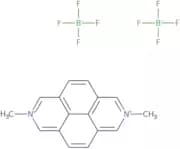
CAS :<p>Please enquire for more information about N,N'-Dimethyl-2,7-Diazapyrenium bistetrafluoroborate including the price, delivery time and more detailed product information at the technical inquiry form on this page</p>Formule :C16H14B2F8N2Degré de pureté :Min. 95%Masse moléculaire :407.91 g/molN-α-Fmoc-Nε-allyloxycarbonyl-D-lysine
CAS :<p>N-alpha-Fmoc-Nepsilon-allyloxycarbonyl-D-lysine is a medicament that is modified with an amino group at the alpha position. It is synthesized by modification of the chain with a ganirelix acetate. N-alpha-Fmoc-Nepsilon-allyloxycarbonyl-D-lysine can be used to produce ganirelix, which inhibits the release of follicle stimulating hormone (FSH). The chemical synthesis of this drug has been shown to be successful in large scale production, and it has been shown to be effective in treating patients with prostate cancer. Impurities in this drug have been found and treated by removing the methyl ester group from the lysine residue.</p>Formule :C25H28N2O6Degré de pureté :Min. 95%Masse moléculaire :452.5 g/mol2-(4,4-Difluorocyclohex-1-en-1-yl)-4,4,5,5-tetramethyl-1,3,2-dioxaborolane
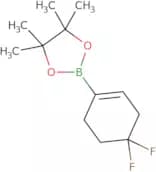
CAS :<p>Please enquire for more information about 2-(4,4-Difluorocyclohex-1-en-1-yl)-4,4,5,5-tetramethyl-1,3,2-dioxaborolane including the price, delivery time and more detailed product information at the technical inquiry form on this page</p>Formule :C12H19BF2O2Degré de pureté :Min. 95%Masse moléculaire :244.09 g/molε-Maleimidocaproic acid-(2-nitro-4-sulfo)-phenyl ester·sodium salt
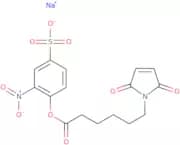
CAS :<p>Epsilon-Maleimidocaproic acid-(2-nitro-4-sulfo)-phenyl ester·sodium salt (EMAP) is a crosslinker that belongs to the group of heterobifunctional reagents. It has been used to conjugate monoclonal antibodies with other molecules, such as toxins. EMAP is activated by the dianion generated by protonation of the nitro groups on the phenyl ring and reacts with free amines or thiols in proteins. EMAP can be used for labeling immunotoxins for diagnostic use, maximizing detection sensitivity, and crosslinking DNA molecules for use in molecular cloning experiments.</p>Formule :C16H15N2NaO9SDegré de pureté :Min. 95%Masse moléculaire :434.35 g/mol3-Acetylphenylboronic acid, pinacol ester
CAS :<p>Please enquire for more information about 3-Acetylphenylboronic acid, pinacol ester including the price, delivery time and more detailed product information at the technical inquiry form on this page</p>Formule :C14H19BO3Degré de pureté :Min. 95%Masse moléculaire :246.11 g/mol3-Maleimidophenyl boronic acid
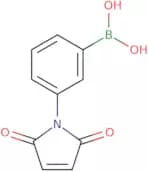
CAS :<p>Please enquire for more information about 3-Maleimidophenyl boronic acid including the price, delivery time and more detailed product information at the technical inquiry form on this page</p>Formule :C10H8NO4BDegré de pureté :Min. 95%Masse moléculaire :216.99 g/mol3-Formylfuran-2-boronic acid
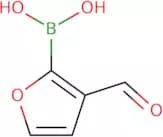
CAS :<p>3-Formylfuran-2-boronic acid is a molecule that can reversibly form an imine with primary amines. 3-Formyl group and fluorophore are the main features of this molecule. The fluorescent properties of 3-formyl group have been extensively studied by functional theory, structural studies and kinetic experiments. The study of these properties has led to the discovery of new fluorescent probes for use in biochemical studies. 3-Formyl furan also interacts with anthracene and other heterocycles by binding constants. These interactions were studied using quantum chemical calculations.</p>Formule :C5H5BO4Degré de pureté :Min. 95%Couleur et forme :PowderMasse moléculaire :139.9 g/mol2,2-Difluoro-1,3-Benzodioxol-5-Ylboronic Acid
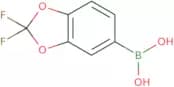
CAS :<p>Please enquire for more information about 2,2-Difluoro-1,3-Benzodioxol-5-Ylboronic Acid including the price, delivery time and more detailed product information at the technical inquiry form on this page</p>Formule :C7H5BF2O4Degré de pureté :Min. 95%Masse moléculaire :201.92 g/molTetraethylammonium tetrafluoroborate
CAS :<p>Tetraethylammonium tetrafluoroborate is a diamagnetic chemical species that reacts with water, forming the hydrated salt tetraethylammonium hydroxide. Tetraethylammonium tetrafluoroborate has a high resistance to oxidation and reduction reactions. It can be used as an electrolyte in electrochemistry and as a thermal expansion agent in plastics. The potentials of this substance are around +1 V, which makes it useful for electrochemical impedance spectroscopy. Tetraethylammonium tetrafluoroborate is activated by organic solvents, but not by water vapor.</p>Formule :C8H20N·BF4Couleur et forme :White Off-White PowderMasse moléculaire :217.06 g/mol2-Chloropyridine-4-boronic acid
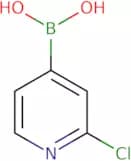
CAS :<p>2-Chloropyridine-4-boronic acid is a nicotinic acetylcholine receptor antagonist that has been shown to be effective against trypanosomiasis. It blocks the binding of acetylcholine to its receptor, which prevents the propagation of an action potential in the postsynaptic cell. 2-Chloropyridine-4-boronic acid inhibits the enzymes cyclooxygenase and prostaglandin synthase, which are involved in inflammation. 2-Chloropyridine-4-boronic acid is potent and selective for nicotinic acetylcholine receptors, but it also binds to other sites on the enzyme. The molecular modeling studies have shown that this compound has a pharmacophore that can be used as a guide for drug design.</p>Formule :C5H5BClNO2Degré de pureté :Min. 95%Masse moléculaire :157.36 g/molBobbitt's salt
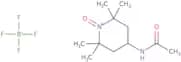
CAS :<p>4-Acetamido-2,2,6,6-tetramethyl-1-oxopiperidinium tetrafluoroborate, most commonly known as Bobbitt's salt, is a cheap and benign oxidant. It’s an oxoamonium salt that is used in oxidative cleveage of C-C and C-O bonds. The most common application of Bobbitt's salts is as a catalyst for the synthesis of dimethylbenzoquinones or DMBQs.</p>Formule :C11H21BF4N2O2Degré de pureté :Min. 95%Couleur et forme :Red PowderMasse moléculaire :300.1 g/mol1H-Indazole-5-boronic acid
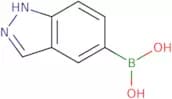
CAS :<p>1H-Indazole-5-boronic acid is a potent compound that belongs to the class of indazole compounds. It has been shown to inhibit protein phosphorylation and induce morphological changes in cells. This compound also inhibits the activity of a number of different cellular enzymes, including protein phosphatases, protein kinases, and protein tyrosine phosphatases. 1H-Indazole-5-boronic acid has been shown to be a promising lead compound for the discovery of novel inhibitors of these enzymes.</p>Formule :C7H7BN2O2Degré de pureté :Min. 95%Masse moléculaire :161.95 g/mol


![[4-(1-Cyano-1-methylethyl)phenyl]boronic acid](/_next/image/?url=https%3A%2Fstatic.cymitquimica.com%2Fproducts%2F3D%2Fthumb-webp%2FFC121870.webp&w=3840&q=75)