


Composés organosiliciés
Dans cette section, vous trouverez un grand nombre de composés organosiliciés. Les composés organosiliciés sont caractérisés par des atomes de carbone liés à des atomes de silicium. D'autres composés non métalliques peuvent également être présents. Ces composés sont largement utilisés en synthèse organique, en science des matériaux et en pharmaceutique en raison de leurs propriétés chimiques uniques. Chez CymitQuimica, nous offrons une large gamme de composés organosiliciés de haute qualité pour soutenir vos recherches et projets industriels.
Sous-catégories appartenant à la catégorie "Composés organosiliciés"
4325 produits trouvés pour "Composés organosiliciés"
Trier par
Degré de pureté (%)
0
100
|
0
|
50
|
90
|
95
|
100
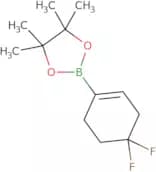
2-(4,4-Difluorocyclohex-1-en-1-yl)-4,4,5,5-tetramethyl-1,3,2-dioxaborolane
CAS :<p>Please enquire for more information about 2-(4,4-Difluorocyclohex-1-en-1-yl)-4,4,5,5-tetramethyl-1,3,2-dioxaborolane including the price, delivery time and more detailed product information at the technical inquiry form on this page</p>Formule :C12H19BF2O2Degré de pureté :Min. 95%Masse moléculaire :244.09 g/molTetraethylammonium tetrafluoroborate
CAS :<p>Tetraethylammonium tetrafluoroborate is a diamagnetic chemical species that reacts with water, forming the hydrated salt tetraethylammonium hydroxide. Tetraethylammonium tetrafluoroborate has a high resistance to oxidation and reduction reactions. It can be used as an electrolyte in electrochemistry and as a thermal expansion agent in plastics. The potentials of this substance are around +1 V, which makes it useful for electrochemical impedance spectroscopy. Tetraethylammonium tetrafluoroborate is activated by organic solvents, but not by water vapor.</p>Formule :C8H20N·BF4Couleur et forme :White Off-White PowderMasse moléculaire :217.06 g/molN-α-Trityl-Nε-Fmoc-L-lysine
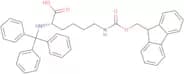
CAS :<p>N-alpha-Trityl-Nepsilon-Fmoc-L-lysine is a pentapeptide that is used in peptides. It has been shown to have cytotoxicity and permeability, as well as being biologically active. N-alpha-Trityl-Nepsilon-Fmoc-L-lysine has also been used in solid phase synthesis of peptides. This pentapeptide can be synthesized using the Miyaura cross coupling reaction with an ether or Suzuki cross coupling reaction. N-alpha-Trityl-Nepsilon-Fmoc-L-lysine is a bicyclic molecule that can be synthesized on a solid phase.</p>Formule :C40H38N2O4Degré de pureté :Min. 95%Masse moléculaire :610.74 g/molEthylammonium Tetrafluoroborate
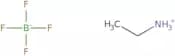
CAS :Produit contrôlé<p>Ethylammonium tetrafluoroborate is an ionic liquid that is a colorless, nonvolatile liquid at room temperature. It has a melting point of -9 °C and a boiling point of 230 °C. This compound is soluble in water and organic solvents, but insoluble in diethyl ether. Ethylammonium tetrafluoroborate can be used as an electrolyte for lithium-ion batteries. The reversible oxidation reaction of ethylammonium tetrafluoroborate can be catalyzed by the addition of fluorine or carbonyl groups to the molecule. The NMR spectra of ethylammonium tetrafluoroborate show that it contains an alcohol group with a phase transition temperature near 35 °C and an activation energy near 15 kJ/mol. This compound also undergoes polymerization reactions with various types of monomers, such as vinyl acetate and methyl methacrylate,</p>Formule :C2H7BF4NDegré de pureté :Min. 95%Couleur et forme :PowderMasse moléculaire :131.89 g/molGly-Amyloid b-Protein (15-25)-Gly-ε-aminocaproyl(-Lys)6
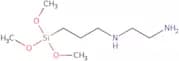
CAS :<p>Please enquire for more information about Gly-Amyloid b-Protein (15-25)-Gly-epsilon-aminocaproyl(-Lys)6 including the price, delivery time and more detailed product information at the technical inquiry form on this page</p>Formule :C105H178N28O26Degré de pureté :Min. 95%Masse moléculaire :2,248.71 g/molN-(2-Aminoethyl)-3-(trimethoxysilyl)propylamine
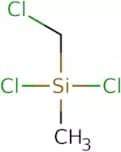
CAS :<p>N-(2-Aminoethyl)-3-(trimethoxysilyl)propylamine (NAP) is a cationic surfactant that is used as a fluorescent probe to study the binding of proteins to cell surface integrin receptors. The adsorption mechanism is based on the interaction between the hydrophobic parts of the protein and the hydrophobic parts of NAP. This interaction leads to an increase in the concentration of NAP at the interface and thus an increase in fluorescence. NAP has been shown to bind human serum albumin, fatty acids, and monoclonal antibodies with high affinity. It also has been shown to bind to plasma proteins through hydrogen bonding. The optimum concentration for NAP adsorption is 1mM.</p>Formule :C8H22N2O3SiDegré de pureté :Min. 95%Masse moléculaire :222.36 g/molChloromethyl(dichloro)methylsilane
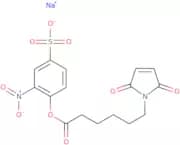
CAS :<p>Chloromethyl(dichloro)methylsilane is a diphenyl ether that can be generated by the reaction of chloromethylchlorosilane with sodium in liquid ammonia. Chloromethyl(dichloro)methylsilane is used to prepare Grignard reagents and coatings. It reacts with benzyl groups in the presence of base to form phenyldichlorosilanes, which are used as thermally stable coatings. Chloromethyl(dichloro)methylsilane has been shown to undergo bond cleavage under thermal conditions, forming a molecule with a hydroxyl group and chloride functional group. Gel permeation chromatography has revealed that this substance contains no reactive functional groups other than the chloromethoxy group.</p>Formule :C2H5Cl3SiDegré de pureté :Min. 95%Couleur et forme :Clear LiquidMasse moléculaire :163.5 g/molε-Maleimidocaproic acid-(2-nitro-4-sulfo)-phenyl ester·sodium salt
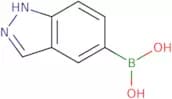
CAS :<p>Epsilon-Maleimidocaproic acid-(2-nitro-4-sulfo)-phenyl ester·sodium salt (EMAP) is a crosslinker that belongs to the group of heterobifunctional reagents. It has been used to conjugate monoclonal antibodies with other molecules, such as toxins. EMAP is activated by the dianion generated by protonation of the nitro groups on the phenyl ring and reacts with free amines or thiols in proteins. EMAP can be used for labeling immunotoxins for diagnostic use, maximizing detection sensitivity, and crosslinking DNA molecules for use in molecular cloning experiments.</p>Formule :C16H15N2NaO9SDegré de pureté :Min. 95%Masse moléculaire :434.35 g/mol1H-Indazole-5-boronic acid
CAS :<p>1H-Indazole-5-boronic acid is a potent compound that belongs to the class of indazole compounds. It has been shown to inhibit protein phosphorylation and induce morphological changes in cells. This compound also inhibits the activity of a number of different cellular enzymes, including protein phosphatases, protein kinases, and protein tyrosine phosphatases. 1H-Indazole-5-boronic acid has been shown to be a promising lead compound for the discovery of novel inhibitors of these enzymes.</p>Formule :C7H7BN2O2Degré de pureté :Min. 95%Masse moléculaire :161.95 g/mol1-Pyreneboronic Acid (contains varying amounts of Anhydride)
CAS :<p>1-Pyreneboronic acid is a fluorescent derivative of boronic acid. It has been shown to have synergistic effects with other compounds, such as glucose monitoring. 1-Pyreneboronic acid is used in the preparation of a fluorescent probe for use in dna duplex assays. The fluorescence properties of this compound are affected by the presence of hydroxy groups and benzyl groups, making it useful for protein detection and identification. This compound can be prepared using the suzuki coupling reaction and it has been shown that it has an effect on cell line raw264.7 cells.</p>Formule :C16H11BO2Degré de pureté :Min. 95%Masse moléculaire :246.07 g/mol[4-(1-Cyano-1-methylethyl)phenyl]boronic acid
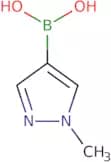
CAS :<p>Please enquire for more information about [4-(1-Cyano-1-methylethyl)phenyl]boronic acid including the price, delivery time and more detailed product information at the technical inquiry form on this page</p>Formule :C10H12BNO2Degré de pureté :Min. 95%Masse moléculaire :189.02 g/mol(1-Methyl-1H-pyrazol-4-yl)boronic acid
CAS :<p>(1-Methyl-1H-pyrazol-4-yl)boronic acid is a boronic acid that has been used for the synthesis of a number of heterocyclic compounds. Boronic acids are commonly used to synthesize phosphine ligands, which are reactive and can be used in cross-coupling reactions with organic halides, triflates, and tosylates. The efficiency of the reaction depends on the functional group present on the boron atom. (1-Methyl-1H-pyrazol-4-yl)boronic acid can inhibit the activity of many types of enzymes, including those involved in bacterial DNA synthesis and protein synthesis. (1-Methyl-1H-pyrazol-4-yl)boronic acid has been shown to have pharmacokinetic properties that depend on its ionization state.</p>Formule :C4H7BN2O2Degré de pureté :Min. 95%Masse moléculaire :125.92 g/mol(2-Chlorophenyl)boronic acid
CAS :<p>2-Chlorophenylboronic acid is a diphenyl ether that can be used as a building block for the synthesis of benzodiazepine receptor ligands. It has been shown to be an efficient nucleophile, leading to the formation of carbonyl groups in the presence of halides. 2-Chlorophenylboronic acid has also been shown to inhibit p38 kinase activity and may be useful for anticancer therapy.</p>Formule :C6H6BClO2Degré de pureté :Min. 95%Masse moléculaire :156.37 g/mol4-(Trimethylsilyl)pheNylboroNic acid
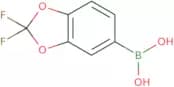
CAS :<p>4-(Trimethylsilyl)phenylboronic acid is a molecule that can be used as an acceptor in fluorescence. It has been shown to have acceptor properties, which means it is able to absorb light energy and transfer it to other molecules. This chemical can be used in microscopy and cross-coupling reactions. 4-(Trimethylsilyl)phenylboronic acid has been shown to undergo thermally activated transport properties and to be isomeric. The molecule also has cross-coupling reactions with anilines, which are important for the production of pharmaceuticals and other organic compounds. 4-(Trimethylsilyl)phenylboronic acid has a high affinity for chloride ions, making it a good candidate for use in solar cells.</p>Formule :C9H15BO2SiDegré de pureté :Min. 95%Masse moléculaire :194.11 g/mol2,2-Difluoro-1,3-Benzodioxol-5-Ylboronic Acid
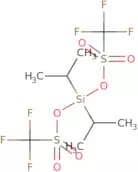
CAS :<p>Please enquire for more information about 2,2-Difluoro-1,3-Benzodioxol-5-Ylboronic Acid including the price, delivery time and more detailed product information at the technical inquiry form on this page</p>Formule :C7H5BF2O4Degré de pureté :Min. 95%Masse moléculaire :201.92 g/molDiisopropylsilyl Bis(Trifluoromethanesulfonate)
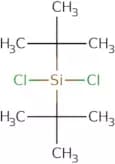
CAS :<p>Diisopropylsilyl bis(trifluoromethanesulfonate) is a bifunctional reagent that can be used to prepare the trifluoromethanesulfonic acid. It reacts with an alcohol in the presence of base to generate an ester, and then hydrolyzes the ester in the presence of water to generate the desired acid. Diisopropylsilyl bis(trifluoromethanesulfonate) is pale yellow and soluble in argon, nitrogen, and solvents such as ethyl acetate.</p>Formule :C8H14F6O6S2SiDegré de pureté :Min. 95%Masse moléculaire :412.4 g/molDi-tert-butyldichlorosilane
CAS :<p>Di-tert-butyldichlorosilane is a silicon compound that has been used to silylate amines and primary alcohols. It is a sterically hindered molecule with two chloro groups at the same position on one of the silicon atoms, which prevents or limits steric interactions with other molecules. Covid-19 Pandemic is the name given to a new strain of influenza virus that was discovered in 2009. The new strain contains some genetic material from bird flu, which makes it resistant to oseltamivir and zanamivir, drugs commonly used to fight against influenza infection.</p>Formule :C8H18Cl2SiDegré de pureté :Min. 95%Couleur et forme :Clear LiquidMasse moléculaire :213.22 g/mol2,6-Dimethyl-4-phenylpyronium tetrafluoroborate
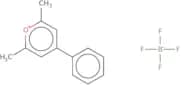
CAS :<p>2,6-Dimethyl-4-phenylpyronium tetrafluoroborate is a high quality reagent that is useful for the preparation of complex compounds. It is also a useful intermediate and building block. The CAS No. 97606-13-8, 2,6-Dimethyl-4-phenylpyronium tetrafluoroborate has been used in research chemicals and as a versatile building block for the synthesis of speciality chemicals. This reagent can be used in reactions to form many organic molecules that are not commercially available or difficult to synthesize.</p>Formule :C13H13O·BF4Degré de pureté :Min. 95%Couleur et forme :PowderMasse moléculaire :272.05 g/molTriethyloxonium tetrafluoroborate
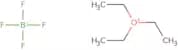
CAS :<p>Triethyloxonium tetrafluoroborate is an antimicrobial agent that inhibits the transfer of electrons from one molecule to another. It has been shown to be effective against methicillin-resistant Staphylococcus aureus and Mycobacterium tuberculosis. Triethyloxonium tetrafluoroborate binds to the bacterial enzyme, Jak1, which is involved in the formation of cytokines and interleukins. This binding inhibits the production of these molecules, leading to cell death by apoptosis. The use of triethyloxonium tetrafluoroborate as a research tool has facilitated its discovery as a potential anti-inflammatory drug for autoimmune diseases such as type 1 diabetes mellitus and rheumatoid arthritis. Triethyloxonium tetrafluoroborate can be used to inhibit amide synthesis, which may have applications in the study of carbohydrate chemistry and nitrogen atoms in biological systems. This compound has also been used</p>Formule :C6H15BF4ODegré de pureté :Min. 95%Couleur et forme :PowderMasse moléculaire :189.99 g/mol1-Phenyl-4-[4-(4,4,5,5-tetramethyl-[1,3,2]dioxaborolan-2-yl)-benzyl]piperazine
CAS :<p>Please enquire for more information about 1-Phenyl-4-[4-(4,4,5,5-tetramethyl-[1,3,2]dioxaborolan-2-yl)-benzyl]piperazine including the price, delivery time and more detailed product information at the technical inquiry form on this page</p>Formule :C23H31BN2O2Degré de pureté :Min. 95%Couleur et forme :PowderMasse moléculaire :378.32 g/mol



![[4-(1-Cyano-1-methylethyl)phenyl]boronic acid](/_next/image/?url=https%3A%2Fstatic.cymitquimica.com%2Fproducts%2F3D%2Fthumb-webp%2FFC121870.webp&w=3840&q=75)


![1-Phenyl-4-[4-(4,4,5,5-tetramethyl-[1,3,2]dioxaborolan-2-yl)-benzyl]piperazine](/_next/image/?url=https%3A%2Fstatic.cymitquimica.com%2Fproducts%2F3D%2Fthumb-webp%2FFP33228.webp&w=3840&q=75)