Composés organosiliciés
Dans cette section, vous trouverez un grand nombre de composés organosiliciés. Les composés organosiliciés sont caractérisés par des atomes de carbone liés à des atomes de silicium. D'autres composés non métalliques peuvent également être présents. Ces composés sont largement utilisés en synthèse organique, en science des matériaux et en pharmaceutique en raison de leurs propriétés chimiques uniques. Chez CymitQuimica, nous offrons une large gamme de composés organosiliciés de haute qualité pour soutenir vos recherches et projets industriels.
Sous-catégories appartenant à la catégorie "Composés organosiliciés"
4327 produits trouvés pour "Composés organosiliciés"
Trier par
Degré de pureté (%)
0
100
|
0
|
50
|
90
|
95
|
100
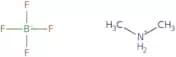
Dimethylammonium tetrafluoroborate
CAS :Produit contrôlé<p>Dimethylammonium tetrafluoroborate is a reagent that is used in organic chemistry. It is a solid with a melting point of -56°C and can be synthesized by the reaction of ethyl amine and hexafluoro-2-butyne. This reagent has been used to synthesize quaternary ammonium salts, anions, and aliphatic hydrocarbons. Dimethylammonium tetrafluoroborate is also employed as a solvent for some devices due to its physicochemical properties, including its low boiling point and high dielectric constant.</p>Formule :C2H8BF4NDegré de pureté :Min. 95%Masse moléculaire :132.9 g/molCyclopentadienyldicarbonyl(tetrahydrofuran)iron(II) tetrafluoroborate
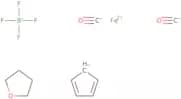
CAS :<p>Cyclopentadienyldicarbonyl(tetrahydrofuran)iron(II) tetrafluoroborate is a chemical that is used as a building block in research and speciality chemical synthesis. The compound has been shown to be versatile, with many possible reactions, including the formation of a complex. This compound can also be used as an intermediate for another chemical or as a scaffold for other compounds. Cyclopentadienyldicarbonyl(tetrahydrofuran)iron(II) tetrafluoroborate is a high quality reagent that can be used in reaction processes with low toxicity.</p>Formule :C11H13FeO3•BF4Degré de pureté :Min. 95%Couleur et forme :SolidMasse moléculaire :335.87 g/mol(1R,2R,3S,5R)-Pinanediol pyrrolidine-2S-boronate hydrochloride
CAS :<p>(1R,2R,3S,5R)-Pinanediol pyrrolidine-2S-boronate hydrochloride is a reagent that can be used in the synthesis of complex compounds. It is a fine chemical with CAS No. 149716-73-4. (1R,2R,3S,5R)-Pinanediol pyrrolidine-2S-boronate hydrochloride has a number of uses including as an intermediate for the preparation of speciality chemicals and as a building block for reactions in research. This compound is also useful as a versatile building block for many reactions.</p>Formule :C14H25BClNO2Degré de pureté :Min. 95%Couleur et forme :PowderMasse moléculaire :285.62 g/mol(3R,4R)-4-Acetoxy-3-[(R)-1-(tert-butyldimethylsilyloxy)ethyl]-2-azetidinone
CAS :<p>(3R,4R)-4-Acetoxy-3-[(R)-1-(tert-butyldimethylsilyloxy)ethyl]-2-azetidinone is a versatile building block that can be used as a reagent and speciality chemical. It is also a useful scaffold for the synthesis of complex compounds. It has been shown to be useful in the manufacture of research chemicals and other fine chemicals. This compound is characterized by its high quality and can be used as an intermediate in reactions involving nucleophilic substitution, alkylation, acylation, esterification, and amination.</p>Formule :C13H25NO4SiDegré de pureté :Min. 98 Area-%Couleur et forme :White PowderMasse moléculaire :287.43 g/molN-Methyl-N-trimethylsilylacetamide
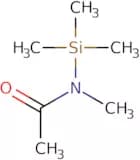
CAS :<p>N-Methyl-N-trimethylsilylacetamide is a bifunctional amide that can react with an electrophile, such as hexane, to form an N-methylated product. The amide group of the molecule can also be deprotonated by a strong base to form an enolate, which can then react with a nucleophile. The NMR spectra of this compound show that it has a multinuclear structure and contains two tautomers. It is used in analytical chemistry for sample preparation, chromatographic science for reaction intermediates, and chemical study for its reactivity.</p>Formule :C6H15NOSiDegré de pureté :Min. 97 Area-%Couleur et forme :Clear LiquidMasse moléculaire :145.27 g/mol2,3-Dimethoxyphenylboronic acid
CAS :<p>2,3-Dimethoxyphenylboronic acid is a synthetic molecule that contains a boronic acid group. This compound has been shown to interact with histones H3 and L6. It has also been shown to modify lysine residues on the histone H3 protein by methylation. In addition, 2,3-dimethoxyphenylboronic acid interacts with other molecules in a way that changes their conformation and this interaction can be studied using vibrational spectroscopy. Organic chemists may use 2,3-dimethoxyphenylboronic acid as a ligand for biological targets or as a means of modifying proteins.</p>Formule :C8H11BO4Degré de pureté :Min. 95%Couleur et forme :PowderMasse moléculaire :181.98 g/molFerroceneboronic acid
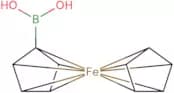
CAS :<p>Ferroceneboronic acid is a reagent, complex compound, useful intermediate, fine chemical and useful scaffold. It is also a versatile building block for the synthesis of speciality chemicals. Ferroceneboronic acid reacts with an organic halide to form a ferrocenyl-containing boronate ester that is useful as a reaction component in organic synthesis. The CAS number for ferroceneboronic acid is 12152-94-2.</p>Formule :C5H6BO2·C5H5·FeDegré de pureté :Min. 95 Area-%Couleur et forme :PowderMasse moléculaire :229.85 g/molCalcium dobesilate
CAS :<p>Calcium dobesilate is a calcium salt that emits chemiluminescence in the presence of an oxidant. It has been used as a treatment for hypercalcemia, which is caused by high levels of calcium in the blood, and to prevent skin cancer. The experimental model was conducted on human serum and showed that calcium dobesilate reduced the enzyme activities in serum samples by 30% after 15 minutes of incubation. This reduction was statistically significant when compared to untreated groups. Calcium dobesilate also inhibited the growth of skin cancer cells in a pharmacological agent-induced experimental model.</p>Formule :C8H6O5S•Ca0Degré de pureté :Min. 98 Area-%Couleur et forme :PowderMasse moléculaire :418.41 g/molAdrenochrome monoaminoguanidine mesilate
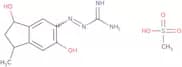
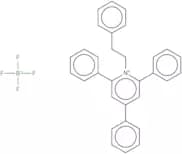
CAS :<p>Adrenochrome monoaminoguanidine mesilate is a synthetic drug that has been used in the treatment of cellulite, obesity, and chronic fatigue syndrome. It is an orally administered drug that causes the body to release adrenaline and noradrenaline. Adrenochrome monoaminoguanidine mesilate is a crystalline substance with a melting point of 130-140°C. The drug contains no additives or excipients other than gelatinization and cellulose.</p>Formule :C11H17N5O5SDegré de pureté :Min. 95%Couleur et forme :PowderMasse moléculaire :331.35 g/molN-Ethylbenzene-2,4,6-triphenyl pyridinium tetrafluoroborate
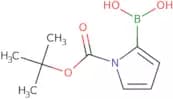
CAS :<p>N-Ethylbenzene-2,4,6-triphenyl pyridinium tetrafluoroborate is a reagent that can be used in chemical reactions. It is a fine chemical and research chemicals with high quality and a versatile scaffold. It is useful as an intermediate in the synthesis of complex compounds. N-Ethylbenzene-2,4,6-triphenyl pyridinium tetrafluoroborate has CAS number 66310-06-3.</p>Formule :C31H26N·BF4Degré de pureté :Min. 95%Couleur et forme :PowderMasse moléculaire :499.35 g/molN-Boc-pyrroyl-boronic acid
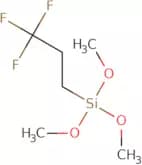
CAS :<p>N-Boc-pyrroyl-boronic acid is a linker that is used in organic synthesis. It reacts with chloride to form an organochlorine compound, which can be used as an inhibitor of s. aureus or other bacteria. The reaction time for this chemical is shorter than for the corresponding boronic acid, and it does not require the presence of a Lewis acid. This chemical has been shown to have anticancer activity in vitro, and its optimization has been studied using fluorescent carbonyl groups as the active component.</p>Formule :C9H14BNO4Degré de pureté :Min. 95%Masse moléculaire :211.02 g/molTrimethoxy(3,3,3-trifluoropropyl)silane
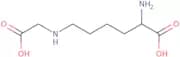
CAS :<p>Trimethoxy(3,3,3-trifluoropropyl)silane is a chemical that is used as a coating for metals and plastics. It has been shown to be an excellent lubricant and can be used as a fuel additive. Trimethoxy(3,3,3-trifluoropropyl)silane is also used in analytical chemistry for gravimetric analysis. This chemical can undergo reactions with other compounds such as hydrogen gas to form trimethoxysilane (SiH), which can be detected by FT-IR spectroscopy. Trimethoxy(3,3,3-trifluoropropyl)silane also reacts with metal ions in the presence of light to form metal complexes that have potential applications in photovoltaic devices and electrochemical studies. !--END--> !--END--></p>Formule :C6H13F3O3SiDegré de pureté :Min. 95%Couleur et forme :Clear LiquidMasse moléculaire :218.25 g/molN-ε-(1-Carboxymethyl)-L-lysine
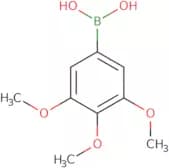
CAS :<p>N-ε-(1-Carboxymethyl)-L-lysine (NEM) is a versatile building block that is used in the synthesis of complex compounds. It is a reagent and speciality chemical that can be used as an intermediate to produce other useful chemicals or as a reaction component. It has been shown to be useful in the synthesis of peptides, oligonucleotides, and organic molecules. NEM has also been shown to have high quality and purity, making it a useful scaffold for further research into new compounds.</p>Formule :C8H16N2O4Degré de pureté :Min. 97%Couleur et forme :White PowderMasse moléculaire :204.22 g/mol(3,4,5-Trimethoxyphenyl)boronic acid
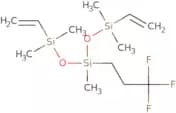
CAS :<p>(3,4,5-Trimethoxyphenyl)boronic acid is an active analogue of 3,4,5-trimethoxybenzoic acid. It has potent anti-inflammatory properties and inhibits cancer cell proliferation. (3,4,5-Trimethoxyphenyl)boronic acid has been shown to inhibit the growth of cancer cells in vitro by binding to the gyrase enzyme. This drug also has biological properties that may be useful for treating human liver diseases such as hepatic steatosis or nonalcoholic fatty liver disease (NAFLD).</p>Formule :C9H13BO5Degré de pureté :Min. 95 Area-%Couleur et forme :PowderMasse moléculaire :212.01 g/molPolysiloxanes di-Me, Me 3,3,3-trifluoropropyl vinyl group-terminated, 14,000-18,000 Cst
CAS :<p>14,000-18,000 Cst</p>Degré de pureté :Min. 95%Couleur et forme :Clear Liquid3-Aminophenylboronic acid hemisulphate
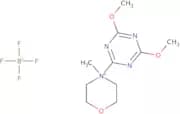
CAS :<p>3-Aminophenylboronic acid hemisulphate is a cross-linking agent that has been shown to induce apoptosis in mammalian cells. It also has the ability to bind to glycan, a sugar molecule on the surface of cells. The binding of 3-aminophenylboronic acid hemisulphate induces morphogenetic protein (MP) secretion, which leads to cell death. This compound is used as an adjuvant in vaccines and also as a research reagent for studying protein sequences and antigen/antibody interactions.</p>Formule :C6H8BNO2•(H2SO4)0Degré de pureté :Min. 95%Couleur et forme :White PowderMasse moléculaire :185.98 g/mol4-(4,6-Dimethoxy-1,3,5-triazin-2-yl)-4-morpholinium tetrafluoroborate
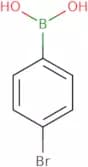
CAS :<p>4-(4,6-Dimethoxy-1,3,5-triazin-2-yl)-4-morpholinium tetrafluoroborate is a modulating agent that is used in the treatment of infectious and metabolic disorders. The compound has been shown to increase the activity of fatty acid oxidation and decrease the production of inflammatory mediators. 4-(4,6-Dimethoxy-1,3,5-triazin-2-yl)-4-morpholinium tetrafluoroborate interacts with a variety of proteins by binding to their Nterminal domains. It can be conjugated to other molecules and then used as probes for kinetic studies or as antiinflammatory compounds.</p>Formule :C10H17N4O3•BF4Degré de pureté :Min. 97 Area-%Couleur et forme :PowderMasse moléculaire :328.07 g/mol4-Bromophenylboronic acid
CAS :<p>4-Bromophenylboronic acid is a boronic acid with a basic structure. It has been used to synthesize picolinic acid, which is a water-soluble drug with light emission and anhydrous sodium. 4-Bromophenylboronic acid has been shown to have diagnostic properties because of its ability to enhance the concentration–time curve of sodium salts in human serum. It can also be used as an asymmetric synthesis agent for the production of fatty acids.</p>Formule :C6H6BBrO2Degré de pureté :Min. 97.5 Area-%Couleur et forme :PowderMasse moléculaire :200.83 g/molImidazo[1,2-α]pyridin-3-yl-boronic acid pinacol ester
CAS :<p>Imidazo[1,2-a]pyridin-3-yl-boronic acid pinacol ester is a reagent that is used as an intermediate in the synthesis of complex compounds. The compound has been shown to be useful for research purposes and can be used as a building block in the synthesis of chemical compounds. Imidazo[1,2-a]pyridin-3-yl-boronic acid pinacol ester has an CAS number of 1238337-02-4 and is a versatile building block that can be used to synthesize speciality chemicals.</p>Formule :C13H17BN2O2Degré de pureté :Min. 95%Couleur et forme :PowderMasse moléculaire :244.1 g/mol(S)-BoroLeu-(+)-pinanediol-trifluoroacetate
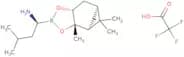
CAS :<p>(S)-BoroLeu-(+)-pinanediol-trifluoroacetate is a useful scaffold, building block, and intermediate for the synthesis of complex compounds. It is a high quality reagent that can be used in research chemicals and speciality chemicals. (S)-BoroLeu-(+)-pinanediol-trifluoroacetate is a versatile building block because it can be used as a reaction component in the synthesis of fine chemicals and as an intermediate in the synthesis of other reagents. CAS No. 477254-69-6</p>Formule :C15H28BNO2·C2HF3O2Degré de pureté :Min. 95%Couleur et forme :PowderMasse moléculaire :379.22 g/molMethylboronic acid
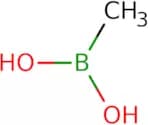
CAS :<p>Methylboronic acid is a cyclic peptide that can be found in plants. It was first discovered as an antimicrobial agent in the 1980s and has since been used to treat infectious diseases. Methylboronic acid reacts with oxygen nucleophiles such as penicillin-binding proteins, leading to their inhibition and subsequent death of bacteria. This compound also has potential for use in treating autoimmune diseases and inflammatory bowel disease due to its ability to inhibit the production of cytokines and other inflammatory mediators.</p>Formule :CH5BO2Degré de pureté :Min. 95%Couleur et forme :PowderMasse moléculaire :59.86 g/mol(2-Aminophenyl)boronic acid hydrochloride
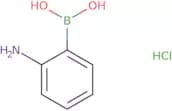
CAS :<p>(2-Aminophenyl)boronic acid hydrochloride is an analytical reagent that is used in the cross-coupling reaction between aryl bromides and organoboron compounds. It has been synthesized from 2-aminophenylboronic acid, which can be produced by the alkylation of phenol with 3-bromoquinoline. This compound has been shown to have antimalarial activity against the human malaria parasite Plasmodium falciparum in vitro. (2-Aminophenyl)boronic acid hydrochloride has also been shown to have a high intestinal absorption rate when given orally to rats. In vivo studies are needed to determine whether this chemical is safe for humans.</p>Formule :C6H9BClNO2Degré de pureté :Min. 95%Couleur et forme :PowderMasse moléculaire :173.41 g/mol5-Formyl-2-thiopheneboronic acid
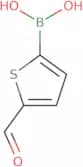
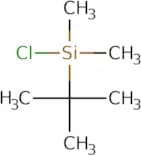
CAS :<p>5-Formyl-2-thiopheneboronic acid is a synthetic molecule that has been shown to be an effective electron microscope stabilizer. It is a boronate ester with a formyl group at the 2-position and a thiophene ring at the 5-position. The chloride in this molecule is used as a functional group, which can then react with other molecules to form new compounds. The functional theory of 5-formyl-2-thiopheneboronic acid includes its ability to form bonds with other molecules and its use as an inorganic base. The particle size of 5-formyl-2-thiopheneboronic acid is unsymmetrical, making it different from other molecules.</p>Formule :C5H5BO3SDegré de pureté :Min. 95%Couleur et forme :PowderMasse moléculaire :155.97 g/moltert-Butyldimethylsilyl chloride
CAS :<p>Tert-butyldimethylsilyl chloride is a silicon-containing compound that is used to prepare the tert-butyl group, which is an important part of many organic compounds. Tert-butyldimethylsilyl chloride reacts with trifluoroacetic acid to form hydrogen bonds. It can also react with hydrochloric acid to form a tert-butyl chloride, which is soluble in water and hydrolyzes in human serum. Tert-butyldimethylsilyl chloride has been used for the synthesis of carbohydrates and fatty acids. It has been used as a sample preparation agent for gas chromatography mass spectrometry and high performance liquid chromatography. The reaction solution can be prepared by reacting tert-butyldimethylsilyl chloride with an alcohol or carboxylic acid in the presence of base at low temperature. Tert-butyldimethylsilyl chloride can be synthesized by reacting</p>Formule :C6H15ClSiDegré de pureté :Min. 95 Area-%Couleur et forme :Colorless PowderMasse moléculaire :150.73 g/molQuinolin-4-ylboronic acid
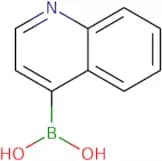
CAS :<p>Quinolin-4-ylboronic acid is a heterocyclic compound with two nitrogen atoms that are attached to the ring by means of carbonyl groups. This compound is a precursor in the synthesis of the drug dorsomorphin, which is used for pain relief. It also has an important role in pharmacokinetics because it can be used as a marker for estimating blood levels of other drugs. Quinolin-4-ylboronic acid yields an active form, quinolin-4-yl boronic acid, when reacted with piperazine in basic conditions. The drug ldn-193189 is a derivative of this active form and has been evaluated as a potential drug for treating osteoporosis and cancer.</p>Formule :C9H8BNO2Degré de pureté :Min. 95 Area-%Couleur et forme :PowderMasse moléculaire :172.98 g/molN-α-tert-BOC-N-ε-formyl-L-lysine
CAS :<p>N-alpha-tert-BOC-N-epsilon-formyl-L-lysine is a dry weight of 4.1g/100g. It's diameter is 2.5mm with a growth rate of 0.3mm per day. This compound has been statistically shown to have no effect on the growth rates of bacteria in the presence of zinc bacitracin. The leucaena plant, which is a natural source of antibiotics, can be used as a sustainable treatment for bacterial infections because it contains N-alpha-tert-BOC-N-epsilon-formyl-L-lysine and other compounds that are effective against infections. This compound also catalyses energy efficiency, by providing an alternative to antibiotics, which may lead to more sustainable treatments for bacterial infections.</p>Formule :C12H22N2O5Degré de pureté :Min. 95%Couleur et forme :White PowderMasse moléculaire :274.31 g/mol1H-PYRROLO[2,3-B]PYRIDINE-5-CARBOXYLIC ACID, 4-CHLORO-1-[TRIS(1-METHYLETHYL)SILYL]-, METHYL ESTER
CAS :Formule :C18H27ClN2O2SiDegré de pureté :98%Masse moléculaire :366.96Tribenzyl silane
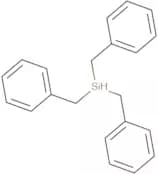
CAS :<p>S16745 - Tribenzyl silane</p>Formule :C21H22SiDegré de pureté :98%Couleur et forme :SolidMasse moléculaire :302.492Trimethyl(2,3,4,5-tetramethylcyclopenta-2,4-dien-1-yl)silane
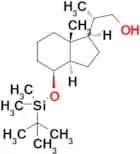
CAS :Degré de pureté :97%Masse moléculaire :194.3930054(S)-2-((1R,3aR,4S,7aR)-4-((tert-butyldimethylsilyl)oxy)-7a-methyloctahydro-1H-inden-1-yl)propan-1-ol
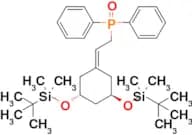
CAS :Degré de pureté :96%Masse moléculaire :326.5960083(2-((3R,5R)-3,5-Bis((tert-butyldimethylsilyl)oxy)cyclohexylidene)ethyl)diphenylphosphine oxide
CAS :Degré de pureté :98%Masse moléculaire :570.9010013-(t-Butyl dimethylsiloxy) iodobenzene
CAS :<p>S03323 - 3-(t-Butyl dimethylsiloxy) iodobenzene</p>Formule :C12H19IOSiDegré de pureté :98%Masse moléculaire :334.272tert-Butyl(2-iodoethoxy)dimethylsilane
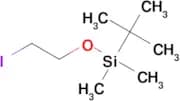
CAS :Formule :C8H19IOSiDegré de pureté :95%Couleur et forme :Liquid, ClearMasse moléculaire :286.228(R)-Methyl 2-((tert-butyldimethylsilyl)oxy)propanoate
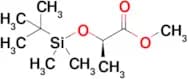
CAS :Degré de pureté :97%Masse moléculaire :218.3679962(R)-2-((tert-butyldimethylsilyl)oxy)-1-(4-chloro-3-fluorophenyl)ethanol
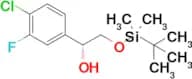
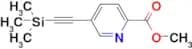
CAS :Degré de pureté :95%Masse moléculaire :304.8599854(4-((Trimethylsilyl)ethynyl)phenyl)methanol
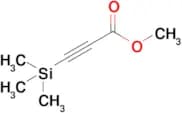
CAS :Formule :C12H16OSiDegré de pureté :98%Couleur et forme :Liquid, No data available.Masse moléculaire :204.344Methyl 3-(trimethylsilyl)propiolate
CAS :Degré de pureté :96%Couleur et forme :LiquidMasse moléculaire :156.2559967trans-Ethyl 2-((5-bromo-1-((2-(trimethylsilyl)ethoxy)methyl)-1H-indazol-3-yl)amino)-1-((1r,4r)-4-((tert-butyldimethylsilyl)oxy)cyclohexyl)-1H-benzo[d]imidazole-5-carboxylate
CAS :Degré de pureté :95%Masse moléculaire :742.906(1R,3S,Z)-3-(tert-butyldimethylsilyloxy)-5-((E)-2-((1R,3aS,7aR)-1-((R)-6-hydroxy-6-methylheptan-2-yl)-7a-methyldihydro-1H-inden-4(2H,5H,6H,7H,7aH)-ylidene)ethylidene)-4-methylenecyclohexanol
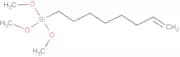
CAS :Degré de pureté :95%Masse moléculaire :530.9097-Oct-1-enyltrimethoxysilane
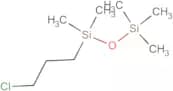
CAS :<p>S12600 - 7-Oct-1-enyltrimethoxysilane</p>Formule :C11H24O3SiDegré de pureté :95%Couleur et forme :ClearMasse moléculaire :232.395(3-Chloropropyl)pentamethyldisiloxane
CAS :<p>S25113 - (3-Chloropropyl)pentamethyldisiloxane</p>Formule :C8H21ClOSi2Degré de pureté :98%Masse moléculaire :224.88tert-Butyl 4-chloro-1-(triisopropylsilyl)-1H-pyrrolo[2,3-b]pyridine-5-carboxylate
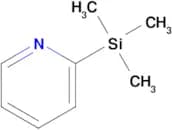
CAS :Degré de pureté :95%Masse moléculaire :409.04000852-(Trimethylsilyl)pyridine
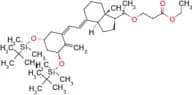
CAS :Formule :C8H13NSiDegré de pureté :97%Couleur et forme :LiquidMasse moléculaire :151.284Ethyl 3-((S)-1-((1S,3aS,7aS,E)-4-((Z)-2-((3S,5R)-3,5-bis((tert-butyldimethylsilyl)oxy)-2-methylenecyclohexylidene)ethylidene)-7a-methyloctahydro-1H-inden-1-yl)ethoxy)propanoate
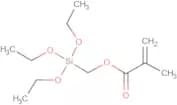
CAS :Degré de pureté :98%Masse moléculaire :661.127Methacryloxymethyltriethoxysilane (stabilised with MEHQ)
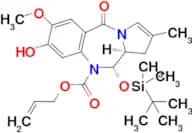
CAS :<p>S10520 - Methacryloxymethyltriethoxysilane</p>Formule :C11H22O5SiDegré de pureté :95%Couleur et forme :Liquid, ClearMasse moléculaire :262.377Allyl (11S,11aS)-11-((tert-butyldimethylsilyl)oxy)-8-hydroxy-7-methoxy-2-methyl-5-oxo-11,11a-dihydro-1H-benzo[e]pyrrolo[1,2-a][1,4]diazepine-10(5H)-carboxylate
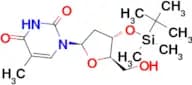
CAS :Degré de pureté :97%Masse moléculaire :474.62899781-((2R,4S,5R)-4-((tert-Butyldimethylsilyl)oxy)-5-(hydroxymethyl)tetrahydrofuran-2-yl)-5-methylpyrimidine-2,4(1H,3H)-dione
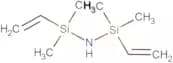
CAS :Formule :C16H28N2O5SiDegré de pureté :97%Couleur et forme :SolidMasse moléculaire :356.4941,3-Divinyltetramethyldisilazane
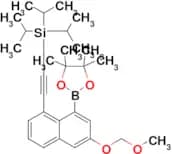
CAS :<p>S08375 - 1,3-Divinyltetramethyldisilazane</p>Formule :C8H19NSi2Degré de pureté :95%Couleur et forme :Clear LiquidMasse moléculaire :185.417Triisopropyl((6-(methoxymethoxy)-8-(4,4,5,5-tetramethyl-1,3,2-dioxaborolan-2-yl)naphthalen-1-yl)ethynyl)silane
CAS :Degré de pureté :97%Masse moléculaire :494.5499878


![(3R,4R)-4-Acetoxy-3-[(R)-1-(tert-butyldimethylsilyloxy)ethyl]-2-azetidinone](/_next/image/?url=https%3A%2Fstatic.cymitquimica.com%2Fproducts%2F3D%2Fthumb-webp%2FFA16979.webp&w=3840&q=75)



![Imidazo[1,2-α]pyridin-3-yl-boronic acid pinacol ester](/_next/image/?url=https%3A%2Fstatic.cymitquimica.com%2Fproducts%2F3D%2Fthumb-webp%2FFI51745.webp&w=3840&q=75)

![1H-PYRROLO[2,3-B]PYRIDINE-5-CARBOXYLIC ACID, 4-CHLORO-1-[TRIS(1-METHYLETHYL)SILYL]-, METHYL ESTER](/_next/image/?url=https%3A%2Fstatic.cymitquimica.com%2Fproducts%2F10%2Fthumb-webp%2FF502024.webp&w=3840&q=75)






![tert-Butyl 4-chloro-1-(triisopropylsilyl)-1H-pyrrolo[2,3-b]pyridine-5-carboxylate](/_next/image/?url=https%3A%2Fstatic.cymitquimica.com%2Fproducts%2F10%2Fthumb-webp%2FF789882.webp&w=3840&q=75)