Composés organosiliciés
Dans cette section, vous trouverez un grand nombre de composés organosiliciés. Les composés organosiliciés sont caractérisés par des atomes de carbone liés à des atomes de silicium. D'autres composés non métalliques peuvent également être présents. Ces composés sont largement utilisés en synthèse organique, en science des matériaux et en pharmaceutique en raison de leurs propriétés chimiques uniques. Chez CymitQuimica, nous offrons une large gamme de composés organosiliciés de haute qualité pour soutenir vos recherches et projets industriels.
Sous-catégories appartenant à la catégorie "Composés organosiliciés"
4327 produits trouvés pour "Composés organosiliciés"
Trier par
Degré de pureté (%)
0
100
|
0
|
50
|
90
|
95
|
100
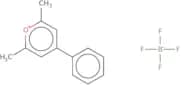
2,6-Dimethyl-4-phenylpyronium tetrafluoroborate
CAS :<p>2,6-Dimethyl-4-phenylpyronium tetrafluoroborate is a high quality reagent that is useful for the preparation of complex compounds. It is also a useful intermediate and building block. The CAS No. 97606-13-8, 2,6-Dimethyl-4-phenylpyronium tetrafluoroborate has been used in research chemicals and as a versatile building block for the synthesis of speciality chemicals. This reagent can be used in reactions to form many organic molecules that are not commercially available or difficult to synthesize.</p>Formule :C13H13O·BF4Degré de pureté :Min. 95%Couleur et forme :PowderMasse moléculaire :272.05 g/molTriethyloxonium tetrafluoroborate
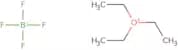
CAS :<p>Triethyloxonium tetrafluoroborate is an antimicrobial agent that inhibits the transfer of electrons from one molecule to another. It has been shown to be effective against methicillin-resistant Staphylococcus aureus and Mycobacterium tuberculosis. Triethyloxonium tetrafluoroborate binds to the bacterial enzyme, Jak1, which is involved in the formation of cytokines and interleukins. This binding inhibits the production of these molecules, leading to cell death by apoptosis. The use of triethyloxonium tetrafluoroborate as a research tool has facilitated its discovery as a potential anti-inflammatory drug for autoimmune diseases such as type 1 diabetes mellitus and rheumatoid arthritis. Triethyloxonium tetrafluoroborate can be used to inhibit amide synthesis, which may have applications in the study of carbohydrate chemistry and nitrogen atoms in biological systems. This compound has also been used</p>Formule :C6H15BF4ODegré de pureté :Min. 95%Couleur et forme :PowderMasse moléculaire :189.99 g/mol3-(Triallylsilyl)propyl Acrylate (stabilized with MEHQ)
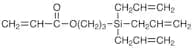
CAS :Formule :C15H24O2SiDegré de pureté :>92.0%(GC)Couleur et forme :Light yellow to Brown clear liquidMasse moléculaire :264.441,1-Dichlorosilacyclobutane
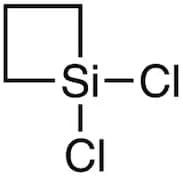
CAS :Formule :C3H6Cl2SiDegré de pureté :>98.0%(GC)(T)Couleur et forme :Colorless to Almost colorless clear liquidMasse moléculaire :141.07Triacetoxymethylsilane
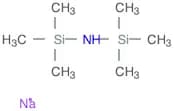
CAS :Formule :C7H12O6SiDegré de pureté :>90.0%(GC)Couleur et forme :White or Colorless to Almost white or Almost colorless powder to lump to clear liquidMasse moléculaire :220.25Sodium bis(trimethylsilyl)amide
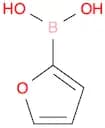
CAS :Formule :C6H18NNaSi2Degré de pureté :95%Couleur et forme :LiquidMasse moléculaire :183.3746Boronic acid, B-2-furanyl-
CAS :Formule :C4H5BO3Degré de pureté :97%Couleur et forme :SolidMasse moléculaire :111.8917(Trifluoromethyl)Trimethylsilane
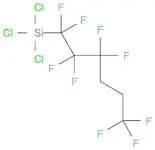
CAS :Formule :C4H9F3SiDegré de pureté :98%Couleur et forme :LiquidMasse moléculaire :142.1950Silane,trichloro(3,3,4,4,5,5,6,6,6-nonafluorohexyl)-
CAS :Formule :C6H4Cl3F9SiDegré de pureté :98%Masse moléculaire :381.5261n-Octadecyltrichlorosilane
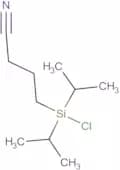
CAS :<p>S12250 - n-Octadecyltrichlorosilane</p>Formule :C18H37Cl3SiDegré de pureté :95%Couleur et forme :Liquid, ClearMasse moléculaire :387.929992675781253-Cyanopropyldiisopropylchlorosilane
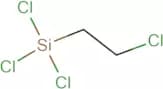
CAS :Couleur et forme :LiquidMasse moléculaire :217.809997558593752-Chloroethyltrichlorosilane
CAS :Degré de pureté :95%Couleur et forme :Liquid, ClearMasse moléculaire :197.94000244140625Allyltrichlorosilane
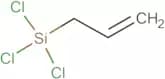
CAS :<p>S00350 - Allyltrichlorosilane</p>Formule :C3H5Cl3SiCouleur et forme :Liquid, ClearMasse moléculaire :175.509994506835941,3-Dichloro-1,1,3,3-tetraisopropyldisiloxane
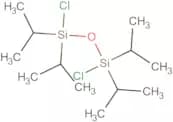
CAS :<p>S06200 - 1,3-Dichloro-1,1,3,3-tetraisopropyldisiloxane</p>Formule :C12H28Cl2OSi2Degré de pureté :95%Couleur et forme :Liquid, ClearMasse moléculaire :315.42999267578125Poly ε L-lysine HCl - Average MW 2000~4700Da
CAS :<p>Antimicrobial cationic peptide; used for microscopy glass slides coating</p>Formule :(C6H12N2O•HCl)nDegré de pureté :Min. 95 Area-%Couleur et forme :White Yellow PowderTris(pentafluorophenyl)borane
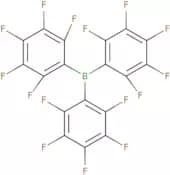
CAS :<p>Tris(pentafluorophenyl)borane is a cationic polymerization agent that can be used to form stable complexes with amines. These complexes are useful for the synthesis of polymers, which are used in a variety of applications such as coatings and adhesives. Tris(pentafluorophenyl)borane is also an important reagent in transfer reactions, electrochemical impedance spectroscopy, kinetic studies, and chemical stability. It has been shown to react with intramolecular hydrogen atoms to form polymeric matrixes that have high kinetic energy and transport properties. In coordination geometry, tris(pentafluorophenyl)borane has a planar geometry with a triangular arrangement around the boron atom.</p>Formule :C18BF15Degré de pureté :Min. 95%Couleur et forme :PowderMasse moléculaire :511.98 g/molTrimethylsilylcyclopentadiene (mixture of isomers)
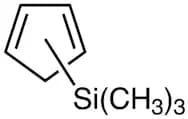
CAS :Formule :C8H14SiDegré de pureté :>97.0%(GC)Couleur et forme :Colorless to Red to Green clear liquidMasse moléculaire :138.29Polycondensation product of N-(1,3-Dimethylbutylidene)-3-(triethoxysilyl)propylamine
Couleur et forme :Light orange to Yellow to Green clear liquid2,5-Dibromo-1,1,3,4-tetraphenylsilole
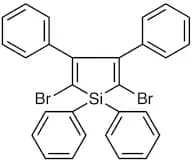
CAS :Formule :C28H20Br2SiDegré de pureté :>98.0%(GC)Couleur et forme :White to Light yellow powder to crystalMasse moléculaire :544.362-Isopropoxy-4,4,5,5-tetramethyl-1,3,2-dioxaborolane
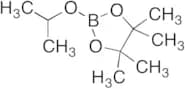
CAS :Produit contrôlé<p>Applications 2-Isopropoxy-4,4,5,5-tetramethyl-1,3,2-dioxaborolane was used in the synthesis of Alternariol [A575760] which is an alternaria mycotoxin and genotoxin, found in common edible crops. Also used in synthesis of highly efficient nanostructured organosilicon luminophore with fast photoluminescence.<br> Not a dangerous good if item is equal to or less than 1g/ml and there is less than 100g/ml in the package<br>References Won, M., et al.: J. Korean. Chem. Soc., 59, 471 (2015); Starikova, T., et al.: J. Mater. Chem., 4, 4699 (2016);<br></p>Formule :C9H19BO3Couleur et forme :NeatMasse moléculaire :186.06Tributylborane (1.0 M in THF)
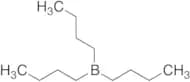
CAS :Produit contrôlé<p>Applications Tributylborane is a reducing agent used in the controlled radical polymerization of alkyl acrylates.<br>References Ludin, D. et al.: Russ. Chem. Bill., 65, 1859 (2016); Semenycheva, L. et al.: Russ. J. App. Chem., 89, 1667 (2016);<br></p>Formule :C12H27BCouleur et forme :Single SolutionMasse moléculaire :182.15Ammonium tetrafluoroborate
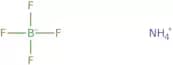
CAS :<p>Ammonium tetrafluoroborate is a salt of the organic compound tetrafluoroborate and ammonium. It is a colorless solid that can be used as a chemical reagent. Ammonium tetrafluoroborate has a higher chemical stability than other salts of tetrafluoroborate, such as ammonium hexafluorophosphate and ammonium hexafluoroarsenate. Ammonium tetrafluoroborate is used to make the dinucleotide phosphate, which is an important component in DNA synthesis. In a redox potential test, ammonium tetrafluoroborate showed no electrochemical activity in water vapor at pH 7. Ammonium tetrafluoroborate reacts with trifluoroacetic acid to produce hydrogen fluoride and ammonium chloride. This reaction is reversible, which means that it can be used for the synthesis of ammonia gas from hydrogen and nitrogen gases or for the</p>Formule :NH4BF4Degré de pureté :Min. 98%Couleur et forme :White PowderMasse moléculaire :104.84 g/mol1,2-Bis(hydroxymethyl)-O-carborane
CAS :Produit contrôlé<p>1,2-Bis(hydroxymethyl)-O-carborane is a cyclic molecule that can be used in the synthesis of organic compounds. It can be prepared by reacting anhydrous sodium chloride with propiolic acid. It has been shown to produce decaborane and anion when reacted with chlorine. The chlorides are catalytic for the formation of methyl alcohol and methacrylates. 1,2-Bis(hydroxymethyl)-O-carborane has been used as a starting material for the synthesis of triflates and methyl alcohols. This compound has also been found to produce diffraction patterns that can be used for structural analysis.</p>Formule :C4H16B10O2Degré de pureté :Min. 95%Masse moléculaire :204.28 g/molPotassium dihydrogen arsenate
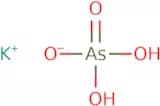
CAS :<p>Potassium dihydrogen arsenate is an inorganic chemical that is used as a pesticide. It prevents the synthesis of proteins by inhibiting soybean trypsin. The optimum concentration for chrysoperla is 1.6 mg/L, which has been shown to be sublethal at levels below 5 mg/L. This chemical has also been shown to have effects on light exposure and thermal expansion. Potassium dihydrogen arsenate belongs to the ferroelectric class of compounds and has a hydrogen bond with water, which may explain its uptake into plants.</p>Formule :H2AsKO4Degré de pureté :Min. 95%Masse moléculaire :180.04 g/molRef: 3D-FP30728
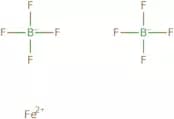
Produit arrêtéIron(II) tetrafluoroborate - 40-45% aqueous solution
CAS :<p>Iron(II) tetrafluoroborate is a green-yellow crystalline solid that is soluble in water. It has been shown to have structural and optical properties that are similar to those of ferric chloride, but with the advantage of being less toxic. Iron(II) tetrafluoroborate is used as a homogeneous catalyst for organic reactions such as the hydrogenation of nitroarenes and the reduction of ketones. The catalytic activity of Iron(II) tetrafluoroborate arises from its ability to form hydrogen bonding interactions with other molecules and ions in solution.<br>Iron(II) tetrafluoroborate undergoes a number of reactions with other compounds, including cleavage products such as hydrogen sulfate and nitrogen atoms, which may be due to its chelate ligand. In coordination chemistry, Iron(II) tetrafluoroborate can form coordination complexes by reacting with potassium dichromate or calcium carbonate. These complexes are</p>Formule :B2F8FeDegré de pureté :About 45%Couleur et forme :Slightly Green Clear LiquidMasse moléculaire :229.45 g/mol