Composés organosiliciés
Sous-catégories appartenant à la catégorie "Composés organosiliciés"
4330 produits trouvés pour "Composés organosiliciés"
Polycondensation product of N-(1,3-Dimethylbutylidene)-3-(triethoxysilyl)propylamine
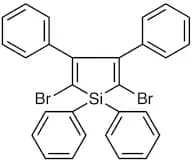
Couleur et forme :Light orange to Yellow to Green clear liquid2,5-Dibromo-1,1,3,4-tetraphenylsilole
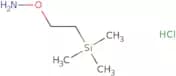
CAS :Formule :C28H20Br2SiDegré de pureté :>98.0%(GC)Couleur et forme :White to Light yellow powder to crystalMasse moléculaire :544.36O-(2-Trimethylsilylethyl)hydroxylamine HCl
CAS :O-(2-Trimethylsilylethyl)hydroxylamine HCl is a fine chemical that can be used as a versatile building block in the synthesis of complex compounds. It is also an intermediate for research chemicals, reagents, and speciality chemicals. O-(2-Trimethylsilylethyl)hydroxylamine HCl can be used as a reaction component in organic synthesis and has been shown to be useful in the synthesis of new scaffolds.
Formule :C5H15NOSi·HClDegré de pureté :Min. 95%Couleur et forme :White PowderMasse moléculaire :169.72 g/molAmmonium tetrafluoroborate
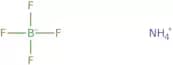
CAS :Ammonium tetrafluoroborate is a salt of the organic compound tetrafluoroborate and ammonium. It is a colorless solid that can be used as a chemical reagent. Ammonium tetrafluoroborate has a higher chemical stability than other salts of tetrafluoroborate, such as ammonium hexafluorophosphate and ammonium hexafluoroarsenate. Ammonium tetrafluoroborate is used to make the dinucleotide phosphate, which is an important component in DNA synthesis. In a redox potential test, ammonium tetrafluoroborate showed no electrochemical activity in water vapor at pH 7. Ammonium tetrafluoroborate reacts with trifluoroacetic acid to produce hydrogen fluoride and ammonium chloride. This reaction is reversible, which means that it can be used for the synthesis of ammonia gas from hydrogen and nitrogen gases or for the
Formule :NH4BF4Degré de pureté :Min. 98%Couleur et forme :White PowderMasse moléculaire :104.84 g/mol1,2-Bis(hydroxymethyl)-O-carborane
CAS :Produit contrôlé1,2-Bis(hydroxymethyl)-O-carborane is a cyclic molecule that can be used in the synthesis of organic compounds. It can be prepared by reacting anhydrous sodium chloride with propiolic acid. It has been shown to produce decaborane and anion when reacted with chlorine. The chlorides are catalytic for the formation of methyl alcohol and methacrylates. 1,2-Bis(hydroxymethyl)-O-carborane has been used as a starting material for the synthesis of triflates and methyl alcohols. This compound has also been found to produce diffraction patterns that can be used for structural analysis.
Formule :C4H16B10O2Degré de pureté :Min. 95%Masse moléculaire :204.28 g/molPotassium dihydrogen arsenate
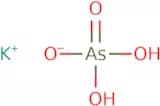
CAS :Potassium dihydrogen arsenate is an inorganic chemical that is used as a pesticide. It prevents the synthesis of proteins by inhibiting soybean trypsin. The optimum concentration for chrysoperla is 1.6 mg/L, which has been shown to be sublethal at levels below 5 mg/L. This chemical has also been shown to have effects on light exposure and thermal expansion. Potassium dihydrogen arsenate belongs to the ferroelectric class of compounds and has a hydrogen bond with water, which may explain its uptake into plants.
Formule :H2AsKO4Degré de pureté :Min. 95%Masse moléculaire :180.04 g/molRef: 3D-FP30728
Produit arrêté(5-Chloropyridin-3-yl)boronic acid
CAS :Please enquire for more information about (5-Chloropyridin-3-yl)boronic acid including the price, delivery time and more detailed product information at the technical inquiry form on this page
Formule :C5H5BClNO2Degré de pureté :Min. 95%Masse moléculaire :157.36 g/mol4-(Trimethylsilyl)pheNylboroNic acid
CAS :4-(Trimethylsilyl)phenylboronic acid is a molecule that can be used as an acceptor in fluorescence. It has been shown to have acceptor properties, which means it is able to absorb light energy and transfer it to other molecules. This chemical can be used in microscopy and cross-coupling reactions. 4-(Trimethylsilyl)phenylboronic acid has been shown to undergo thermally activated transport properties and to be isomeric. The molecule also has cross-coupling reactions with anilines, which are important for the production of pharmaceuticals and other organic compounds. 4-(Trimethylsilyl)phenylboronic acid has a high affinity for chloride ions, making it a good candidate for use in solar cells.
Formule :C9H15BO2SiDegré de pureté :Min. 95%Masse moléculaire :194.11 g/molRef: 3D-FT40289
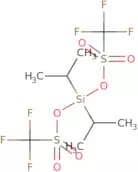
Produit arrêtéDiisopropylsilyl Bis(Trifluoromethanesulfonate)
CAS :Diisopropylsilyl bis(trifluoromethanesulfonate) is a bifunctional reagent that can be used to prepare the trifluoromethanesulfonic acid. It reacts with an alcohol in the presence of base to generate an ester, and then hydrolyzes the ester in the presence of water to generate the desired acid. Diisopropylsilyl bis(trifluoromethanesulfonate) is pale yellow and soluble in argon, nitrogen, and solvents such as ethyl acetate.
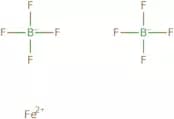
Formule :C8H14F6O6S2SiDegré de pureté :Min. 95%Masse moléculaire :412.4 g/molIron(II) tetrafluoroborate - 40-45% aqueous solution
CAS :Iron(II) tetrafluoroborate is a green-yellow crystalline solid that is soluble in water. It has been shown to have structural and optical properties that are similar to those of ferric chloride, but with the advantage of being less toxic. Iron(II) tetrafluoroborate is used as a homogeneous catalyst for organic reactions such as the hydrogenation of nitroarenes and the reduction of ketones. The catalytic activity of Iron(II) tetrafluoroborate arises from its ability to form hydrogen bonding interactions with other molecules and ions in solution.
Iron(II) tetrafluoroborate undergoes a number of reactions with other compounds, including cleavage products such as hydrogen sulfate and nitrogen atoms, which may be due to its chelate ligand. In coordination chemistry, Iron(II) tetrafluoroborate can form coordination complexes by reacting with potassium dichromate or calcium carbonate. These complexes areFormule :B2F8FeDegré de pureté :About 45%Couleur et forme :Slightly Green Clear LiquidMasse moléculaire :229.45 g/mol