Groupes protecteurs
Les groupes protecteurs sont utilisés en synthèse organique pour masquer temporairement des groupes fonctionnels réactifs, permettant ainsi la réalisation de réactions sélectives sans interférence. Ces groupes sont essentiels pour les processus de synthèse en plusieurs étapes, garantissant que des parties spécifiques de la molécule restent non réactives pendant que d'autres réactions sont effectuées. Dans cette section, vous trouverez une variété de groupes protecteurs adaptés à différents groupes fonctionnels, ainsi que des réactifs pour leur introduction et leur retrait. Chez CymitQuimica, nous offrons une gamme complète de groupes protecteurs de haute qualité pour faciliter vos stratégies de synthèse.
Sous-catégories appartenant à la catégorie "Groupes protecteurs"
- Composés protégés au Boc(913 produits)
- Composés déprotégés(24 produits)
- Composés protégés au Fmoc(1.722 produits)
444 produits trouvés pour "Groupes protecteurs"
Trier par
Degré de pureté (%)
0
100
|
0
|
50
|
90
|
95
|
100
N,O-Bis(trimethylsilyl)acetamide Kit TMS-BA (25% in Acetonitrile) 1 mL × 8 / Reaction vial, capacity 2 mL × 8 [Trimethylsilylating Reagent, for NH2 compounds]
CAS :Couleur et forme :Colorless to Light yellow clear liquidtert-Butyl 4-[4-(1-Hydroxyethyl)-2-methoxy-5-nitrophenoxy]butanoate
CAS :Formule :C17H25NO7Degré de pureté :>98.0%(HPLC)(qNMR)Couleur et forme :White to Light yellow powder to crystalMasse moléculaire :355.39Dichlorodiphenylsilane
CAS :Formule :C12H10Cl2SiDegré de pureté :>98.0%(GC)Couleur et forme :Colorless to Almost colorless clear liquidMasse moléculaire :253.20Di-tert-butyl Dicarbonate (ca. 30% in Tetrahydrofuran)
CAS :Formule :C10H18O5Couleur et forme :Colorless to Almost colorless clear liquidMasse moléculaire :218.25Ethylenedioxybis(trimethylsilane) [Protecting Reagent for Aldehydes and Ketones]
CAS :Formule :C8H22O2Si2Degré de pureté :>97.0%(GC)Couleur et forme :Colorless to Light yellow clear liquidMasse moléculaire :206.432,4,6-Tris(trifluoromethyl)benzenesulfonyl Chloride
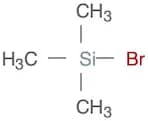
CAS :Formule :C9H2ClF9O2SDegré de pureté :>95.0%(T)(HPLC)Couleur et forme :White to Light yellow to Light orange powder to granuleMasse moléculaire :380.61Bromotriethylsilane
CAS :Formule :C6H15BrSiDegré de pureté :>96.0%(GC)Couleur et forme :White - Yellow LiquidMasse moléculaire :195.184-(Chloromethyl)-1,2-dimethoxybenzene
CAS :Formule :C9H11ClO2Degré de pureté :>95.0%(GC)(T)Couleur et forme :White to Light yellow powder to crystalMasse moléculaire :186.64N-(tert-Butoxycarbonyloxy)phthalimide
CAS :Formule :C13H13NO5Degré de pureté :>95.0%(HPLC)Couleur et forme :White to Almost white powder to crystalMasse moléculaire :263.25Benzyl 2,2,2-Trifluoro-N-phenylacetimidate
CAS :Formule :C15H12F3NODegré de pureté :>98.0%(GC)Couleur et forme :White or Colorless to Yellow to Green powder to lump to clear liquidMasse moléculaire :279.26Cbz-L-glutamine
CAS :<p>Cbz-L-glutamine is a water soluble compound that is used in the synthesis of pomalidomide. It is synthesized through a stepwise amide formation from methylamine and ethylene diamine. Cbz-L-glutamine has been shown to have an inhibitory effect on cancer cells, which may be due to its ability to break down hydroxamic acids. This chemical reaction causes the release of hydrogen ions, which leads to the disruption of various cellular processes, such as DNA replication and protein synthesis. The uptake of Cbz-L-glutamine by cancer cells has been shown in tissue culture experiments.</p>Formule :C13H16N2O5Degré de pureté :Min. 95%Couleur et forme :PowderMasse moléculaire :280.28 g/molFmoc-N-Me-Asp(OtBu)-OH
CAS :<p>Fmoc-N-Me-Asp(OtBu)-OH is a synthetic peptide with potential immunosuppressive properties. It has been shown to inhibit the proliferation of human lymphocytes in response to lipopolysaccharides (LPS) and also to suppress the release of cytokines such as IL-1β, IL-6, and TNFα. The effects were dose dependent and could be reversed by the addition of a neutralizing antibody. This peptide can be used as an immunosuppressant in clinical trials that are investigating treatments for myasthenia gravis. Fmoc-N-Me-Asp(OtBu)-OH has been synthesised using chemical synthesis methods from commercially available reagents.</p>Formule :C24H27NO6Degré de pureté :Min. 98 Area-%Couleur et forme :PowderMasse moléculaire :425.47 g/molH-L-Cys(mdnpe)-OH
CAS :<p>A novel protected cysteine that can be cleaved by photolysis.</p>Formule :C12H14N2O6SDegré de pureté :Min. 95%Masse moléculaire :314.32 g/molFmoc-D-allo-Thr(tBu)-L-Ser(Psi(Me,Me)pro)-OH
<p>Fmoc-D-allo-Thr(tBu)-L-Ser(Psi(Me,Me)pro)-OH is a reagent that is used as an intermediate in the synthesis of complex compounds. It is also a fine chemical that can be used to prepare speciality chemicals. Fmoc-D-allo-Thr(tBu)-L-Ser(Psi(Me,Me)pro)-OH has CAS No. and can be used as a reaction component in various reactions. This compound is versatile and can be used as a building block for other compounds.</p>Formule :C29H36N2O7Degré de pureté :Min. 95%Couleur et forme :PowderMasse moléculaire :524.61 g/molBoc-L-prolinal
CAS :<p>Boc-L-prolinal is a stereoselective enolate that has been used in the synthesis of organometallic compounds. It is also used in the preparation of monoclonal antibodies, which are proteins that are produced by the immune system to help fight off infections. Boc-L-prolinal has been shown to be an effective agent for treating many cancers, including breast cancer and melanoma. In addition, it has been shown to inhibit epidermal growth factor (EGF) and other growth factors, which may be due to its ability to induce apoptotic signaling. Boc-L-prolinal also contains a carbonyl group, which can undergo acidolysis reactions with nucleophiles such as water or alcohols.</p>Formule :C10H17NO3Degré de pureté :Min. 95%Couleur et forme :Colorless Clear LiquidMasse moléculaire :199.25 g/molFmoc-L-Cys(StBu)-OH
CAS :<p>Fmoc-L-Cys(StBu)-OH is a synthetic molecule that is used in pharmaceutical formulations. It can be synthesized from Fmoc-L-Cys and L-serine methyl ester by the chemical ligation of the two molecules. The chloride group at the end of this molecule provides a functional group for conjugation with other biomolecules, such as fatty acids. This molecule has been shown to have high purity with an isolated yield of about 98%.</p>Formule :C22H25NO4S2Degré de pureté :Min. 98 Area-%Couleur et forme :PowderMasse moléculaire :431.57 g/molFmoc-Cys-(CAMTrt)-OH
CAS :<p>Fmoc-Cys-(CAMTrt)-OH is an amino acid derivative, which is a synthetic compound essential for peptide synthesis. It is derived from natural cysteine, an amino acid found in proteins, and is modified with an Fmoc (9-fluorenylmethoxycarbonyl) protective group and a CAMTrt (trityl sulfonium ion) moiety. This derivative is used primarily in solid-phase peptide synthesis, where the Fmoc group protects the amine during chain elongation, and the CAMTrt group safeguards the thiol function of cysteine, preventing unwanted side reactions during synthesis.</p>Formule :C39H34N2O5SDegré de pureté :Min. 98 Area-%Masse moléculaire :642.76 g/molFmoc-Thr(tBu)-D-Ser(Psi(Me,Me)pro)-OH
<p>Fmoc-Thr(tBu)-D-Ser(Psi(Me,Me)pro)-OH is a speciality chemical that is used as a reagent for peptide synthesis. It is also useful in the synthesis of complex compounds and scaffolds. This compound has high quality with a CAS number of 56610-81-8. Fmoc-Thr(tBu)-D-Ser(Psi(Me,Me)pro)-OH is a versatile building block that can be used in reactions involving amines and carboxylic acids. Fmoc-Thr(tBu)-D-Ser(Psi(Me,Me)pro)-OH is an intermediate that can be used in the synthesis of many different compounds.</p>Formule :C29H36N2O7Degré de pureté :Min. 95%Couleur et forme :PowderMasse moléculaire :524.61 g/mol2-Mesitylenesulfonyl Chloride
CAS :Formule :C9H11ClO2SDegré de pureté :>99.0%(T)Couleur et forme :White powder to crystalMasse moléculaire :218.70Ethylenedithiobis(trimethylsilane) [Protecting Reagent for Aldehydes and Ketones]
CAS :Formule :C8H22S2Si2Degré de pureté :>97.0%(GC)Couleur et forme :Colorless to Almost colorless clear liquidMasse moléculaire :238.55