Signalisation du cytosquelette
Les inhibiteurs de la signalisation du cytosquelette sont des composés qui perturbent les voies de signalisation régulant le cytosquelette, essentiel pour la forme, la motilité, la division des cellules et le transport intracellulaire. Ces inhibiteurs sont utilisés pour étudier la dynamique des protéines du cytosquelette, telles que l'actine et la tubuline, et leur rôle dans des processus comme la migration cellulaire, l'adhésion et la métastase du cancer. Les inhibiteurs de la signalisation du cytosquelette sont précieux dans la recherche en biologie cellulaire, en cancérologie et en neurobiologie. Chez CymitQuimica, nous offrons une gamme complète d'inhibiteurs de la signalisation du cytosquelette de haute qualité pour soutenir vos recherches dans ces domaines.
1382 produits trouvés pour "Signalisation du cytosquelette"
Trier par
Degré de pureté (%)
0
100
|
0
|
50
|
90
|
95
|
100
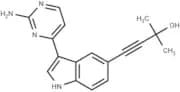
TTBK1/2-IN-1
CAS :<p>TTBK1/2-IN-1 (compound 3) is a potent inhibitor of Tau tubulin kinase 1 (TTBK1) and TTBK2, with IC50 values of 816 nM and 384 nM, respectively.</p>Formule :C17H16N4OCouleur et forme :SolidMasse moléculaire :292.335Hsp90-IN-34
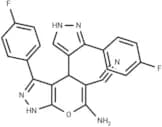
CAS :<p>Hsp90-IN-34 (compound HAM-1) is a chemical inhibitor that targets the Aha1-Hsp90 chaperone complex with high affinity (KDapp=23.5 µM). It modulates the ATPase activity of Hsp90 by affecting the interaction between Hsp90 and Aha1.</p>Formule :C22H14F2N6OCouleur et forme :SolidMasse moléculaire :416.38Tubulin polymerization-IN-75
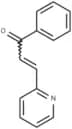
CAS :<p>Tubulin polymerization-IN-75 (Compound 6) is an inhibitor of tubulin polymerization, with an IC50 value of 30 μM. It effectively suppresses the proliferation of cancer cells Huh7 and 293T, demonstrating IC50 values of 14.3 μM and 13.8 μM, respectively.</p>Formule :C14H11NOCouleur et forme :SolidMasse moléculaire :209.243DCEM1
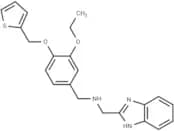
CAS :<p>DCEM1 binds to heat shock protein 60 (HSP60) and inhibits the interaction between HSP60 and ClpP, thereby blocking the mitochondrial unfolded protein response. Additionally, DCEM1 suppresses the expression of β-catenin and reduces ATP production in PC-3 and TKO cells. It is utilized in research related to prostate cancer.</p>Formule :C22H23N3O2SCouleur et forme :SolidMasse moléculaire :393.50FAK inhibitor 7
CAS :<p>FAK inhibitor7, a potent FAK inhibitor, demonstrates an IC50 of 3.58 nM. This compound effectively inhibits downstream signaling cascades of FAK (such as Src and AKT), which leads to cell cycle arrest at the G0/G1 phase and induces cytotoxic autophagy in ovarian cancer cells. Additionally, FAK inhibitor7 has been shown to suppress tumor metastasis and growth in ovarian cancer mouse models.</p>Formule :C32H37N7O3Couleur et forme :SolidMasse moléculaire :567.68Dictyostatin
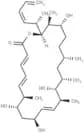
CAS :<p>Dictyostatin: potent microtubule stabilizer & anticancer agent with antiproliferative effects; researched for tauopathies.</p>Formule :C32H52O6Couleur et forme :SolidMasse moléculaire :532.75OXA-11
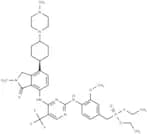
CAS :<p>OXA-11 (FAK-IN-16) is a FAK inhibitor with anti-tumor activity, useful for cancer research.</p>Formule :C37H49F3N7O5PDegré de pureté :98.70% - 99.20%Couleur et forme :SolidMasse moléculaire :759.8Uprosertib hydrochloride
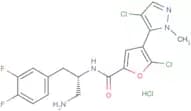
CAS :<p>Uprosertib hydrochloride is a potent and selective inhibitor of pan-Akt (IC50: 180/328/38 nM for Akt1/Akt2/Akt3, respectively).</p>Formule :C18H17Cl3F2N4O2Degré de pureté :98%Couleur et forme :SolidMasse moléculaire :465.71AMG28
CAS :<p>AMG28 is an inhibitor of Tau tubulin kinase 1 (TTBK1) and TTBK2, with IC50 values of 805 nM and 988 nM, respectively. Additionally, AMG28 suppresses the phosphorylation of tau protein at the Ser422 site, with an IC50 of 1.85 μM.</p>Formule :C20H20N4OCouleur et forme :SolidMasse moléculaire :332.399Tubulin inhibitor 19
<p>Tubulin inhibitor 19 (9b), a potent indole chalcone, strongly blocks tubulin, valuable in cancer studies.</p>Formule :C21H23NO5Couleur et forme :SolidMasse moléculaire :369.41PKCTheta-IN-2
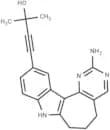
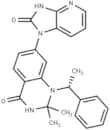
CAS :<p>PKCTheta-IN-2 (compound 14) is a potent and selective inhibitor of PKCθ, with an IC50 value of 0.25 nM. It demonstrates good selectivity across a broad range of kinases, including the PKC subfamily (30 kinases). Additionally, PKCTheta-IN-2 effectively inhibits the production of IL-2 in mice, where it exhibits an IC50 of 682 nM.</p>Formule :C24H23N5O2Couleur et forme :SolidMasse moléculaire :413.47Lisavanbulin
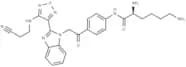
CAS :<p>Lisavanbulin (BAL-101553) is a prodrug of Avanbulin (BAL 27862), a microtubule-targeting agent. It exhibits antitumor activity, particularly effective against tumors with high expression of end-binding protein 1.</p>Formule :C26H29N9O3Couleur et forme :SolidMasse moléculaire :515.57PI3K-IN-29
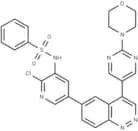
CAS :<p>PI3K-IN-29: Strong PI3K block, inhibits Akt phosphorylation. IC50: U87MG 0.264µM, HeLa 2.04µM, HL60 1.14µM.</p>Formule :C27H22ClN7O3SCouleur et forme :SolidMasse moléculaire :560.03Tubulin polymerization-IN-32
<p>Tubulin polymerization-IN-32: a cancer cell growth inhibitor used for research in cancers like lymphoma.</p>Formule :C29H30N2O7Couleur et forme :SolidMasse moléculaire :518.56Hsp90-IN-37
CAS :<p>Hsp90-IN-37 (Z-2) is an inhibitor of heat shock protein 90 (Hsp90), demonstrating a 69% inhibition rate on Hsp90 enzyme activity. It exhibits antitumor properties.</p>Formule :C12H15N3O2Couleur et forme :SolidMasse moléculaire :233.266L 734217
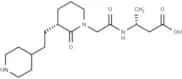
CAS :<p>L 734217 is an antagonist of the fibrinogen receptor.</p>Formule :C18H31N3O4Degré de pureté :98%Couleur et forme :SolidMasse moléculaire :353.46EV206
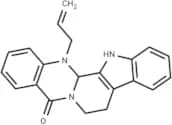
CAS :<p>EV206 is an effective inhibitor of Hsp70, exhibiting antiproliferative properties. This compound induces cell apoptosis (apoptosis) and enhances the protein expression of cleaved PARP and caspase-3. Additionally, EV206 demonstrates antitumor activity.</p>Formule :C21H19N3OCouleur et forme :SolidMasse moléculaire :329.40Tubulin inhibitor 22
<p>Compound 4c: Strong tubulin inhibitor with anti-cancer & anti-angiogenic effects; halts MGC-803 cells in G2/M, triggers Caspase-mediated apoptosis.</p>Formule :C20H17BrFNO4Couleur et forme :SolidMasse moléculaire :434.26PROTAC α-synuclein degrader 6
CAS :<p>PROTACα-synuclein degrader 6 (compound T3) is a PROTAC degrader of α-synuclein and tau, with an EC50 of 1.57 μM and 4.09 μM, respectively. This compound plays a significant role in neurodegenerative disease (ND) research.</p>Formule :C37H39N5O9SMasse moléculaire :729.80FPDT
<p>FPDT combats glioblastoma by inhibiting the AKT pathway; IC50: >100 μM (astrocytes), 45-68 μM (GBM cells).</p>Formule :C16H12FNO2SCouleur et forme :SolidMasse moléculaire :301.34